Judge Skeptical as Trump Seeks to Overturn Hush Money Conviction/ Newslooks/ WASHINGTON/ J. Mansour/ Morning Edition/ A federal judge expressed skepticism toward Donald Trump’s latest effort to void his hush money conviction. Judge Alvin Hellerstein criticized the former president’s legal strategy as an attempt to exploit the system. The ruling, which could determine whether the case shifts to federal court, is pending.
Trump Hush Money Appeal: Quick Looks
- Judge Alvin Hellerstein questions Trump’s bid to move case to federal court
- Trump was convicted in May 2024 on 34 counts of falsifying business records
- The case stems from hush money paid to adult film star Stormy Daniels
- Trump’s legal team cited presidential immunity after a 2024 Supreme Court ruling
- Judge says Trump’s attorneys delayed and sought “two bites at the apple”
- Legal strategy criticized as “tactical” by both judge and Manhattan DA’s office
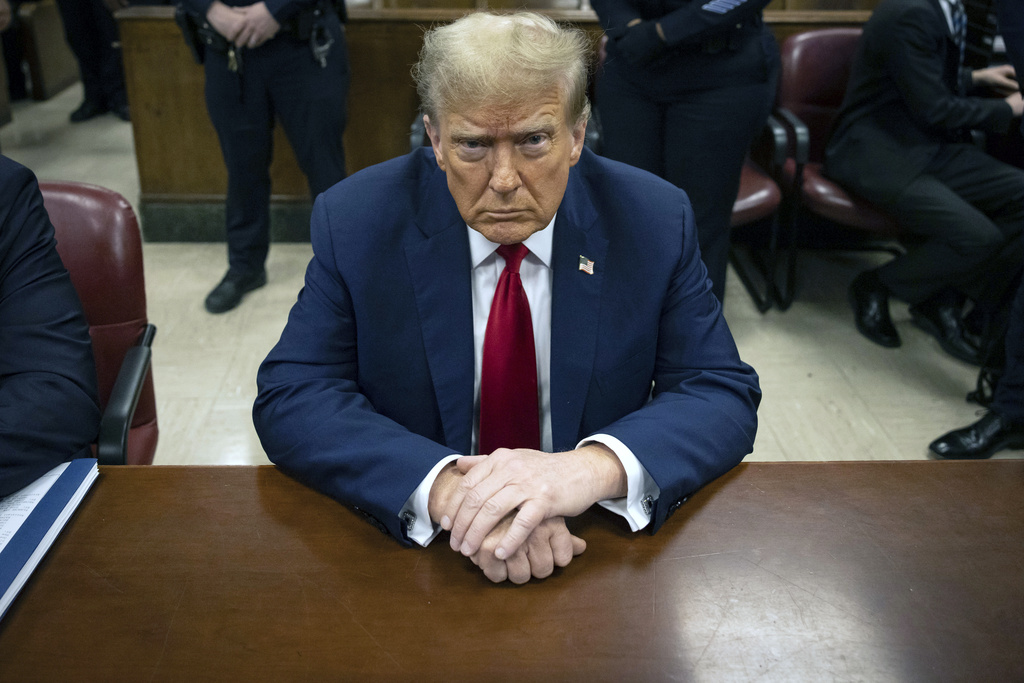
- Trump did not attend the three-hour Manhattan hearing
- Judge will rule at a later date following court-ordered review
Deep Look: Judge Skeptical as Trump Seeks to Overturn Hush Money Conviction
NEW YORK — Federal Judge Alvin K. Hellerstein delivered sharp rebukes to President Donald Trump’s legal team during a tense hearing Wednesday, as Trump seeks to overturn his 2024 state conviction related to a hush money payment to adult film actor Stormy Daniels.
The hearing, which lasted nearly three hours in Manhattan federal court, centered on whether Trump’s case should be transferred from state to federal court based on newly invoked presidential immunity claims. Judge Hellerstein, however, appeared unconvinced, calling Trump’s legal maneuvering a “strategic decision” and suggesting it may be too late to revisit the matter.
Trump, who was convicted on 34 felony counts of falsifying business records to hide a 2016 campaign-season payment to Daniels, received an unconditional discharge. Though he faced no jail time or fines, the conviction remains on his record. Trump denies any wrongdoing and maintains that Daniels’ claims of an affair are false.
At the heart of Trump’s argument is the U.S. Supreme Court’s July 2024 decision, which extended broad immunity protections to presidents for official acts. Trump’s legal team argues that elements of the state case against him intersect with those protected acts. But Hellerstein was skeptical of both the timing and the logic behind that claim.
The judge questioned why Trump’s lawyers didn’t immediately seek to move the case to federal court following the Supreme Court’s ruling. Instead, they first asked the state trial judge, Juan Merchan, to throw out the verdict, and only sought federal court relief two months later.
“You didn’t have to do that,” Hellerstein said. “You could have come right to the federal court. Just by filing a notice of removal, there would be no sentencing.” He accused Trump’s team of trying to “get two bites at the apple.”
Jeffrey Wall, Trump’s attorney, argued that the short window between the Supreme Court’s decision and Trump’s sentencing made it difficult to act. “It is what any sensible litigant would do,” Wall said. Hellerstein disagreed, responding bluntly, “Not so.”
Steven Wu of the Manhattan District Attorney’s office echoed the judge’s assessment. “They knew they had options,” he said. “You can’t go to state court, lose, and then come to federal court as a fallback.”
This is the third time Hellerstein has been asked to intervene. He previously denied Trump’s request to move the case in 2023 and again post-conviction in 2025. Both times, he ruled that Trump’s actions were personal—not official presidential duties—and thus not protected by executive immunity.
In November 2025, the 2nd U.S. Circuit Court of Appeals ordered Hellerstein to revisit the issue, stating his prior ruling failed to assess whether parts of the evidence tied to official presidential acts. However, the appellate judges did not instruct Hellerstein on how to rule—only that the argument deserved fuller consideration.
The Manhattan hearing focused heavily on the interpretation of “official acts” and whether presidential immunity should retroactively apply to elements of Trump’s conduct in the hush money case.
Political implications hovered in the background. Trump remains a central figure in Republican politics, and the case remains a lightning rod for both his supporters and critics. Though he did not attend the hearing, his team continues to appeal the conviction in state court, hoping to erase the only criminal verdict ever rendered against a U.S. president.
Legal experts say the case touches on sensitive boundaries between executive power and criminal accountability.
David Schultz, a constitutional law professor, noted, “This case forces the courts to balance presidential immunity against the rule of law—particularly when the alleged conduct is rooted in personal gain.”
Trump’s next legal challenge comes Thursday when he appears, through counsel, before the Senate Banking, Housing and Urban Affairs Committee as part of an ongoing review of the Financial Stability Oversight Council, which he once chaired.
Judge Hellerstein did not specify when he would issue his ruling but thanked both legal teams for presenting “provocative arguments.”