

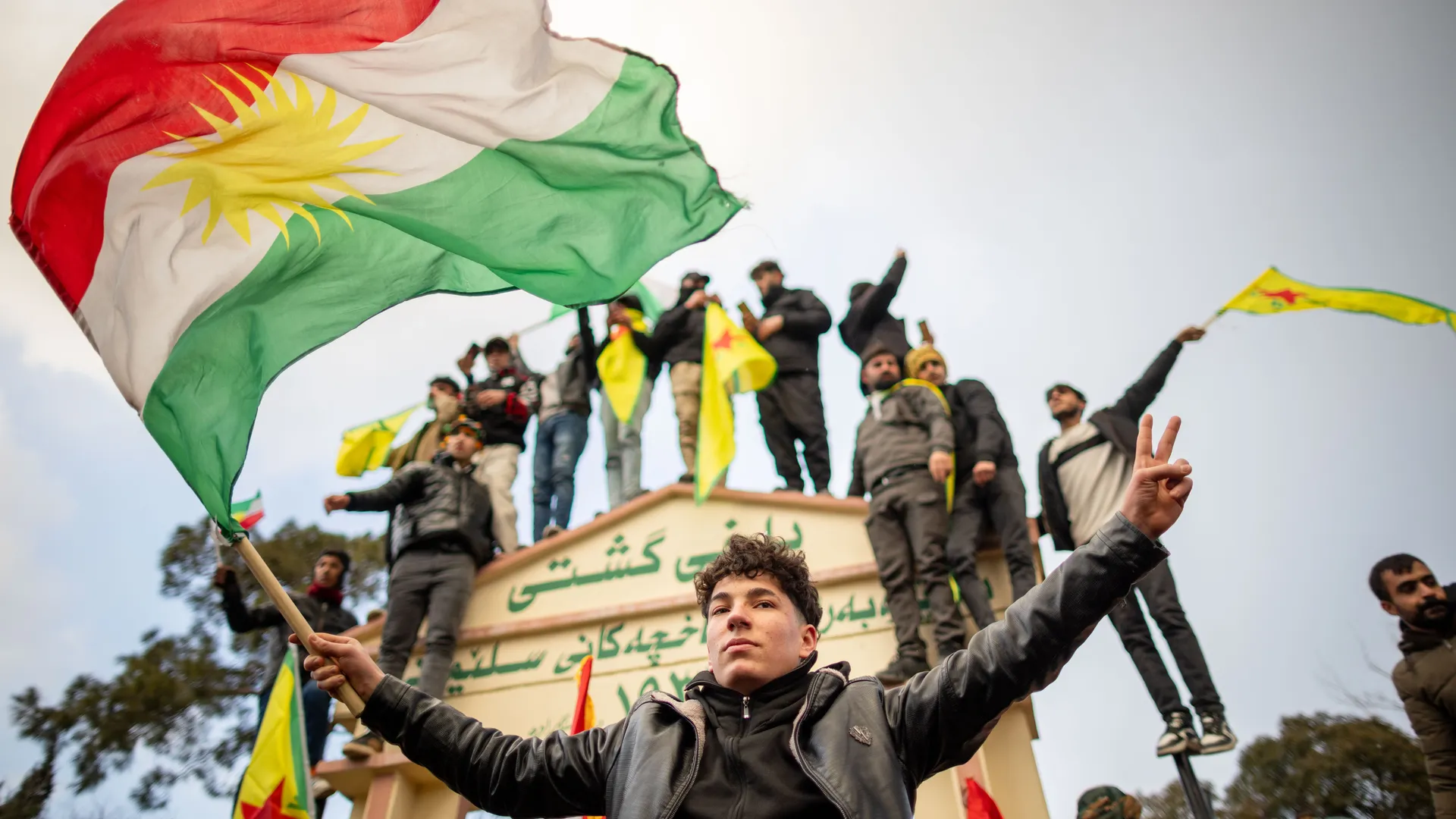
Kurdish Militias Prepare Possible Offensive Against Iran/ Newslooks/ WASHINGTON/ J. Mansour/ Morning Edition/ Kurdish militant groups near Iran’s border are reportedly preparing for a possible ground offensive against Tehran’s regime. U.S. and Israeli officials say Kurdish factions could coordinate with ongoing American and Israeli airstrikes. The strategy aims to pressure Iran’s leadership and potentially spark internal rebellion.
Kurdish Offensive Iran War Quick Looks
- Kurdish Iranian militant groups are preparing a possible ground offensive against Iran.
- Fighters are positioned along the Iran–Iraq border.
- Several factions formed a Coalition of Political Forces of Iranian Kurdistan.
- Intelligence sources say Kurdish groups receive support from Israel and possibly the U.S.
- The strategy could open a new front in the war against Tehran.
- Kurdish forces aim to seize territory inside northwestern Iran.
- Iraqi Kurdish leaders have shown hesitation about supporting an invasion.
- Iran warned Iraq not to allow attacks from its territory.
Kurdish Offensive Iran War Deep Look
Kurdish militant factions operating near Iran’s western border are preparing for a potential ground offensive against the Iranian government, according to U.S. and Israeli officials and individuals familiar with the plans.
The possible operation could mark the next phase of the growing conflict involving Iran, as Kurdish forces coordinate with the ongoing U.S. and Israeli bombing campaign targeting Tehran’s military infrastructure.
Officials say a Kurdish-led ground assault in northwestern Iran could significantly increase pressure on the country’s leadership while potentially triggering broader unrest inside the Islamic Republic.
Kurdish Groups Form New Coalition
Just days before the war began, several Iranian Kurdish opposition factions based in neighboring Iraq announced the creation of a new alliance called the Coalition of Political Forces of Iranian Kurdistan.
The coalition includes five dissident Kurdish groups that have long opposed Iran’s ruling government.
Many of these factions maintain thousands of fighters stationed along the rugged border region between Iraq and Iran.
Sources familiar with the situation say hundreds of militants have recently moved from camps in Iraqi territory into positions closer to or inside Iran.
The repositioning is believed to be part of preparations for a possible attack against Iranian security forces.
Intelligence Agencies Reportedly Involved
According to U.S. and Israeli officials, Kurdish factions have received backing from both Israeli intelligence and American intelligence agencies.
The goal of supporting Kurdish militants would be to create a new front in the conflict that complements airstrikes carried out by the United States and Israel.
A U.S. official said the plan would involve Kurdish fighters attempting to seize control of a specific territory within Iran’s Kurdish region.
If successful, that foothold could challenge Tehran’s authority and encourage broader resistance against the government.
An Israeli official suggested the war may evolve beyond conventional military operations.
“The war started with a kinetic phase by the U.S. and Israeli militaries,” the official said. “But as it continues, other efforts will follow.”
U.S. Secretary of State Marco Rubio told lawmakers during a closed-door congressional briefing that Washington is not directly arming Kurdish groups.
“We’re not arming the Kurds,” Rubio reportedly said, though he added that Israel sometimes acts independently.
Neither the CIA nor Israel’s intelligence service, Mossad, publicly commented on the reports.
Israeli Role In Early Planning
Sources say the concept of using Kurdish factions for a ground offensive originated with Israeli Prime Minister Benjamin Netanyahu and the country’s intelligence agencies.
American intelligence officials later became involved in the discussions, according to people familiar with the planning.
Israeli officials reportedly promised Kurdish groups both military assistance and political backing if Iran’s government collapses.
That support could include recognition of a Kurdish autonomous region within a future Iranian political system.
However, some U.S. officials have raised concerns about the risks of such a strategy.
They warn that Kurdish militias may lack sufficient military strength to confront Iran’s forces directly and could suffer heavy losses.
“The problem is that they could end up as cannon fodder,” one official said.
White House Signals No Approval Yet
Despite the discussions, the White House has not formally approved any plan involving Kurdish fighters.
Press Secretary Karoline Leavitt told reporters that President Donald Trump has not agreed to support a Kurdish ground offensive against Iran.
The administration has instead focused publicly on the ongoing aerial campaign targeting Iranian military infrastructure.
Kurdish Leaders Express Caution
Trump recently spoke with key Kurdish political leaders in Iraq to discuss the situation.
Those leaders included Masoud Barzani and Bafel Talabani, influential figures in Iraqi Kurdistan.
According to U.S. officials, both leaders expressed reservations about becoming directly involved in an invasion of Iran.
Kurdish authorities in Iraq are wary of provoking retaliation from Tehran or destabilizing their own region.
Trump also reportedly spoke separately with Mustafa Hijri, the leader of the Democratic Party of Iranian Kurdistan.
Iran Warns Against Cross-Border Attack
Iranian officials have already raised concerns about the possibility of Kurdish militants launching attacks from Iraqi territory.
Iran’s foreign minister, Abbas Araghchi, discussed the issue with Iraqi Prime Minister Mohammed Shia al-Sudani earlier this week.
According to Iran’s foreign ministry, the Iraqi government assured Tehran that it would not allow attacks on Iran to be launched from its territory.
“The Iraqi government will under no circumstances allow any threat to be directed at Iran from Iraqi soil,” the ministry said in a statement.
Airstrikes Intensify Near Kurdish Regions
Meanwhile, Israeli fighter jets have carried out multiple airstrikes near Iran’s Kurdish border areas.
The strikes targeted Iranian military positions, bases belonging to the Revolutionary Guard, and police installations.
Iranian media reported heavy bombing near the city of Bukan, located in northwestern Iran close to the Iraqi border.
The air campaign is widely seen as part of efforts to weaken Iranian security forces ahead of any possible ground activity in the region.
Kurdish Fighters Await Possible Green Light
Despite the preparations, Kurdish factions say they have not yet launched any ground offensive.
Sources within the groups say fighters are waiting for a signal from international backers before moving forward.
Some officials believe a ground operation could begin in the coming days if political and military conditions align.
If Kurdish forces do enter the conflict, it could significantly alter the dynamics of the war by opening a new front inside Iran’s borders.
Such a development could increase pressure on Tehran’s government — but it could also risk expanding the conflict further across the region.






You must Register or Login to post a comment.