Last US-Russia Nuclear Pact ‘New START’ Set to Expire/ Newslooks/ WASHINGTON/ J. Mansour/ Morning Edition/ The last nuclear arms control treaty between the U.S. and Russia expires Thursday, ending a decades-long era of mutual weapons limits. With New START expiring and no new deal in place, experts fear a dangerous new arms race involving China. Leaders in Washington and Moscow remain divided on how to move forward.
Nuclear Arms Treaty Expiry Quick Looks
- New START Treaty between U.S. and Russia expires Thursday
- Marks first time in 50+ years without nuclear weapons limits
- Putin open to 1-year extension; Trump remains undecided
- Experts warn of a new U.S.-Russia-China arms race
- On-site inspections halted in 2020, never resumed
- China resists joining multilateral nuclear limits
- Pope Leo XIV, global experts urge treaty continuation
- Russia tests advanced weapons, including Poseidon nuclear drone
- U.S. “Golden Dome” missile shield raises Moscow concerns
- Trump proposes possible nuclear tests; Russia vows to respond
Deep Look: Last US-Russia Nuclear Pact ‘New START’ Set to Expire
A historic chapter in global nuclear arms control is drawing to a close. The New START Treaty—the final major nuclear agreement between the United States and Russia—is set to expire this Thursday, removing limits on the world’s two largest nuclear arsenals for the first time in more than 50 years.
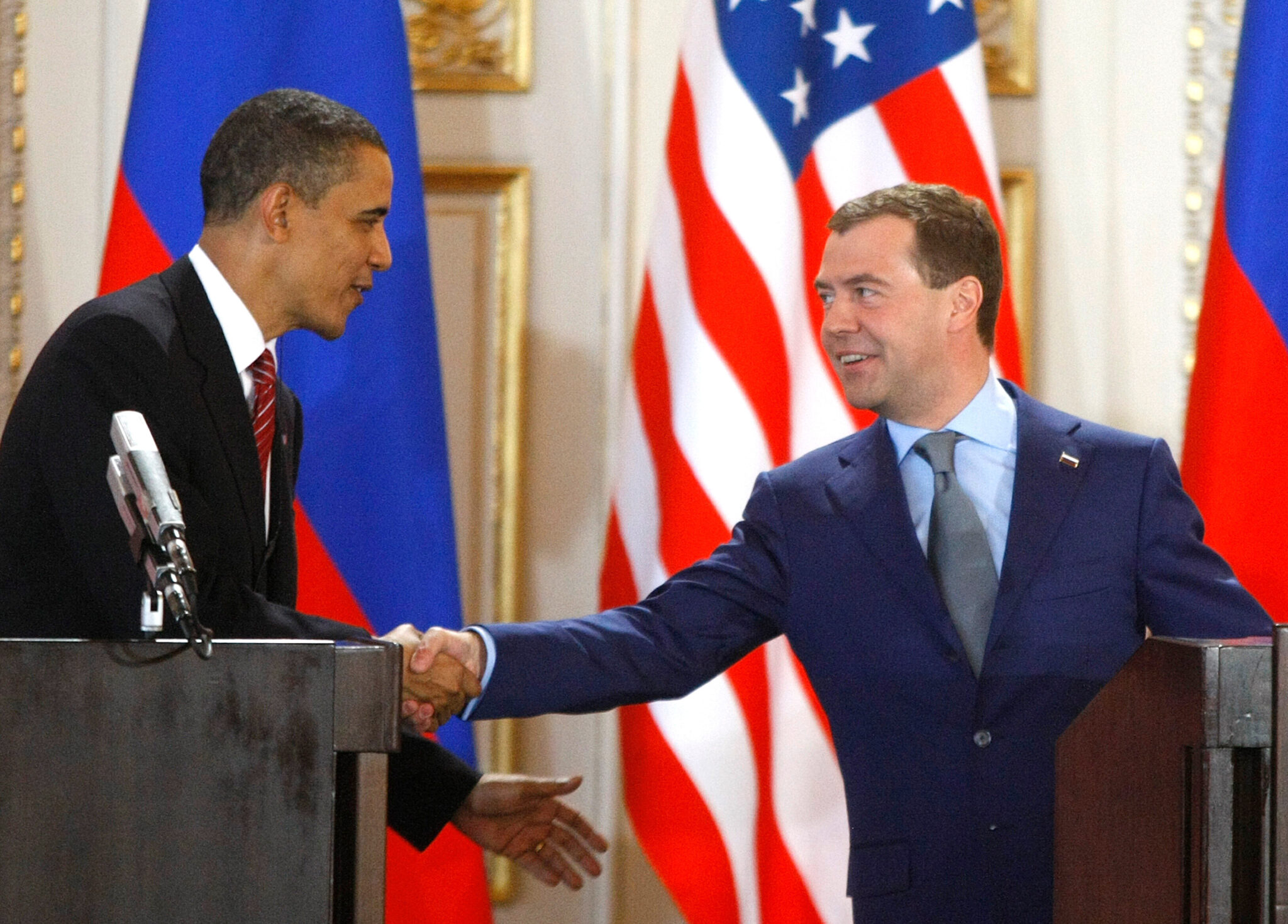
Signed in 2010 by Presidents Barack Obama and Dmitry Medvedev, the New START Treaty capped each country at 1,550 deployed nuclear warheads and 700 delivery systems. It included robust verification measures, including on-site inspections, which were suspended in 2020 due to the COVID-19 pandemic and never resumed.
The expiration raises serious concerns among experts and officials worldwide. Without the treaty, both sides could expand their deployed nuclear stockpiles, a move that could ignite a renewed arms race—one now likely to include China, whose smaller but growing arsenal has remained outside any formal agreements.
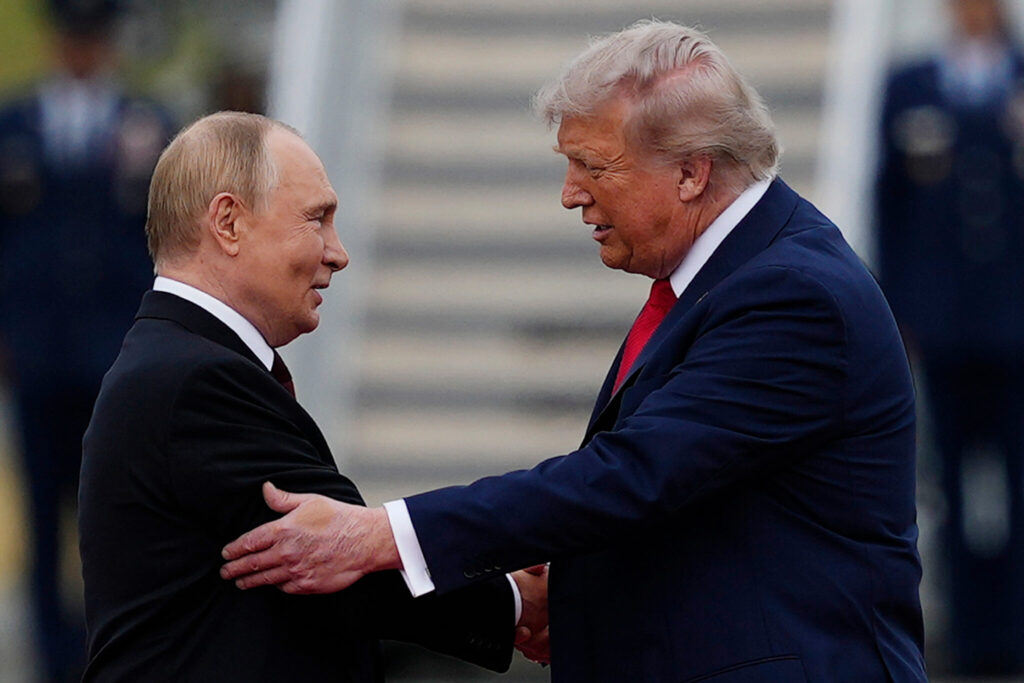
Russian President Vladimir Putin has offered to maintain current New START limits for another year, provided the United States does the same. However, U.S. President Donald Trump has not committed to an extension. According to White House sources, Trump wants China involved in any new nuclear deal and will make a decision “on his own timeline.”
China, for its part, has shown little interest in joining a trilateral arms control framework. Kremlin adviser Yuri Ushakov noted that Putin discussed the treaty’s expiration with Chinese President Xi Jinping and that Washington has yet to respond to the extension proposal.
“The U.S. and Russia are now entering a period where, for the first time in decades, there are no binding limits on nuclear weapons,” warned Daryl Kimball, executive director of the Arms Control Association. “The risk of a new three-way arms race is no longer hypothetical—it’s imminent.”
Global leaders and institutions are voicing concern. Pope Leo XIV called for the treaty’s preservation, and analysts warn that the absence of constraints could lead to expanded deployments and increased instability.
Kingston Reif of the RAND Corporation emphasized the dangers in an online forum: “Without the predictability of New START, both sides may increase deployments to gain leverage—or simply to prepare for the worst.”
This shift comes against a backdrop of rising geopolitical tension. Since Russia’s 2022 invasion of Ukraine, Putin has repeatedly invoked the country’s nuclear capabilities and in 2024 updated the nation’s nuclear doctrine to lower the threshold for nuclear use. While Moscow suspended participation in New START in 2023, it claimed it would still respect the treaty’s warhead limits.
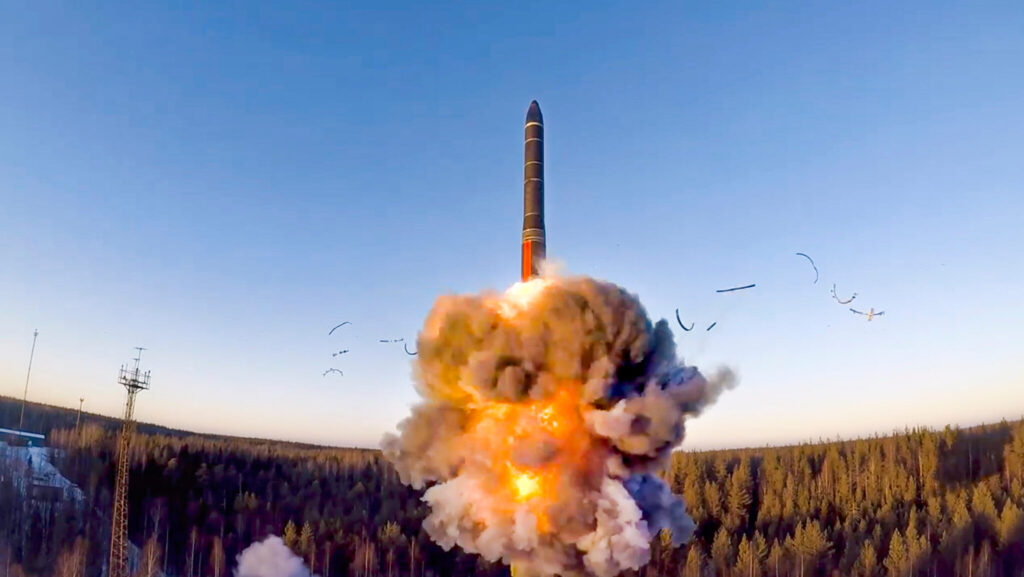
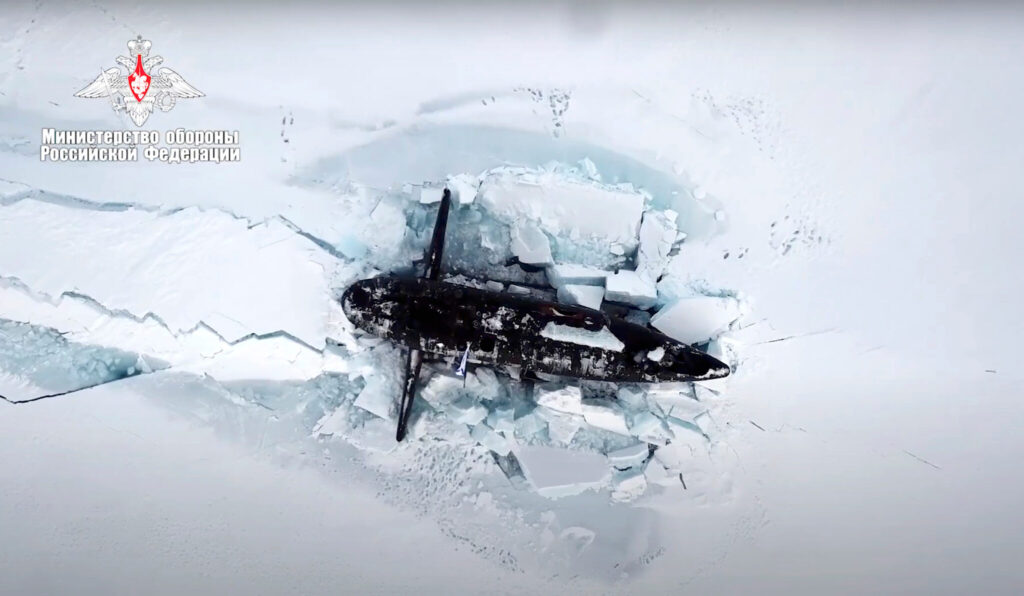
Russia has also ramped up development and testing of new weapons like the Poseidon underwater nuclear drone and the Burevestnik cruise missile. These systems aim to bypass U.S. missile defense, which Russia views as a threat to its deterrence capabilities—particularly Trump’s proposed “Golden Dome” missile shield.
Medvedev, now deputy head of Russia’s Security Council, echoed those concerns. “We will restore parity if we are not heard,” he said, referencing Trump’s defense proposals. Analysts warn that in response to the U.S. expanding missile defenses, Russia and China could increase offensive warhead production to overwhelm the systems.
In 2019, the Intermediate-Range Nuclear Forces (INF) Treaty collapsed, and the Anti-Ballistic Missile Treaty was scrapped in 2001 under President George W. Bush. The New START expiration leaves no active nuclear arms agreements between the U.S. and Russia for the first time since 1972’s SALT I.
Recent actions suggest that the arms race may already be accelerating. In late 2024 and January 2026, Russia used a conventional version of its Oreshnik intermediate-range ballistic missile in Ukraine. Capable of reaching targets up to 5,000 kilometers away, the missile can carry either nuclear or conventional warheads and threatens to further destabilize Europe.
Adding to global anxiety, Trump has suggested that the U.S. may resume nuclear testing, which has been on hold since 1992. While Energy Secretary Chris Wright clarified that any future tests wouldn’t involve actual explosions, Russia has pledged to respond in kind if the U.S. resumes testing.
Kimball warned that even symbolic tests could trigger a dangerous domino effect. “This would blow a massive hole in the global nonproliferation regime,” he said, noting that other nations like China and India may follow suit.
Former U.S. arms negotiator Rose Gottemoeller emphasized that even a short extension would have preserved stability while broader negotiations took place. “A one-year extension would not impede U.S. efforts to address China’s buildup,” she noted.
Instead, the expiration of New START without a successor leaves a gaping hole in global security architecture. Experts agree that the absence of constraints—alongside escalating global tensions—makes the coming era uniquely dangerous.
“This marks a potential turning point into a much more dangerous period of global nuclear competition,” Kimball said. “One unlike anything we’ve seen in our lifetimes.”