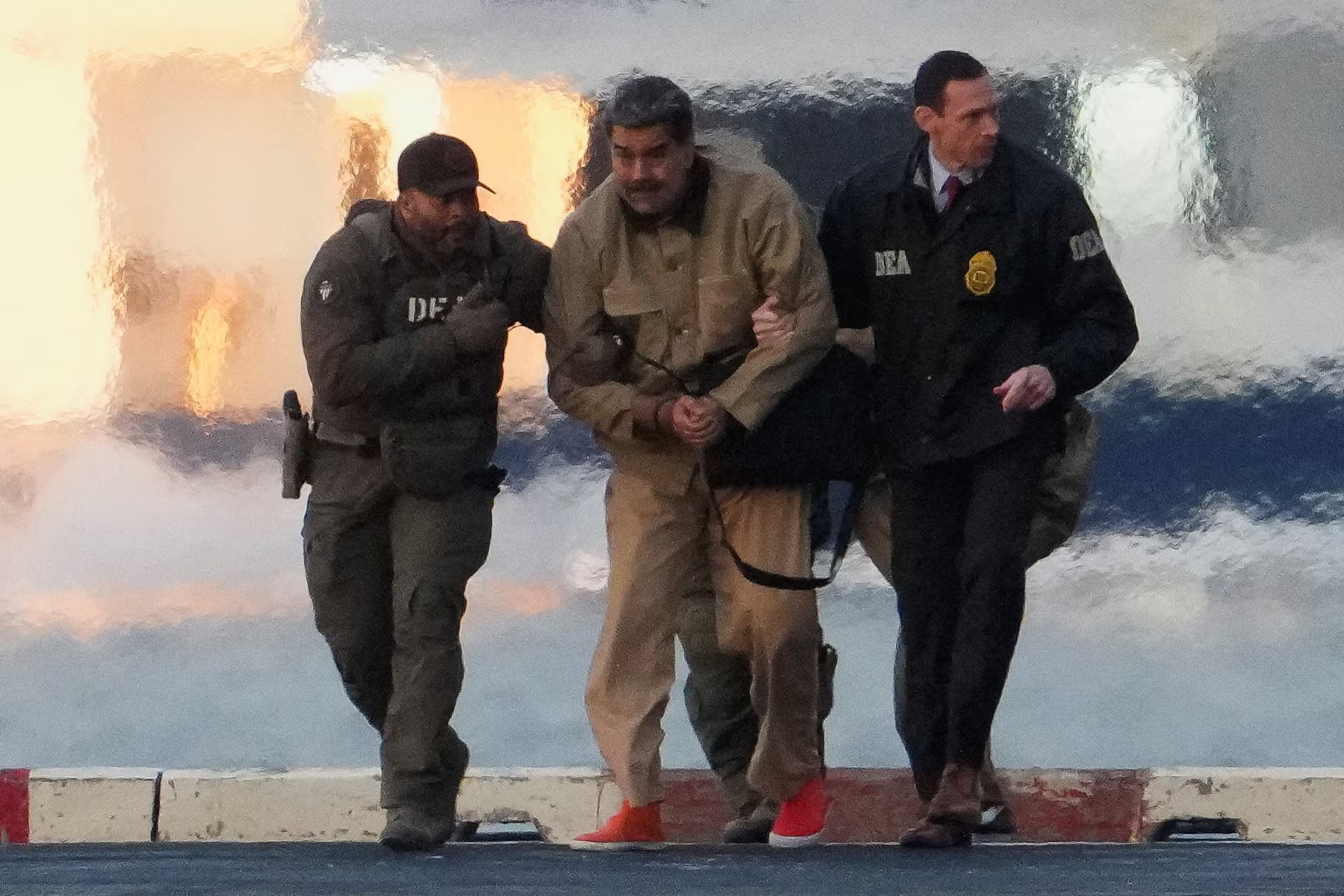
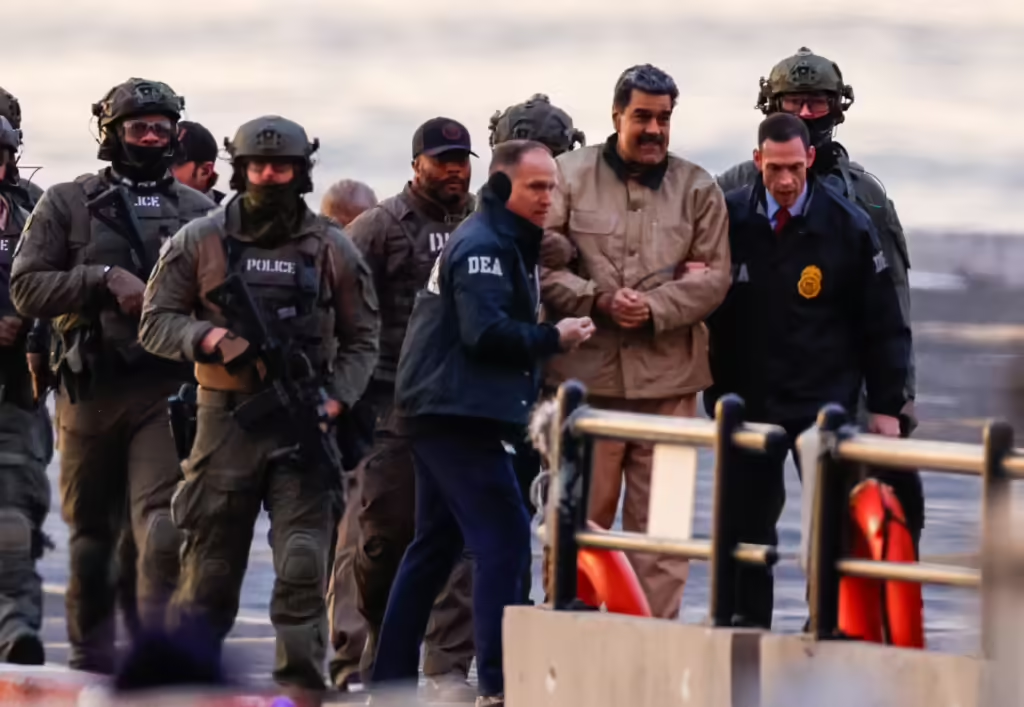
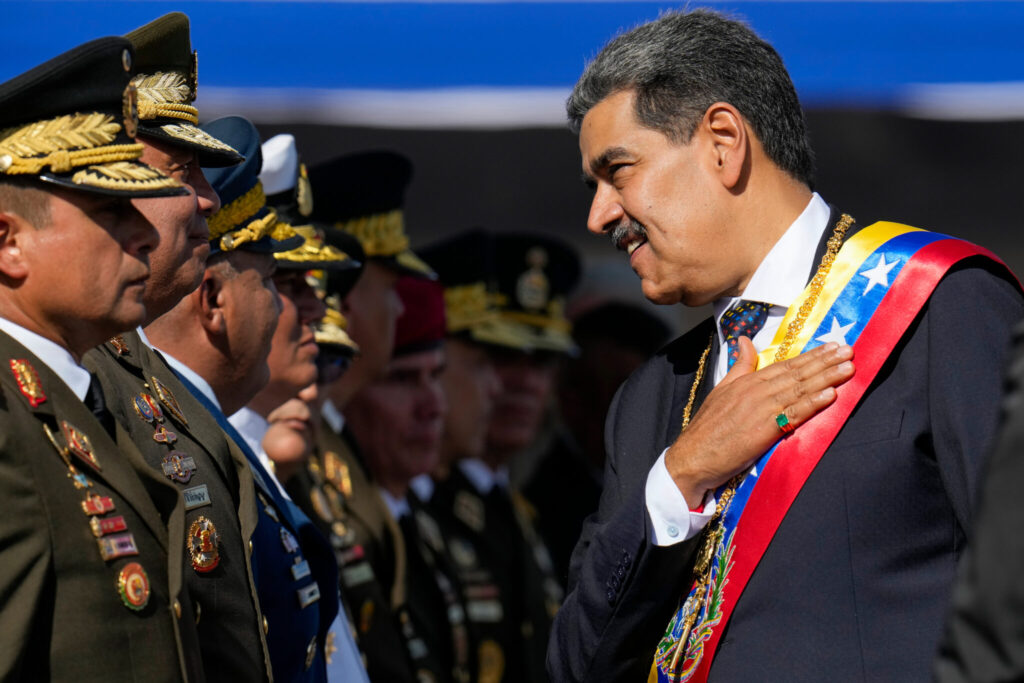
Maduro and Flores Plead Not Guilty in New York Court/ Newslooks/ WASHINGTON/ J. Mansour/ Morning Edition/ Ousted Venezuelan President Nicolás Maduro pleaded not guilty to drug and weapons charges in his first U.S. court appearance. His wife, Cilia Flores, also entered a not guilty plea. The high-profile case follows their capture by U.S. forces in Caracas.
Maduro Arraigned in U.S. Court — Quick Looks
- Nicolás Maduro pleads not guilty in New York courtroom
- Cilia Flores also enters not guilty plea before federal judge
- Both defendants request access to Venezuelan consulate
- Maduro insists he is still Venezuela’s legitimate president
- Judge outlines rights and case schedule during arraignment
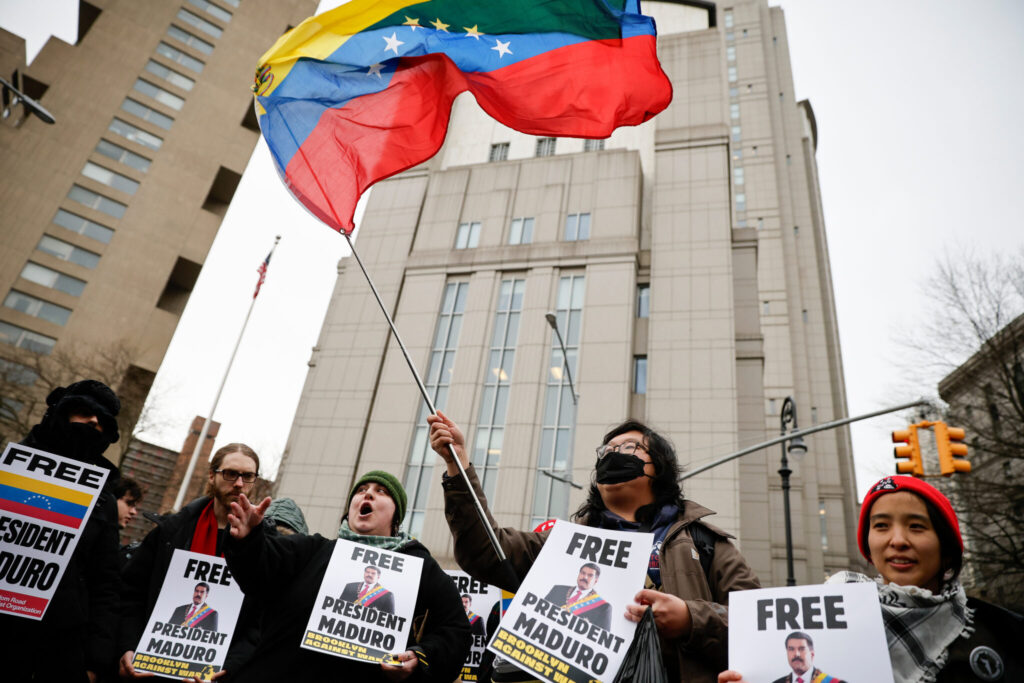
- Crowds protest outside court, both supporting and opposing Maduro
- Legal analysts expect bail denial, trial timeline to follow
- U.S. says capture was “law enforcement operation,” not occupation
- Russia denounces U.S. raid, calls for Maduro’s immediate release
- U.S. oil stocks soar amid hopes of access to Venezuela’s reserves
- High-profile lawyers, including Julian Assange’s former attorney, represent Maduro
Maduro and Flores Plead Not Guilty in New York Court
Deep Look
NEW YORK — Former Venezuelan President Nicolás Maduro entered a plea of not guilty in a New York federal courtroom on Monday, following his dramatic capture by U.S. forces during a weekend raid in Caracas. His wife, Cilia Flores, also pleaded not guilty to multiple charges, including drug trafficking and weapons violations.
Maduro, speaking through a translator, told the court, “I am innocent. I am not guilty of anything that is mentioned here,” reaffirming his claim to still be the legitimate president of Venezuela. The couple is facing U.S. federal charges stemming from longstanding allegations of narco-terrorism and corruption.
Judge Alvin Hellerstein oversaw the arraignment, during which he informed both defendants of their legal rights and offered access to the Venezuelan consulate, a request both Maduro and Flores accepted. Flores, standing before the judge, confirmed her identity, stating:
“I am the first lady of the Republic of Venezuela.”
The courtroom, closed to cameras, was closely followed by live reporters providing play-by-play updates of the proceedings.
Outside the courthouse, large crowds gathered in dueling protests, waving Venezuelan flags and signs. Some demonstrators celebrated Maduro’s capture, chanting “Libertad!” while others demanded his release, calling him a political prisoner.
This case marks an unprecedented legal and geopolitical confrontation between the United States and Venezuela. President Donald Trump has declared that the U.S. is now “running” Venezuela until a new government is formed, and has called for U.S. energy companies to begin rebuilding Venezuela’s oil infrastructure.
In a UN Security Council meeting, U.S. Ambassador Michael Waltz emphasized that the capture was a “law enforcement operation” against two indicted individuals, not an occupation of Venezuela. Waltz described Maduro as a “narco-terrorist” responsible for destabilizing the Western Hemisphere.
“There is no war against Venezuela or its people,” Waltz said. “We are not occupying a country.”
Meanwhile, Russia’s envoy to the United Nations, Vasily Nebenzya, condemned the operation as an act of “armed aggression” and accused the U.S. of rekindling neocolonialism. Russia and several Latin American nations, including Mexico, Cuba, Colombia, Chile, and Uruguay, have demanded Maduro’s release.
Inside Venezuela, the National Assembly opened its legislative term Monday, declaring that Vice President Delcy Rodríguez is now the acting president. Lawmakers accused the U.S. of kidnapping Maduro, calling Trump’s administration “barbaric” and “cowardly” in its actions.
As legal proceedings begin, Maduro and Flores have assembled a high-powered legal team. Maduro is represented by Barry Pollack, a respected trial attorney known for defending Julian Assange, while Flores will be represented by Mark Donnelly, a Houston-based former federal prosecutor fluent in Spanish.
Legal experts expect bail to be denied due to the nature of the charges. The judge is expected to set a timeline for pretrial motions and possibly determine a trial start date in the coming weeks.
Though President Trump has framed the operation as a move toward regional stability, critics see it as a controversial assertion of American dominance in Latin America. The legal outcome, along with its diplomatic fallout, may influence U.S. foreign relations, energy policy, and regional alliances in the Western Hemisphere for years to come.