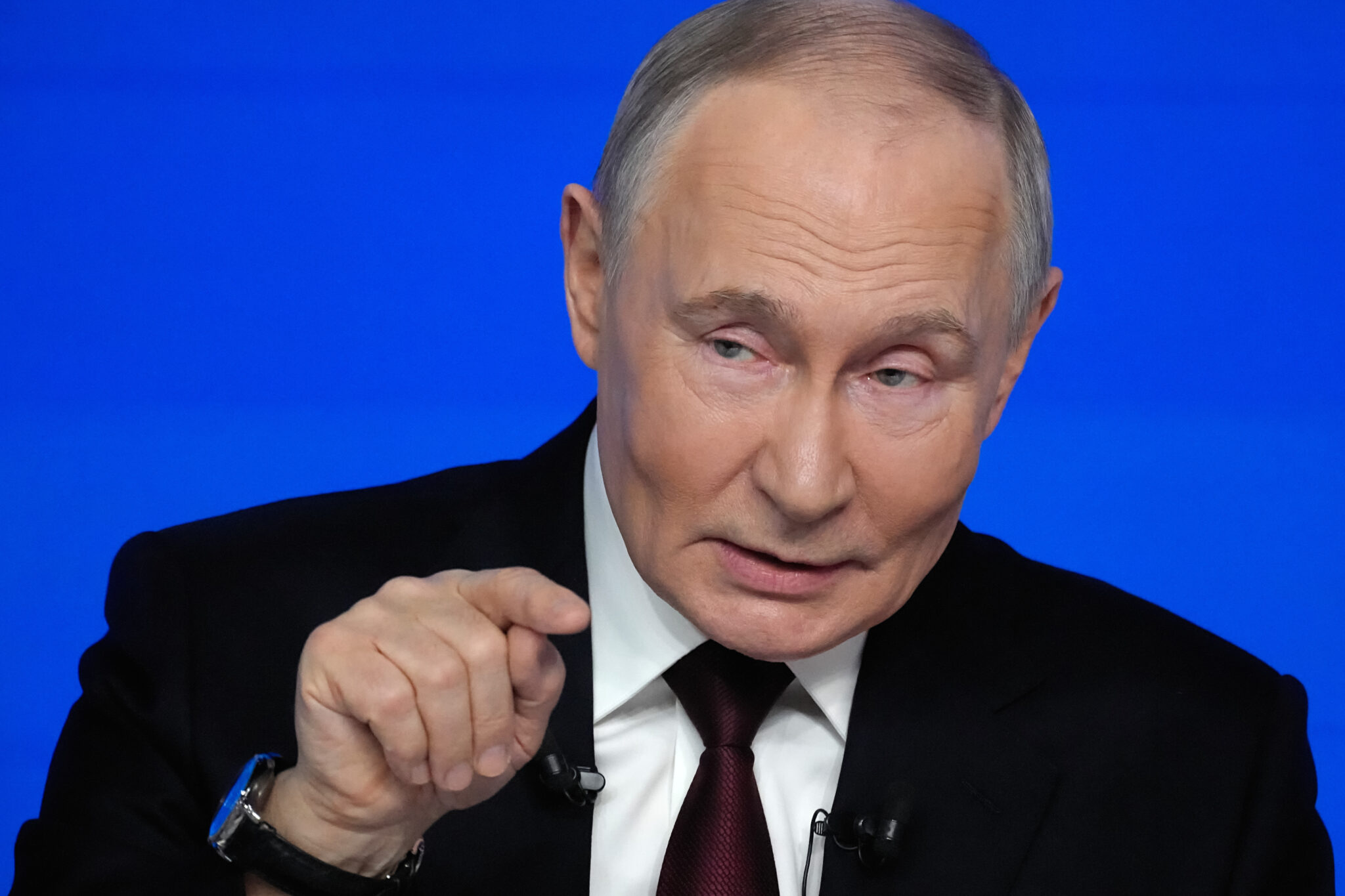
Putin Declares Ukraine Military Goals Will Be Achieved/ Newslooks/ WASHINGTON/ J. Mansour/ Morning Edition/ At his annual news conference, President Vladimir Putin declared that Russian forces were making steady gains in Ukraine and would achieve their objectives through military means if peace talks fail. He reiterated demands including Ukrainian withdrawal from occupied areas and rejection of NATO membership. Putin also warned Western leaders against using frozen Russian assets to support Ukraine.
Ukraine Military Goals + Quick Looks
- Putin claims Russian troops have seized the “strategic initiative”
- Russia is advancing along the entire Ukraine front line
- Kremlin still insists on Ukraine conceding occupied territories
- Demands include withdrawal from Eastern Ukraine and NATO rejection
- Peace deal must recognize Crimea and four annexed regions as Russian
- EU fails to reach agreement on using frozen Russian funds
- Putin labels Western asset seizure attempts as “robbery”
- Volunteer recruitment in Russian military reported as strong
- Domestic issues addressed through citizen Q&A during the event
Putin Declares Ukraine Military Goals Will Be Achieved
Deep Look
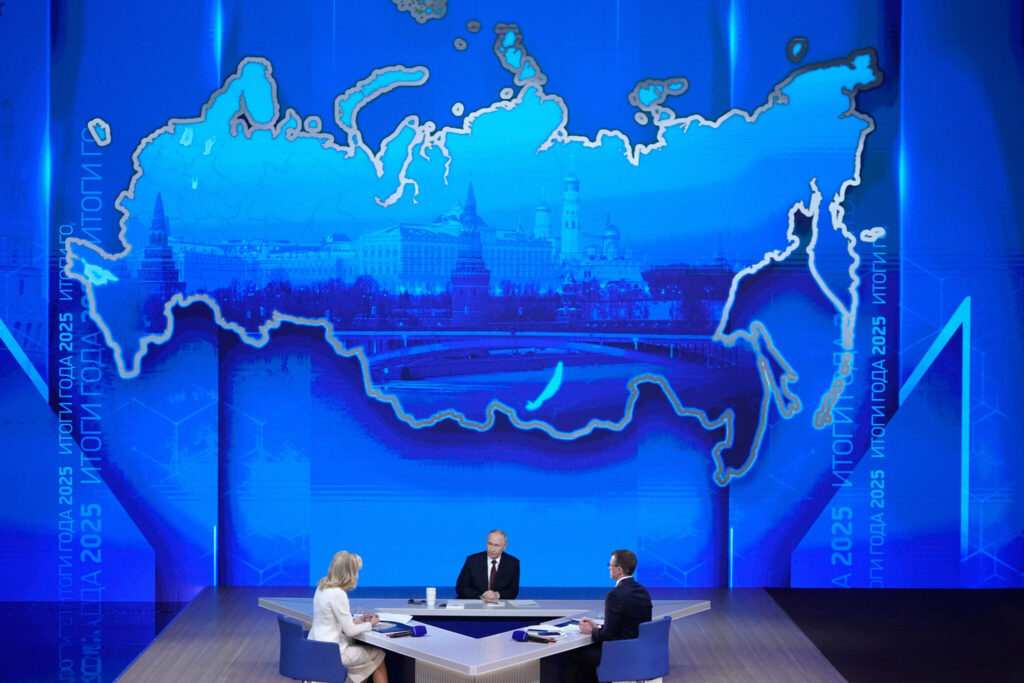
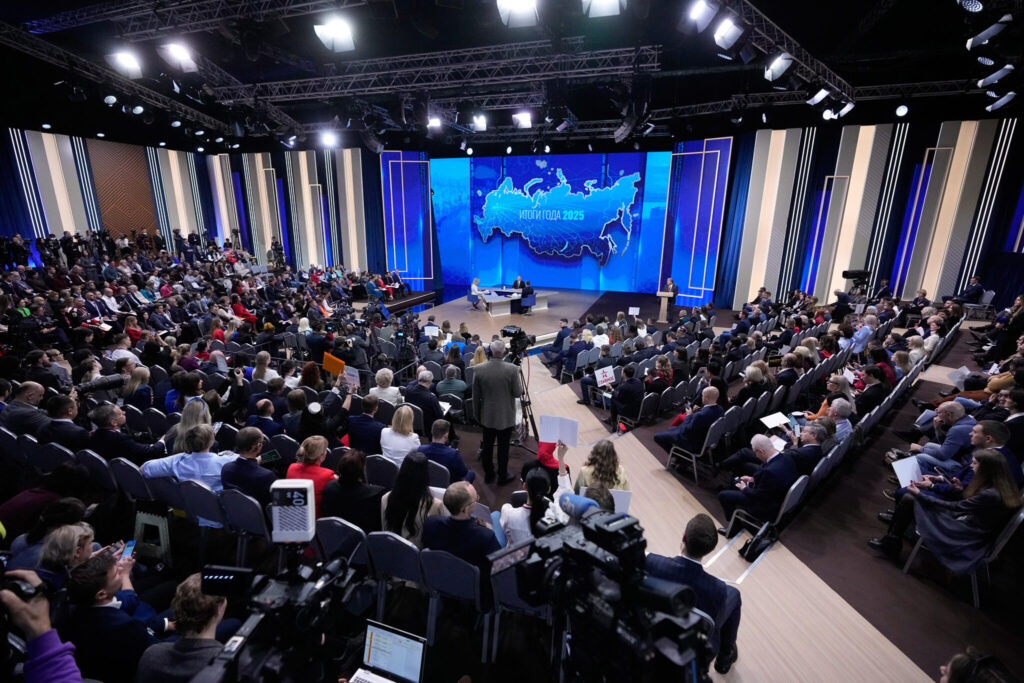
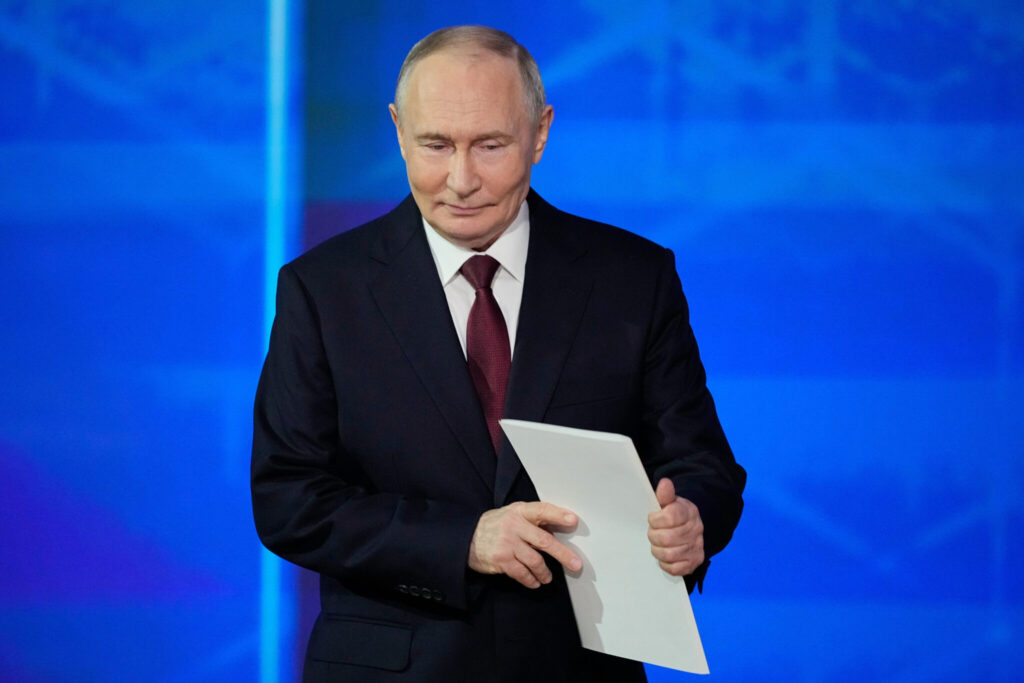
MOSCOW — President Vladimir Putin projected confidence Friday during his highly choreographed annual news conference, insisting that Russia’s military campaign in Ukraine remains on course and that Moscow’s objectives will be fulfilled if peace talks with Kyiv do not meet Kremlin conditions.
Framing the war as moving in Russia’s favor, Putin stated that Russian troops had “fully seized the strategic initiative,” claiming gains across the entire front line. “Our troops are advancing all across the line of contact,” he said, noting that progress varied by region, but insisting “the enemy is retreating in all sectors.”
Now in its fourth year, the war in Ukraine continues to grind on with high costs on both sides. In the early stages, Ukraine managed to repel Russian forces from Kyiv, but since then, the conflict has turned into a prolonged battle of attrition. Putin, who has ruled Russia for 25 years, used the nationally televised press event—merged with his traditional call-in show—to rally public support and reiterate his long-standing demands.
The annual news event, typically a showcase for the Russian leader’s command of domestic affairs, was this year dominated by the war in Ukraine. The increased focus underscores how central the conflict has become for the Kremlin’s public messaging strategy. It also reflects concerns about growing fatigue and economic strain among Russians as the war drags on.
Putin Doubles Down on Conditions for Peace
Putin repeated that Russia remains open to peace talks, but only under conditions that would require significant concessions from Ukraine. These include recognition of Russian sovereignty over four partially occupied Ukrainian regions and Crimea, which Russia annexed in 2014. He also demanded a Ukrainian withdrawal from areas not currently under Russian control and called for an end to Ukraine’s NATO ambitions.
Moscow insists that any peace agreement must address the “root causes” of the conflict — a term often used by Russian officials to justify their territorial and security demands. These include Ukraine’s demilitarization, a cap on the size of its armed forces, and granting official status to the Russian language within Ukraine.
Ukrainian President Volodymyr Zelenskyy, while open to alternatives to NATO membership under certain Western security guarantees, maintains that full NATO accession is Ukraine’s best protection.
“The United States don’t see us in NATO, for now,” Zelenskyy said this week, adding, “Politicians change.”
Tensions Over Frozen Russian Assets
Putin also addressed recent developments in European financial diplomacy. As Ukraine faces mounting financial challenges and Russian missile attacks on its infrastructure, EU leaders have approved a large interest-free loan to support Kyiv. However, the bloc has failed to reach consensus on using frozen Russian state assets to finance aid.
Most of the frozen Russian assets are held in Belgium, whose concerns over legal and retaliatory risks delayed a broader agreement. EU leaders ultimately decided to raise funds through capital markets rather than rely on confiscated Russian wealth.
Putin condemned any such use of Russian assets, calling it an act of “robbery.” He warned that the move would damage investor confidence in Europe and deal a blow to the eurozone’s credibility. “It would not just be an image blow, but a serious signal to investors worldwide,” he said.
Military Recruitment and Public Support
Putin also addressed Russia’s troop levels, claiming that over 400,000 volunteers had joined the military in 2025 alone. Independent verification of these numbers is difficult due to the opaque nature of Russia’s military recruitment and reporting. However, the government has aggressively promoted contract military service with financial incentives and benefits.
While the Kremlin insists it relies solely on volunteers, reports from media and human rights groups suggest that some conscripts have been pressured into signing contracts for combat deployment.
One moment from the event highlighted the format’s controlled but populist tone. A soldier’s widow raised concerns about delayed pension payments. Putin publicly apologized and pledged a prompt resolution. These interactions serve to present the Russian leader as both accessible and decisive, reinforcing his image as a hands-on problem solver.