

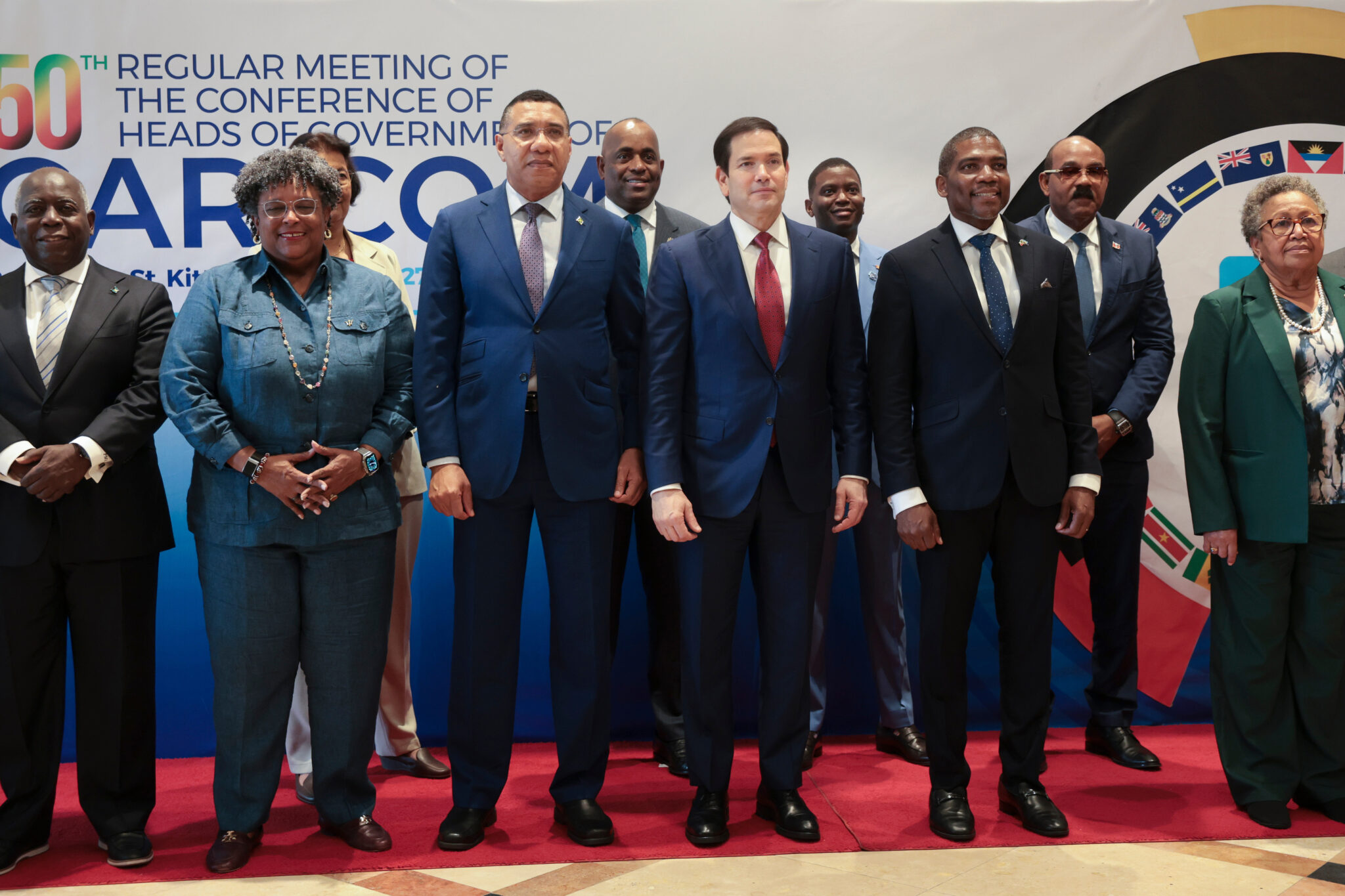
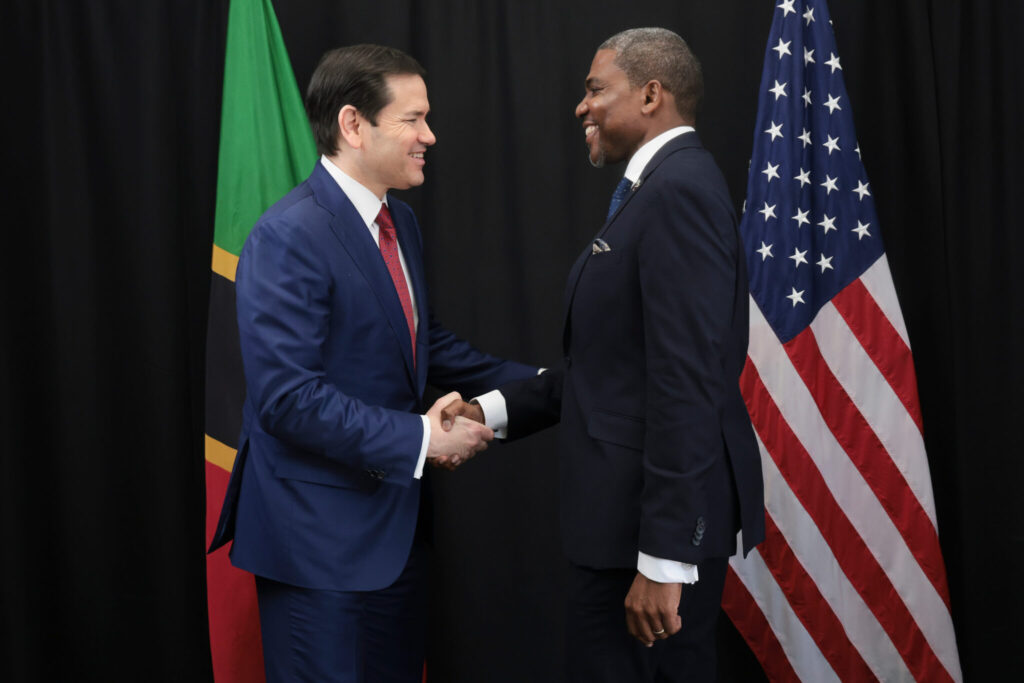
Rubio Defends Maduro Ouster at Caribbean Summit Amid Regional Concerns/ Newslooks/ WASHINGTON/ J. Mansour/ Morning Edition/ U.S. Secretary of State Marco Rubio defended the Trump administration’s removal of Venezuelan leader Nicolás Maduro during a Caribbean summit in St. Kitts and Nevis. Regional leaders expressed concern over the legality and broader implications of the U.S. military operation. Rubio emphasized regional security, democratic elections, and economic cooperation while addressing tensions involving Cuba and Venezuela.
Rubio Defends Maduro Ouster at Caribbean Summit Quick Looks
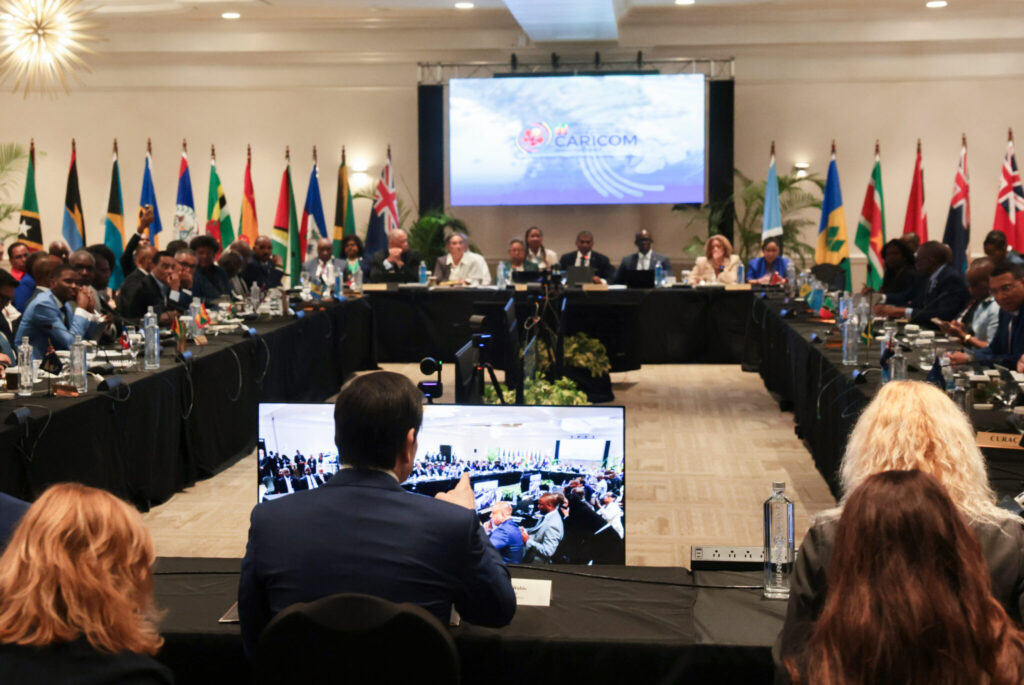
- Marco Rubio addressed 15 CARICOM leaders in St. Kitts and Nevis
- Defended U.S. military operation that removed Nicolás Maduro
- Claimed Venezuela is “better off” following U.S. intervention
- Caribbean leaders raised concerns over legality and regional stability
- Trump administration frames move under expanded Monroe Doctrine approach
- Cuba shooting incident adds tension to regional discussions
- U.S. calls for democratic elections and economic partnerships in Venezuela
Deep Look: Rubio Defends Maduro Ouster at Caribbean Summit Amid Regional Concerns
BASSETERRE, St. Kitts and Nevis — U.S. Secretary of State Marco Rubio strongly defended the Trump administration’s military operation that removed Venezuelan President Nicolás Maduro from power, addressing skepticism and concern from Caribbean leaders gathered for a regional summit.
Speaking behind closed doors to leaders of the 15-member Caribbean Community (CARICOM) bloc, Rubio asserted that Venezuela and the broader Western Hemisphere are safer following Maduro’s capture last month. According to a transcript later released by the U.S. State Department, Rubio dismissed objections regarding the legality of the operation and maintained that tangible improvements have already taken place inside Venezuela.
“Irrespective of how some of you may have individually felt about our operations and our policy toward Venezuela,” Rubio told the group, “Venezuela is better off today than it was eight weeks ago.”
The operation resulted in Maduro being transported to New York to face drug trafficking charges. Since then, the United States has taken effective control of Venezuela’s oil sector while interim authorities have assumed governance responsibilities. Rubio claimed that progress under the transitional arrangement has been “substantial,” citing reforms and developments that he said would have been unimaginable just weeks earlier.
Regional Unease Over U.S. Strategy
Despite Rubio’s assurances, many Caribbean leaders have voiced unease over the precedent set by the operation. The summit unfolded against the backdrop of President Donald Trump’s renewed emphasis on hemispheric dominance, described by some administration officials as a modernized version of the Monroe Doctrine.
The administration’s strategic pivot prioritizes influence in the Western Hemisphere, even as Washington simultaneously increases military pressure on Iran in the Middle East. Prior to the January 3 raid that led to Maduro’s removal, the U.S. had assembled its largest military presence in the Caribbean Sea in generations.
In his State of the Union address, President Trump described the operation as “an absolutely colossal victory for the security of the United States.” The administration has since framed the action as part of a broader anti-drug trafficking and anti-corruption effort across the region.
However, Caribbean leaders have raised concerns not only about Venezuela but also about other aggressive U.S. tactics. Trump has authorized intensified maritime strikes targeting suspected drug-smuggling vessels, operations that have reportedly resulted in more than 150 deaths. In addition, regional governments have expressed frustration with U.S. demands to accept deportees from third countries and to scale back diplomatic ties with China.
Cuba Incident Adds to Tensions
Complicating regional dynamics further, Cuba announced that its forces killed four individuals aboard a Florida-registered speedboat after occupants allegedly opened fire on Cuban officers in territorial waters. Rubio called the incident highly unusual, noting that armed confrontations at sea involving Cuba have been rare in recent history.
The United States is conducting its own review of the episode. Rubio stated that Washington would be prepared to respond if necessary, though he stopped short of detailing potential actions.
Cuba’s humanitarian and economic challenges also featured prominently in summit discussions. Jamaican Prime Minister Andrew Holness warned that prolonged instability in Cuba could ripple across the Caribbean, affecting migration patterns, security, and economic stability.
Rubio acknowledged the concerns but placed responsibility on Cuba’s leadership. He argued that U.S. assistance is available, asserting that political barriers within Cuba’s ruling system are obstructing relief efforts.
Focus on Democratic Transition in Venezuela
Rubio emphasized that the United States supports fair and democratic elections in Venezuela, which lies just miles from Trinidad and Tobago at its closest maritime point. He said a free and prosperous Venezuela governed by legitimate authorities could become a significant economic and security partner for Caribbean nations.
“We do believe that a prosperous, free Venezuela governed by a legitimate government who has the interests of their people in mind could be an extraordinary partner,” Rubio said.
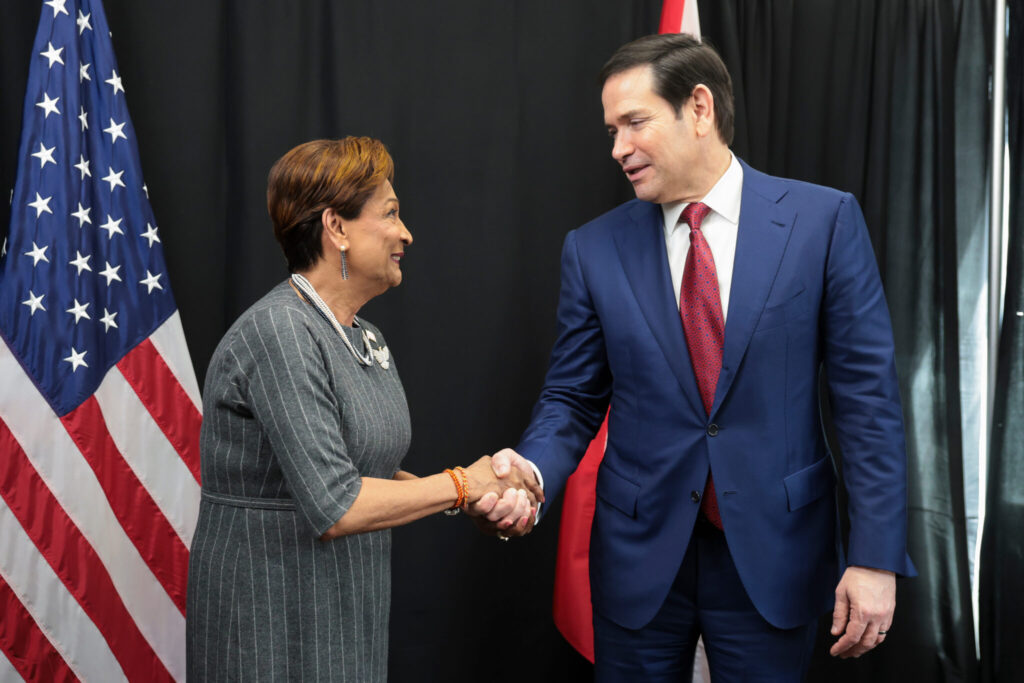
One regional leader publicly supporting the U.S. escalation is Trinidad and Tobago Prime Minister Kamla Persad-Bissessar. According to the State Department, Rubio thanked her for backing the administration’s actions. Persad-Bissessar told reporters that discussions with Rubio covered Haiti, Cuba, Venezuela, and regional engagement strategies.
When asked whether U.S. maritime strikes could constitute extrajudicial killings, she responded that her government’s legal advice indicates they do not.
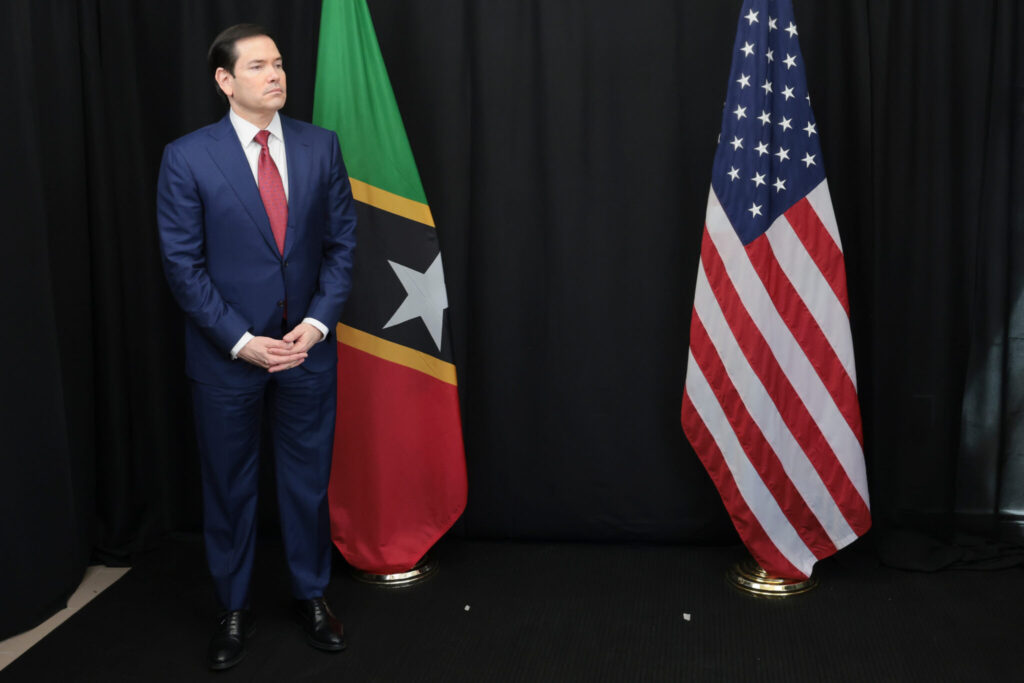
Rubio also held bilateral meetings with officials from St. Kitts and Nevis, Haiti, Jamaica, and Guyana. Terrance Drew, prime minister of St. Kitts and Nevis and current CARICOM chair, described the moment as pivotal, noting that “the global order is shifting.”
Economic and Energy Cooperation
Beyond security, Rubio sought to reframe U.S. engagement as partnership-oriented. He stressed shared economic opportunities, particularly in energy development. Several Caribbean nations are exploring offshore oil and gas reserves, and Rubio pledged that the United States wants to collaborate on responsible development and economic advancement.
He also acknowledged that transnational criminal organizations represent a major threat to regional stability. While some weapons fueling Caribbean crime originate in the United States, Rubio said American authorities are working to curb illicit arms trafficking.
In a related move, the U.S. Treasury Department announced a slight easing of restrictions on Venezuelan oil sales to Cuba. The adjustment follows fuel-saving measures implemented in Cuba after the U.S. intervention in Venezuela disrupted supply channels.
A Shifting Hemispheric Landscape
The summit underscored the complex geopolitical landscape now unfolding across the Caribbean basin. As the Trump administration intensifies its regional footprint, leaders must balance economic ties, security cooperation, and diplomatic autonomy.
While Rubio maintained that the removal of Maduro represents a step toward stability and democracy, skepticism among several Caribbean nations remains evident. Questions surrounding sovereignty, legal precedent, and humanitarian impact continue to shape the regional debate.
Whether the intervention ultimately strengthens U.S.-Caribbean relations or deepens divisions may depend on how Venezuela’s political transition unfolds in the coming months and how Washington manages its broader hemispheric strategy.
You must Register or Login to post a comment.