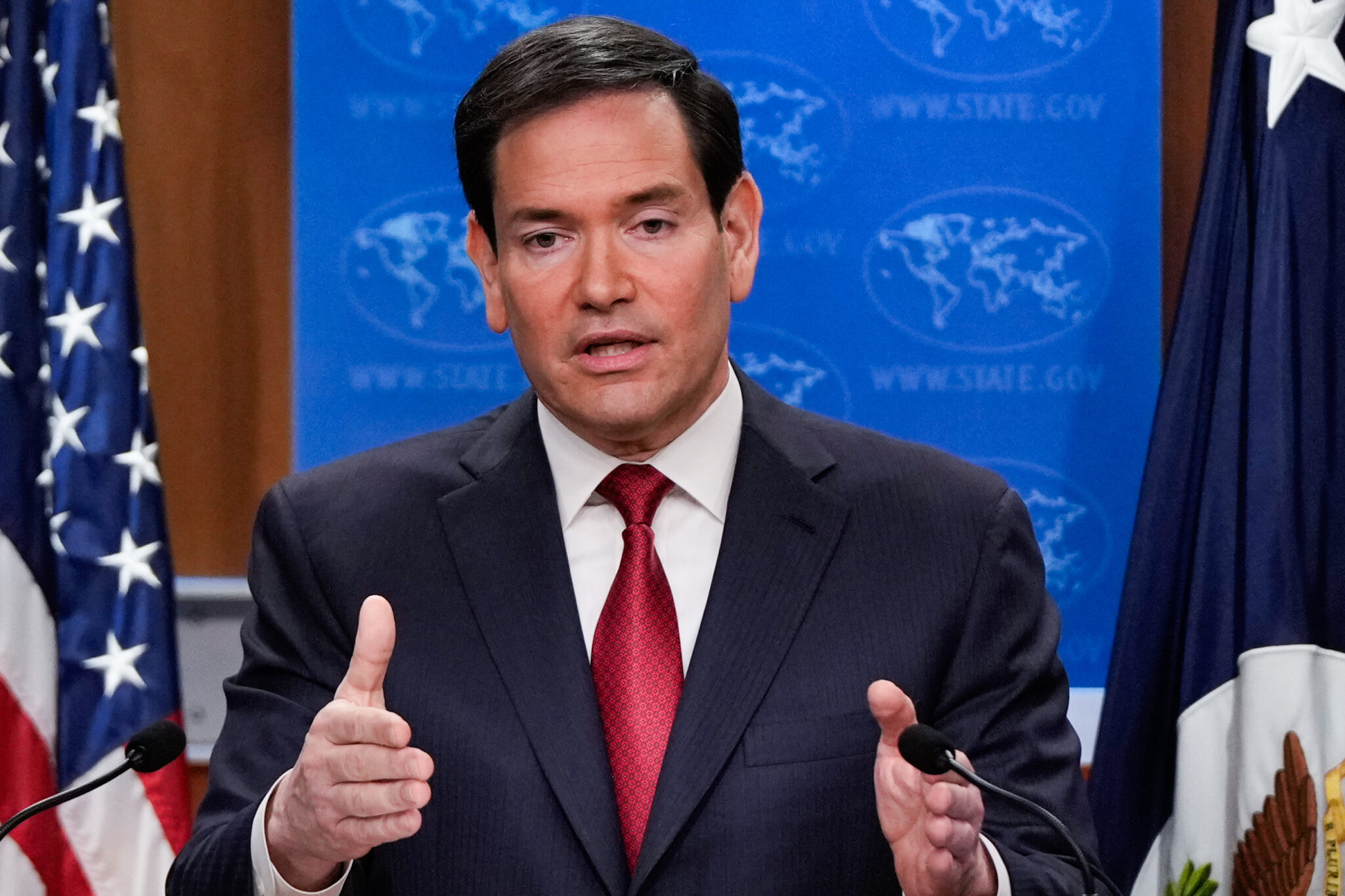
Rubio Expresses Cautious Hope on Ukraine, Gaza Peace/ Newslooks/ WASHINGTON/ J. Mansour/ Morning Edition/ Secretary of State Marco Rubio voiced cautious optimism about U.S.-led peace efforts in Ukraine and Gaza while defending military pressure on Venezuela. Speaking during an extended end-of-year briefing, Rubio acknowledged progress but emphasized that significant challenges remain. His remarks came as international negotiations continue in Florida.
Marco Rubio Foreign Policy Briefing Quick Looks
- Secretary of State Marco Rubio held a two-hour year-end press briefing Friday.
- He discussed ongoing peace negotiations in Gaza and Ukraine with international partners.
- Rubio expressed hope but warned of serious challenges to both peace efforts.
- Talks in Miami include UK, France, Germany, and envoys like Jared Kushner.
- A U.S. “Board of Peace” proposal would govern post-war Gaza.
- Rubio emphasized that any Ukraine peace deal must be mutual, not imposed.
- He defended increased military operations targeting drug routes near Venezuela.
- Trump’s administration denies it crossed legal lines requiring congressional approval.
- Rubio avoided directly endorsing regime change in Venezuela.
- Ceasefires brokered by the U.S. in other regions are under stress.
- Rubio continues reshaping foreign policy under the “America First” agenda.
- USAID has been dismantled and aid restructured under his leadership.
- Rubio took questions from nearly all reporters, including in Spanish.
- Trump remains focused on being remembered as a global “peacemaker.”
Deep Look: Rubio Signals Hope in Gaza, Ukraine Talks But Warns of Tough Road Ahead
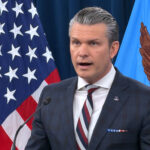
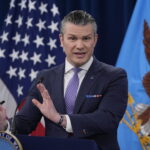
WASHINGTON — Secretary of State Marco Rubio offered a measured but optimistic assessment of the Trump administration’s ongoing diplomatic efforts in Ukraine and Gaza during a rare, extended press conference at the State Department Friday. While hopeful that progress is being made, Rubio underscored the complex and fragile nature of the peace efforts.
Rubio’s remarks came amid two major international negotiation efforts taking place in Miami. He confirmed that senior officials from Britain, France, and Germany are holding talks with Ukrainian negotiator Rustem Umerov, alongside Trump envoys Jared Kushner and Steve Witkoff, to refine a possible peace deal between Ukraine and Russia. Separate meetings are also taking place with Egyptian, Turkish, and Qatari officials to advance President Trump’s proposed plan to end the Israel-Hamas war in Gaza.
On the Ukraine front, Rubio was blunt: “We’re not going to have a deal unless both sides are willing to give something and get something.” He explained that the U.S. is not seeking to impose terms on Ukraine or Russia, but rather “nudge both sides to a common place.”
Trump’s approach to Ukraine has been inconsistent—oscillating between strong support for Kyiv and pressure on Ukrainian President Volodymyr Zelenskyy to accept territorial concessions to Russia. Kyiv has firmly rejected those terms, even in exchange for U.S.-backed security guarantees.
Regarding Gaza, Rubio said Trump’s administration is working to implement a plan introduced in October to establish a “Board of Peace” that would oversee governance and demilitarization of the Gaza Strip. The plan also includes a technocratic Palestinian government and an international stabilization force. However, Rubio acknowledged key logistical and financial questions remain, including who would fund and staff such a force.
“I think we owe them a few more answers before we get there,” Rubio said, emphasizing that clarity around engagement rules and funding is essential before deployment.
Rubio is expected to join negotiations this weekend in Florida, including a scheduled meeting with Russian official Kirill Dmitriev. He made clear, however, that progress remains uncertain, reiterating, “You may not have a deal. It’s unfortunate.”
Beyond Ukraine and Gaza, Rubio also addressed the administration’s increased military activity near Venezuela. Since September, U.S. forces have targeted suspected drug-trafficking vessels in the Caribbean and Eastern Pacific, prompting accusations from Venezuelan President Nicolás Maduro that Washington seeks regime change.
Rubio defended the operations, arguing that they focus on combating narco-terrorism and have not violated the War Powers Act. “We have very strong legal opinions,” he said, adding that nothing done so far required congressional approval.
In an NBC interview the same day, President Trump did not rule out military escalation against Venezuela. Rubio deflected direct questions about regime change, instead criticizing the Maduro government’s alliances with Iran, Hezbollah, and transnational criminal networks.
“We have a regime that’s illegitimate, that cooperates with narco-trafficking and terrorist organizations,” Rubio said.
He also addressed rising tensions in other parts of the world where Trump-brokered ceasefires are under strain. Renewed conflict between Thailand and Cambodia, as well as tensions between Rwanda and Congo, threaten to unravel agreements made earlier in the administration. Rubio noted that while the deals are now being violated, they created a framework that U.S. diplomats can use to press for renewed peace.
“The work now is to bring them back to the table,” he said, referencing recent Thai airstrikes as an urgent concern.
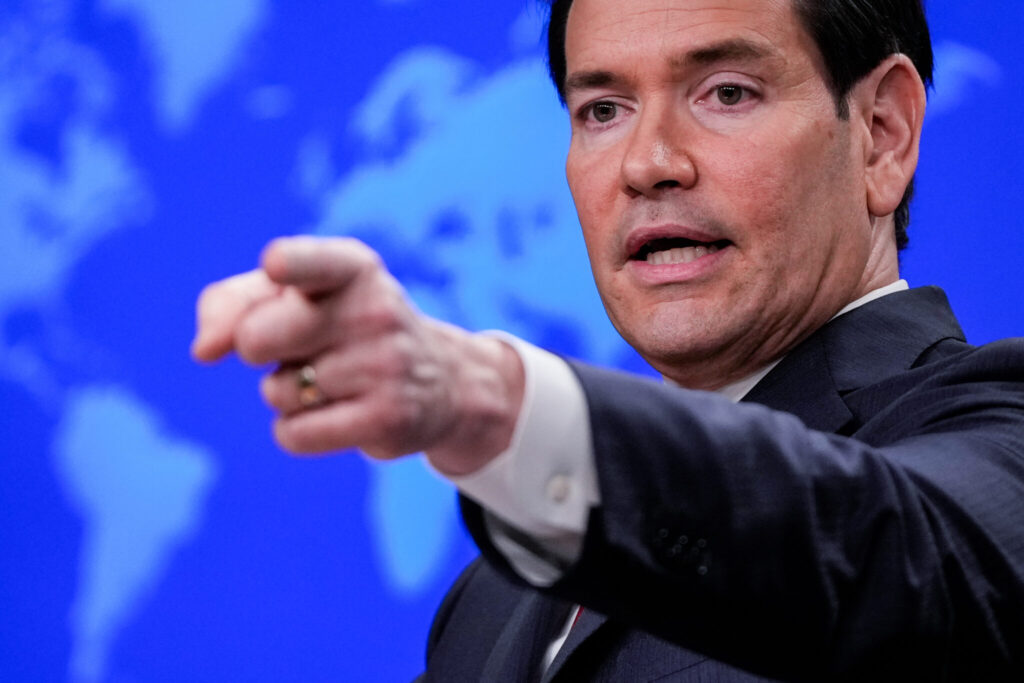
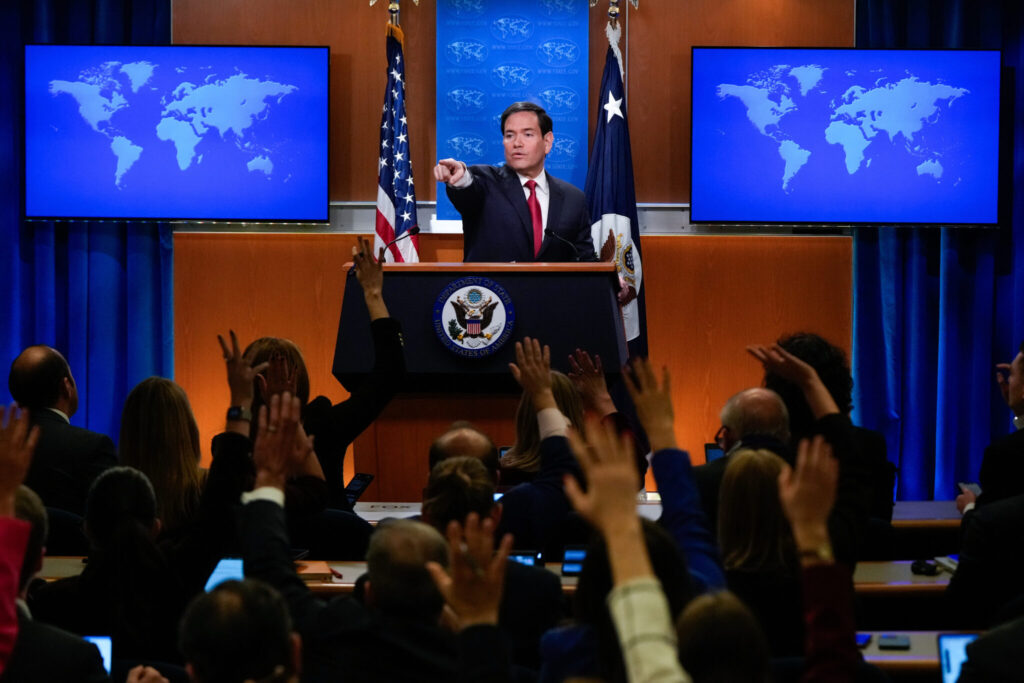
In one of the most open briefings in recent State Department history, Rubio fielded questions from nearly every journalist present in the 59-seat room, including a handful in Spanish. The session stood in stark contrast to past years, when press briefings were infrequent or limited in scope.
Rubio also used the opportunity to defend Trump’s foreign aid reforms. Under the “America First” agenda, the administration has dismantled the U.S. Agency for International Development (USAID) and restructured foreign aid, reducing traditional spending but launching targeted health and disaster relief programs in countries like the Philippines and Caribbean nations.
Critics have charged that the rollback of USAID has harmed global health and humanitarian efforts, but Rubio dismissed those concerns. “We have a limited amount of money that can be dedicated to foreign aid and humanitarian assistance,” he said. “And that has to be applied in a way that furthers our national interest.”
As 2026 approaches, the Trump administration is seeking to close out the year with progress on global hotspots, despite mounting geopolitical risks. Whether peace deals in Ukraine, Gaza, or elsewhere are finalized remains uncertain, but Rubio’s briefing reflects both the ambition and the complexity of Trump’s second-term foreign policy agenda.