

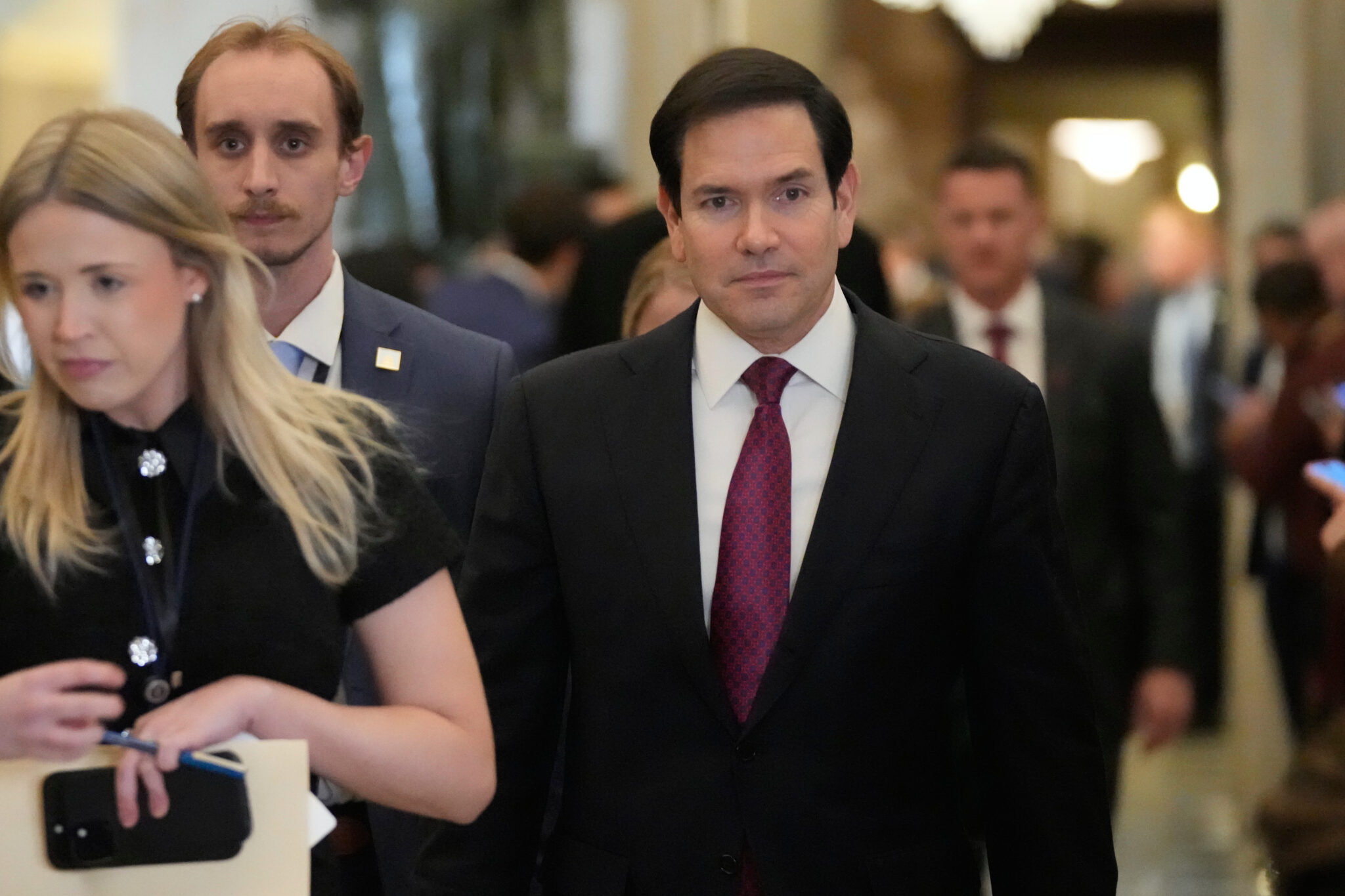
Rubio Meets Caribbean Leaders Amid Policy Tensions/ Newslooks/ WASHINGTON/ J. Mansour/ Morning Edition/ Secretary of State Marco Rubio is meeting Caribbean leaders in St. Kitts amid concerns over Trump administration policies. Regional officials are uneasy about U.S. actions on Venezuela, Cuba, deportations and security. Talks are expected to focus on migration, narcotics trafficking, trade and regional stability.

Quick Look
- Who: Secretary of State Marco Rubio
- Where: CARICOM summit in St. Kitts and Nevis
- Why: Address regional concerns over Trump administration policies
- Key Issues: Venezuela, Cuba, deportations, narcotics operations, China’s influence
- Regional Focus: Migration, climate change, trade and economic stability
- Backdrop: Maduro facing U.S. charges; shifting global order
Rubio Heads to St. Kitts for CARICOM Talks Amid Regional Unease
BASSETERRE, St. Kitts and Nevis — U.S. Secretary of State Marco Rubio arrived in the Caribbean on Wednesday for high-level talks with regional leaders who are seeking clarity — and reassurance — amid shifting U.S. policies under President Donald Trump.
Rubio is attending a summit of the Caribbean Community (CARICOM), the 15-nation bloc grappling with mounting geopolitical and economic pressures.
His visit comes just a day after Trump used his State of the Union address to tout what he described as a “colossal victory” following the U.S. military operation that removed Venezuelan leader Nicolás Maduro, who now faces drug trafficking charges in the United States. Maduro has pleaded not guilty and continues to assert he is Venezuela’s legitimate president.
Regional Concerns Over U.S. Actions
Caribbean leaders have voiced unease over several Trump administration initiatives, including:
- Requests that Caribbean nations accept third-country deportees from the U.S.
- Pressure to distance themselves from Cuban medical missions
- Heightened U.S. rhetoric and actions aimed at countering China’s influence
- Aggressive anti-narcotics operations in Caribbean waters
Trump has framed the policy approach as a revival of U.S. dominance in the Western Hemisphere, invoking a modernized Monroe Doctrine. Caribbean leaders, however, have stressed the importance of mutual respect and rules-based cooperation.
Godwin Friday, prime minister of St. Vincent and the Grenadines, said international norms are changing in “troubling ways.”
Terrance Drew, prime minister of St. Kitts and Nevis and current CARICOM chair, warned that the region stands at a “decisive hour” as global supply chains remain fragile, energy markets fluctuate and climate shocks intensify.
Cuba, Migration and Security in Focus
The humanitarian situation in Cuba is expected to be a central topic. Jamaican Prime Minister Andrew Holness cautioned that prolonged instability in Cuba could affect migration flows, security and economic stability across the Caribbean.
Cuba’s U.N. resident coordinator has argued that the U.S. oil embargo is complicating humanitarian recovery efforts following Hurricane Melissa, citing fuel shortages that disrupt logistics across the island.
Meanwhile, U.S. anti-drug operations in Caribbean waters have intensified. Since early September, U.S. forces have carried out dozens of strikes against suspected narcotics trafficking vessels. Critics note that Washington has not publicly presented detailed evidence linking the targeted boats to drug shipments.
Trinidad and Tobago Prime Minister Kamla Persad-Bissessar has praised the U.S. operations, thanking Trump and Rubio for standing firm against narcotrafficking. She acknowledged that regional governments often lack the military capacity to address the threat alone.
Broader Agenda: Trade, Climate and Stability
Beyond security concerns, Rubio is expected to discuss trade, economic growth and regional stability. According to the State Department, he plans bilateral meetings with host Prime Minister Drew and other leaders to reinforce long-standing U.S. partnerships on anti-gun and anti-narcotics initiatives.
CARICOM leaders are also debating climate financing, reparations, regional security coordination and strengthening the bloc’s single market economy.
Bahamian Foreign Minister Fred Mitchell said ahead of the summit that Caribbean nations seek “mutual respect and a rules-based order” in their relationship with Washington.
Rubio’s visit unfolds as the U.S. government is also increasingly focused on tensions in the Middle East, particularly Iran — a reminder of the broader geopolitical landscape shaping Washington’s approach to the Caribbean.



You must Register or Login to post a comment.