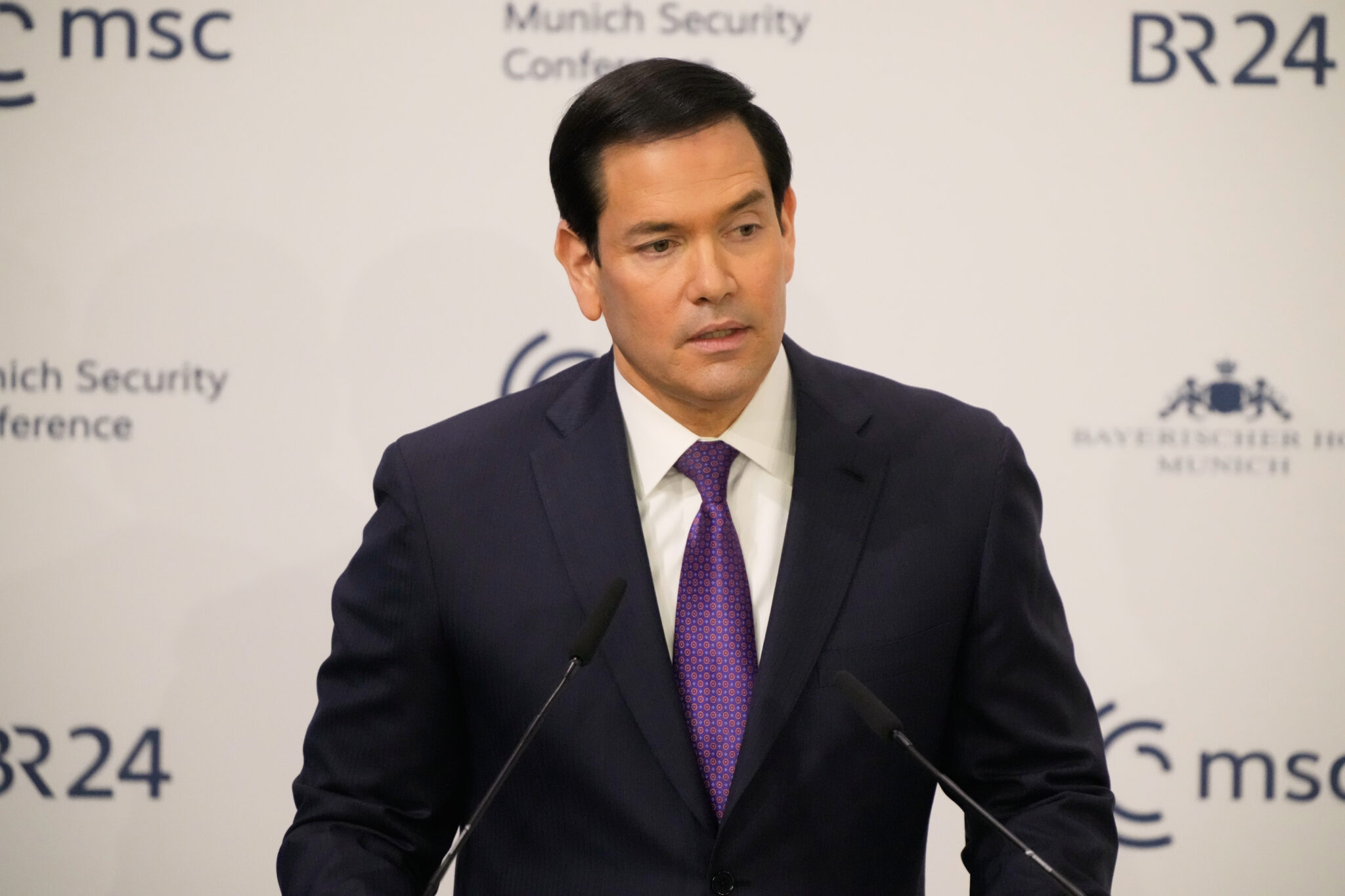
Rubio Reassures Europe While Defending Trump Agenda/ Newslooks/ WASHINGTON/ J. Mansour/ Morning Edition/ Secretary of State Marco Rubio sought to reassure European allies at the Munich Security Conference. While striking a calmer tone, Rubio reaffirmed President Trump’s firm stance on migration, climate and trans-Atlantic reform. European leaders welcomed the tone but signaled continued caution, particularly over Greenland.
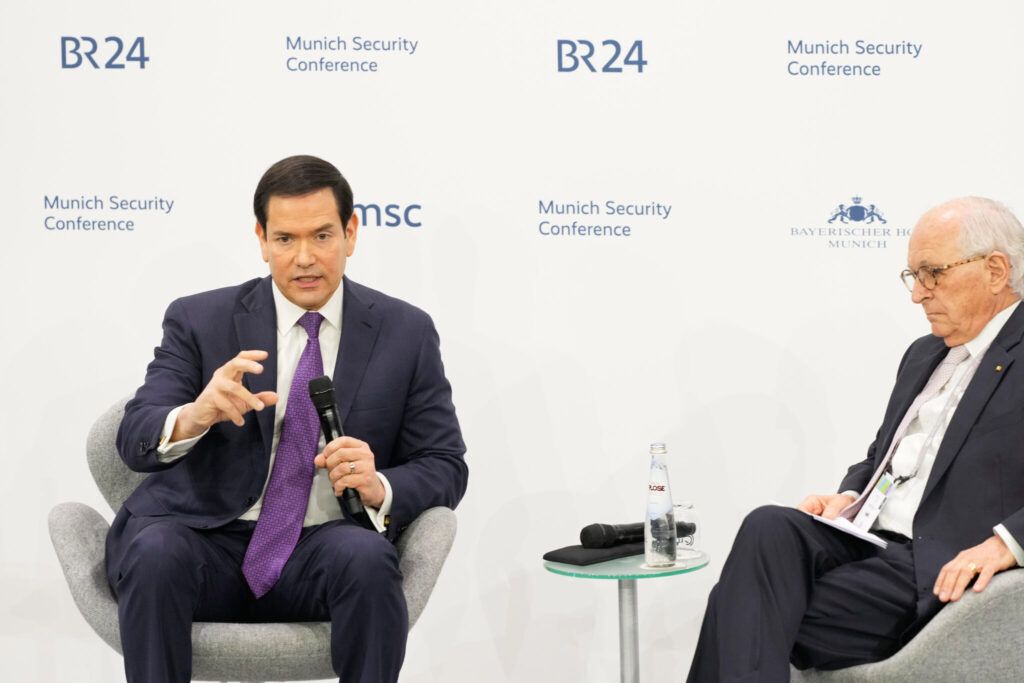
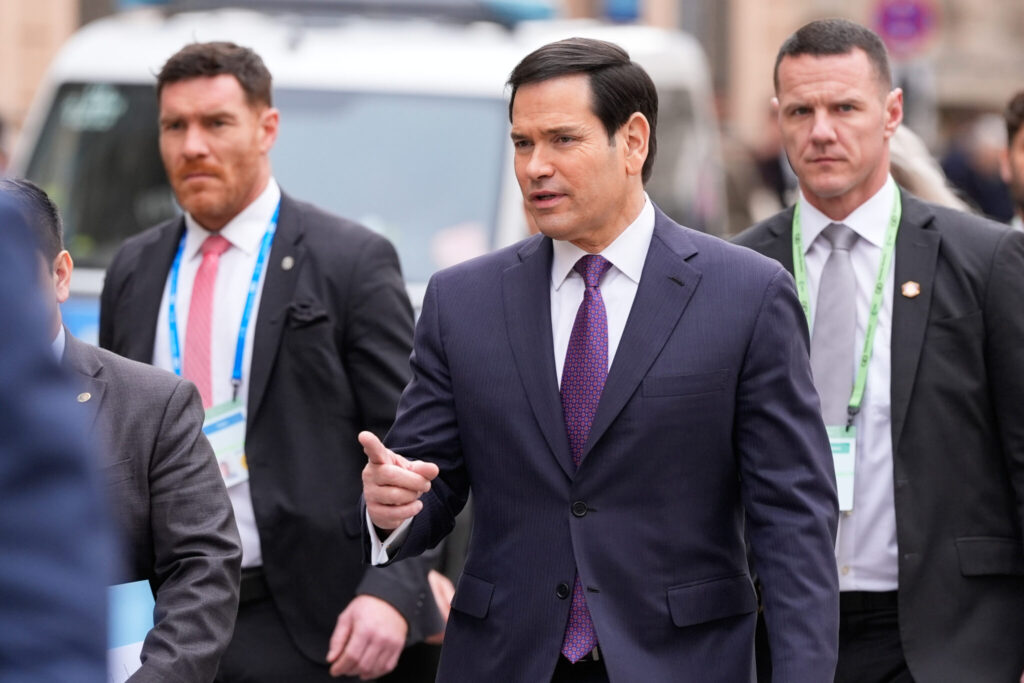
Rubio Munich Speech on Trans-Atlantic Relations: Quick Looks
- Rubio addresses Munich Security Conference.
- Emphasizes enduring U.S.-Europe ties.
- Defends Trump’s tougher stance on migration and climate.
- European leaders call for greater independence.
- Greenland tensions remain unresolved.
- Rubio signals continuity in U.S. policy.
Deep Look: Rubio Reassures Europe While Defending Trump Agenda
U.S. Secretary of State Marco Rubio delivered a measured but resolute message to European allies at the Munich Security Conference, seeking to ease tensions after a year of strained rhetoric from the Trump administration while reaffirming Washington’s intent to reshape the trans-Atlantic partnership.
Speaking to an audience that includes heads of state, defense ministers and security officials, Rubio underscored the deep historical bonds between the United States and Europe. While acknowledging friction in recent months, he insisted that the alliance remains foundational.
“Our home may be in the Western Hemisphere, but we will always be a child of Europe,” Rubio said, referencing centuries of shared history and sacrifice. He pointed to joint military efforts “from Kapyong to Kandahar” as evidence of enduring cooperation.
A Softer Tone, Same Policy Direction
Rubio’s speech came one year after Vice President JD Vance sharply criticized European governments at the same conference, a moment that many attendees viewed as a turning point in U.S.-European relations.
This time, U.S. officials said the message was largely consistent with President Donald Trump’s policy priorities but delivered with a tone intended to reassure rather than confront.
Rubio made clear that Washington is not backing away from its core positions. He criticized what he called a “climate cult” and warned of “an unprecedented wave of mass migration” threatening social cohesion in Western societies.
He argued that the optimism following the Cold War fostered a “dangerous delusion” that liberal democracy would spread universally and that economic interdependence alone would replace national sovereignty.
“We made these mistakes together,” Rubio said. “Now together we owe it to our people to face those facts and to move forward to rebuild.”
He emphasized that ending the trans-Atlantic era is neither the administration’s goal nor desire, but said President Trump expects “seriousness and reciprocity” from European partners.
European Leaders: Reassured but Vigilant
European officials responded cautiously.
European Commission President Ursula von der Leyen described Rubio’s remarks as “very reassuring,” while noting that other figures within the administration have taken a harsher tone on similar issues.
She reiterated that Europe must strengthen its independence, particularly in defense and digital sovereignty, including its approach to regulating hate speech online.
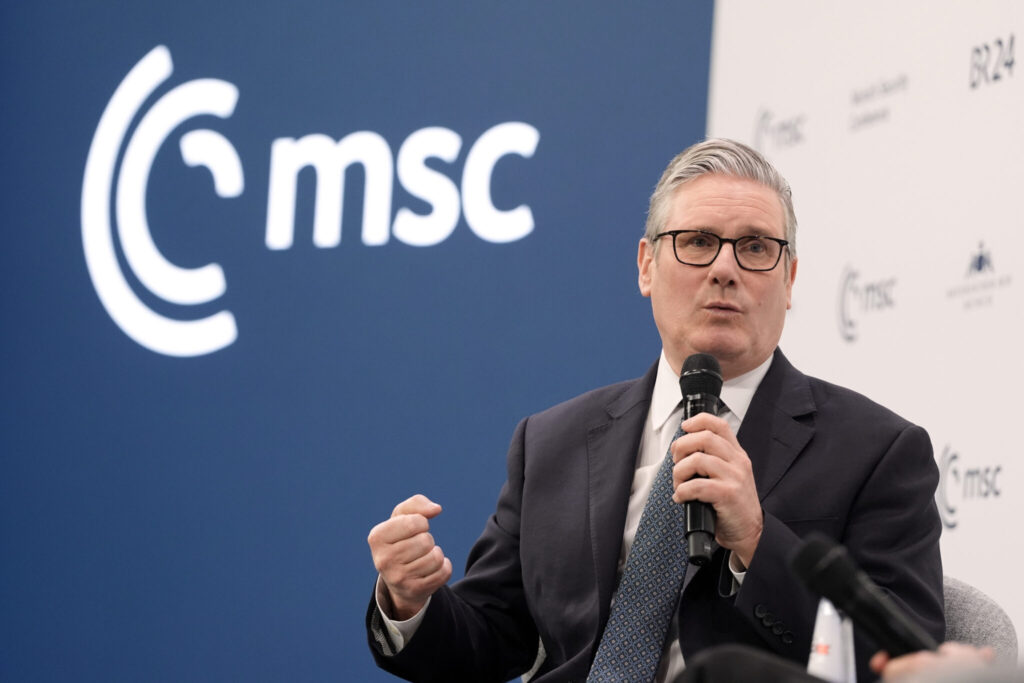
British Prime Minister Keir Starmer echoed the need for renewed European resilience, warning against complacency. He called for deeper cooperation within Europe to reduce overdependence on any single partner and foster greater interdependence.
Estonian Defense Minister Hanno Pevkur described Rubio’s speech as “good” and timely, but stressed that significant work remains to maintain trust.
“It was needed here today,” Pevkur said, “but that doesn’t mean we can rest.”
Greenland Issue Lingers
Though Rubio avoided direct mention of Greenland in his speech, the issue remained in the background.
Last month, President Trump briefly threatened tariffs on European countries as part of a proposal aimed at increasing U.S. control over Greenland, a self-governing territory of Denmark. While tensions have cooled and technical discussions on Arctic security have begun among the U.S., Denmark and Greenland, the matter remains sensitive.
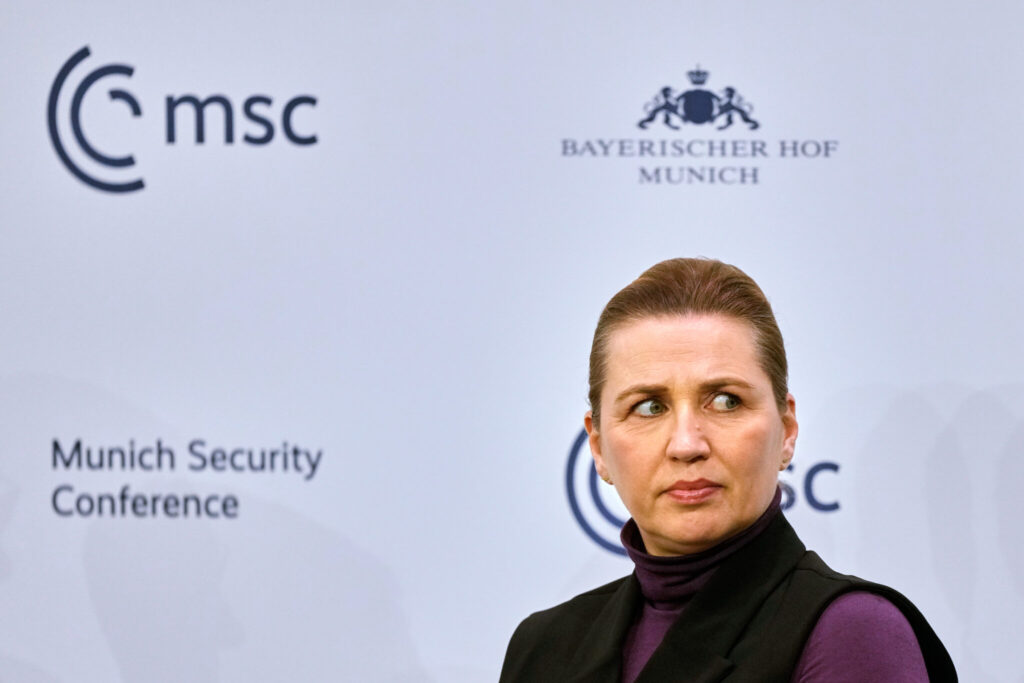
Danish Prime Minister Mette Frederiksen said discussions with Rubio in Munich were constructive but cautioned that the underlying disagreement has not fully dissipated.
Asked whether the dispute was resolved, she responded, “No, unfortunately not,” noting that Trump remains serious about the issue. She rejected any suggestion of placing a monetary value on Greenland and emphasized respect for sovereignty and self-determination.
“The Greenlandic people have been very clear — they don’t want to become Americans,” she said.
A New Phase in Trans-Atlantic Relations
Rubio’s appearance followed remarks by German Chancellor Friedrich Merz, who called for repairing and reviving trans-Atlantic trust while acknowledging that the post-World War II global order has shifted.
Together, the speeches reflected a relationship in transition: the U.S. pressing for structural changes in NATO, trade and migration policy, and Europe responding by strengthening its own autonomy while seeking continued partnership.
For Rubio, the challenge was to strike a balance — reinforcing Trump’s firm agenda while signaling that the United States remains committed to working with its oldest allies.
The tone may have softened, but the policy direction remains clear: Washington wants a recalibrated alliance, built on shared interests but guided by what it views as renewed realism about sovereignty, borders and economic security.