

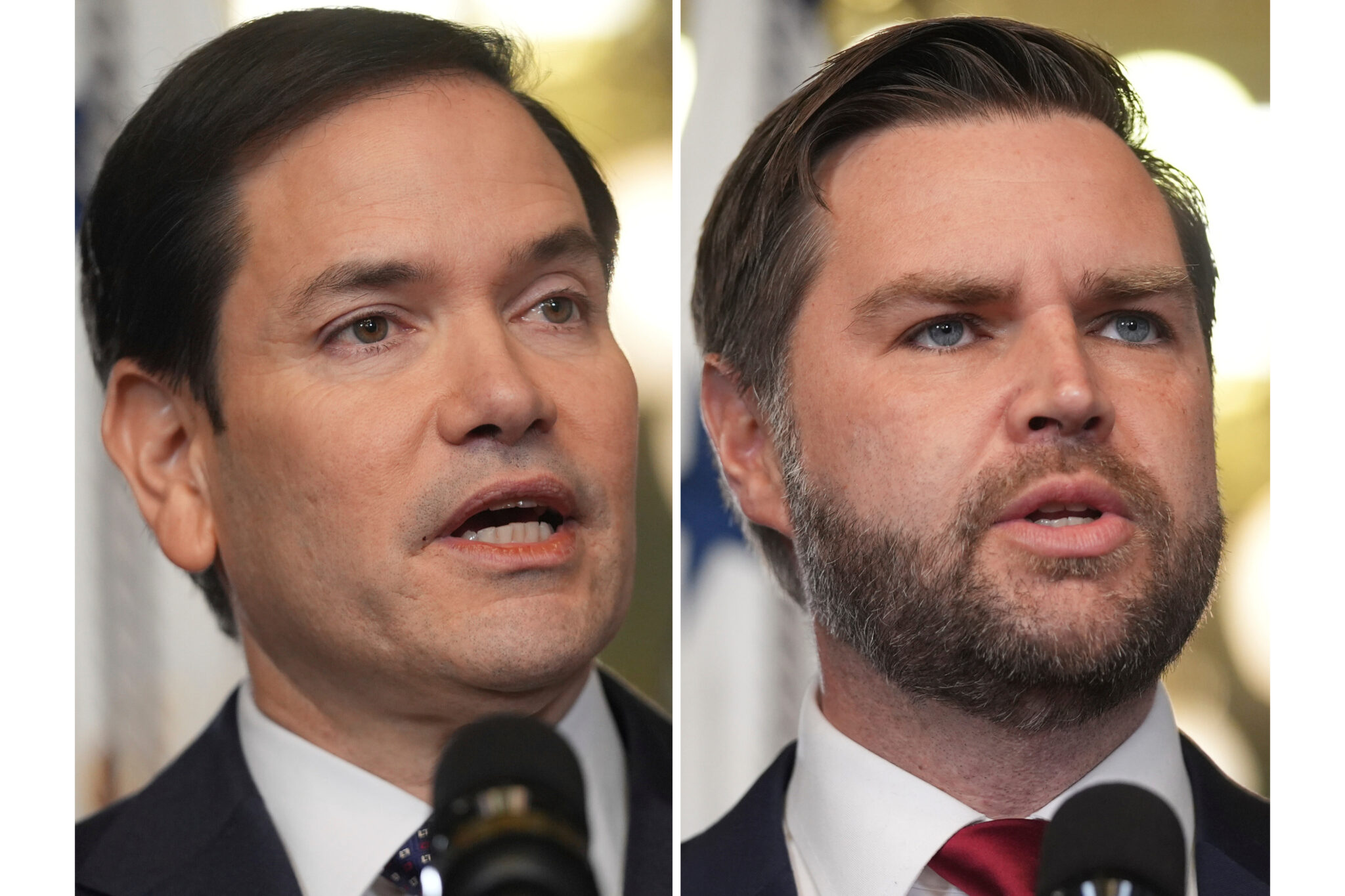
Rubio, Vance Diverge on Iran War Shapes Their Challenges Ahead of 2028 Election/ Newslooks/ WASHINGTON/ J. Mansour/ Morning Edition/ Secretary of State Marco Rubio and Vice President JD Vance are taking different approaches to the Iran war. Their positions highlight growing divisions within the Republican Party ahead of 2028. Both potential presidential contenders face political risks tied to the conflict.
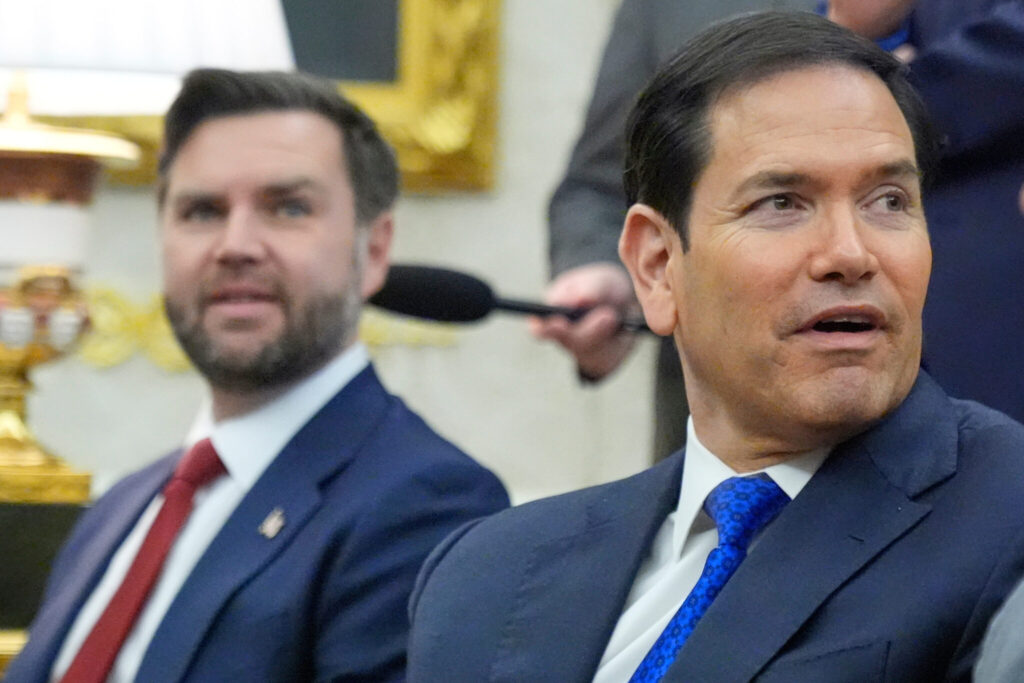
Rubio Vance Iran War 2028 — Quick Looks
- Rubio strongly supports Iran war
- Vance adopts cautious, restrained tone
- Trump says both advisers remain trusted voices
- Differences emerge during Cabinet meeting
- GOP divisions growing over Iran conflict
- Both seen as top 2028 Republican contenders
- Rubio promotes aggressive foreign policy
- Vance historically skeptical of military intervention
- Poll shows mixed Republican views on war
- Conflict may shape 2028 presidential race
Deep Look: Rubio, Vance Differing Postures on Iran War Shape Their Challenges Ahead of 2028 Election
Secretary of State Marco Rubio and Vice President JD Vance are emerging with noticeably different approaches to the Iran war — a divide that underscores growing political challenges as both men are viewed as leading contenders for the Republican presidential nomination in 2028.
The contrast became apparent during a recent Cabinet meeting when President Donald Trump asked top officials to provide updates on the ongoing conflict with Iran. Rubio delivered a passionate defense of the war, describing it as beneficial for both the United States and global security.
Vance, however, struck a more measured tone. While emphasizing the importance of preventing Iran from obtaining nuclear weapons, he avoided endorsing the conflict in strong terms. Instead, he pivoted his remarks toward broader themes and even wished troops a happy Easter, highlighting his more cautious posture.
The exchange highlighted differing philosophies between the two rising Republican figures. Rubio has long supported an assertive U.S. foreign policy and military intervention when necessary. Vance, a Marine Corps veteran of the Iraq War, has historically been more skeptical of overseas military engagements.
Curt Mills, executive director of The American Conservative magazine, described the moment as revealing, noting that Rubio and Vance appeared to have fundamentally different perspectives on the war.
The White House later issued a statement emphasizing unity within the administration.
“President Trump has full confidence in both Vice President Vance and Secretary Rubio, who continue to be trusted voices within the administration,” White House spokesperson Anna Kelly said.
Still, political risks loom for both leaders. Rubio’s strong support for the war could become a liability if the conflict drags on or produces unfavorable outcomes. Vance, meanwhile, risks appearing disloyal to Trump if he distances himself too much from the administration’s strategy.
Trump himself acknowledged that Vance initially appeared less enthusiastic about military action.
“I think he was maybe less enthusiastic about going, but he was quite enthusiastic,” Trump said, suggesting that Vance’s position evolved during internal discussions.
Vance has carefully navigated public comments about the war. During a March visit to North Carolina, he declined to express concerns about the conflict, emphasizing the importance of private discussions within the administration.
Later, when pressed again, Vance accused reporters of attempting to create divisions between him and Trump.
Rubio, by contrast, has consistently defended the military campaign. Soon after the conflict began, he called the operation a “wise decision” and said there was an imminent threat from Iran that justified action.
State Department officials emphasized Rubio’s alignment with Trump’s policy.
“Secretary Rubio is proud to be on the team implementing President Trump’s policies,” said State Department spokesperson Tommy Pigott.
The differing tones reflect broader divisions emerging within the Republican Party. A recent Associated Press-NORC poll found mixed views among Republicans about the Iran war. Roughly half said the U.S. response has been appropriate, while about one-quarter said the military action has gone too far. Only a smaller share believed the United States should escalate further.
Among Republican voters, reactions to Rubio and Vance also vary. Some voters favor Rubio’s more assertive approach, while others appreciate Vance’s cautious stance.
At a recent event in North Carolina, voter Alice Swanson said she supports both men but prefers Vance. She acknowledged his past skepticism of military intervention but said she understands the complexities of the current conflict.
Others expressed stronger support for Rubio. Joe Ropar, a retired military contractor attending a conservative conference, said Rubio’s support for the war reinforced his preference for the secretary of state.
Some Republican activists, however, are looking beyond both men, arguing that the Iran conflict could reshape the party’s leadership landscape.
Political strategists say the long-term impact will depend largely on how the war unfolds. If the conflict ends successfully, both Rubio and Vance could benefit politically. If it becomes prolonged or unpopular, both may face criticism.
Former New Hampshire Gov. Chris Sununu suggested that the Iran conflict may not create a sharp divide between the two candidates because both serve in Trump’s administration.
“They’re tied together with the success or failure of Iran,” Sununu said.
Still, early maneuvering for 2028 has already begun, with potential candidates quietly engaging political leaders in early primary states like New Hampshire.
Republican strategist Jim Merrill predicted the Iran war could become a defining issue in the next presidential primary, similar to how the Iraq war shaped earlier elections.
As the conflict continues, Rubio and Vance must balance loyalty to Trump, their own policy preferences, and their long-term political ambitions — a challenge that could shape the Republican Party’s future leadership.






You must Register or Login to post a comment.