Saudi Arabia Strikes Yemen Port Over UAE Weapons/ Newslooks/ WASHINGTON/ J. Mansour/ Morning Edition/ Saudi Arabia launched an airstrike on Yemen’s Mukalla port, targeting weapons and military vehicles allegedly shipped by the UAE to separatist forces. Riyadh condemned the Emirati move as a threat to peace, escalating tensions between the two Gulf powers. The confrontation signals a deepening rift within the anti-Houthi coalition and risks destabilizing Yemen’s fragile conflict further.

Saudi-UAE Rift in Yemen Quick Looks
- Saudi Arabia bombs Yemen’s Mukalla port over UAE arms shipment
- UAE denies wrongdoing, urges “restraint and wisdom” in response
- Riyadh labels Emirati actions “extremely dangerous”
- Strike followed STC gains and clashes with Saudi-aligned forces
- Anti-Houthi alliance fractures; calls for UAE to withdraw in 24 hours
- Airstrike targets vehicles and weapons from UAE-linked ship
- Separatists push to revive South Yemen state amid growing support
- Escalation adds to Gulf rivalry and regional Red Sea instability
Deep Look
Saudi Arabia Targets Yemen Port Over UAE Arms, Warning Signals Growing Gulf Rift
DUBAI, United Arab Emirates — In a dramatic escalation, Saudi Arabia bombed the Yemeni port city of Mukalla on Tuesday, claiming the United Arab Emirates had secretly delivered a large cache of weapons to separatist forces. The strike marks a turning point in the decade-long war in Yemen, as it pits two longtime Gulf allies against one another in a widening regional power struggle.
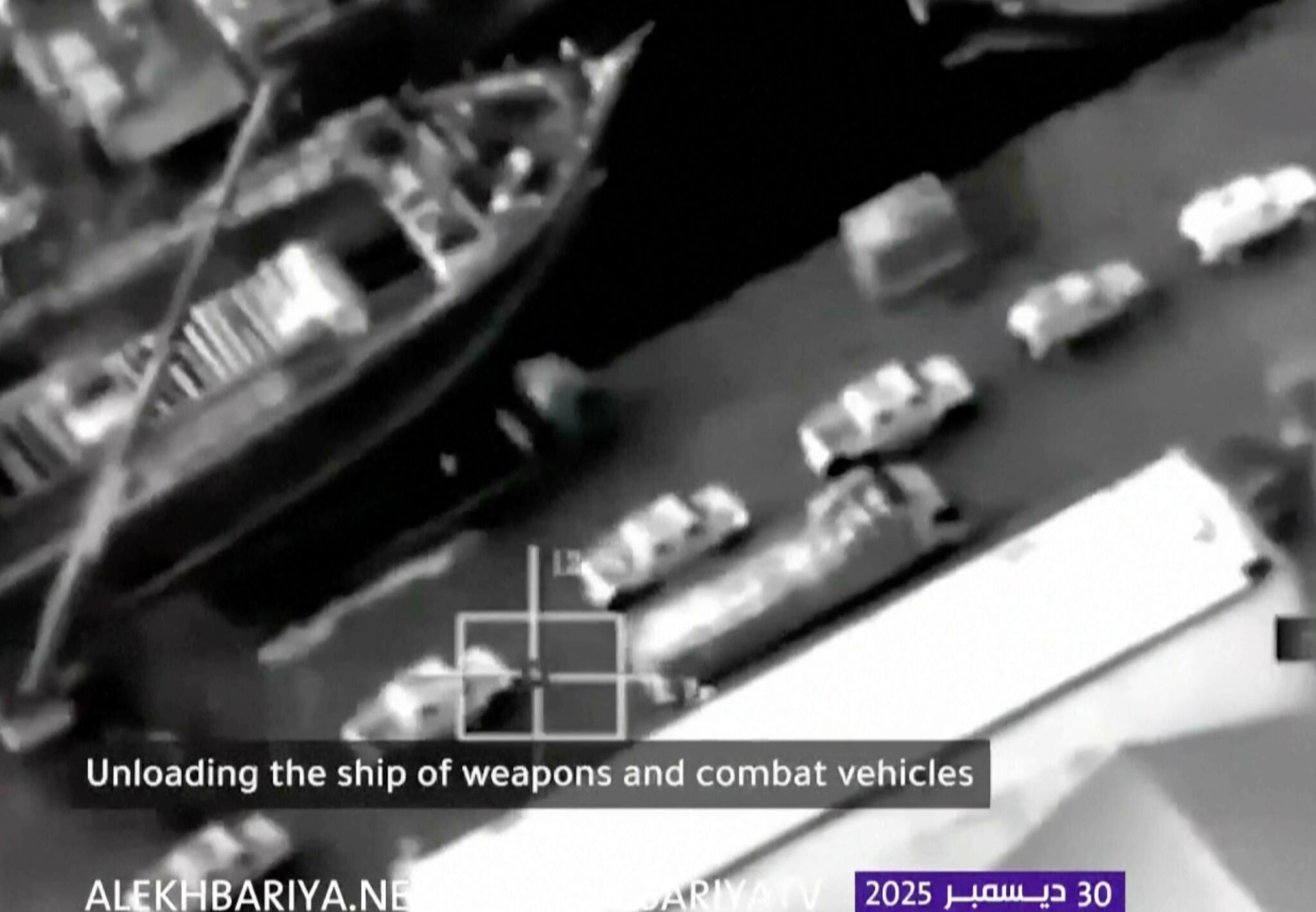
The Saudi airstrike, announced via state media, targeted military vehicles and weapons allegedly offloaded from two ships that had docked in Mukalla. According to the Saudi Press Agency, the cargo came from Fujairah, a port city on the UAE’s eastern coast. Riyadh accused the UAE of aiding the Southern Transitional Council (STC), a separatist force pushing for an independent South Yemen.
“The vessels had disabled their tracking systems and unloaded combat vehicles and weapons in support of the STC,” Saudi authorities said. “This poses a direct threat to regional peace and stability.”
UAE Denies Accusations, Defends Role
The UAE swiftly responded, denying that the shipment was intended for STC fighters and insisting the vehicles were for Emirati forces still operating in Yemen. The Emirati Foreign Ministry also claimed that Saudi Arabia had been informed of the delivery in advance.
“These developments raise serious questions,” the UAE said. “They require coordination and wisdom, especially during a time of heightened regional security threats.”
Despite the denial, the strike revealed a rapidly worsening rift between Riyadh and Abu Dhabi, once united in their campaign against Yemen’s Houthi rebels. Now, the alliance appears fractured, with Saudi Arabia directly blaming its Gulf neighbor for destabilizing actions.
Emergency Measures and Growing Defiance
In response to the incident, anti-Houthi factions not aligned with the STC declared a state of emergency. These groups severed ties with the UAE, demanded that all Emirati forces exit Yemen within 24 hours, and imposed a temporary 72-hour shutdown of border crossings, seaports, and airports in territories under their control—except those cleared by Saudi Arabia.
Despite the ultimatum, the STC doubled down. Its media outlet, AIC News, aired footage of the aftermath but avoided showing any damage to the alleged Emirati armored vehicles.
“This unjustified attack only strengthens the movement for an independent South Arabian state,” the channel stated defiantly.
Tracking the Shipment
Evidence suggests that the strike targeted a roll-on, roll-off ship called the Greenland, flagged under St. Kitts. Tracking data shows the vessel departed Fujairah on December 22 and reached Mukalla by Sunday. Surveillance footage broadcast on Saudi TV appeared to show armored vehicles being unloaded and transported from the port to a staging area nearby.
This development follows Saudi strikes last week aimed at halting STC advances in Hadramout and Mahra governorates. The STC had recently ousted Saudi-aligned National Shield Forces from those areas, raising fears of a broader intra-coalition conflict.
Tensions Amid Larger Regional Shifts
Yemen’s conflict began in 2014 when Iranian-backed Houthi rebels seized the capital, Sanaa. Since then, the war has devastated the country, killing over 150,000 people and triggering one of the world’s worst humanitarian crises.
Recently, the Houthis have attacked dozens of commercial ships in the Red Sea, citing support for Palestinians in the Israel-Hamas conflict. The instability has disrupted vital trade corridors and drawn international concern.
Meanwhile, the STC has revived calls to restore South Yemen’s independence, a country that existed separately from North Yemen until their unification in 1990. Flags of South Yemen have appeared across newly captured towns, and protests supporting secession have intensified.
Analysts see the Saudi-UAE clash as part of a broader competition for influence. Both nations are OPEC members and key players in the Gulf, but tensions have grown. Riyadh is pushing to lure international businesses away from Dubai and has clashed with Abu Dhabi over border issues and conflicting regional ambitions—including divergent backing in Sudan’s civil war.
“This is the most serious confrontation between Saudi Arabia and the UAE in decades,” said Mohammed al-Basha, a Yemeni analyst. “It may reshape the trajectory of the Yemen war and the future of Gulf alliances.”
International Concern and Regional Fallout
The Saudi strike was a clear signal that Riyadh will not tolerate the STC’s aggressive expansion or further Emirati interference. A statement from the Saudi Foreign Ministry directly held the UAE responsible for enabling the separatist advances.
“The steps taken by the sisterly United Arab Emirates are extremely dangerous,” the ministry warned.
Despite this, the STC and its allies remain unbowed. They continue to assert their right to self-determination, even in the face of Saudi airpower. Their growing influence, fueled by arms shipments and political momentum, could lead to a formal call for South Yemen’s independence in the near future.
Adding complexity to the crisis, Israel recently recognized Somaliland as an independent nation—the first country to do so in more than 30 years. The move has drawn condemnation from the Houthis, who threatened attacks on any Israeli presence in Somaliland, further straining an already volatile Red Sea region.
As rival powers harden their positions, Yemen risks becoming a proxy battlefield not just between Iran and the Gulf, but between former allies now vying for regional supremacy.