Senate Passes Trump-Backed Deal, ICE Clash Delayed 2 Weeks/ Newslooks/ WASHINGTON/ J. Mansour/ Morning Edition/ The Senate passed a Trump-endorsed government funding bill to avert a shutdown. The deal excludes Homeland Security funding, which was extended two weeks to allow debate on ICE reforms. The bill now heads to the House for a Monday vote.
Trump-Backed Funding Deal Quick Looks
- Senate passed a bipartisan bill funding most of government.
- Homeland Security funding extended for 2 weeks amid ICE controversy.
- Deal followed deaths of protesters shot by federal agents.
- Trump and Schumer reached rare bipartisan agreement.
- House may delay vote until Monday, risking weekend shutdown.
- Democrats demand ICE reforms, including warrant rules and transparency.
- Republicans split: some support reforms, others resist sanctuary city limits.
- Senator Lindsey Graham delayed vote to secure GOP concessions.

Deep Look: Senate Approves Trump-Backed Spending Deal Amid Homeland Security Tensions
With a potential government shutdown looming, the U.S. Senate voted Friday to approve a sweeping government funding package through September—excluding Homeland Security—after President Donald Trump struck a rare bipartisan agreement with Senate Democrats. The move temporarily averts a fiscal crisis but sets the stage for intense negotiations over federal immigration enforcement practices.
The legislation, which passed the Senate 71-29, keeps most federal departments running but extends Homeland Security’s funding for just two more weeks. The short-term extension offers lawmakers time to debate potential reforms to Immigration and Customs Enforcement (ICE) following two high-profile deaths connected to immigration raids in Minneapolis.
Trump and Schumer Forge Surprise Agreement
President Trump, typically a staunch defender of aggressive immigration enforcement, surprised observers by aligning with Senate Majority Leader Chuck Schumer to strike a compromise. The deal emerged after the recent killings of ICU nurse Alex Pretti and protester Renee Good during immigration enforcement actions.
Democrats insisted they would block broader government funding unless Congress considered measures to increase transparency and accountability in ICE operations—demands that ultimately helped shape the final Senate agreement.
Schumer called the vote “a turning point,” stating, “The American people are demanding that Congress step up and force change.”
Despite his usual opposition to Schumer’s positions, Trump urged bipartisan support for the measure, tweeting that lawmakers should cast a “much-needed Bipartisan ‘YES’ vote” to avert a shutdown.
House Faces Uncertain Path
The bill now heads to the House of Representatives, which won’t reconvene until Monday. Speaker Mike Johnson confirmed he expects a Monday evening vote, but internal divisions could complicate passage.
Johnson’s far-right bloc is hesitant to limit Homeland Security’s funding or agree to new ICE constraints. With GOP support uncertain, Johnson may need Democratic votes to move the bill forward—though Democrats themselves are demanding deeper reforms before fully committing.
ICE Reforms Dominate Political Divide
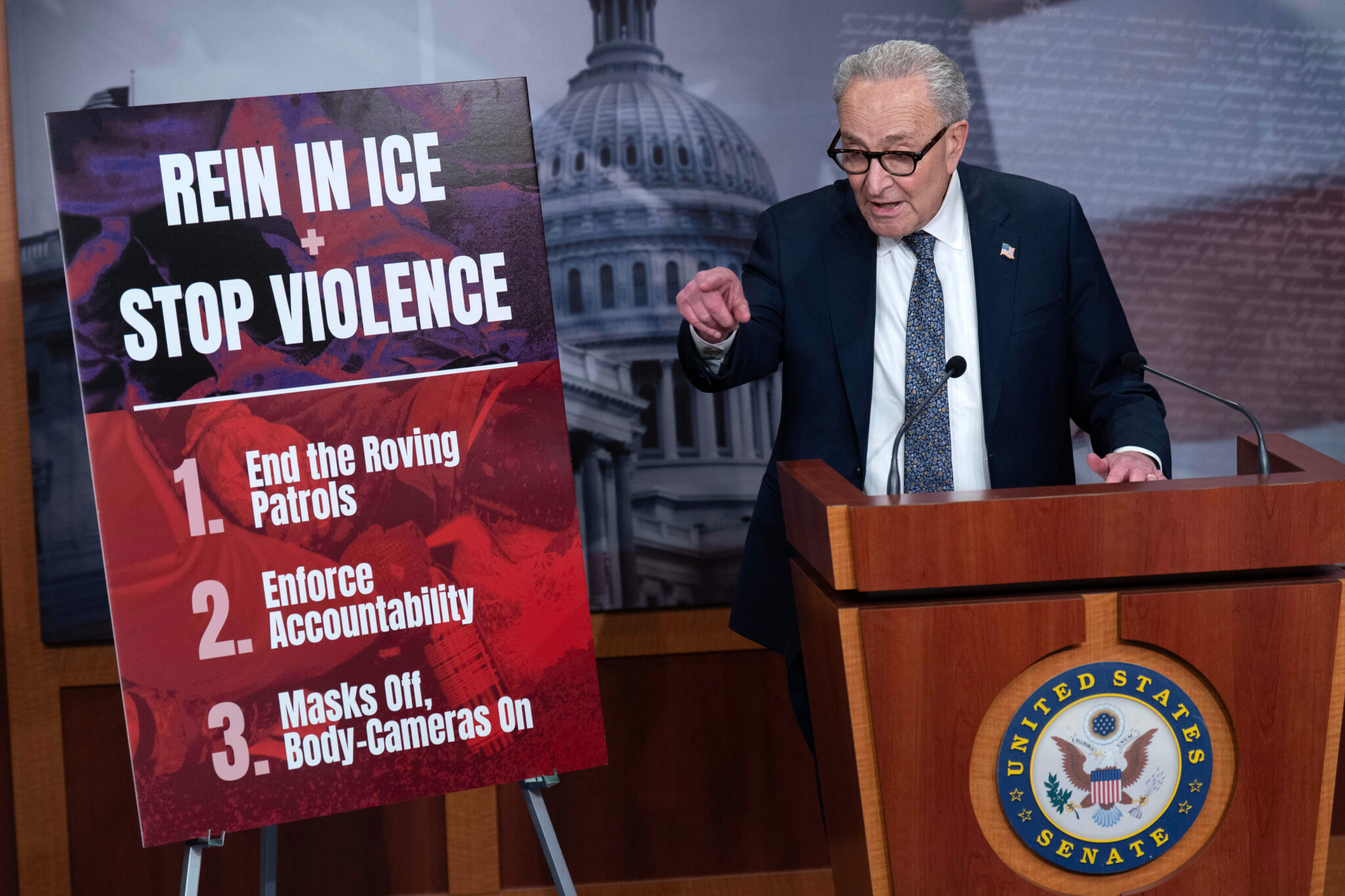
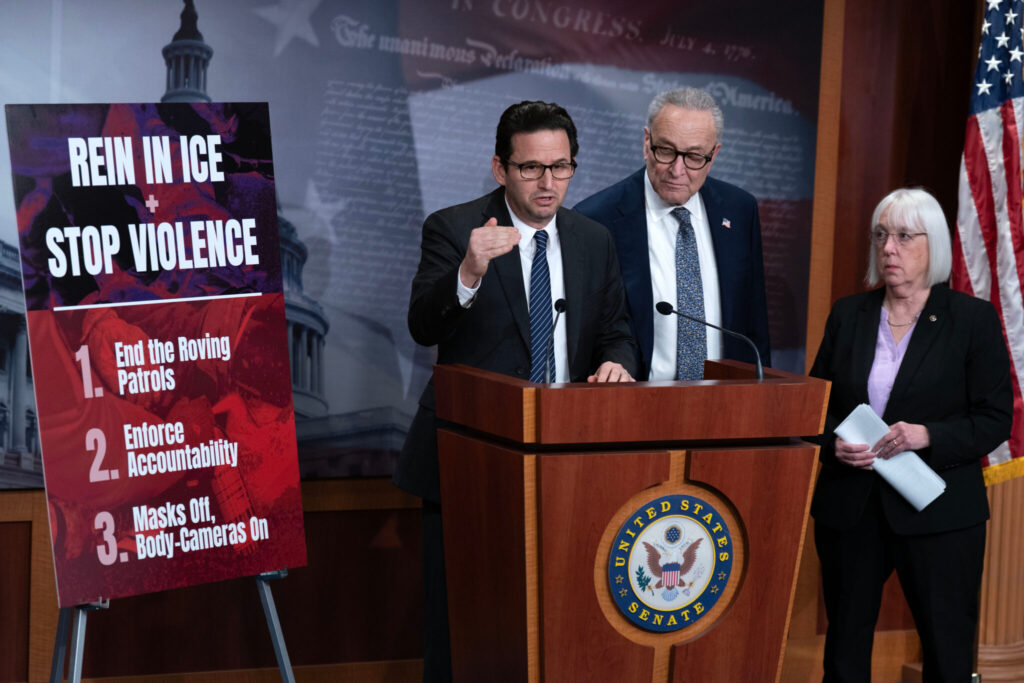
Democratic leaders are adamant that any Homeland Security extension must bring significant reform. Schumer outlined priorities such as banning “roving patrols” in urban areas, enforcing stricter warrant protocols, and mandating visible identification and body cameras for federal agents.
House Democratic Leader Hakeem Jeffries echoed this stance, saying any future bill must be “meaningful and transformative.” Without such measures, he warned, Republicans risk triggering another shutdown in two weeks.
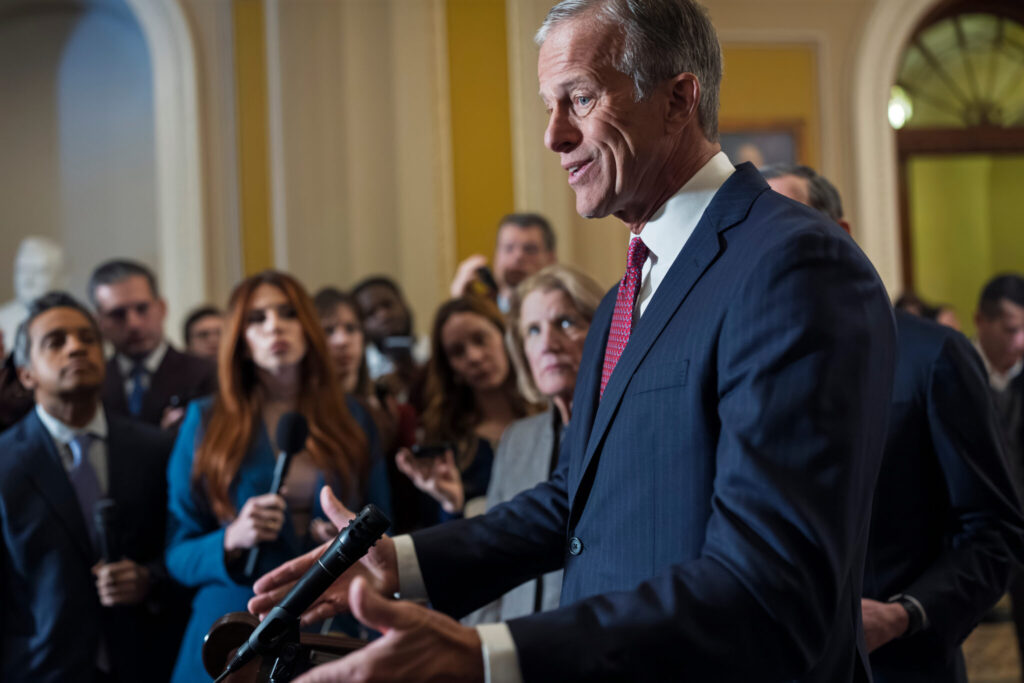
Senator John Thune (R-SD), a key Republican negotiator, acknowledged the challenge ahead. “There are some pretty significant differences of opinion,” he said. “It’s going to be really, really hard to get anything done.”
GOP Pushback and Internal Conflict
Not all Republicans are onboard with Trump’s concessions.
Senator Lindsey Graham (R-SC) voiced fierce opposition to what he called the “slandering” of immigration agents. He argued that any reform must include restrictions on sanctuary cities, warning Republicans not to “kneecap law enforcement.”
Missouri Senator Eric Schmitt went further, declaring, “There’s no way in hell we’re going to let Democrats stop deportations in exchange for DHS funding.”
Yet other Republicans struck a more conciliatory tone. Kentucky Senator Rand Paul said recent discourse around ICE had cooled somewhat.
“I think the rhetoric has been dialed down a little bit, in Minnesota,” Paul observed, suggesting a path to common ground.
Last-Minute Concessions Secure Passage
Graham temporarily held up the final vote, demanding a future vote on a bill targeting sanctuary cities. He also protested the repeal of a law allowing senators to sue over unauthorized surveillance—an issue connected to the Arctic Frost investigation into the Capitol riot on Jan. 6, 2021.
Thune eventually agreed to allow Graham’s sanctuary cities proposal to be debated later and to consider a bill letting private citizens and groups affected by special counsel Jack Smith’s investigation sue the government for damages.
The House must now navigate these overlapping demands and competing timelines before Homeland Security’s funding runs out again in two weeks—threatening another government shutdown unless consensus can be reached.