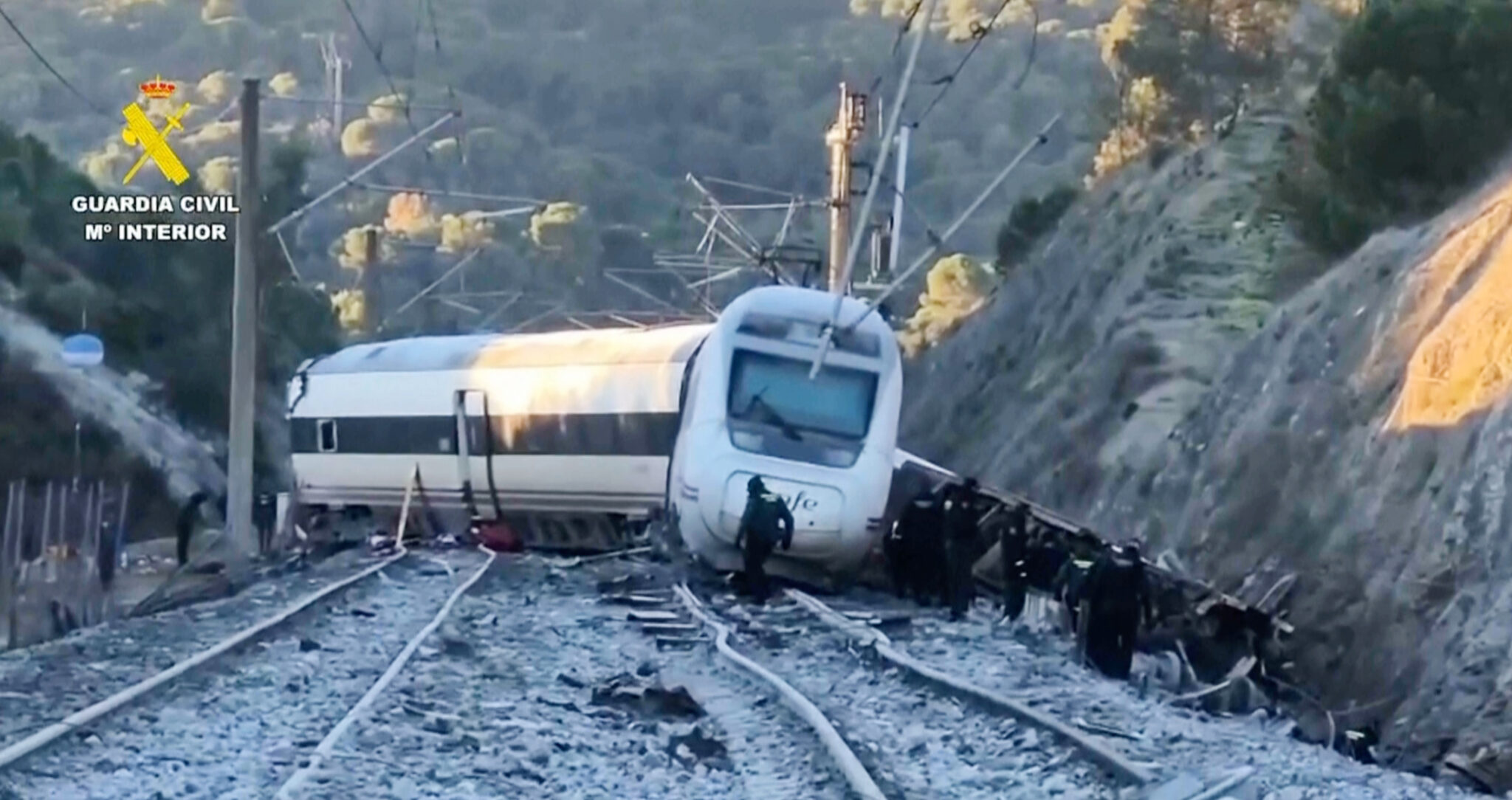
Spain Train Crash Kills 39, Death Toll Rising/ Newslooks/ WASHINGTON/ J. Mansour/ Morning Edition/ A high-speed train crash in southern Spain has killed at least 39 people. Rescuers continue to search for bodies amid mangled wreckage near Adamuz. Authorities fear the death toll could rise as recovery operations continue.
Spain Train Disaster: Quick Looks
- At least 39 confirmed dead in southern Spain rail collision.
- Crash occurred Sunday night near Adamuz in Córdoba province.
- Tail end of one train derailed and hit oncoming train.
- Second train’s lead cars fell down a slope upon impact.
- Victims’ bodies found hundreds of meters from crash site.
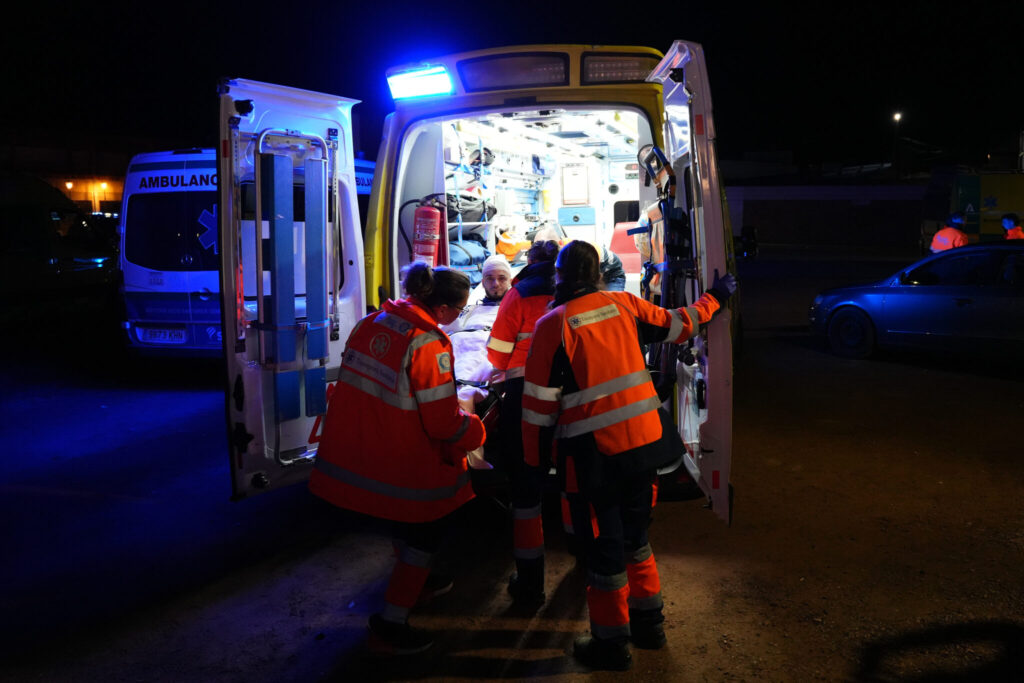
- 159 people injured; 12 remain in critical condition.
- Emergency services continue searching wreckage for additional victims.
- Spanish PM Sánchez and King Felipe express condolences.
- Officials say cause remains unclear; investigation underway.
- Sunday’s crash is Spain’s worst high-speed rail tragedy since 1992.
Deep Look
Spain’s High-Speed Train Collision Kills 39, Rescue Crews Search for More Victims
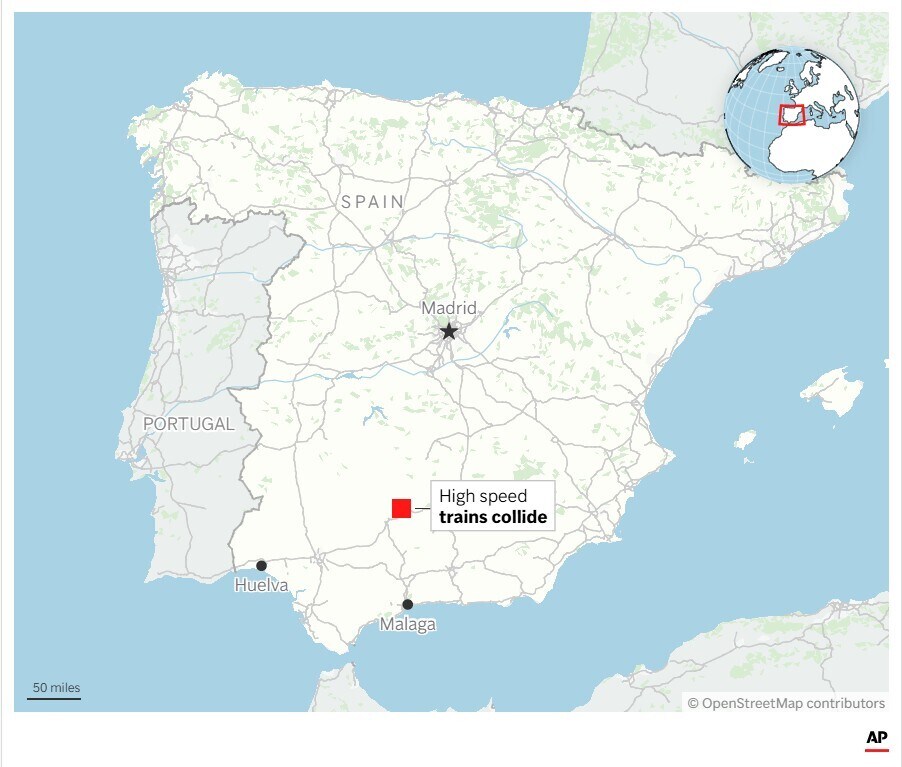
ADAMUZ, Spain — At least 39 people were confirmed dead and 159 injured after a catastrophic high-speed rail collision late Sunday in southern Spain. Authorities warned Monday the death toll could continue to rise as emergency crews search through the mangled wreckage near the small town of Adamuz in the province of Córdoba.
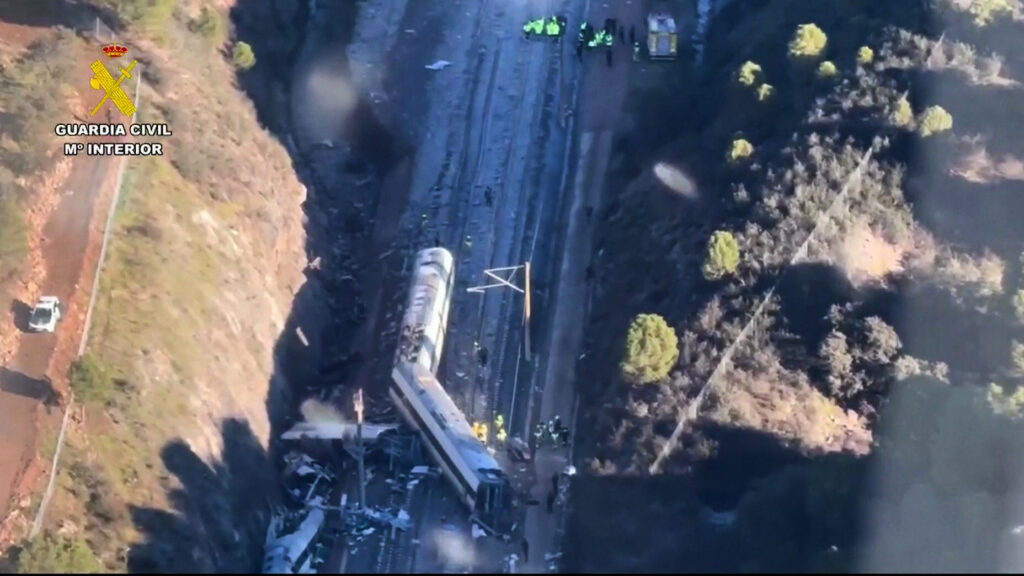
The crash occurred around 7:45 p.m. when the rear cars of a high-speed train traveling from Málaga to Madrid derailed. The dislodged cars veered into the path of another oncoming train en route from Madrid to Huelva, resulting in a violent collision that sent carriages hurtling off the tracks and down a 13-foot slope.
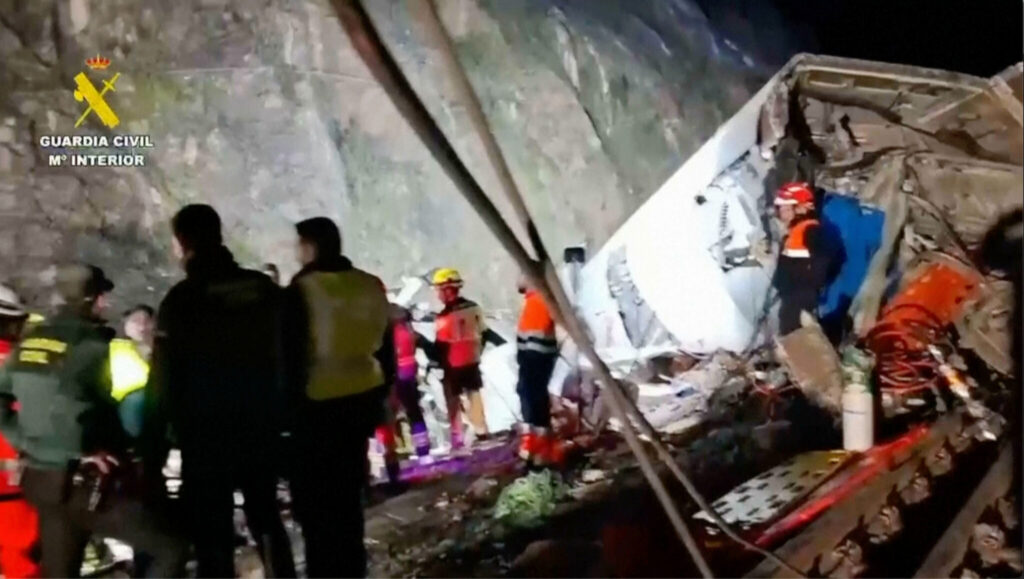
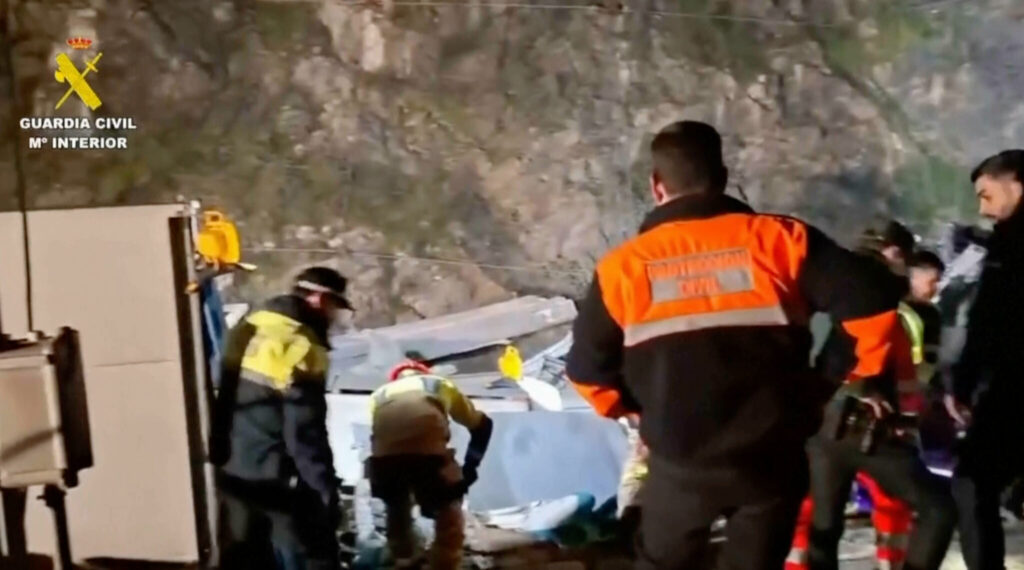
Authorities described the scene as a “mass of twisted metal,” with some bodies discovered hundreds of meters from the collision point. Emergency services worked through the night and into Monday morning to recover victims trapped in the wreckage and to search surrounding terrain for those thrown from the trains during the impact.
Worst Spanish Rail Disaster in Over a Decade
Regional President of Andalusia Juanma Moreno confirmed the death toll and warned that “more bodies could still be found.” Speaking from the crash site, he described the wreck as a “ground zero of violence and destruction,” saying heavy machinery would be needed to lift mangled carriages before additional victims could be recovered.
“It is likely we will find more dead when we begin moving these carriages,” Moreno said. “The impact was so incredibly violent that we have found bodies hundreds of meters away.”
As Spain begins mourning one of its deadliest train accidents in decades, the government ordered flags at half-mast across the country. Spanish King Felipe VI expressed condolences and said he may visit the crash site soon. Prime Minister Pedro Sánchez is also expected to visit Adamuz and has promised a full investigation.
Rescue and Recovery Operations Underway
Cordoba’s firefighter chief Francisco Carmona described rescue operations as slow and painful. “The carriages were twisted. We had to work carefully, cutting through the wreckage,” he told Onda Cero radio. “There were moments when we had to remove the dead to reach the living.”
Survivors described scenes of chaos and confusion. Salvador Jiménez, a journalist traveling on one of the trains, said passengers broke windows with emergency hammers to escape.
“It was harrowing,” he told Spanish broadcaster RTVE. “A train can derail or have an accident, but this magnitude of tragedy was unthinkable.”
Authorities confirmed that all survivors had been rescued by Monday morning, though at least a dozen people — including one child — remain in critical condition.
Identification Efforts and Public Assistance
Identifying victims has proven difficult due to the condition of the bodies and the scale of destruction. Authorities have opened emergency DNA collection centers in Córdoba, Madrid, Málaga, Seville, and Huelva to aid in the process.
“Some of the dead are not easily identifiable and will need DNA testing,” Moreno said. Officials have urged families of missing passengers to come forward and provide samples.
Social media has been flooded with posts from loved ones searching for information about those who may have been on board.
What Caused the Crash? Investigation Begins
Transport Minister Óscar Puente called the crash “a truly strange incident.” He noted the accident took place on a flat, recently renovated stretch of track, and that the train which derailed was less than four years old.
The train that initially derailed belonged to Italian-owned private rail operator Iryo, while the second, which took the brunt of the impact, was part of the Spanish public rail company Renfe. Both trains were traveling well under the 250 km/h (155 mph) speed limit at the time of the accident — Iryo at 205 km/h and Renfe at 210 km/h — according to Renfe president Álvaro Fernández.
Fernández ruled out human error, stating, “The incident must be related either to the moving equipment or the infrastructure.” A full inquiry is expected to take at least a month, officials said.
Iryo confirmed that its train, manufactured in 2022, had passed a full safety check on January 15 — just four days before the crash. The company pledged full cooperation with investigators and offered condolences to victims and their families.
Train services between Madrid and major cities in Andalusia were suspended Monday as recovery and investigation efforts continued.
Spain’s High-Speed Rail Safety Record
Spain boasts Europe’s most extensive high-speed rail network, with over 3,100 kilometers (1,900 miles) of track dedicated to trains traveling at more than 250 km/h. The system is known for its safety and affordability, carrying more than 25 million passengers in 2024 alone.
Sunday’s crash is the first fatal accident involving Spain’s high-speed trains since the network launched in 1992. The country’s worst rail disaster in recent memory occurred in 2013, when 80 people died in a derailment caused by speeding on a curve near Santiago de Compostela — a stretch of track that was not part of the high-speed network.
While rail travel in Spain remains statistically safe, the Adamuz crash is expected to prompt renewed scrutiny over safety inspections, maintenance, and track monitoring.