

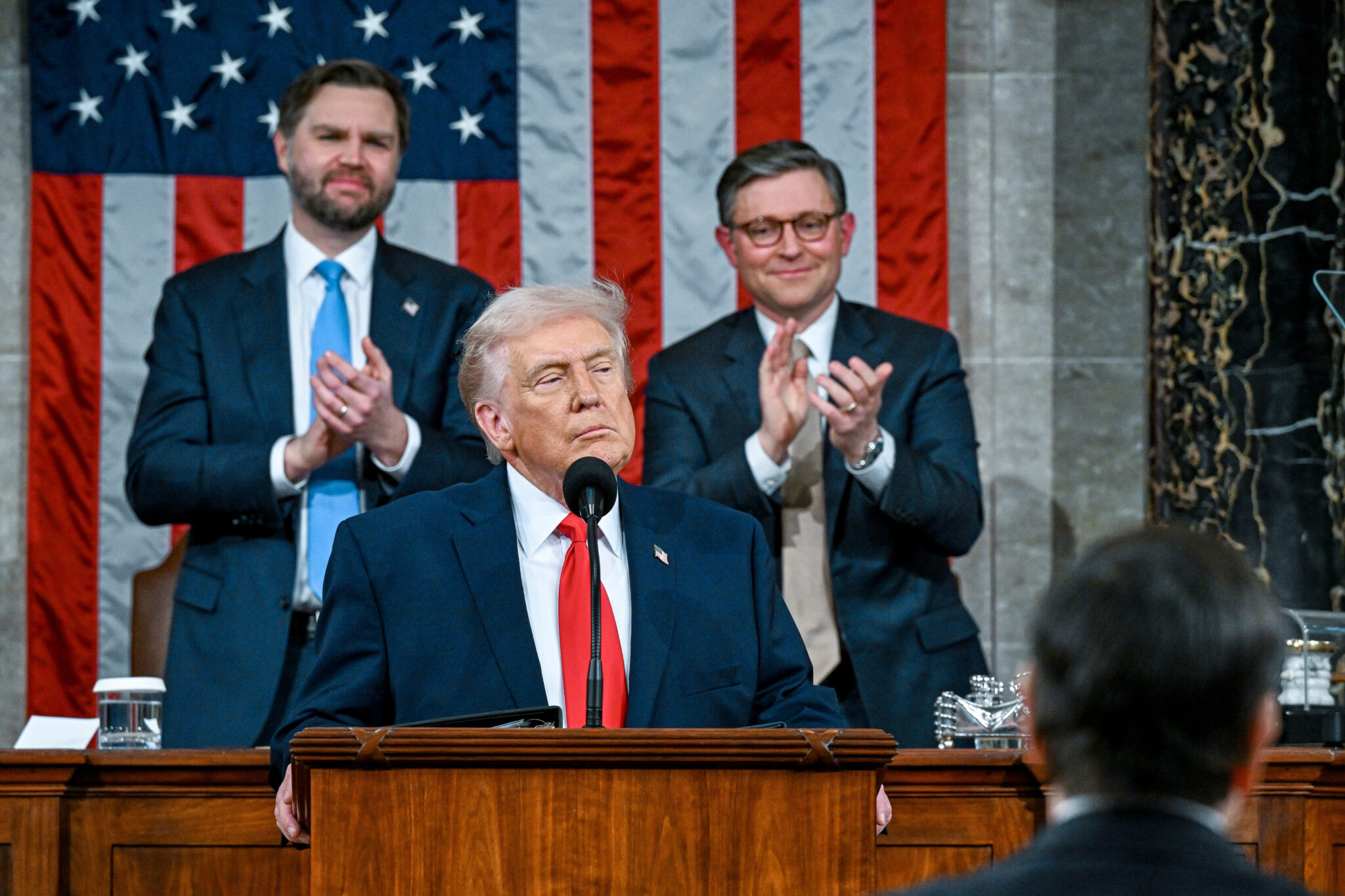
State of the Union Offers Trump a Chance to Make the Case for his Foreign Policy Approach/ Newslooks/ WASHINGTON/ J. Mansour/ Morning Edition/ President Donald Trump used his State of the Union to defend his foreign policy record amid growing public skepticism. He highlighted a Gaza ceasefire, pressure on NATO allies, action against Venezuela’s Nicolás Maduro, and tariff battles with the Supreme Court. With midterms approaching, Trump sought to balance “America First” priorities with military assertiveness abroad.
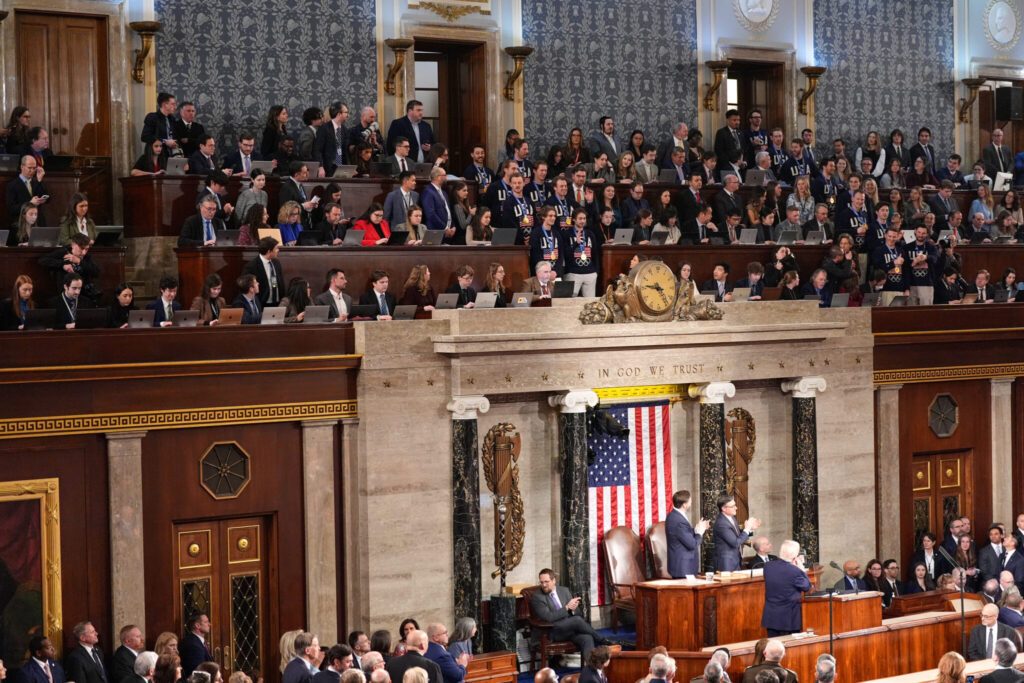
Trump State of the Union Foreign Policy Approach + Quick Looks
- Trump defends “America First” strategy amid falling approval.
- Points to Gaza ceasefire and action against Nicolás Maduro.
- Pressures NATO allies to increase defense spending.
- Weighs new military action against Iran nuclear ambitions.
- Struggles to broker Russia-Ukraine peace deal.
- Expands Western Hemisphere crackdown under “Donroe Doctrine.”
- Vows to preserve tariffs despite Supreme Court setback.
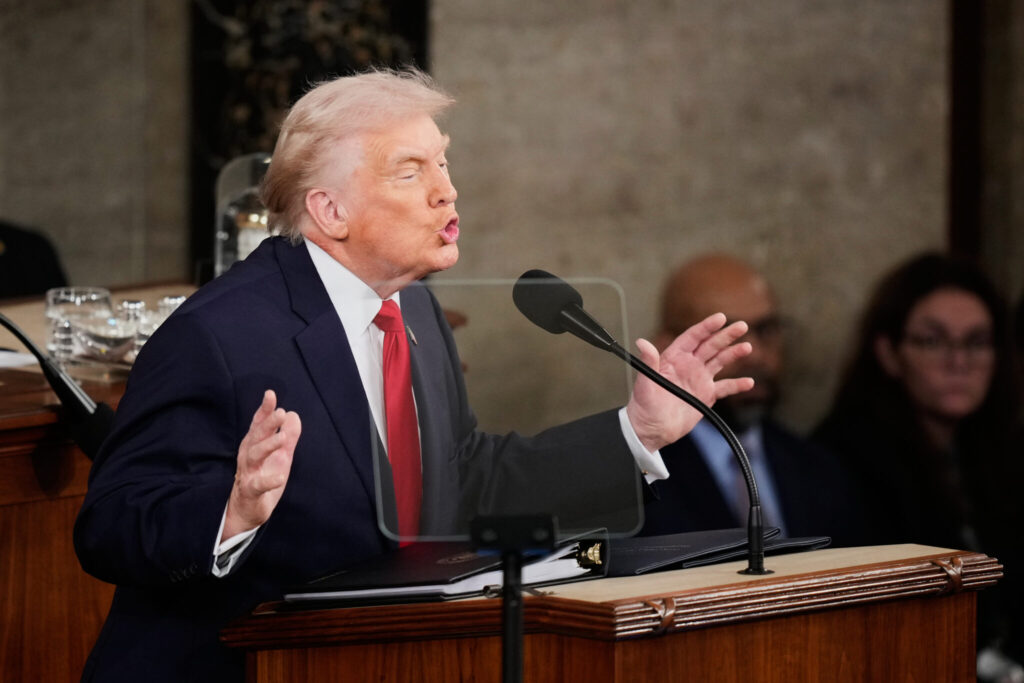
Deep Look: State of the Union Offers Trump a Chance to Make the Case for his Foreign Policy Approach
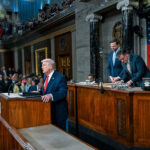
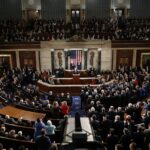
President Donald Trump used his State of the Union address to present a robust defense of his foreign policy agenda, seeking to reassure Americans uneasy about his global priorities while reinforcing his “America First” doctrine.
Although the speech leaned heavily on domestic themes, Trump carved out significant time to argue that his administration has restored U.S. strength abroad. Facing declining approval ratings on foreign affairs — with recent surveys showing a majority of Americans disapprove of his handling of global issues — Trump framed his actions as measured, strategic and ultimately beneficial to U.S. interests.
“As president, I will make peace wherever I can — but I will never hesitate to confront threats to America wherever we must,” Trump said, according to excerpts released by the White House. The statement encapsulated his effort to balance diplomacy with deterrence.
Iran: Pressure and Potential Military Action
One of the most pressing questions surrounding Trump’s foreign policy is whether he will authorize further military action against Iran. The president recently warned Tehran that “bad things will happen” if negotiations over its nuclear program fail.
Envoys Steve Witkoff and Jared Kushner are set to resume talks in Geneva with Iranian officials as U.S. warships and aircraft mass in the Middle East. Trump previously claimed that American airstrikes “obliterated” key Iranian nuclear facilities, but negotiations remain fraught.
Iran’s clerical leadership insists discussions focus solely on nuclear development. Meanwhile, the United States and Israel want broader talks covering ballistic missiles and Tehran’s backing of regional proxy groups such as Hezbollah, Hamas and the Houthis. The widening gap underscores the fragile path toward any diplomatic breakthrough.
Public skepticism is mounting. A majority of Americans believe Trump has gone too far in deploying U.S. military power abroad, according to Associated Press-NORC polling. The president may use his address to explain why further intervention could be necessary, even as voters prioritize domestic concerns.
Ukraine War: Four Years On
Tuesday also marked the fourth anniversary of Russia’s invasion of Ukraine — a sobering backdrop for Trump’s remarks.
On the campaign trail, Trump pledged to end the war within a day. In office, however, negotiations between Moscow and Kyiv have proven complex. Russian President Vladimir Putin continues to demand that Ukraine relinquish territory Moscow illegally annexed but does not fully control.
Trump has pressured Ukrainian President Volodymyr Zelenskyy to consider concessions, arguing that a deal could save lives. U.S.-mediated talks remain deadlocked over territorial control and the fate of the Zaporizhzhia nuclear power plant, Europe’s largest.
While Russian forces have advanced slowly in eastern Ukraine, Putin maintains maximalist demands. Trump has reportedly set an informal June target for progress toward a settlement, signaling urgency ahead of midterm elections.
Europe and U.S. allies are closely watching Trump’s rhetoric, particularly given tensions over NATO burden-sharing and his past criticism of alliance members.
Venezuela and the “Donroe Doctrine”
Trump also touted what he described as a major victory in the Western Hemisphere: the capture of Venezuelan leader Nicolás Maduro in a dramatic U.S. operation. Maduro and his wife were transferred to New York to face federal drug conspiracy charges.
The administration has since moved to unlock millions of barrels of Venezuelan oil that were stranded under partial sanctions. Trump is urging U.S. energy companies to reinvest in Venezuela, seeking billions in infrastructure upgrades and expanded petroleum production.
The president has framed his Western Hemisphere strategy as a revival of the Monroe Doctrine, referring to it as the “Donroe Doctrine.” The approach emphasizes curbing drug trafficking, tightening migration enforcement and limiting foreign influence in Latin America.
U.S. forces have reportedly conducted dozens of strikes against alleged drug-running vessels and seized sanctioned oil tankers. While some smaller nations have welcomed Washington’s renewed engagement, critics warn the strategy risks destabilizing regional relations.
Tariffs and the Supreme Court
Foreign economic policy also featured prominently. Trump addressed last week’s ruling by the Supreme Court of the United States, which invalidated his use of a 1977 emergency law to justify sweeping tariff hikes.
In his speech, Trump adopted a measured tone, calling the decision “an unfortunate ruling.” Yet he simultaneously warned trading partners against renegotiating agreements, threatening steeper tariffs for countries that attempt to exploit the court’s decision.
Over the weekend, he announced a 15% global tariff designed to replace measures struck down by the court. He also signed an executive order imposing a temporary 10% import tax, effective for 150 days unless extended by Congress.
Trump argued that most nations prefer maintaining existing agreements rather than risk harsher terms under new executive authority. His comments signaled a determination to preserve tariffs as a cornerstone of both economic and geopolitical leverage.
Balancing Domestic and Global Priorities
With Americans increasingly focused on affordability and domestic challenges, Trump faces the delicate task of convincing voters that assertive global engagement aligns with national interests. Polls suggest many are wary of expanded military involvement, yet the president insists his strategy deters adversaries and strengthens U.S. standing.
By spotlighting ceasefire efforts in Gaza, renewed pressure on NATO allies, decisive action in Venezuela and hardline trade policies, Trump sought to present a narrative of restored American dominance.
As midterm elections approach, the effectiveness of that message remains uncertain. Supporters view his actions as evidence of strong leadership; critics question whether his approach risks overreach and international instability.
The State of the Union provided Trump with a high-profile platform to defend his foreign policy worldview — one built on economic leverage, military readiness and a promise that America’s interests come first. Whether that vision reassures skeptical voters may shape not only the midterm results but also the trajectory of U.S. engagement abroad.

You must Register or Login to post a comment.