

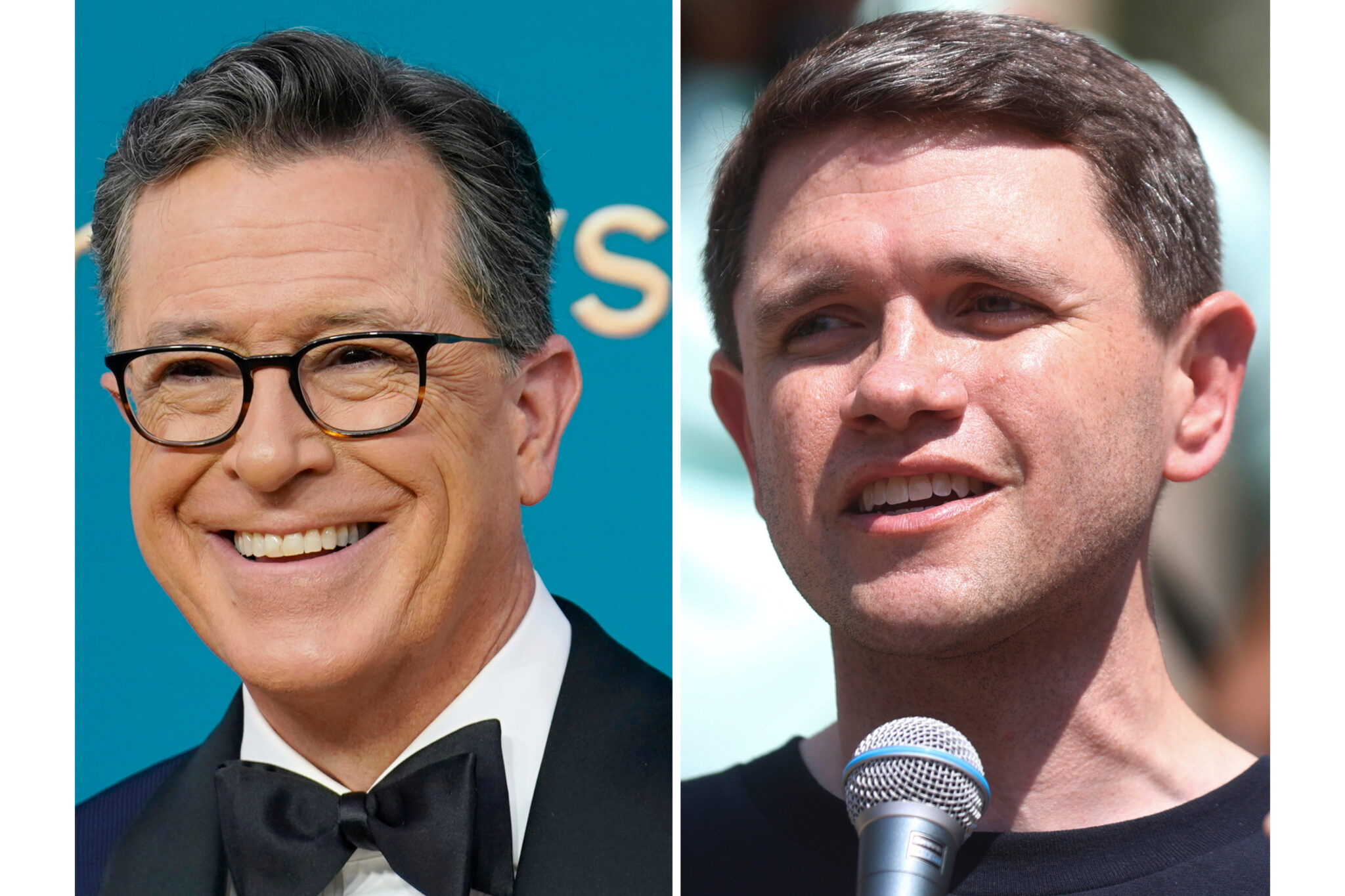
Stephen Colbert: CBS Pulled James Talarico Interview over FCC Equal Time Rule/ Newslooks/ WASHINGTON/ J. Mansour/ Morning Edition/ Stephen Colbert says CBS lawyers pulled a scheduled interview with Texas Senate candidate James Talarico over concerns about FCC equal-time rules. The move comes as the Trump administration’s FCC tightens scrutiny of political appearances on broadcast talk shows. Colbert later posted the full interview online, highlighting differences between broadcast and streaming regulations.

Stephen Colbert FCC Equal Time Controversy Quick Looks
- Stephen Colbert says network lawyers blocked James Talarico interview.
- Concerns centered on FCC equal-time guidance under Trump administration.
- Decision came hours before Texas primary early voting began.
- FCC Chairman Brendan Carr questioned talk show exemptions.
- Colbert posted full interview on YouTube instead of broadcast.
- Talarico accused Trump of suppressing the interview.
- CBS and FCC did not immediately comment.
- Colbert’s show is set to end in May after cancellation announcement.
Deep Look: Stephen Colbert: CBS Pulled James Talarico Interview over FCC Equal Time Rule
Late-night host Stephen Colbert says his network’s legal team pulled a planned interview with Democratic Texas Senate candidate James Talarico from Monday night’s broadcast over concerns about federal equal-time regulations.
Speaking during his CBS program, “The Late Show with Stephen Colbert,” Colbert told viewers that Talarico had been scheduled to appear but was abruptly removed from the lineup after intervention from network attorneys.
“He was supposed to be here, but we were told in no uncertain terms by our network’s lawyers, who called us directly, that we could not have him on the broadcast,” Colbert said. He added that he was initially instructed not only to avoid airing the interview but also not to mention that it had been canceled.
The decision came just hours before early voting began in Texas’ primary elections, intensifying the political sensitivity surrounding the matter. Talarico is among several Democrats seeking the U.S. Senate seat currently held by Republican Sen. John Cornyn.
FCC Guidance Sparks Network Concerns
At the center of the controversy is guidance issued in January by the Federal Communications Commission under Chairman Brendan Carr, who was appointed to lead the agency by President Donald Trump.
Broadcast networks in the United States have long been subject to the “equal time” rule, which requires stations to provide comparable airtime opportunities to competing political candidates. Historically, however, talk shows — particularly late-night entertainment programs — have been granted a “bona fide news exemption,” meaning interviews with candidates did not automatically trigger equal-time obligations.
In its recent public notice, the FCC questioned whether such exemptions should continue to apply. The agency warned that the interview segments of late-night and daytime talk shows might not qualify under the exemption and suggested that hosts could be motivated by partisan considerations.
“The FCC has not been presented with any evidence that the interview portion of any late night or daytime television talk show program on air presently would qualify for the bona fide news exemption,” the notice stated.
That language appears to have prompted CBS lawyers to act cautiously, pulling Talarico’s appearance from the broadcast schedule to avoid potential regulatory complications.
Broadcast vs. Streaming Divide
Colbert emphasized an important distinction during his monologue: the equal-time rule applies to broadcast television but does not govern streaming platforms in the same way.
As a result, the nearly 15-minute interview with Talarico was posted in full to the show’s official YouTube page, accompanied by a note clarifying that the segment was being made available online only.
Talarico shared a clip of the interview on X, formerly known as Twitter, describing it as “the interview Donald Trump didn’t want you to see.” He further claimed that “His FCC refused to air my interview with Stephen Colbert. Trump is worried we’re about to flip Texas.”
Neither CBS nor the FCC immediately responded to requests for comment.
Political Stakes in Texas
The episode unfolded as early voting began Tuesday in Texas’ primary elections. Talarico and Rep. Jasmine Crockett are among the Democratic contenders vying for their party’s nomination to challenge Cornyn, a four-term Republican incumbent, in the November general election. The Texas primary is scheduled for March 3.
The timing heightened scrutiny, as any perceived advantage or media exposure for one candidate could raise equal-time concerns under federal law.
Chairman Carr has previously criticized broadcast talk shows, including ABC’s “The View,” suggesting last year that revisiting the scope of the news exemption could be “worthwhile.” His comments have fueled debate about whether the FCC is taking a more aggressive posture toward entertainment programming that intersects with political content.
Colbert’s Final Months on Air
The controversy also comes during a transitional period for Colbert. CBS announced last year that it would cancel “The Late Show with Stephen Colbert” in May, citing financial considerations amid shifting media consumption habits.
However, the timing of the cancellation raised eyebrows. The announcement came just days after Colbert sharply criticized a settlement between Trump and Paramount Global — CBS’ parent company — over a “60 Minutes” segment.
Two U.S. senators publicly questioned whether the cancellation might have been politically motivated, noting that Colbert had long been one of Trump’s most persistent late-night critics.
Now, with only months remaining in his tenure behind the desk, Colbert finds himself again at the center of a high-profile clash involving politics, media regulation, and free expression.
Broader Media Implications
The situation underscores a broader recalibration underway in American broadcasting. As regulatory guidance evolves and political polarization deepens, networks appear increasingly cautious about candidate appearances on entertainment programs.
The FCC’s renewed scrutiny of the equal-time rule — especially its potential application to late-night television — could reshape how political figures engage with mass audiences outside traditional news programming.
For Colbert, the episode served as both a pointed critique of regulatory pressures and a demonstration of modern media workarounds. While the interview never aired on broadcast television, it reached viewers online — illustrating how the digital landscape continues to complicate enforcement of decades-old broadcast regulations.





You must Register or Login to post a comment.