

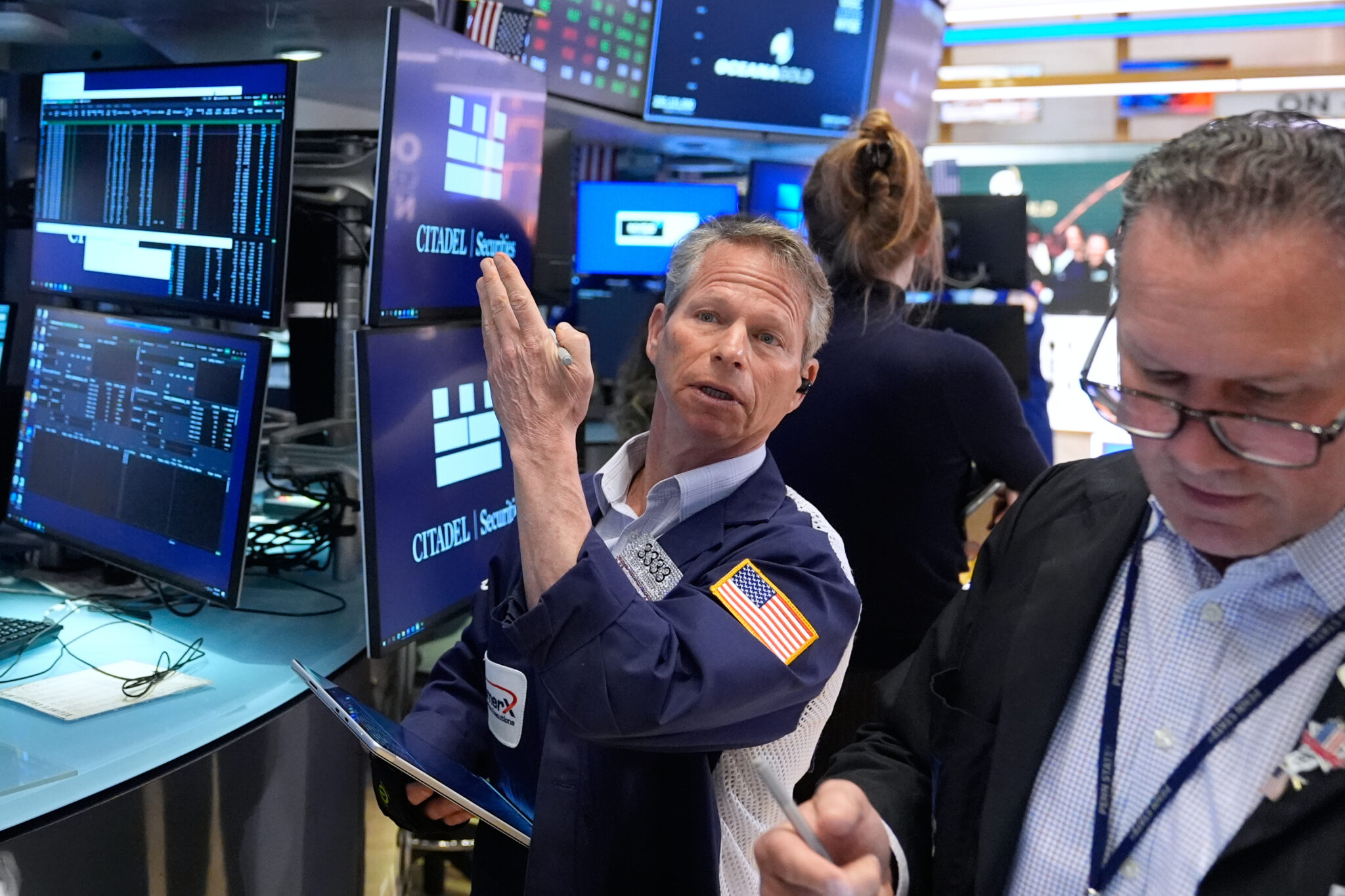
Stocks Waver, Oil Holds Steady Ahead of US-Iran Talks/ Newslooks/ WASHINGTON/ J. Mansour/ Morning Edition/ Wall Street traded unevenly Friday as investors watched U.S.–Iran ceasefire negotiations. Oil prices stabilized after weeks of volatility tied to Strait of Hormuz disruptions. Inflation concerns and Fed policy uncertainty continue to shape market sentiment.
US-Iran Talks Impact Markets Quick Looks
- S&P 500 rises 0.2% in morning trading
- Dow falls 106 points while Nasdaq gains
- Oil prices stabilize after weeks of volatility
- Nvidia and Broadcom lead tech gains
- Markets react to planned U.S.–Iran talks
- Inflation spike raises Fed policy concerns
- Consumer sentiment drops sharply in April
- Bond yields hold steady after inflation report
Deep Look: Stocks Waver, Oil Holds Steady Ahead of US-Iran Talks
NEW YORK — U.S. stocks traded unevenly Friday while oil prices stabilized, as investors closely monitored developments ahead of planned negotiations between the United States and Iran aimed at preserving a fragile ceasefire.
The S&P 500 edged up 0.2% in morning trading, putting the benchmark index on track for its second consecutive weekly gain. Meanwhile, the Dow Jones Industrial Average slipped 106 points, or 0.3%, as of late morning. The Nasdaq composite posted stronger gains, rising 0.6% as technology stocks helped support the broader market.
Markets have been climbing over the past two weeks amid growing optimism that tensions between the U.S. and Iran may ease. However, investors remain cautious, with trading continuing to show volatility as headlines related to the conflict drive sentiment.
Despite the modest gains, market breadth showed weakness. More companies within the S&P 500 declined than advanced, reflecting uncertainty among investors. Still, the index has recovered most of its March losses and now sits roughly 2% below its all-time high reached in January.
Technology stocks played a key role in keeping markets afloat. Nvidia rose 2.4%, while Broadcom jumped 4.9%, highlighting continued investor interest in high-value tech companies even amid geopolitical uncertainty.
Global markets also showed signs of cautious optimism. Stocks in Asia and Europe posted gains, reflecting investor hopes that diplomatic negotiations may prevent further escalation in the Middle East.
Oil prices, which have been a major driver of recent market volatility, held relatively steady Friday. The conflict has significantly disrupted shipping through the Strait of Hormuz, a crucial global energy corridor, sending crude prices sharply higher in recent weeks.
Brent crude oil, the global benchmark, surged from around $70 per barrel before the conflict began in late February to more than $119 at peak levels. On Friday, Brent dipped 0.5% to $95.47 per barrel, suggesting some easing in market concerns.
U.S. crude prices also edged lower, falling 0.3% to $97.59 per barrel.
Investors are now focused on high-level negotiations scheduled between U.S. and Iranian officials. The outcome remains uncertain, with Iran signaling that talks could be jeopardized if Israeli military operations in Lebanon continue.
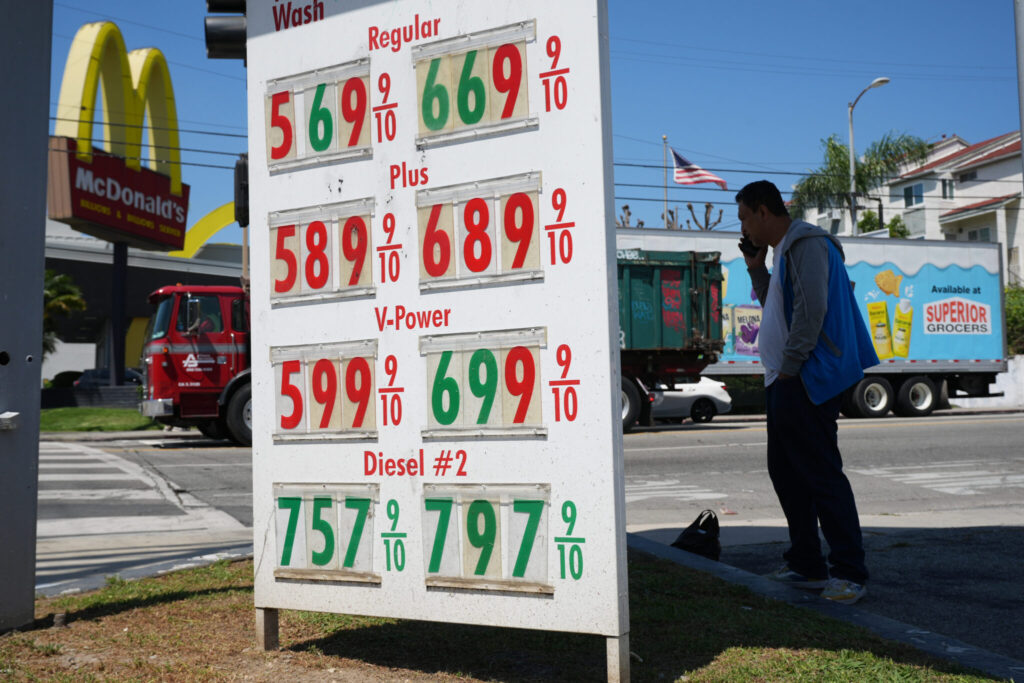
The geopolitical tensions are already affecting the broader economy. The latest inflation report showed the largest increase in consumer prices in four years, largely driven by surging gasoline costs linked to disruptions in oil supply.
While inflation rose sharply, the increase came in slightly below economists’ expectations, offering some relief to markets. Bond yields remained mostly stable following the report, with the yield on the 10-year Treasury rising modestly to 4.31% from 4.29% the previous day.
Inflation remains a key concern for investors and policymakers alike. Prices for many goods and services remain elevated, partly due to global tariffs and supply chain pressures. Higher fuel costs are particularly significant because they ripple through the economy, affecting transportation, food, and travel costs.
Consumer sentiment has also taken a hit. A closely watched survey from the University of Michigan showed confidence falling 10.7% in April. At the same time, inflation expectations climbed, with consumers anticipating prices to rise 4.8% over the next year, up from 3.8% in March.
The persistence of inflation complicates decisions for the Federal Reserve. The central bank has indicated caution, as inflation remains above its 2% target. Policymakers are expected to hold interest rates steady, with some officials even suggesting rate hikes could be necessary if inflation fails to cool.
Interest rates play a critical role in market performance. Lower rates typically support stocks by reducing borrowing costs and encouraging investment. However, lowering rates too soon risks reigniting inflation.
Given the current economic landscape, Wall Street expects the Federal Reserve to keep interest rates unchanged through 2026, barring significant changes in inflation or economic growth.
As investors await the outcome of U.S.-Iran negotiations, markets are likely to remain sensitive to geopolitical developments, oil price movements, and inflation trends.






You must Register or Login to post a comment.