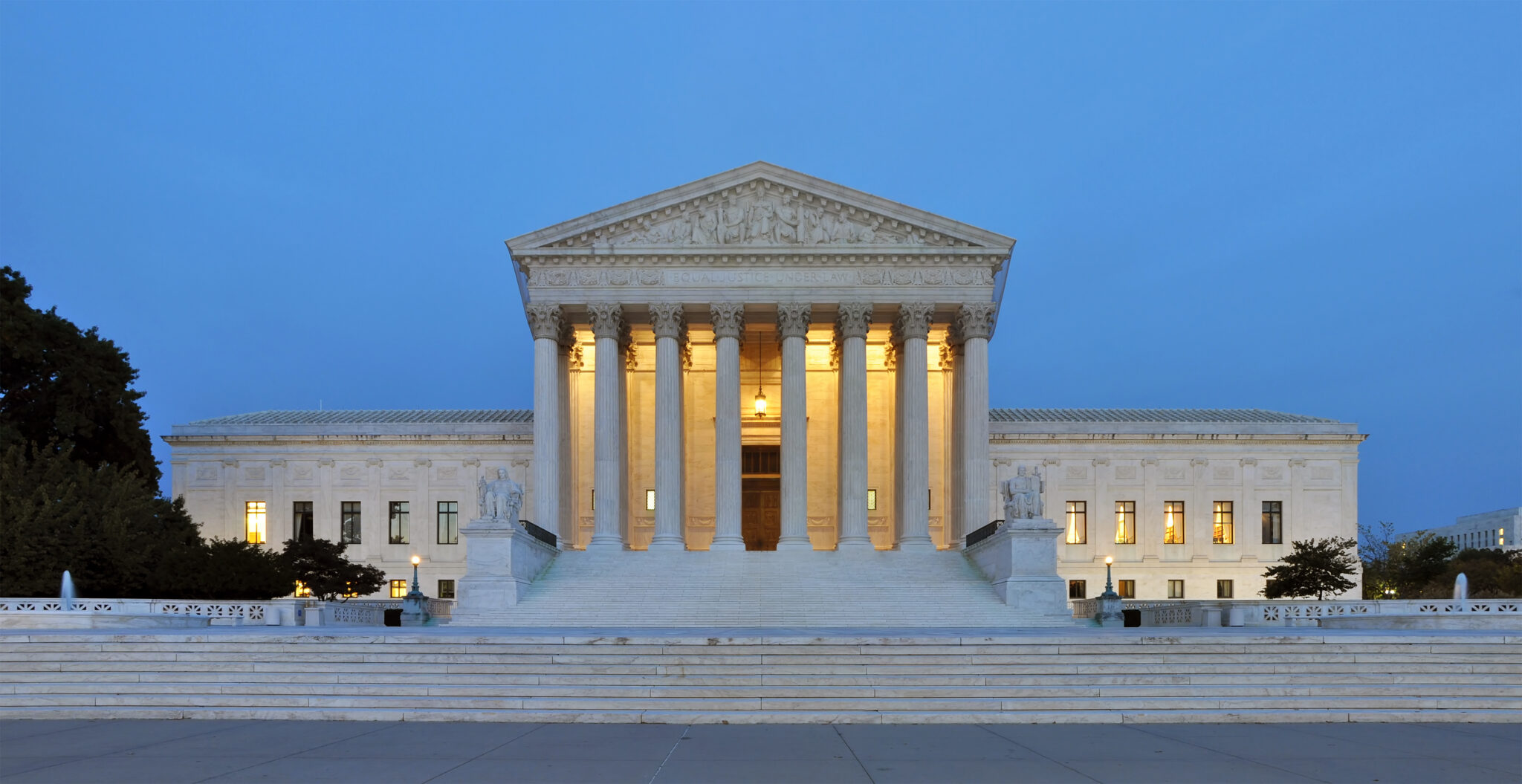
Supreme Court Blocks Trump National Guard Deployment to Chicago/ Newslooks/ WASHINGTON/ J. Mansour/ Morning Edition/ The U.S. Supreme Court blocked President Trump’s attempt to deploy National Guard troops in the Chicago area. The ruling keeps in place a lower-court order questioning Trump’s authority to use the military domestically. Illinois officials called the decision a rare setback for the administration’s expansion of federal power.
Trump National Guard Chicago Ruling Quick Looks
- Supreme Court refused to allow troop deployment while litigation continues
- Lower courts found no legal basis for federalizing Illinois National Guard troops
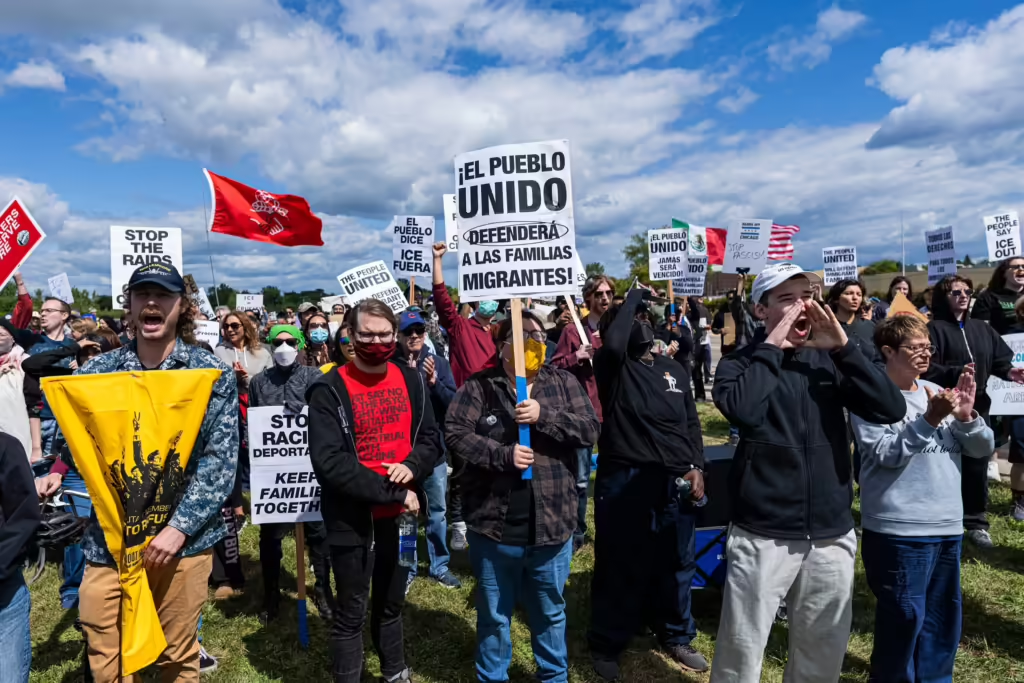
- Trump cited immigration protests as justification for military use
- Illinois and Chicago say demonstrations were peaceful and manageable
- Three conservative justices dissented from the ruling
- Decision marks a rare defeat for Trump at the high court
Deep Look: Trump National Guard Chicago Ruling
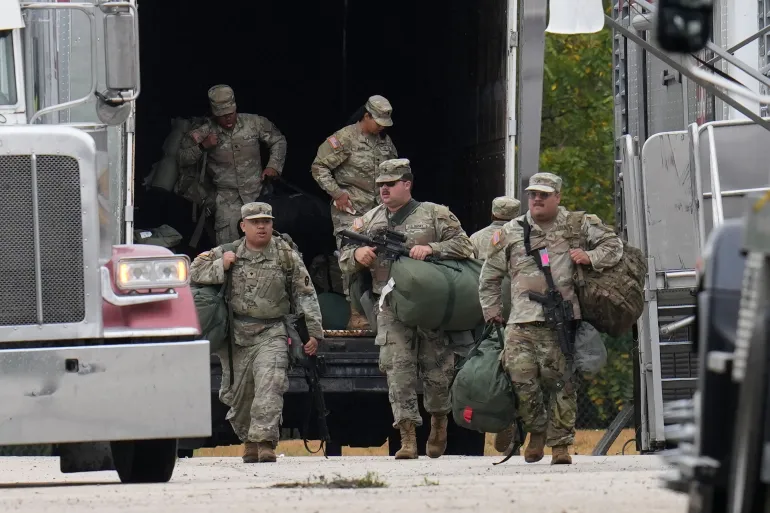
The U.S. Supreme Court on Tuesday blocked President Donald Trump from deploying National Guard troops to the Chicago area, at least for now, delivering a rare setback to the administration as it seeks to expand the military’s role in domestic law enforcement.
In an unsigned order, the court declined to lift a lower-court injunction that prevents the deployment of hundreds of National Guard members in Illinois. The Justice Department had asked the justices to allow the troops to be deployed while legal challenges brought by state and local officials continued.
“At this preliminary stage, the Government has failed to identify a source of authority that would allow the military to execute the laws in Illinois,” the court wrote. The majority emphasized that a president’s power to federalize the National Guard likely applies only in exceptional circumstances.
Three conservative justices — Samuel Alito, Clarence Thomas, and Neil Gorsuch — dissented from the decision.
The ruling keeps intact an order issued earlier by April Perry, a Chicago-based federal judge, who temporarily blocked the deployment in October. Perry found that the Trump administration had overstated the threat posed by protests near an immigration detention facility in the Chicago suburb of Broadview.
Trump had ordered National Guard troops to Chicago as part of a broader effort to use military forces in Democratic-led jurisdictions amid protests over his aggressive immigration enforcement policies. Similar deployments were announced for Portland, Oregon, following earlier troop movements to Los Angeles, Memphis, and Washington, D.C.
Critics, including Democratic governors and mayors, have accused Trump of abusing executive power by using the military to intimidate political opponents and suppress dissent. They argue that the administration has portrayed protests as violent and chaotic despite evidence that they have been largely peaceful.
Illinois Governor JB Pritzker welcomed the Supreme Court’s decision, calling it an important step in curbing what he described as the administration’s march toward authoritarianism. State and city officials argued that local law enforcement was fully capable of managing demonstrations without federal military involvement.
The administration has relied on a federal law that allows a president to deploy National Guard troops if necessary to suppress a rebellion, repel an invasion, or when the president is unable to execute federal law using regular forces. Judges reviewing the case expressed skepticism that any of those conditions existed in Illinois.
Perry concluded that there was no evidence of rebellion or widespread violence and criticized the administration for equating protests with riots. She warned that sending troops into the area could escalate tensions rather than restore order, writing that a military presence would “only add fuel to the fire.”
A three-judge panel of the 7th U.S. Circuit Court of Appeals later declined to overturn Perry’s ruling, stating that the facts did not justify the president’s actions in Illinois. Notably, two members of that panel were appointed by Republican presidents, including one by Trump himself.
The Justice Department argued before the Supreme Court that local officials were minimizing the risks faced by federal agents, claiming they were operating under the constant threat of mob violence. Lawyers for Illinois and Chicago countered that the protests never disrupted operations at the Broadview facility and that state and local authorities responded promptly to all requests for assistance.
The dispute highlights a fundamental disagreement over the use of military forces inside the United States. The National Guard traditionally operates under the authority of state governors unless formally federalized. Courts have historically treated such federalization as an extraordinary measure reserved for extreme circumstances.
The Supreme Court’s refusal to intervene stands out because the conservative-majority court has frequently sided with Trump since his return to the White House in January. In many previous cases, the justices allowed Trump policies to take effect even as legal challenges played out.
The Chicago case is not the only one involving Trump’s attempted military deployments. Officials in Oregon are pursuing a separate challenge to a planned deployment in Portland. In November, Karin Immergut, a Trump appointee, permanently blocked that deployment. The administration has appealed her decision.
In the Illinois case, the Supreme Court has asked both sides to submit additional written arguments clarifying the meaning of the phrase “regular forces” in the law Trump invoked. Perry previously ruled that the term refers to active-duty military forces such as the Army and Navy, not the National Guard, and noted that the administration made no attempt to rely on those forces before federalizing Guard units.
The White House defended Trump’s actions following the ruling. A spokesperson said the president remains committed to enforcing immigration laws and protecting federal personnel, arguing that the court’s decision does not undermine that broader agenda.
For now, the Supreme Court’s decision leaves the deployment blocked while litigation continues in lower courts. The ruling signals that even a president with broad claims of executive authority faces limits when attempting to use the military on domestic soil, especially in the absence of clear evidence of emergency conditions.
As protests over immigration enforcement persist in several cities, the legal battles over Trump’s use of military power are likely to continue. The outcome could have lasting implications for the balance between federal authority, state sovereignty, and the role of the armed forces in domestic affairs.