

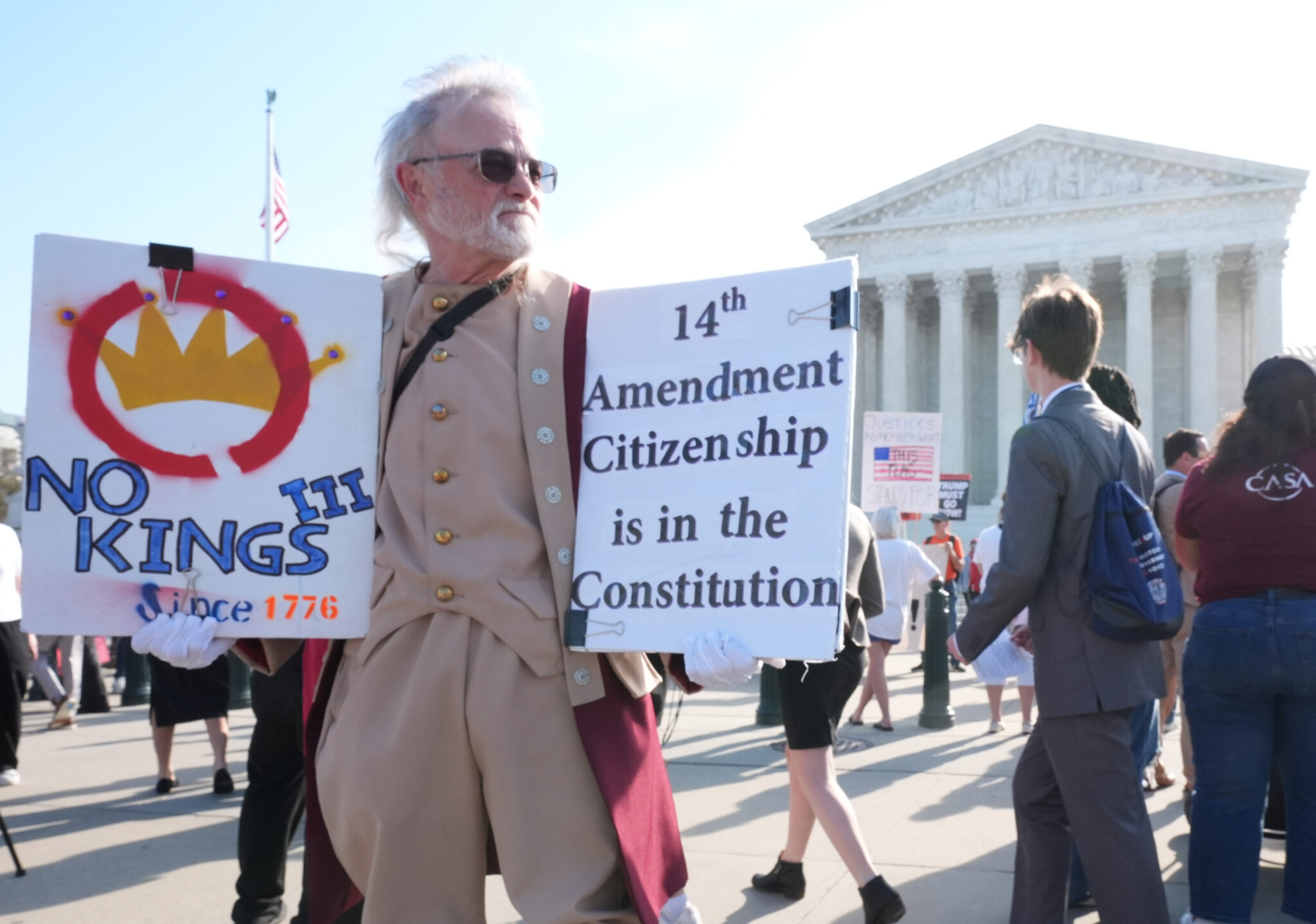
Supreme Court Hears Trump’s Birthright Citizenship Challenge/ Newslooks/ WASHINGTON/ J. Mansour/ Morning Edition/ The U.S. Supreme Court heard arguments on President Donald Trump’s executive order restricting birthright citizenship. Trump attended the hearing, becoming the first sitting president to appear for oral arguments. The case could reshape constitutional interpretation of the 14th Amendment and impact hundreds of thousands of births annually.
Trump Birthright Citizenship Case — Quick Looks
- Supreme Court hears Trump’s birthright citizenship appeal
- Trump attends arguments at nation’s highest court
- Lower courts blocked executive order nationwide
- Case centers on 14th Amendment interpretation
- Administration argues children of noncitizens not automatically citizens
- Opponents cite 1898 Supreme Court precedent
- Policy could affect over 250,000 babies yearly
- Decision expected by early summer
- Case marks major test of executive power
- Order signed first day of Trump’s second term
Deep Look: Supreme Court Hears Trump’s Birthright Citizenship Challenge
The U.S. Supreme Court heard arguments Wednesday in one of the most consequential cases of its current term — President Donald Trump’s executive order seeking to restrict birthright citizenship. The legal battle centers on whether children born in the United States to parents who are in the country illegally or temporarily should automatically receive American citizenship.
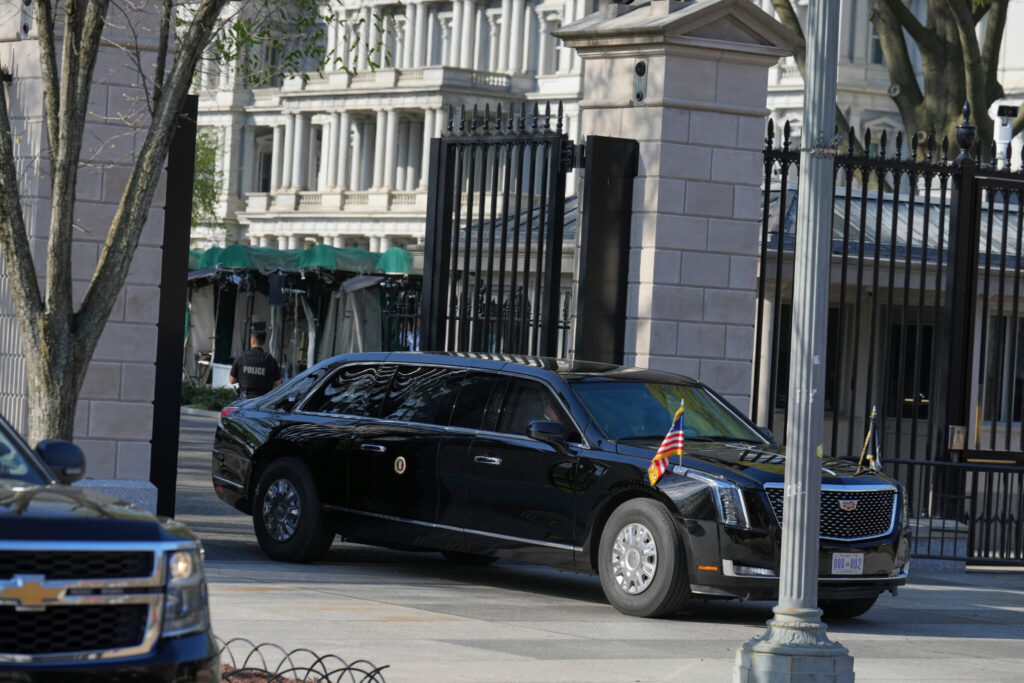
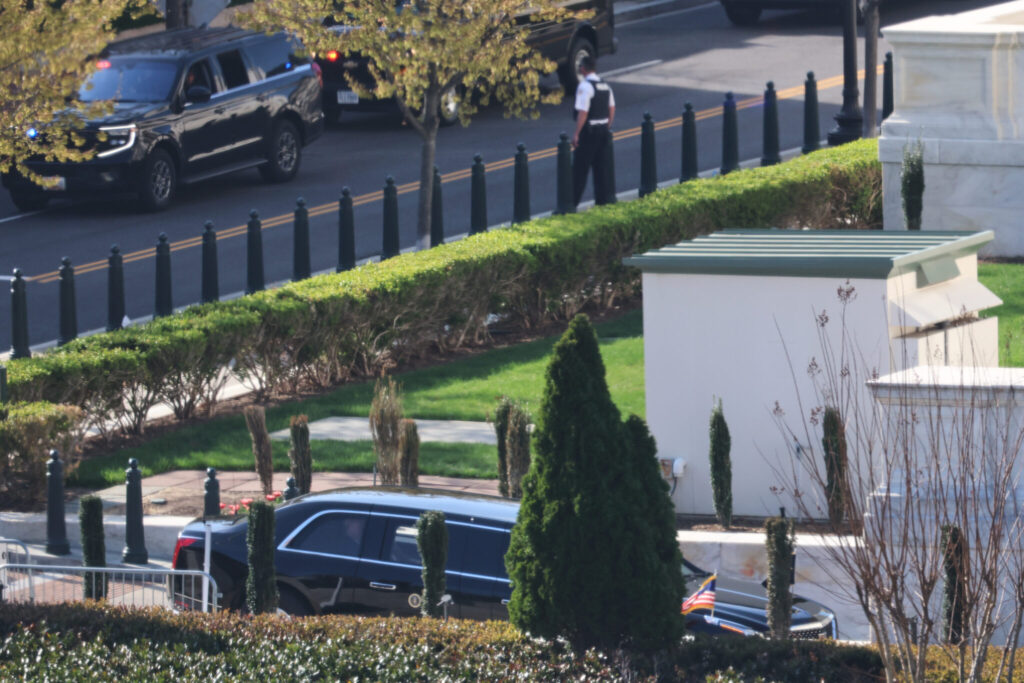
Trump attended the oral arguments in person, becoming the first sitting U.S. president to appear at Supreme Court proceedings. His presence added to the significance of a case that could redefine how the Constitution’s 14th Amendment is interpreted and applied in modern immigration policy.
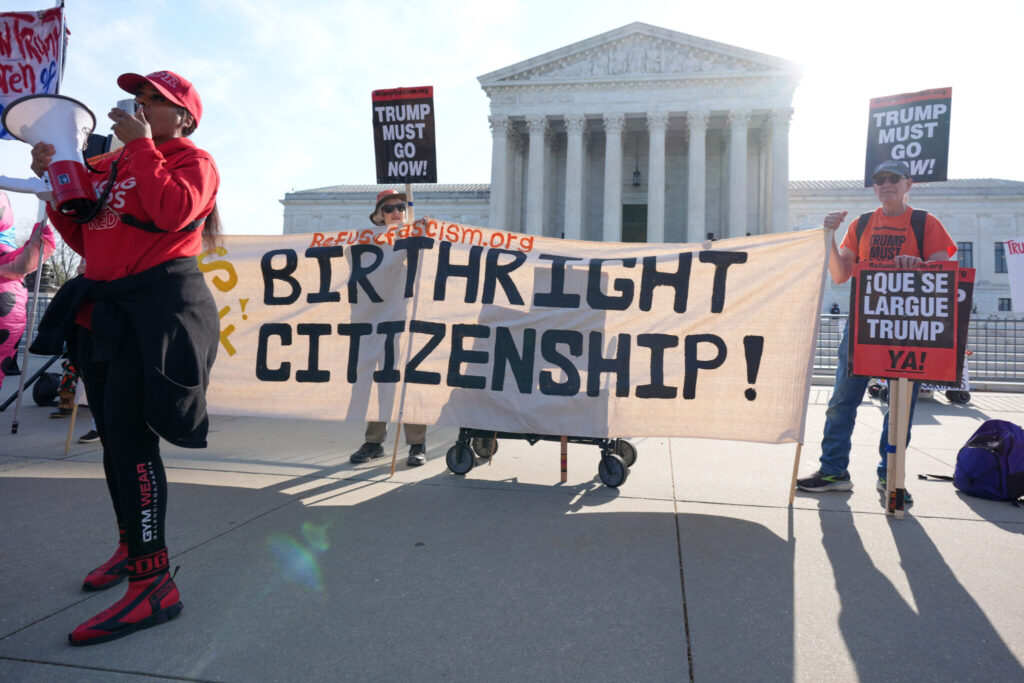
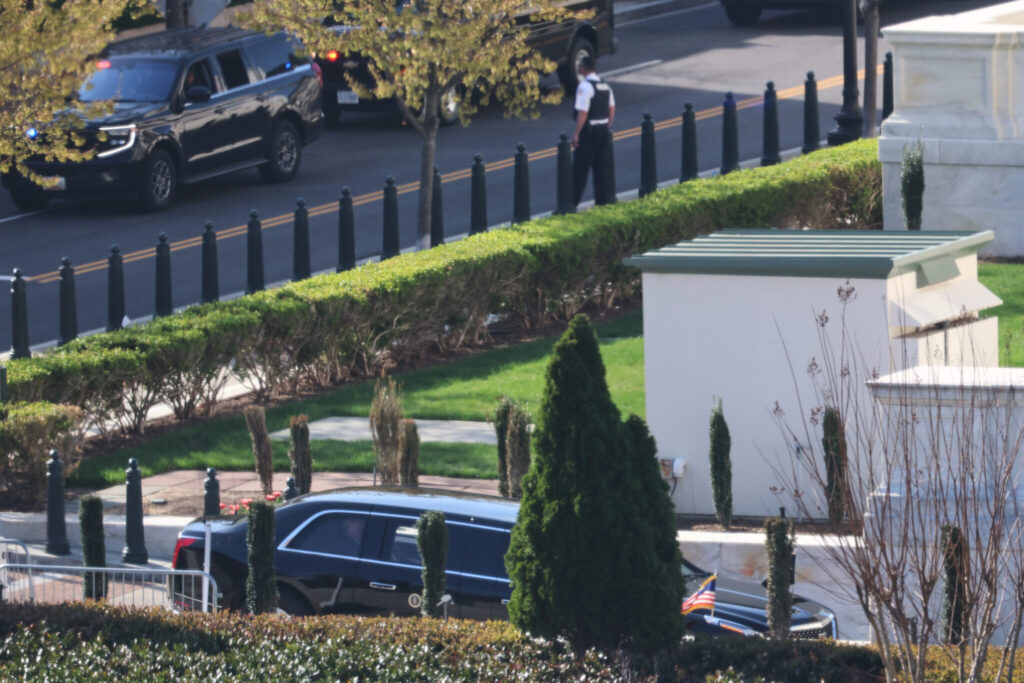
Crowds gathered outside the Supreme Court building as Trump’s motorcade traveled along Constitution and Independence Avenues, passing notable landmarks such as the Washington Monument and the National Mall. The president’s appearance underscored the political and constitutional stakes surrounding the case, which is expected to produce a ruling by early summer.
At the center of the dispute is an executive order Trump signed on the first day of his second term. The order declares that children born in the United States to parents who are either in the country unlawfully or present temporarily — including students, visa holders, and green card applicants — should not automatically be recognized as U.S. citizens.
The policy is part of a broader immigration enforcement strategy pursued by Trump’s administration. However, before the order could take effect, multiple lower courts blocked it, including a federal ruling in New Hampshire that declared the policy unconstitutional. The Supreme Court is now reviewing Trump’s appeal of that decision.
The case represents another major test of Trump’s assertions of executive authority. While the Supreme Court has ruled in Trump’s favor in several cases, the justices have also issued notable decisions against him. Earlier this year, the court struck down global tariffs imposed under emergency powers, prompting sharp criticism from Trump.
Following that decision, Trump publicly criticized the justices who ruled against him, calling them unpatriotic. Days before the birthright citizenship arguments, Trump again took aim at the court in a social media post, defending his interpretation of the Constitution and urging the justices to reconsider longstanding legal precedents.
Birthright citizenship in the United States is rooted in the 14th Amendment, ratified in 1868 after the Civil War. The amendment was designed to ensure citizenship for formerly enslaved people and their descendants, but its language extends broadly. It states that all persons born or naturalized in the United States and subject to its jurisdiction are citizens.
For more than a century, courts have interpreted that language to mean that nearly everyone born on U.S. soil automatically becomes a citizen. One of the most significant precedents is the Supreme Court’s 1898 decision in Wong Kim Ark, which held that a child born in the United States to Chinese immigrant parents was entitled to citizenship.
Lower courts reviewing Trump’s executive order cited this precedent in blocking the policy. Judges ruled that the administration’s interpretation of the 14th Amendment contradicts longstanding constitutional understanding and federal law.
The Trump administration, however, argues that this interpretation is flawed. Government lawyers contend that children born to noncitizen parents are not fully subject to U.S. jurisdiction and therefore should not automatically receive citizenship.
Solicitor General D. John Sauer urged the Supreme Court to correct what he described as long-standing misconceptions about the Constitution. The administration believes the court should revisit historical interpretations and clarify the meaning of jurisdiction under the 14th Amendment.
Opponents of the executive order strongly disagree. Civil rights organizations, including the American Civil Liberties Union, argue that Trump’s proposal represents a dramatic reinterpretation of American citizenship. They contend that the Constitution clearly guarantees birthright citizenship and that altering this understanding would have far-reaching consequences.
Cecillia Wang, legal director for the ACLU, said the case involves an unprecedented attempt by a president to redefine who qualifies as an American citizen. Lawyers representing pregnant women who would be affected by the policy also urged the court not to overturn long-standing precedent.
Researchers estimate the policy could affect more than 250,000 babies born in the United States each year. The impact would extend beyond undocumented immigrants, potentially affecting families legally residing in the country, including students, temporary workers, and individuals awaiting permanent residency.
Legal scholars say the ruling could reshape immigration policy for decades. A decision supporting Trump’s order would mark one of the most significant shifts in citizenship law in American history. Conversely, a ruling against the administration would reaffirm existing interpretations of the 14th Amendment.
The Supreme Court’s decision is expected by early summer, and its outcome could influence immigration debates, constitutional interpretation, and presidential authority for years to come.






You must Register or Login to post a comment.