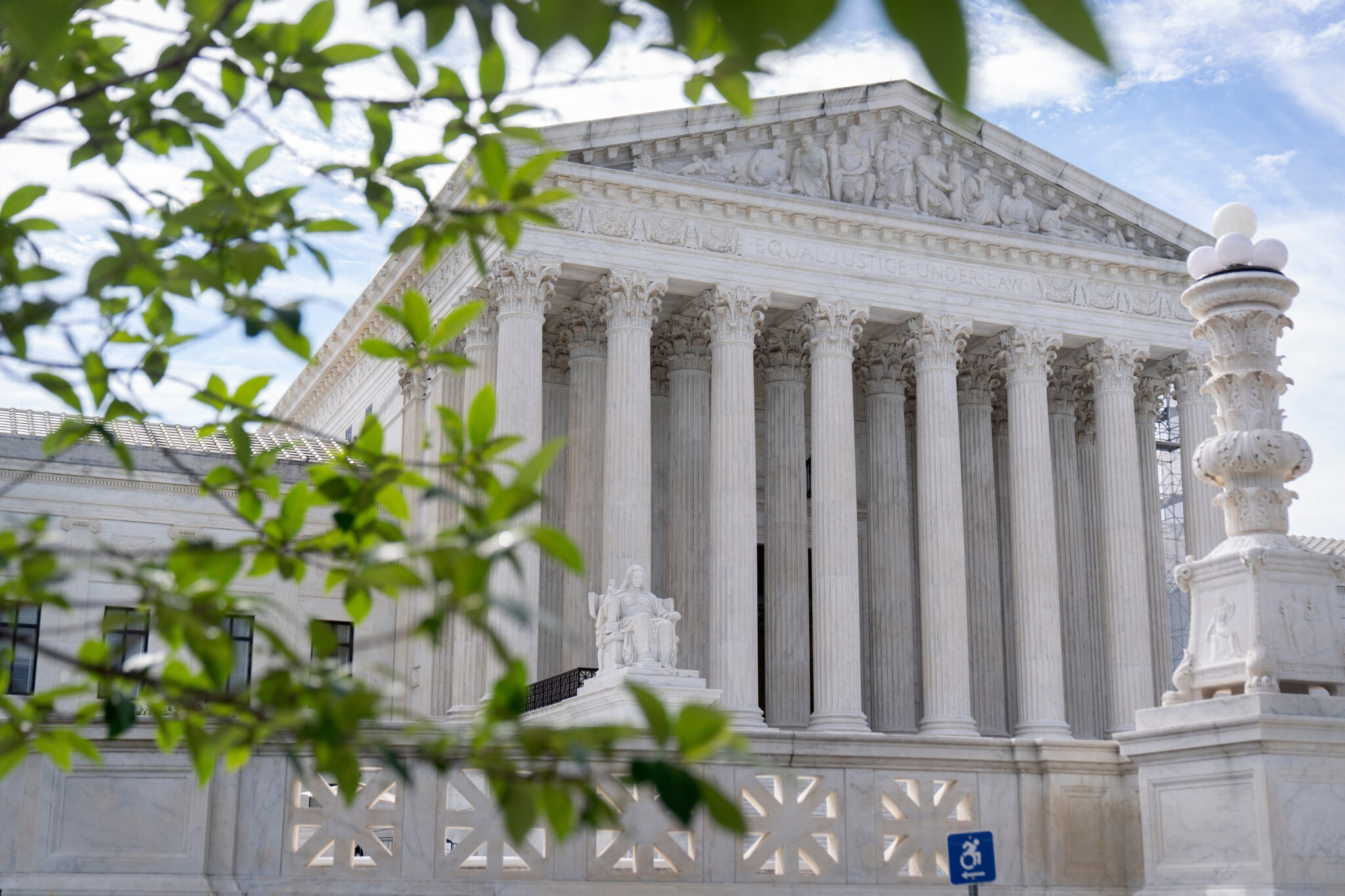
Supreme Court Reviews GOP Bid to End Party Spending Limits/ Newslooks/ WASHINGTON/ J. Mansour/ Morning Edition/ The Supreme Court is reviewing a Republican-led challenge to federal limits on how much political parties can spend in coordination with candidates. The case could reverse a 2001 ruling and reshape campaign finance law. Democrats urge the court to uphold current limits aimed at preventing donor loopholes.
GOP Seeks End to Spending Limits: Quick Looks
- Supreme Court weighs challenge to coordinated spending caps in federal elections.
- Republicans want to overturn a 2001 decision upholding these limits.
- The Trump administration joined the GOP in supporting the challenge.
- Democrats warn removing caps would allow donor circumvention of contribution limits.
- The Federal Election Commission no longer defends the law’s constitutionality.
- A court-appointed lawyer argues the case may be moot.
- Chief Justice Roberts has previously led efforts to roll back campaign finance rules.
- The 2010 Citizens United ruling already allowed unlimited independent spending.
- Coordinated spending limits for 2025 Senate races reach nearly $4 million in large states.
- House race limits range from $63,600 to $127,200 depending on the state.
Supreme Court Reviews GOP Bid to End Party Spending Limits
Deep Look
The Supreme Court is once again at the center of a pivotal battle over the future of campaign finance in the United States. This time, the court is hearing arguments in a Republican-backed effort to eliminate long-standing limits on how much national political parties can spend in coordination with candidates for federal office—a move that could significantly alter the balance of money and influence in U.S. elections.
At issue is a provision of federal election law that dates back more than 50 years and was reaffirmed in a 2001 Supreme Court decision. These coordinated spending caps were designed to prevent wealthy donors from bypassing direct contribution limits by channeling large sums through political parties with the understanding that those funds would support a specific candidate.
President Donald Trump’s administration threw its support behind the effort before leaving office, aligning with Republican interests seeking to dismantle these constraints. If the court sides with the plaintiffs, it could mark the most significant loosening of campaign finance rules since the landmark 2010 Citizens United decision, which allowed for unlimited independent political spending.
The case was originally brought in 2022 by the Republican committees supporting House and Senate candidates, along with two GOP members of Congress from Ohio—then-Sen. JD Vance, now serving as vice president, and then-Rep. Steve Chabot. They argued that the coordinated spending limits infringe on their constitutional rights and hinder their ability to campaign effectively.
In 2025, the Federal Election Commission has largely stepped back from defending the statute, now agreeing with Republicans that the law may no longer be enforceable. That shift led the court to appoint attorney Roman Martinez, a seasoned Supreme Court advocate, to argue in favor of preserving the law.
Martinez presented the justices with a potential off-ramp: declare the case moot. Since the FEC has made clear it doesn’t intend to enforce the law and there is “no credible risk” of penalties, he argued, the court could avoid ruling on the constitutional issue entirely.
Still, the conservative-leaning court—led by Chief Justice John Roberts—has shown a clear pattern of dismantling congressional efforts to regulate campaign finance. In prior rulings, the Roberts court has rejected limits on corporate and union spending, as well as aggregate caps on individual donations, arguing such restrictions violate the First Amendment’s guarantee of free speech.
The Republican position in this case echoes that argument, asserting that coordination between parties and candidates is a core political function that should not be limited by arbitrary spending caps. They claim such collaboration enhances democratic engagement and strengthens party identity.
Democrats, however, are urging the court to uphold the law. They argue that removing coordinated spending caps would invite a new era of backdoor political influence. Donors seeking to exceed legal contribution limits to candidates could do so easily through party committees, creating a loophole that undermines campaign finance transparency and fairness.
While independent spending—often through super PACs—has exploded since Citizens United, coordinated spending remains one of the few areas where caps still apply. These limits differ by state and office. For Senate races in 2025, coordinated party spending ranges from $127,200 in smaller states to as much as $3.9 million in California. In House races, the limits are $127,200 for states with only one congressional district, and $63,600 for all others.
If the Supreme Court removes these restrictions, national party committees could pour millions more directly into candidate campaigns, significantly shifting election dynamics in competitive races.
The timing of the case is especially relevant. With the 2026 midterm elections looming, and control of both chambers of Congress potentially in play, how money flows through campaigns could have a profound impact on outcomes.
For now, the court must decide not only on the legal merits of the case but also whether it even has a case to rule on. If the justices determine that the issue is moot due to the FEC’s withdrawal, the decision could be postponed—though similar challenges would likely emerge again soon.
Whatever the outcome, the case underscores a continued erosion of campaign finance restrictions and the rising role of big money in American politics. Should the court rule in favor of the Republicans, it would further open the floodgates for coordinated party spending, reshaping how campaigns are funded and run.