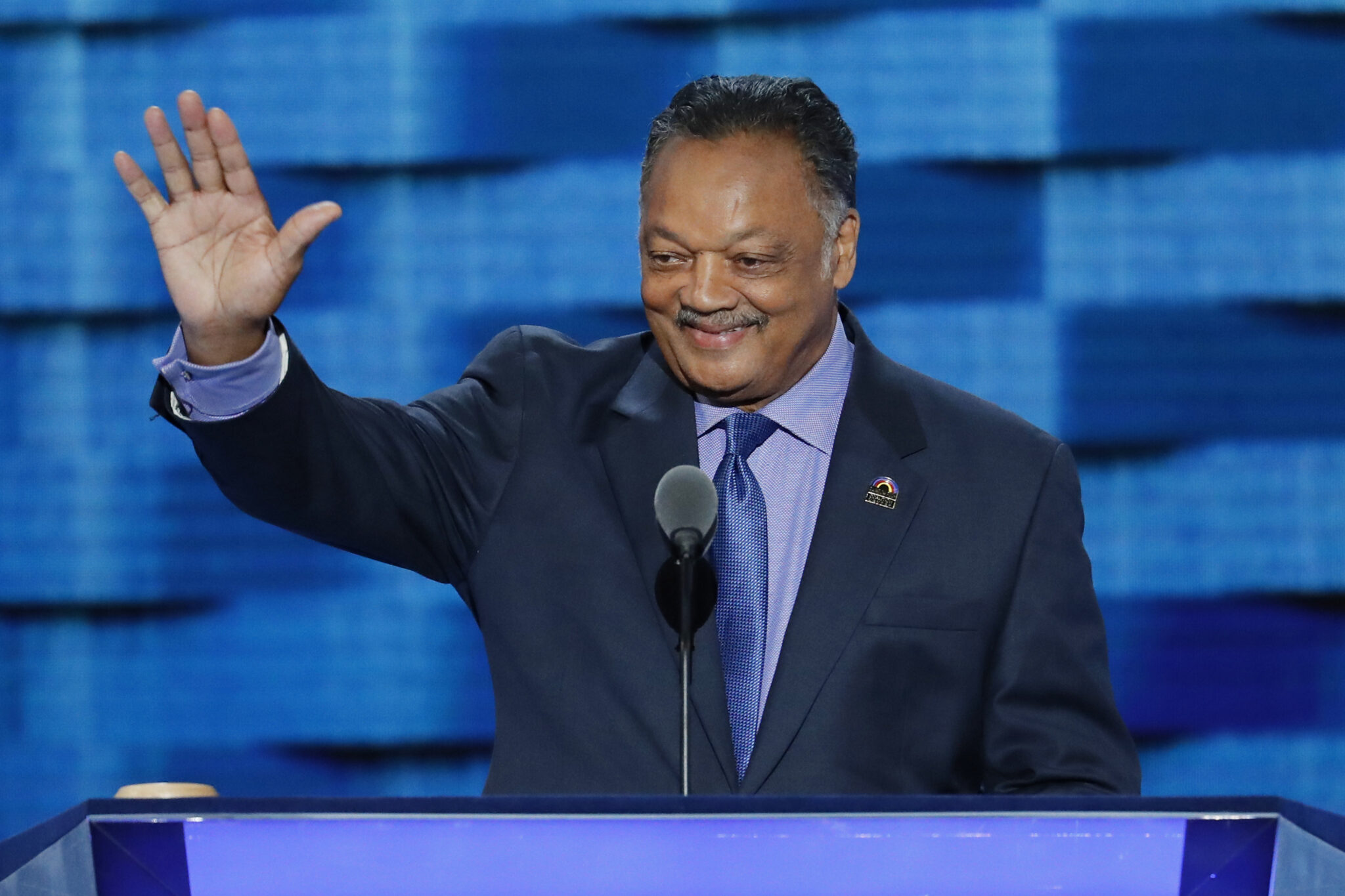
There Was ‘A Bridge Called Jesse Jackson’ Across Decades of Civil Rights Advocacy/ Newslooks/ WASHINGTON/ J. Mansour/ Morning Edition/ Rev. Jesse Jackson, a towering civil rights leader who carried Dr. Martin Luther King Jr.’s legacy forward, has died at 84. For decades, Jackson linked Southern civil rights struggles to national political power, influencing generations from the Black Power era to Barack Obama’s presidency. His activism, presidential campaigns, and global diplomacy reshaped racial politics and expanded the boundaries of American democracy.

Jesse Jackson Civil Rights Legacy Quick Looks
- Rev. Jesse Jackson died at age 84.
- Protégé of Dr. Martin Luther King Jr. and longtime civil rights leader.
- Ran for U.S. president twice, winning 13 Democratic contests in 1988.
- Founder of Operation PUSH and Rainbow/PUSH Coalition.
- Championed the term “African American” in 1988.
- Advocated racial justice into his later years despite Parkinson’s diagnosis.
- Supported COVID-19 vaccination efforts in Black communities.
- Present at George Floyd memorial and Derek Chauvin verdict.
- Helped bridge civil rights movement generations from King to Obama.


Deep Look: There Was ‘a Bridge Called Jesse Jackson’ Aacross Decades of Civil Rights Advocacy
Rev. Jesse Jackson, the longtime civil rights leader who carried forward the unfinished work of the 1960s movement and bridged generations of activism, has died at 84, his family confirmed Tuesday.
For more than five decades, Jackson stood at the intersection of protest and politics — linking the Southern struggle against Jim Crow segregation to Northern fights against systemic inequality. From his early days as a protégé of Martin Luther King Jr. to his presence at the election celebration of Barack Obama, Jackson became what Rev. Al Sharpton once called “a bridge” across eras of Black political advancement.
From King’s Circle to National Leadership
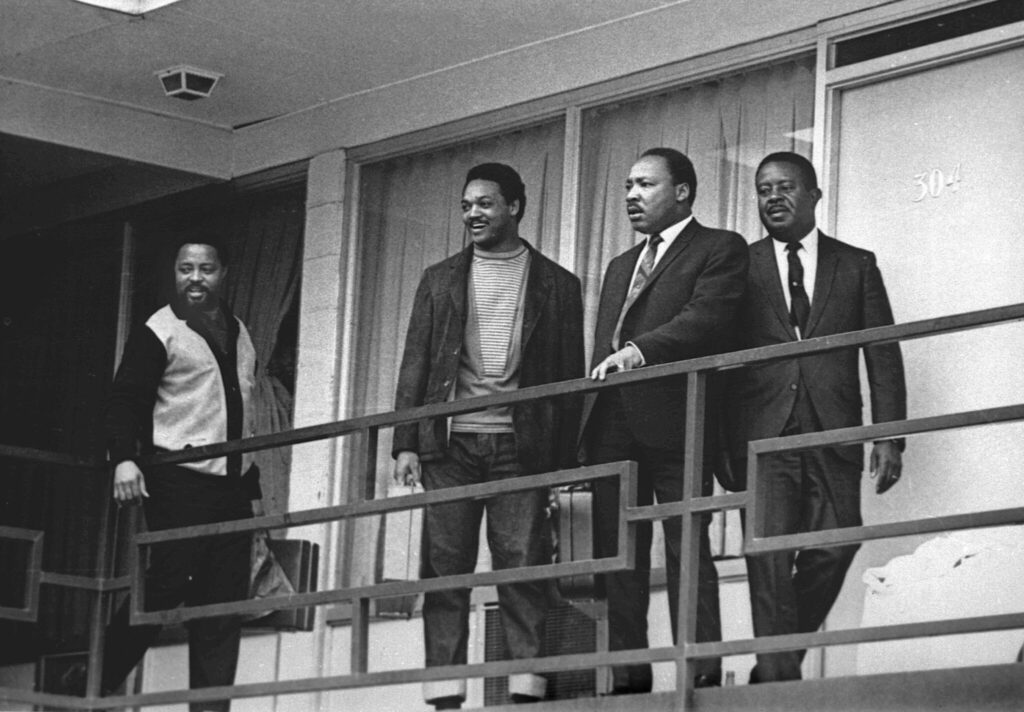
Jackson rose to prominence during the Civil Rights Movement, working closely with King through the Southern Christian Leadership Conference (SCLC). He was present in Memphis on April 4, 1968, when King was assassinated — a moment that seared his image into the nation’s memory.
After King’s death, Jackson emerged as one of the most visible Black leaders in America. He carried the movement’s focus beyond desegregation, pushing for economic justice, political empowerment and corporate accountability.
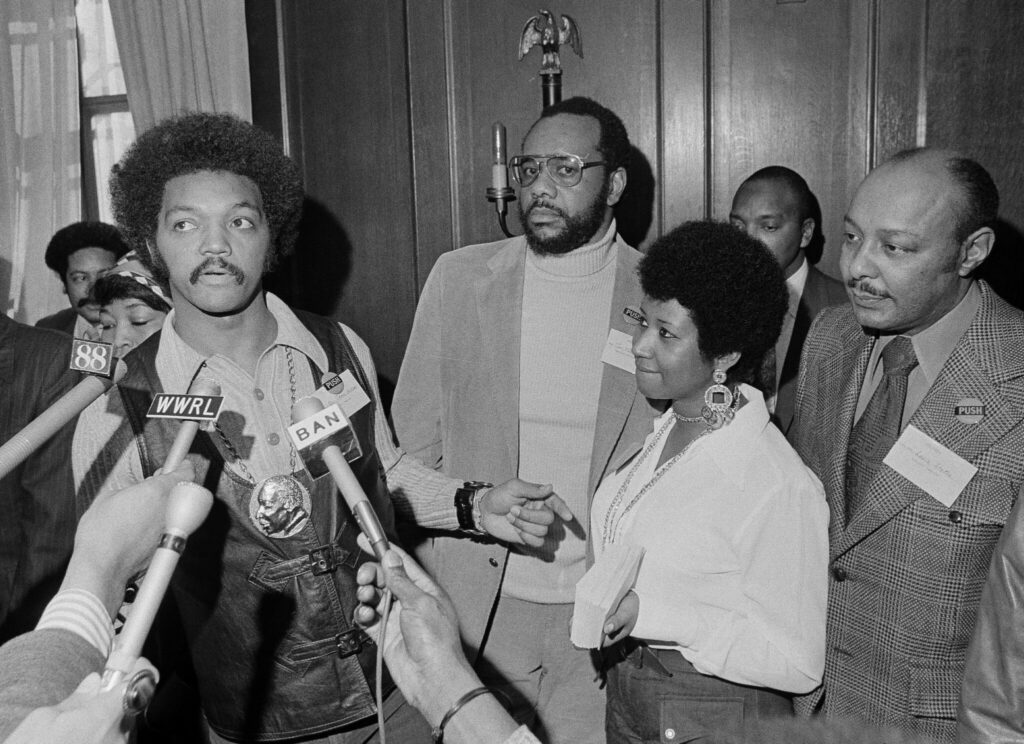
In 1971, after parting ways with the SCLC, Jackson founded Operation PUSH (People United to Save Humanity) in Chicago. The organization later evolved into the Rainbow/PUSH Coalition, blending social services, political activism and corporate advocacy. Jackson pressured major companies to diversify hiring practices and invest in Black communities, transforming protest into boardroom negotiations.
Redefining Political Possibilities
Jackson’s presidential campaigns in 1984 and 1988 redefined what was politically possible for Black Americans. Although he did not win the Democratic nomination, his 1988 campaign secured victories in 13 primaries and caucuses — the most successful presidential bid by a Black candidate until Obama’s historic win two decades later.
Jackson later reflected that his campaigns helped “raise the lid” for women and people of color in national politics. By building a multiracial “Rainbow Coalition,” he broadened the Democratic electorate and injected civil rights language into mainstream political discourse.
His influence also reshaped how Americans talk about race. In 1988, Jackson was among leaders who championed the term “African American,” encouraging a label that acknowledged both ancestral roots and national citizenship.
Global Advocate and Moral Voice
Beyond domestic politics, Jackson played a diplomatic role on the global stage. He helped negotiate the release of American hostages abroad and advocated for peace in international conflicts, leveraging his moral authority to act as an informal envoy.
Even as he aged and was diagnosed with Parkinson’s disease, Jackson remained active. He joined protests after the killing of George Floyd in Minneapolis, crying out “I can’t breathe!” during Floyd’s memorial service to symbolize the nearly nine minutes a police officer knelt on Floyd’s neck.
Jackson returned to Minneapolis for the conviction of former officer Derek Chauvin, telling demonstrators that even a guilty verdict brought “relief, not victory.” His words underscored a lifetime belief that racial justice required sustained vigilance.
Health Equity and COVID-19 Advocacy
During the COVID-19 pandemic, Jackson publicly received the vaccine and encouraged Black Americans to do the same, highlighting longstanding health disparities. Partnering with the National Medical Association, he promoted improved data collection, broader testing access and increased recruitment of African Americans into medical professions.
“It’s America’s unfinished business — we’re free, but not equal,” Jackson said in a 2020 interview, framing the pandemic as both crisis and opportunity for reform.
Triumphs and Controversies
Jackson’s career was not without criticism. Some detractors accused him of seeking publicity or overstepping his role. His remarks occasionally sparked controversy, including a 1984 comment about New York City that he later apologized for and a 2008 hot-mic moment criticizing Obama.
Yet when Obama won the presidency in 2008, Jackson stood in Chicago’s Grant Park with tears streaming down his face — a visible testament to decades of struggle culminating in a milestone many once deemed impossible.
A Life Rooted in Faith and Family
Born Oct. 8, 1941, in Greenville, South Carolina, Jackson overcame personal and social barriers early in life. After excelling as a student-athlete, he transferred to North Carolina A&T State University, where he became student body president and immersed himself in activism following the Greensboro sit-ins.
Ordained as a Baptist minister in 1968, Jackson blended faith and activism throughout his career. His marriage to Jacqueline Lavinia Brown produced five children, including former Rep. Jesse L. Jackson Jr. and Rep. Jonathan Luther Jackson.
Despite personal challenges, including acknowledging fathering a child outside his marriage, Jackson maintained that his own birth circumstances gave him empathy for marginalized families.
The Enduring Bridge
From marching alongside King to witnessing Obama’s ascent, Jackson’s life embodied continuity in the struggle for justice. He stood at protests, in pulpits, on debate stages and across negotiating tables — always urging Americans to “keep hope alive.”
His voice, once thunderous at rallies, softened in later years but never faded from public life. Whether challenging Congress over voting rights or rallying communities during a pandemic, Jackson remained steadfast in his belief that purpose — not comfort — should drive action.
In the long arc of American civil rights history, Jesse Jackson served as a living bridge between eras, connecting improbable dreams to tangible political change. His legacy endures in the leaders he mentored, the language he shaped and the barriers he helped dismantle.