

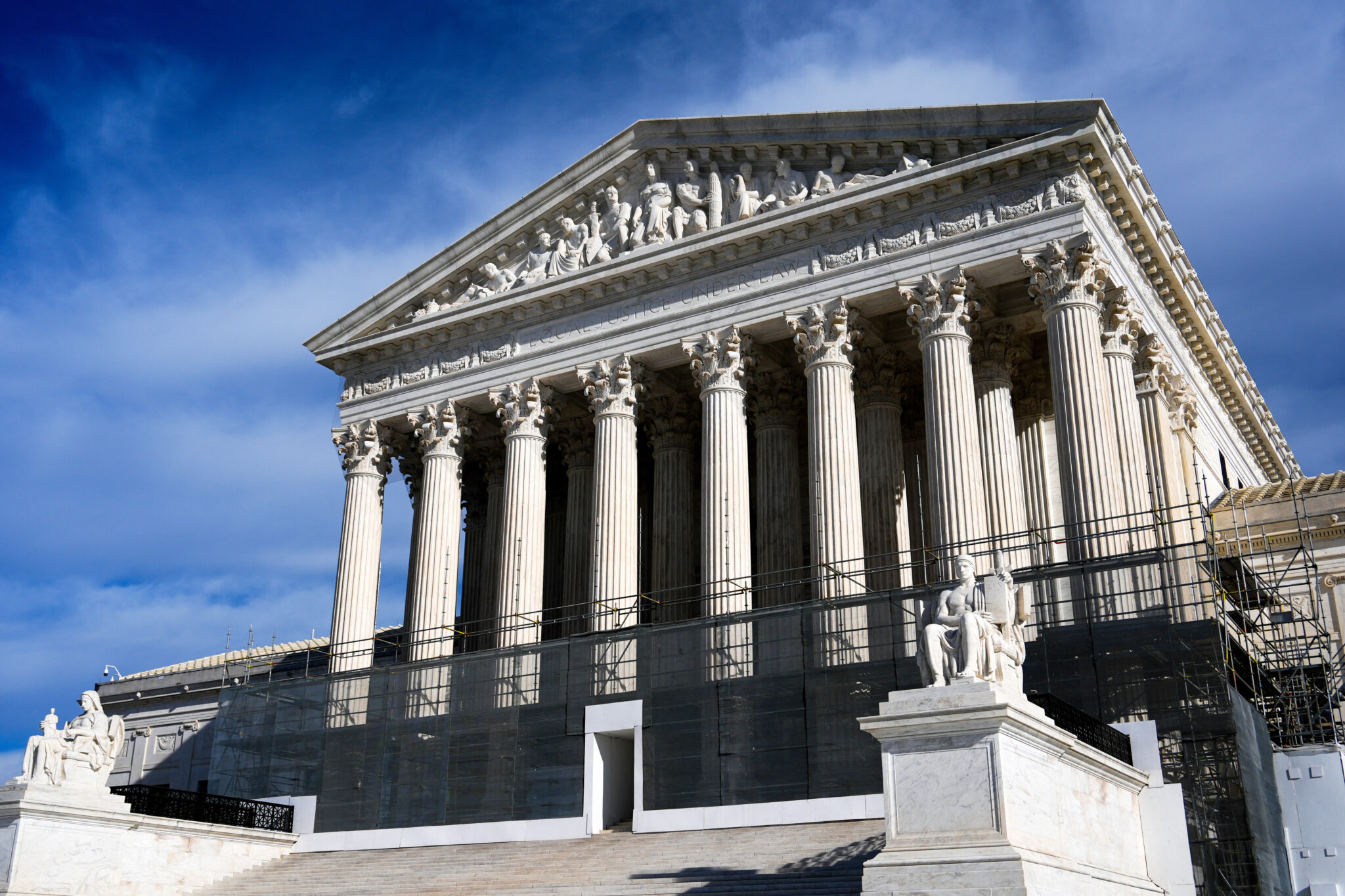
Trump Admin Criticizes Court Rulings Slowing Immigration Agenda in Supreme Court Appeal/ Newslooks/ WASHINGTON/ J. Mansour/ Morning Edition/ The administration of Donald Trump is asking the Supreme Court of the United States to overturn lower court rulings that slowed its immigration crackdown. Officials argue the government has full authority to end Temporary Protected Status (TPS) for migrants from several countries. Advocates warn that removing protections could expose hundreds of thousands of immigrants to deportation.
Trump Immigration Appeal Quick Looks
- The U.S. Department of Justice asked the Supreme Court of the United States to intervene.
- The administration wants broader authority to end Temporary Protected Status (TPS).
- Lower courts have blocked attempts to remove protections for some migrants.
- A federal judge cited possible bias against Haitian immigrants when blocking one termination.
- The administration says courts should not interfere with immigration decisions.
- TPS protections affect migrants from countries including Haiti, Syria, and Venezuela.
- The court previously allowed the termination of protections for Venezuelan migrants to proceed.
- More than 175 former judges urged the court to allow standard appeals to continue.
- Immigration advocates warn ending TPS could place migrants in dangerous conditions.
- The case is part of a broader mass deportation effort by the administration.
Deep Look
Trump Administration Appeals to Supreme Court Over Migrant Protections
The administration of Donald Trump is asking the Supreme Court of the United States to intervene in a series of legal battles over immigration policy, arguing that lower courts are improperly blocking its efforts to end legal protections for thousands of migrants living in the United States.
In a letter submitted Monday, the U.S. Department of Justice urged the high court to issue a sweeping ruling allowing federal officials to terminate immigration protections without interference from the judiciary.
The administration argues that decisions about Temporary Protected Status (TPS) fall squarely within the authority of the executive branch and should not be second-guessed by federal judges.
Lower Courts Block Immigration Moves
The legal fight centers on TPS, a humanitarian program that allows migrants from countries experiencing crises to live and work temporarily in the United States.
Several federal courts have recently blocked attempts by the administration to end those protections for certain groups.
In one case, a judge in Washington, D.C., ruled that the decision to terminate protections for migrants from Haiti may have been influenced by “hostility to nonwhite immigrants.”
That ruling was later upheld by a federal appeals court.
The Trump administration strongly disputes that conclusion and argues that the judiciary has exceeded its authority by interfering in immigration policy decisions.
Justice Department Seeks Broad Ruling
U.S. Solicitor General D. John Sauer told the Supreme Court that lower courts have shown what he described as a “persistent disregard” for earlier decisions from the justices.
He warned that continued court challenges could repeatedly delay the administration’s immigration agenda unless the Supreme Court steps in with a clear ruling.
Sauer has already appealed one decision that kept TPS protections in place for migrants from Syria.
The administration also plans to challenge another ruling protecting roughly 350,000 migrants from Haiti, according to the filing.
Previous Supreme Court Decisions
The Supreme Court has already sided with the administration in at least one recent dispute involving immigration protections.
Earlier this year, the justices allowed the termination of TPS protections for hundreds of thousands of migrants from Venezuela to proceed while litigation continues.
That decision came through the court’s emergency docket — sometimes referred to as the “shadow docket” — which allows urgent rulings without a full hearing.
Those rulings have enabled the administration to move forward with several key policy initiatives while legal challenges remain ongoing.
Critics Urge Full Legal Review
Opponents of the administration’s immigration policies argue that the Supreme Court should allow the normal appeals process to unfold.
A group of more than 175 former federal and state judges filed arguments urging the justices not to treat emergency rulings as permanent legal precedents.
They said complex legal issues surrounding immigration protections deserve full consideration in the courts.
TPS Program Background
Temporary Protected Status allows migrants to live and work legally in the United States if returning to their home countries would be unsafe due to natural disasters, armed conflict, or political instability.
The program is granted in 18-month increments and does not provide a direct path to permanent residency or citizenship.
TPS protections for Haiti were first granted after the devastating 2010 earthquake that killed hundreds of thousands of people and destroyed much of the country’s infrastructure.
While the program has been extended multiple times, Haiti continues to face severe instability and widespread gang violence.
Potential Impact on Migrants
If the administration’s policies are upheld, large numbers of migrants could lose their legal protections.
The Department of Homeland Security has already moved to terminate TPS protections affecting several groups, including:
- About 600,000 migrants from Venezuela
- Roughly 6,100 migrants from Syria
- Around 60,000 migrants from Honduras, Nicaragua, and Nepal
- More than 160,000 migrants from Ukraine
- Thousands from Afghanistan and Cameroon
Immigration attorneys representing Haitian migrants argue that ending the protections could place people in extreme danger.
They warn that some deportees could face violence, political instability, or humanitarian crises in their home countries.
Immigration Policy Fight Continues
The case now places the Supreme Court at the center of one of the administration’s most controversial policy battles.
A ruling in favor of the administration could significantly expand executive authority over immigration protections.
At the same time, a decision siding with the lower courts could reinforce judicial oversight of immigration policy — ensuring that major policy changes undergo full legal scrutiny before taking effect.






You must Register or Login to post a comment.