Trump Approves Nvidia AI Chip Sales to China/ Newslooks/ WASHINGTON/ J. Mansour/ Morning Edition/ President Trump approved Nvidia’s sale of advanced AI chips to select customers in China, aiming to support U.S. jobs and manufacturing. The decision excludes Nvidia’s most advanced chips but has sparked criticism from Democratic senators over national security risks. The move could reshape global AI development dynamics.
Nvidia AI Chip Sales to China: Quick Looks
- Trump approved Nvidia’s H200 AI chips for sale to “approved” Chinese buyers.
- The sale excludes Nvidia’s top-tier Blackwell and Rubin chips.
- Trump claims the decision boosts U.S. jobs and manufacturing.
- Nvidia praised the move as balancing economic and security needs.
- Democratic senators warn the chips could enhance China’s military and cyber power.
- The Commerce Department will screen international chip customers.
- Chinese firms like DeepSeek have struggled without U.S. chip access.
- Trump says AMD and Intel export plans are also underway.
- Nvidia’s stock saw modest gains after the announcement.
- Concerns persist over potential national security risks and AI misuse.
Trump Approves Nvidia AI Chip Sales to China
Deep Look
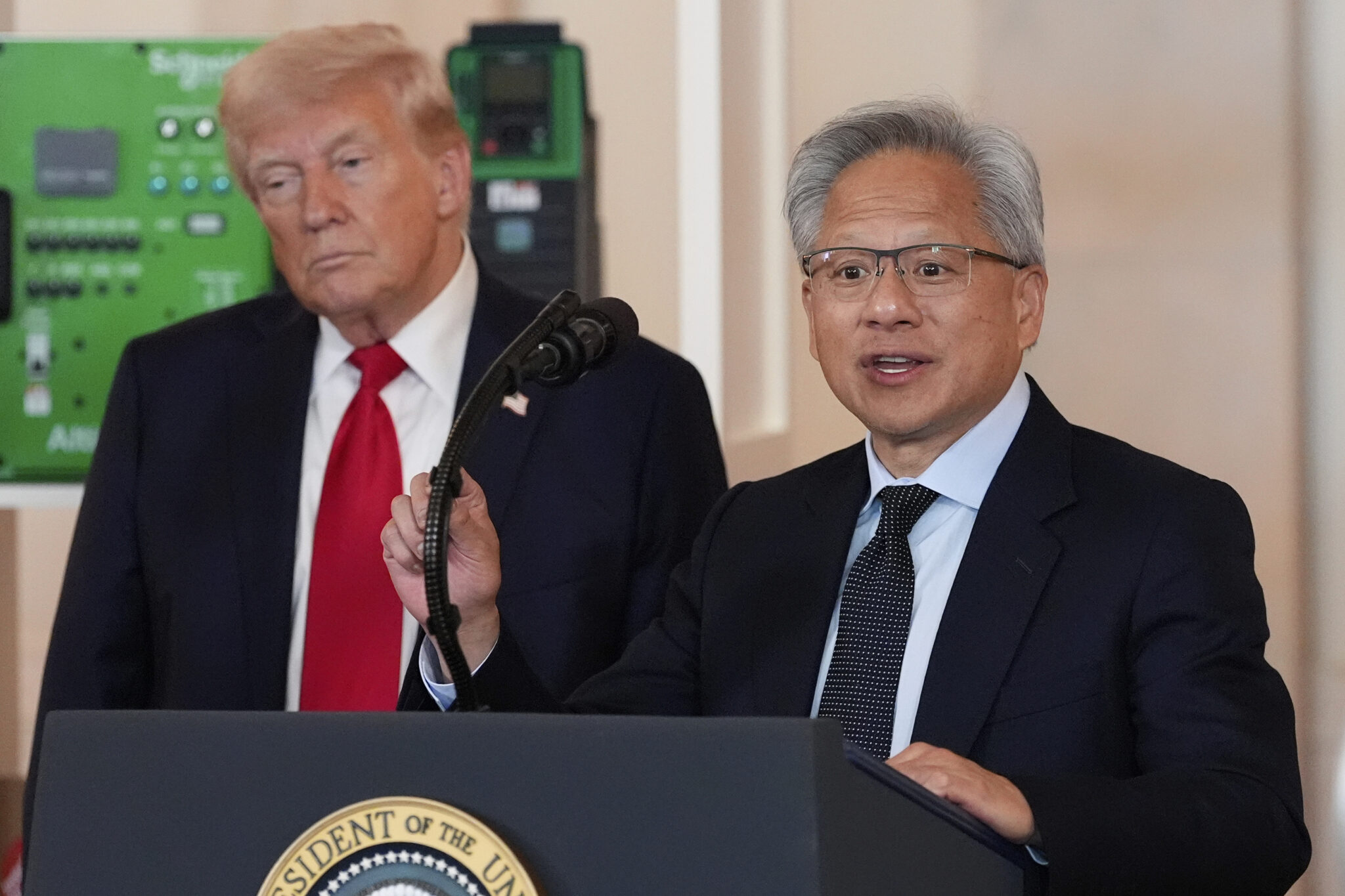
President Donald Trump announced Monday that he will permit Nvidia to sell its advanced H200 computer chips—used in the development of artificial intelligence—to “approved customers” in China. The decision, delivered via social media, represents a significant policy shift that could impact both international AI development and U.S. national security strategy.
Trump stated that he personally informed Chinese President Xi Jinping of the approval, claiming, “President Xi responded positively!” He emphasized the move as a win for the U.S. economy, writing, “This policy will support American Jobs, strengthen U.S. Manufacturing, and benefit American Taxpayers.”
The decision allows Nvidia to sell its H200 chips, which are powerful but not the company’s most cutting-edge products. The approval does not extend to Nvidia’s newest Blackwell series or the upcoming Rubin chips, which remain restricted due to concerns over their potential military or strategic value.
Nvidia welcomed the president’s decision, stating it “applauded” the policy as a practical compromise. The company said the Commerce Department’s role in vetting commercial buyers would ensure “a thoughtful balance” between boosting the U.S. economy and protecting national security.
Despite these safeguards, the move drew swift backlash from a coalition of Democratic senators, who expressed alarm over the potential military applications of the chips. In a joint statement, they warned that the sales could enhance China’s cyber capabilities and strengthen its defense systems.
“Access to these chips would give China’s military transformational technology to make its weapons more lethal, carry out more effective cyberattacks against American businesses and critical infrastructure, and strengthen their economic and manufacturing sector,” the senators wrote.
Among the signatories were Sens. Chris Coons, Jeanne Shaheen, Jack Reed, Elizabeth Warren, Brian Schatz, Andy Kim, Michael Bennet, and Elissa Slotkin—many of whom serve on committees related to national security and technology policy.
The senators also cited recent comments from Chinese AI company DeepSeek, which admitted that a lack of access to advanced American chips was its biggest challenge in competing with U.S.-based AI powerhouses such as OpenAI, Google, Microsoft, Anthropic, Perplexity, and Palantir.
Trump also indicated that other U.S. chipmakers, including AMD and Intel, could soon receive export approval as the Commerce Department “finalizes the details” for broader technology sales abroad. These expansions could further integrate American semiconductor firms into the global AI arms race, increasing both economic opportunities and potential risks.
The licensing approval highlights the growing influence Nvidia and its CEO Jensen Huang hold within the U.S. political and economic landscape. Nvidia, now boasting a market capitalization of $4.5 trillion, is a cornerstone of the global AI revolution and a critical player in Washington’s balancing act between innovation and security.
While the Biden administration had previously restricted AI chip exports to China in order to slow the development of competing military-grade technology, the Trump administration is signaling a different approach—one that prioritizes economic gains while relying on targeted restrictions rather than full bans.
Trump’s policy shift comes amid broader debates in Washington about how to manage China’s rise in AI and tech sectors. Critics argue that even slightly older chips like the H200 can still be instrumental in developing autonomous weapons, surveillance tools, and advanced cyberwarfare platforms.
Meanwhile, Nvidia’s market performance reacted positively, with shares edging up in after-hours trading following the announcement. Investors appear to view the greenlight as a growth opportunity in a massive market where demand for AI infrastructure continues to surge.
The broader implications of the decision remain to be seen. It could spur further international collaboration—or provoke competitive escalations—between U.S. and Chinese tech sectors. As the Commerce Department prepares its regulatory framework, both allies and adversaries are watching closely to gauge how the U.S. plans to walk the tightrope between open markets and national defense.