

Trump Calls $200B Pentagon Funding Request ‘Small Price to Pay’ amid Iran War/ Newslooks/ WASHINGTON/ J. Mansour/ Morning Edition/ President Donald Trump signaled support for a potential $200 billion Pentagon funding increase amid the Iran war. He called the spending a “small price to pay” to maintain military strength and readiness. The proposal comes as global tensions rise and allies differ on support for U.S. actions.
Trump Pentagon funding Quick Looks
- Trump is considering requesting $200 billion in new Pentagon funding.
- He described the cost as a “small price to pay” for military readiness.
- The funding would go beyond needs tied directly to the Iran war.
- Trump emphasized the need for large stockpiles of advanced munitions.
- He denied the U.S. is running low on weapons.
- The request comes amid escalating conflict in the Middle East.
- Trump praised Japan’s support while criticizing NATO allies.
- He also said he is not currently deploying U.S. ground troops.
Deep Look: Trump Calls $200B Pentagon Funding Request ‘Small Price to Pay’ amid Iran War
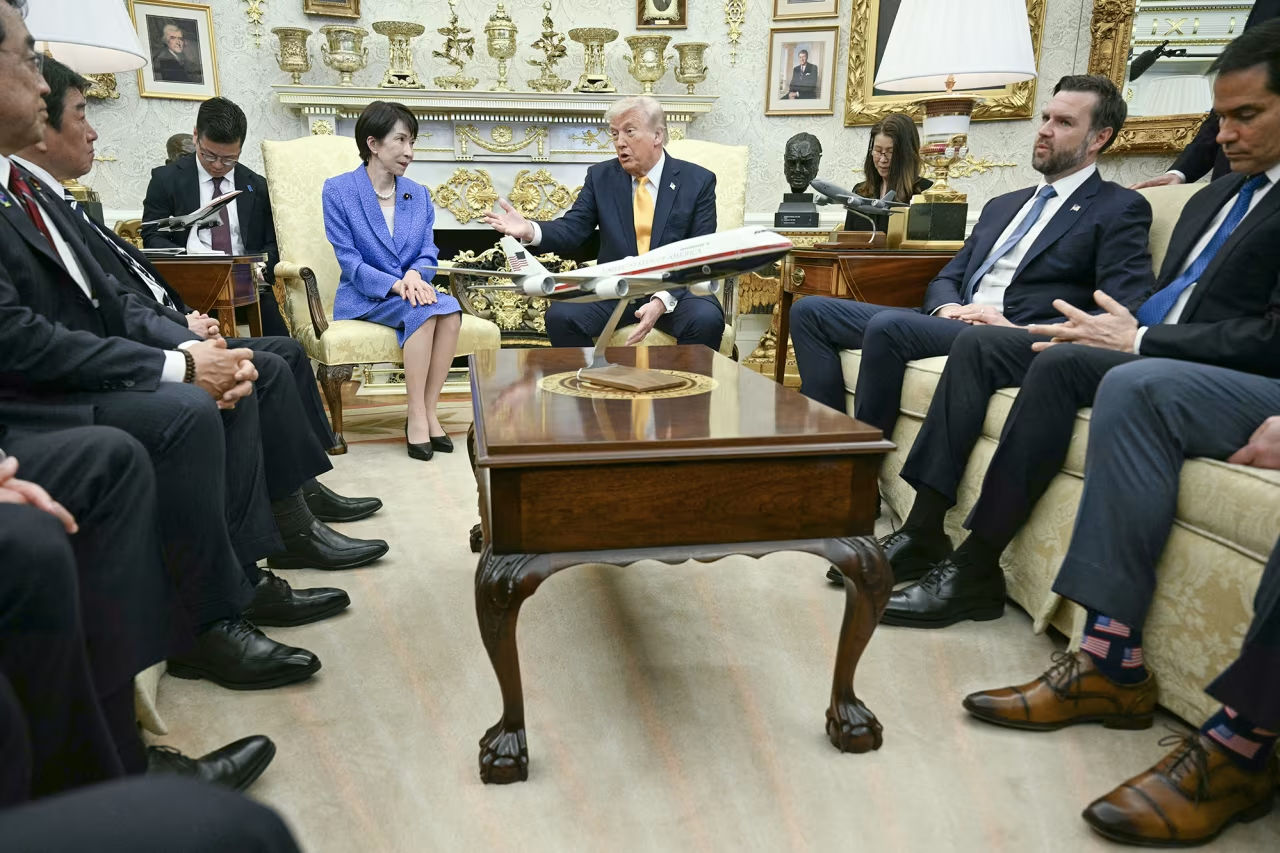
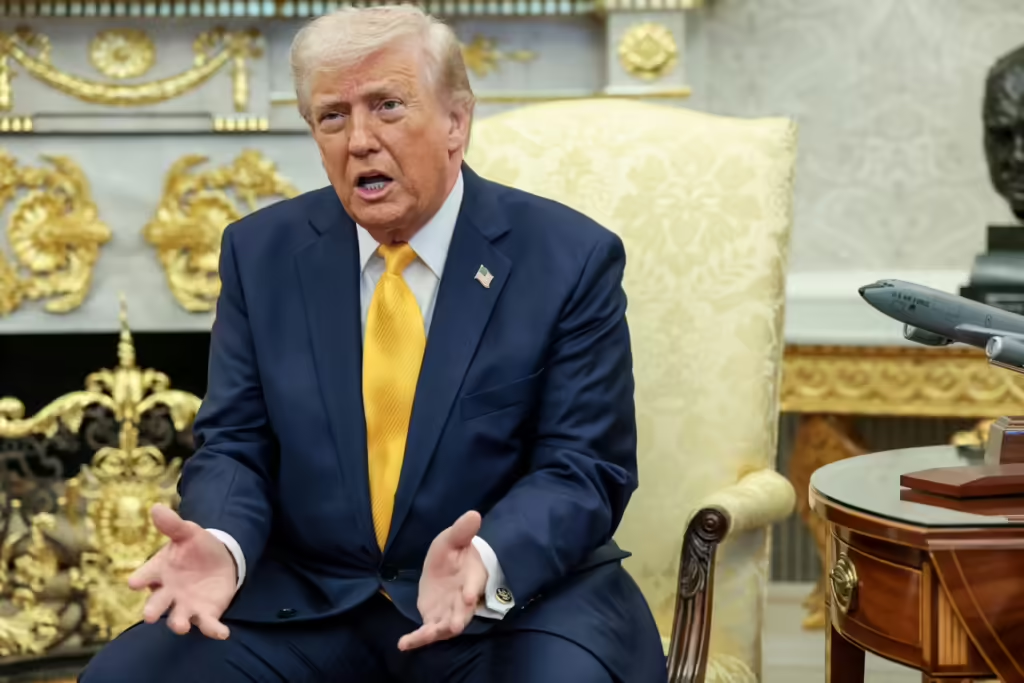
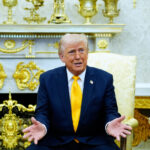
President Donald Trump is weighing a major expansion of U.S. defense spending, suggesting a potential $200 billion increase for the Pentagon as the conflict with Iran intensifies. Speaking from the Oval Office, Trump framed the proposed funding as necessary to ensure the United States maintains overwhelming military strength, calling it a “small price to pay” to remain at the top of global power.
The proposed funding would not be limited to operations related to Iran. Trump made clear that the request would cover broader military needs, including long-term readiness, weapons production, and strategic capabilities. While he did not provide detailed allocations, he emphasized the importance of maintaining large reserves of high-end munitions, suggesting that the U.S. is preparing not just for the current conflict but for future contingencies as well.
Despite the scale of the potential request, Trump rejected the idea that the U.S. military is facing shortages. Instead, he described the administration’s approach as careful and deliberate, saying resources are being preserved while ensuring that the military remains fully equipped. His comments indicate a strategy focused on maintaining dominance rather than reacting to immediate supply constraints.
The funding discussion comes at a time of growing global instability. The war with Iran has already disrupted energy markets, heightened security concerns in the Middle East, and forced the U.S. to reassess its military posture. In that context, Trump’s push for increased defense spending reflects both immediate wartime needs and a broader effort to reinforce U.S. deterrence.
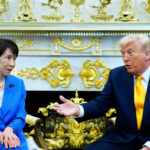
At the same time, Trump highlighted differences among U.S. allies. During a meeting with Japanese Prime Minister Sanae Takaichi, he praised Japan for what he described as strong support for U.S. actions. He contrasted that with NATO allies, whom he criticized for not doing enough to assist in protecting key global shipping routes such as the Strait of Hormuz. Trump suggested that some allies are only now becoming more cooperative after initial reluctance.
The president also addressed coordination with Israel, saying he had personally urged Israeli Prime Minister Benjamin Netanyahu to avoid further strikes on Iranian energy infrastructure. Trump indicated that while the U.S. and Israel work closely together, there are moments when Washington seeks to restrain certain actions to prevent further escalation, particularly when global energy markets are at risk.
On the economic front, Trump acknowledged that he had expected oil prices to rise more sharply following U.S. strikes on Iran. While energy markets have reacted with price increases, he suggested the impact has been less severe than anticipated and predicted that conditions could stabilize relatively soon. He also signaled flexibility on sanctions policy, saying the administration would take whatever steps are necessary to manage energy prices if needed.
Trump also addressed speculation about a broader military escalation, stating that he is not currently deploying U.S. ground troops. However, he added that he would not publicly disclose such plans if they were under consideration, reinforcing the administration’s position that all options remain available.
The potential $200 billion Pentagon request highlights the scale of the administration’s response to the evolving conflict. It reflects a belief that maintaining military superiority requires significant and sustained investment, even as the war’s long-term trajectory remains uncertain. At the same time, it raises questions about cost, priorities, and how far the U.S. is willing to go in committing resources to both current and future conflicts.
As Congress prepares to weigh any formal funding request, the debate is likely to center on balancing national security needs with fiscal concerns, as well as defining the scope of U.S. involvement in the Iran war. Trump’s framing of the spending as a necessary investment in strength sets the tone for what could become a major policy battle in Washington.

You must Register or Login to post a comment.