Trump Commits to U.S. Role in Post-Maduro Venezuela Political Transition/ Newslooks/ WASHINGTON/ J. Mansour/ Morning Edition/ President Trump called Maduro’s ouster a historic success and committed to guiding Venezuela’s transition. The administration claims it will temporarily “run” Venezuela until new leadership is established. Global leaders and critics warn of legal, geopolitical, and humanitarian risks of unilateral U.S. action.
Trump’s Venezuela Plans – Quick Looks
- Trump calls Maduro’s capture a top U.S. military success
- Commits U.S. to overseeing Venezuela’s post-regime transition
- Claims U.S. will be reimbursed via Venezuelan oil revenue
- Global leaders condemn action as breach of international law
- Pentagon warns U.S. adversaries to “stay on notice”
- Democrats question legality, call move an act of aggression
- Trump links oil wealth to rebuilding efforts with U.S. firms
- Venezuela’s political future still uncertain amid power vacuum
Deep Look
After Maduro’s Ouster, Trump Commits to Overseeing Venezuela’s Transition
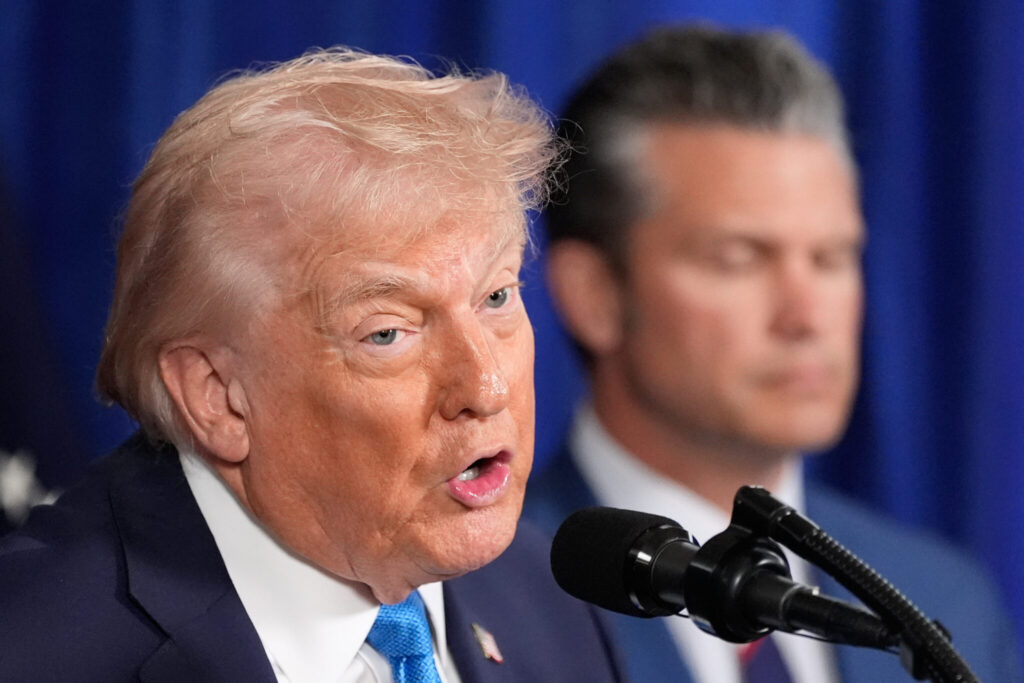
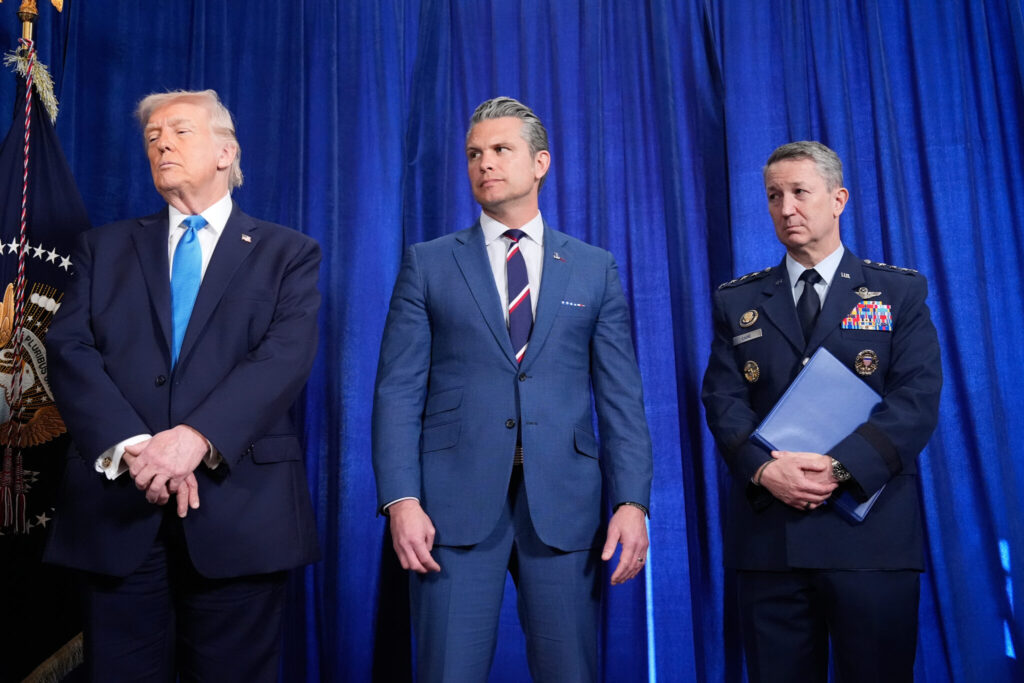
Following the stunning U.S. military operation that removed Nicolás Maduro from power in Venezuela, President Donald Trump has declared the mission a monumental victory and promised a long-term American role in rebuilding the country. At a press conference from his Mar-a-Lago estate, Trump made it clear: the U.S. isn’t done in Venezuela — it’s just getting started.
“This was one of the most stunning, effective and powerful displays of American military might in our history,” Trump proclaimed. He pledged to usher in an era of “peace and justice” for Venezuela after years of economic ruin, corruption, and authoritarian rule.
The president, who once campaigned on limiting foreign entanglements, is now embracing one of the most ambitious U.S.-led foreign policy initiatives in Latin America in decades. With Maduro in custody and en route to face narco-terrorism charges in New York, Trump said the U.S. would “run” Venezuela temporarily until a new government can take over.
No Boots on the Ground — Yet
Despite Trump’s commitment to steering Venezuela’s post-Maduro transition, there is no visible U.S. military presence in Caracas. Still, his administration claims it has control of the situation and will direct the country toward a new democratic order — one fueled, in part, by Venezuela’s vast oil resources.
“We’re going to get reimbursed for everything that we spend,” Trump said, pointing to the country’s lucrative petroleum reserves. “The money coming out of the ground is very substantial.”
The administration has suggested that U.S. oil companies will play a pivotal role in restoring the country’s economy — a move that would further deepen American involvement and financial stakes in the transition.
Global Criticism Mounts
While the Venezuelan diaspora in places like South Florida celebrated the fall of Maduro, the global response was far more skeptical.
France and the European Union criticized the operation for violating international law.
France’s Foreign Minister Jean-Noël Barrot said the mission “infringes the principle of the non-use of force.” European Commission President António Costa voiced “great concern” over Venezuela’s future.
Russia blasted the move as an “act of armed aggression,” warning that Venezuela’s right to self-determination had been trampled. Russia has long been a backer of Maduro and remains aligned with opposition to Western military interventions.
China, Venezuela’s other major global ally, accused the U.S. of violating Venezuela’s sovereignty and condemned the mission in a strongly worded statement.
Domestic Blowback and Political Divides
In Washington, the operation sparked immediate backlash from Democrats and some legal experts who questioned the mission’s legality and constitutionality, given the absence of congressional authorization.
Senator Ruben Gallego (D-Ariz.) posted, “This war is illegal. We went from the world cop to the world bully in less than a year.”
Trump’s critics argue that the administration is creating a dangerous precedent by launching unilateral military operations and dictating post-conflict governance without international consensus.
Still, the president defended the decision by pointing to Maduro’s illegitimacy, citing his fraudulent 2018 and 2024 elections, and Venezuela’s descent into political and economic chaos.
Post-Capture Chaos and Power Vacuum
Maduro’s removal leaves a power vacuum in Venezuela that the U.S. will now attempt to manage. The country, despite being home to the world’s largest proven oil reserves, has suffered from hyperinflation, mass migration, food and medicine shortages, and a deepening brain drain.
Venezuelan government officials had previously offered a gradual transition plan in which Maduro would step down in three years, handing power to Vice President Delcy Rodriguez, who wouldn’t seek re-election. The Trump administration rejected the proposal, citing Maduro’s involvement in narco-terrorism and systemic corruption.
Now, Rodriguez has been sworn in following Maduro’s capture. Trump revealed that Secretary of State Marco Rubio spoke with Rodriguez by phone on Saturday.
“We’ll run it professionally,” Trump said of the U.S. role in Venezuela. “We’ll have the greatest oil companies in the world going in, invest billions and billions of dollars.”
Despite questions surrounding who will ultimately lead Venezuela, Trump declined to endorse a specific successor. He acknowledged the opposition’s claim that exiled politician Edmundo González, an ally of Maria Corina Machado, is the rightful president, but said his administration must remain ‘very involved’ in determining the country’s next steps.
Implications Beyond Venezuela
The Maduro operation marks Trump’s second bold foreign intervention since returning to office. In June, he ordered strikes on Iranian nuclear facilities, signaling a new era of American military assertiveness.
According to Pentagon chief Pete Hegseth, the message to U.S. adversaries is clear. “America can project our will anywhere, anytime,” he said. “Under President Trump, America is back.”
The global ripple effect of this action remains uncertain, especially as powers like China and Russia observe how far the U.S. is willing to go to assert control in its traditional sphere of influence.
With ongoing crises in Gaza and Ukraine, Trump is now deeply committed to a third major foreign policy challenge, potentially reshaping the geopolitical balance in the Western Hemisphere — and once again redefining America’s role on the global stage.