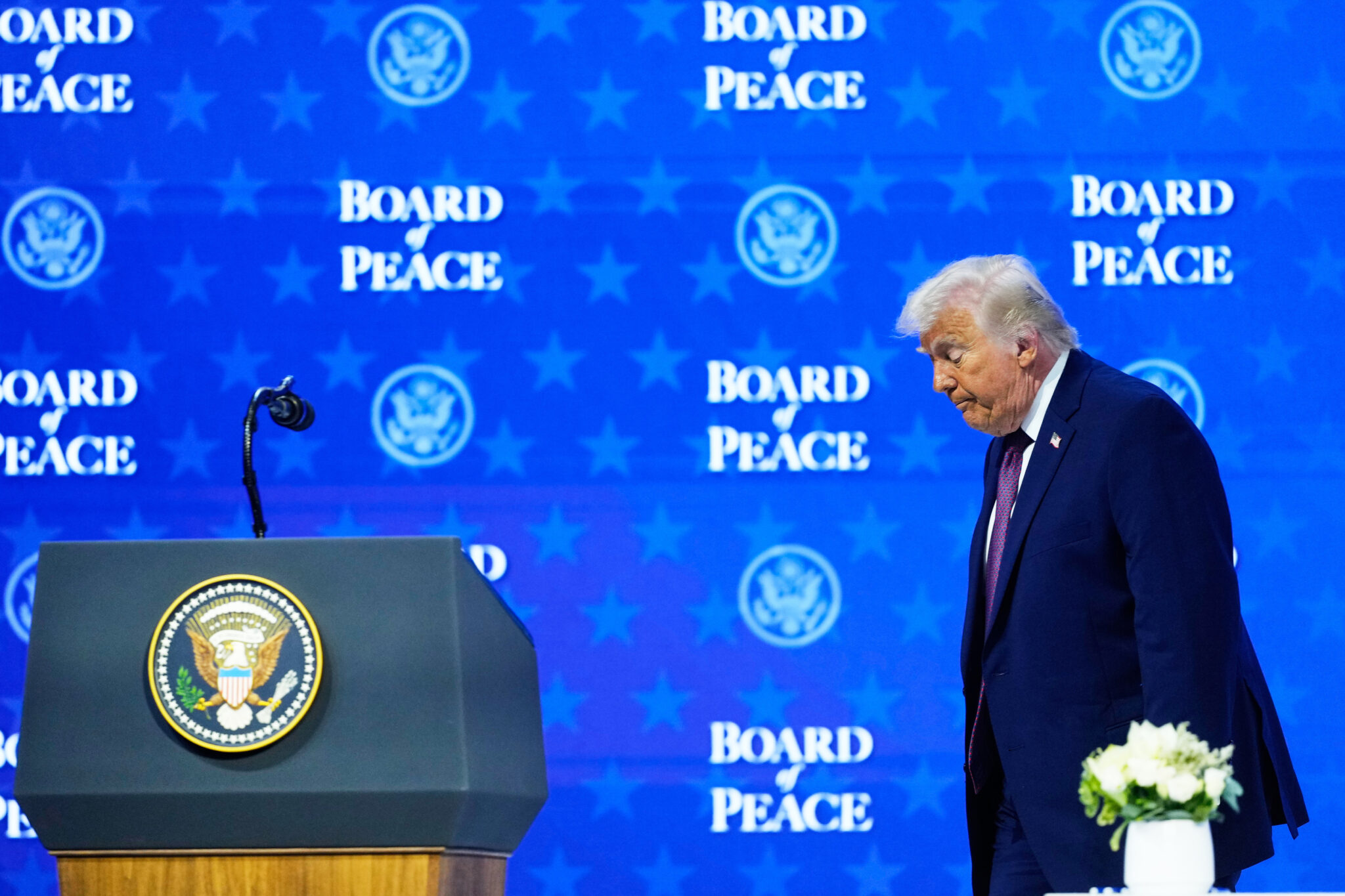
Trump Convenes Board of Peace on Gaza in Washington/ Newslooks/ WASHINGTON/ J. Mansour/ Morning Edition/ President Donald Trump hosts the first meeting of his Board of Peace, aimed at rebuilding Gaza and creating a stabilization force. More than 40 countries will attend, though some U.S. allies remain wary of the initiative’s scope. The board’s expanded mission has sparked concerns it could rival the United Nations.
Trump Board of Peace Gaza Meeting Quick Looks
- Inaugural Board of Peace summit in Washington
- Focus on Gaza reconstruction and security force
- $5 billion pledged toward estimated $70 billion need
- Over 40 nations and EU participating
- Some allies attending as observers, not members
- Questions over Hamas disarmament and ceasefire stability
- Critics worry board could rival United Nations
- Indonesia commits personnel for stabilization force
Deep Look: Trump Convenes Board of Peace on Gaza in Washington
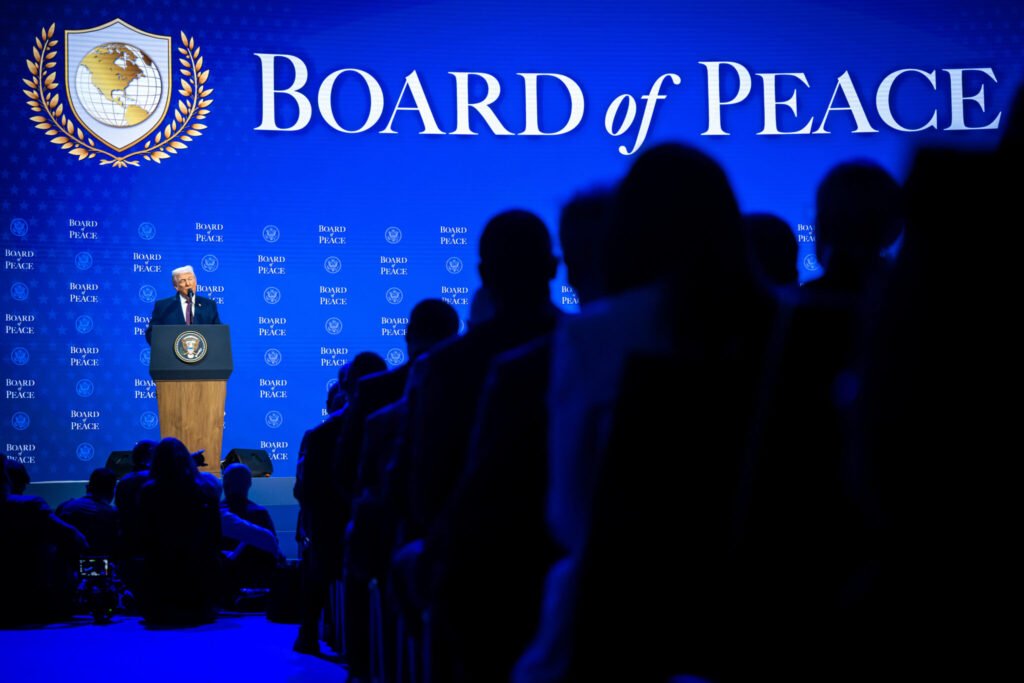
President Donald Trump is convening representatives from more than two dozen countries for the first formal gathering of his newly created Board of Peace, an initiative designed to oversee Gaza’s reconstruction and help secure long-term stability following two years of devastating conflict.
The inaugural meeting, taking place in Washington, marks a major diplomatic effort tied to Trump’s 20-point peace proposal for Gaza. While the administration frames the board as a practical mechanism to rebuild infrastructure and maintain security during a fragile ceasefire, some U.S. allies are expressing reservations about its expanding mission and its potential overlap with the United Nations.
Reconstruction Commitments Fall Short
Ahead of the summit, Trump announced that participating nations have pledged approximately $5 billion toward rebuilding Gaza. The commitment, while significant, represents only a fraction of the estimated $70 billion required to restore the Palestinian territory after prolonged fighting between Israel and Hamas.
Board members are also expected to unveil plans for deploying thousands of personnel as part of an international stabilization and policing force intended to maintain order and support governance reforms.
“We have the greatest leaders in the world joining the Board of Peace,” Trump said earlier in the week, describing the initiative as potentially the most consequential diplomatic body ever assembled.
Initially conceived as a mechanism focused solely on ending the Gaza conflict, Trump has since expanded the board’s envisioned role. The president now suggests it could help address broader global conflicts, transforming it from a region-specific initiative into a wider international platform.
Allies Voice Caution
More than 40 countries and the European Union are sending officials to the meeting. However, some key U.S. partners — including Germany, Italy, Norway, and Switzerland — have declined formal membership and will attend only as observers.
The skepticism reflects unease about whether the Board of Peace might sidestep or weaken existing multilateral institutions. The timing of the board’s debut also coincided with a high-level U.N. Security Council meeting on the Gaza ceasefire and Israel’s actions in the West Bank. That session was rescheduled to accommodate diplomatic travel conflicts once Trump announced the Washington summit.
Vatican Secretary of State Cardinal Pietro Parolin recently suggested that international crisis management should remain primarily within the United Nations framework. The White House swiftly rejected that notion.
Press Secretary Karoline Leavitt defended the board as a legitimate multinational effort, emphasizing that dozens of countries have voluntarily joined. Meanwhile, U.S. Ambassador to the U.N. Mike Waltz dismissed criticism that the initiative is unconventional.
“The old ways were not working,” Waltz said, arguing that the board emphasizes action over rhetoric.
Fragile Ceasefire and Security Challenges
A key issue dominating Thursday’s discussions will be security in Gaza, particularly the disarmament of Hamas — a central demand of Israel and a cornerstone of the current ceasefire arrangement.
Thus far, Indonesia has emerged as the only nation to offer a firm commitment of personnel for the proposed stabilization force. Indonesian President Prabowo Subianto pledged cooperation with other Muslim-majority nations to pursue lasting peace in Palestine.
While acknowledging significant obstacles, Subianto emphasized the importance of sustained diplomatic engagement.
Administration officials concede that demilitarizing Hamas presents enormous challenges. Though mediators have reported incremental progress, no concrete agreement has been reached regarding full disarmament.
The Gaza Executive Board — the operational branch of the initiative — is expected to present updates on efforts to establish functioning governance systems and essential public services in the territory.
High-Profile Participants
In addition to Trump, the summit will feature several prominent figures, including Secretary of State Marco Rubio, special envoy Steve Witkoff, and senior adviser Jared Kushner. Former British Prime Minister Tony Blair and executive board representative Nickolay Mladenov are also scheduled to address attendees.
Their presence underscores the administration’s attempt to project global legitimacy and bipartisan experience for the new body.
Broader Implications
Analysts say allied hesitation is not surprising. Michael Hanna of the International Crisis Group noted that without a clearly defined mandate extending beyond Gaza, many nations are wary of fully committing.
Some participating countries appear motivated less by endorsement of the board’s expanded ambitions and more by a desire to influence U.S. policy from within. By engaging directly, they hope to encourage Washington to leverage its diplomatic influence with Israel to sustain the ceasefire and facilitate reconstruction.
The broader geopolitical stakes remain high. Gaza’s humanitarian crisis persists, and tensions in the West Bank continue to draw international concern. Whether the Board of Peace evolves into a durable multilateral mechanism or remains a narrower Gaza-focused initiative may depend on the success of reconstruction efforts and progress toward security stabilization.
For now, Trump’s diplomatic experiment begins amid both optimism and skepticism — a bold initiative aimed at reshaping post-war Gaza governance while navigating complex alliances and institutional rivalries.