Trump Denounced Europe as ‘Decaying’ and Its Leaders as ‘Weak’/ Newslooks/ WASHINGTON/ J. Mansour/ Morning Edition/ In a POLITICO interview, President Trump harshly criticized European leaders as “weak” and vowed to support like-minded politicians abroad. He declined to reassure allies about Ukraine, praised Hungary’s Viktor Orbán, and said some European nations risk collapse due to migration. Trump also addressed inflation, Latin America, and Supreme Court strategy.
Trump Criticizes Europe and Signals Global Political Shift: Quick Looks
- Trump denounced Europe as “decaying” and its leaders as “weak.”
- He vowed to endorse far-right candidates across the continent.
- Trump said cities like London and Paris are collapsing under migration.
- He praised Hungary’s Viktor Orbán and slammed London Mayor Sadiq Khan.
- Trump offered no support for Ukraine and claimed Russia is stronger.
- He hinted at expanding military action into Venezuela, Mexico, and Colombia.
- Trump said he’d only nominate a Fed chair who backs rate cuts.
- He rated the U.S. economy “A-plus-plus-plus-plus-plus,” despite voter frustration.
- Trump was noncommittal on extending health insurance subsidies set to expire.
- He urged Justices Alito and Thomas to remain on the Supreme Court.
Trump Denounced Europe as ‘Decaying’ and Its Leaders as ‘Weak’
Deep Look
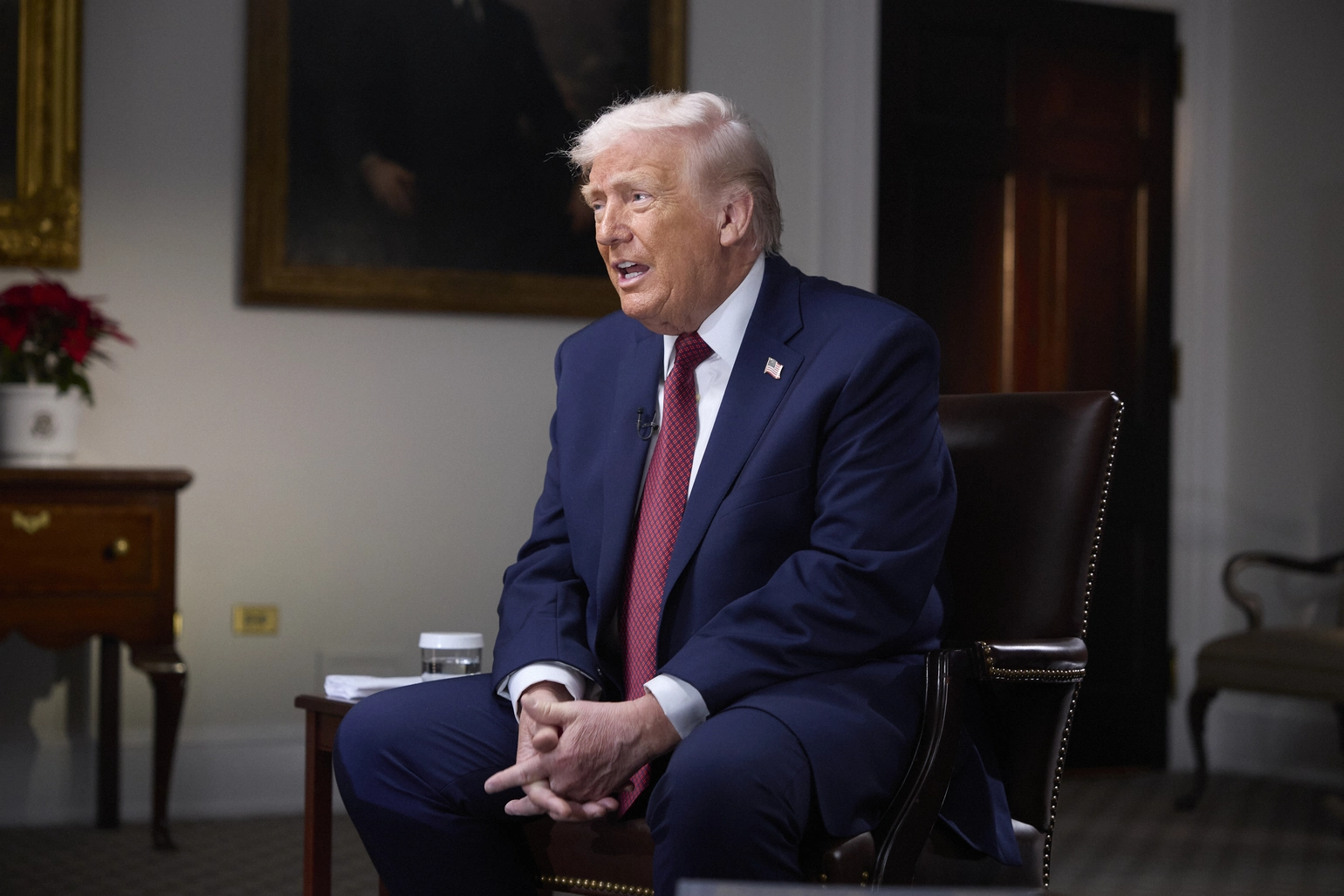
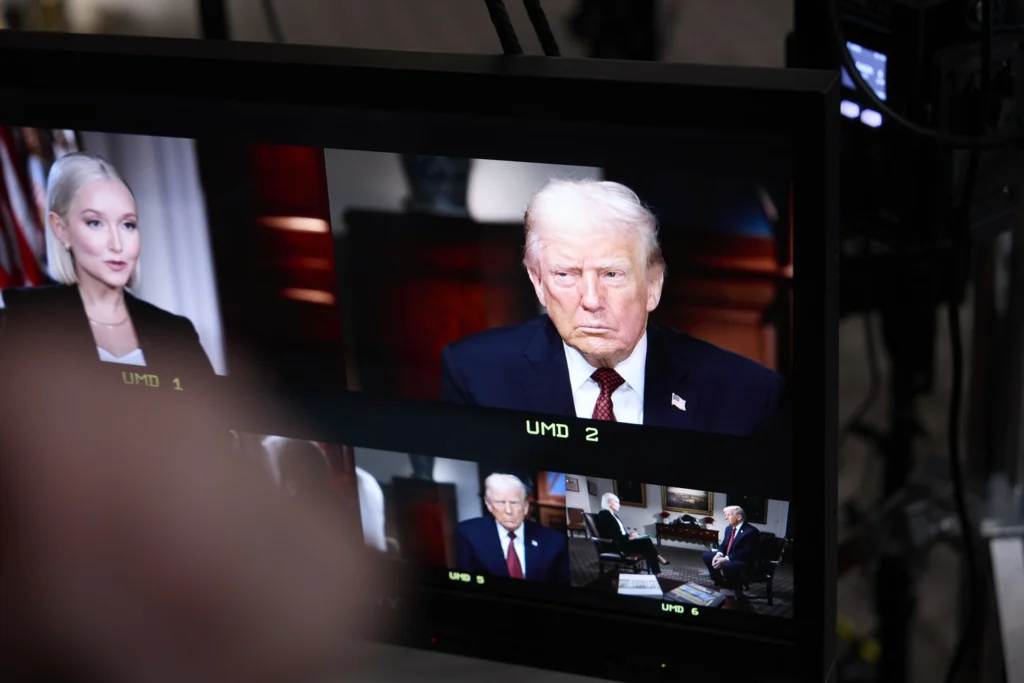
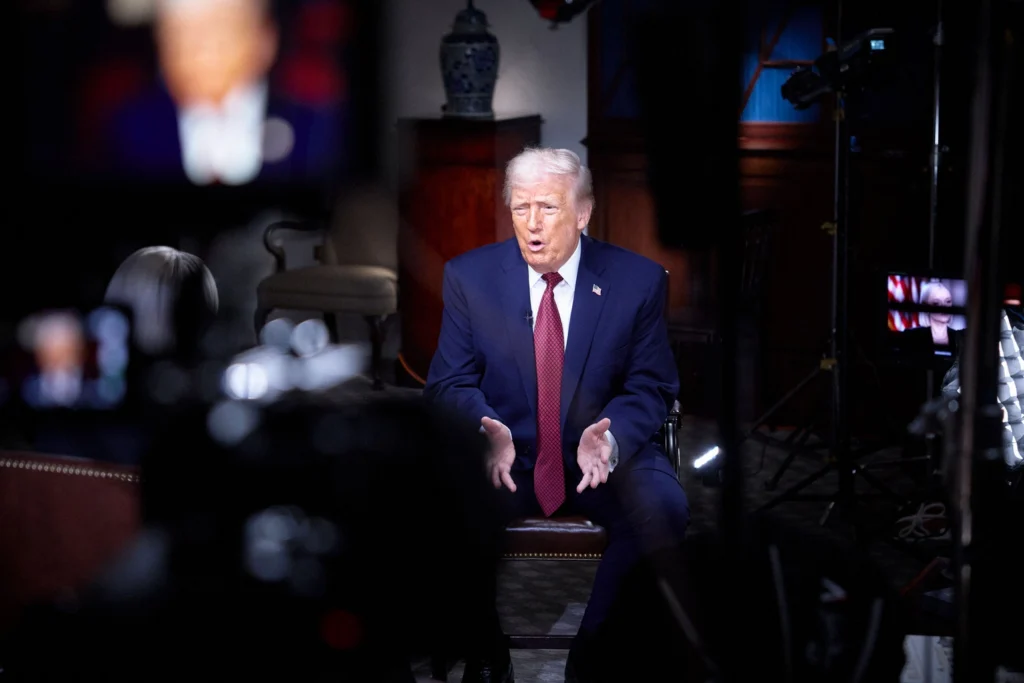
In a searing interview with POLITICO, President Donald Trump unleashed his most direct and provocative critique yet of Europe’s leadership, calling the continent “decaying” and its political class “weak.” The interview, part of a special episode of The Conversation, highlighted Trump’s growing willingness to not only criticize longtime allies but to actively reshape their political direction by endorsing aligned candidates abroad.
“I think they’re weak,” Trump said bluntly of European leaders. “They don’t know what to do. Europe doesn’t know what to do.” He blamed European governments for their failure to end the Russia-Ukraine war and for allowing mass migration, which he claimed was tearing apart cities like London and Paris.
Trump showed no intention of easing tensions with allies. Asked about Europe’s concerns that he may abandon Ukraine to Russian aggression, Trump offered no reassurances. Instead, he stated that Russia is “obviously in a stronger position” and claimed to have drafted a new peace plan that Ukrainian officials hadn’t yet reviewed. “It would be nice if [Zelenskyy] would read it,” Trump said.
While Ukrainian President Volodymyr Zelenskyy continued to insist Ukraine would not cede territory to Russia, Trump dismissed European efforts toward peace as ineffective: “They talk, but they don’t produce.”
In perhaps his most inflammatory comments, Trump called London Mayor Sadiq Khan—a Muslim of Pakistani descent—a “disaster,” attributing his election to high levels of immigration.
“He gets elected because so many people have come in,” Trump said. He added that without stricter border controls, some European nations “will not be viable countries any longer.”
Trump also confirmed he would continue endorsing hard-right candidates in Europe, despite backlash.
“I’d endorse,” he said. “I’ve endorsed Viktor Orbán,” referring to the nationalist Hungarian leader, whose anti-immigration policies Trump admires. This approach directly clashes with the European Council’s recent warning that the U.S. should not interfere in democratic processes abroad.
The interview coincided with POLITICO naming Trump the most influential figure in European politics for the coming year—surpassing past honorees like Zelenskyy and Italian Prime Minister Giorgia Meloni.
Domestic Affairs: Interest Rates, Economy, and Health Care
On the domestic front, Trump remained characteristically confident. He gave the U.S. economy under his administration an “A-plus-plus-plus-plus-plus” rating, despite rising health care costs and public frustration over inflation. “Prices are all coming down,” he insisted, despite Consumer Price Index data showing prices had risen 3 percent year-over-year through September.
The president confirmed he will only consider Federal Reserve chair nominees who support immediate interest rate cuts, making that stance a litmus test. His decision could significantly impact borrowing costs for mortgages, cars, and credit cards, with economists warning that premature rate cuts could reignite inflation.
Meanwhile, Trump dodged questions about extending enhanced health insurance subsidies from the Biden era, which are set to expire at the end of 2025. When pressed on the looming spike in premiums, he replied, “I don’t know. I’m gonna have to see,” and pivoted to blaming Democrats for “giving away too much” to insurance companies under Obamacare.
Trump offered vague reassurances on future reforms: “The people will get the money, and they’re going to buy the health insurance that they want.” Despite years of promising a full repeal and replacement of Obamacare, Trump has yet to unveil a concrete health plan.
Latin America and Military Action
Trump also doubled down on the military campaign against Latin American drug networks. He refused to rule out deploying U.S. troops to Venezuela to confront the regime of Nicolás Maduro, saying only, “I don’t want to talk to you about military strategy.”
He added that he would “consider” similar military actions in Mexico and Colombia, continuing a policy of aggressive intervention in the region.
Trump defended his controversial pardon of former Honduran President Juan Orlando Hernández, who had been serving a lengthy U.S. prison sentence for drug trafficking.
Trump claimed he knew “very little” about the case but acted on recommendations from “very good people.”
Supreme Court and Judicial Legacy
The president also weighed in on the future of the Supreme Court. With aging conservative justices Clarence Thomas (77) and Samuel Alito (75) under pressure to retire before the 2026 midterms, Trump made clear he prefers they remain.
“I hope they stay,” he said, “’cause I think they’re fantastic.”
Trump’s administration is currently involved in high-stakes legal battles, including a case that could determine the fate of birthright citizenship. Trump has said it would be “devastating” if the Court blocked his efforts to roll back the constitutional guarantee of citizenship to those born on U.S. soil. Asked whether he would attempt to strip citizenship retroactively, Trump admitted he hadn’t considered it.
Looking Ahead
Trump’s wide-ranging interview marks a bold reassertion of his influence both at home and abroad. His remarks suggest he intends not just to campaign in the U.S., but to shape global political trends—particularly in Europe—by backing like-minded nationalist candidates and distancing himself from long-held alliances.
As the 2026 midterms approach, Trump’s rhetoric signals a combative strategy that blurs the lines between domestic leadership and international interference, while maintaining a firm grip on the direction of the Republican Party and America’s evolving foreign policy.