

Trump Deportation Plan Faces Turning Point with Homeland Security Shake-up/ Newslooks/ WASHINGTON/ J. Mansour/ Morning Edition/ President Donald Trump’s mass deportation plan faces a pivotal moment as leadership changes loom at the U.S. Department of Homeland Security. While some Republicans call for a shift toward targeting criminals, the administration continues expanding deportation operations. Billions in funding and growing political pressure have intensified debate over immigration enforcement in the United States.


Trump Mass Deportation DHS Crossroads Quick Looks
- Trump’s immigration agenda faces scrutiny amid DHS leadership change.
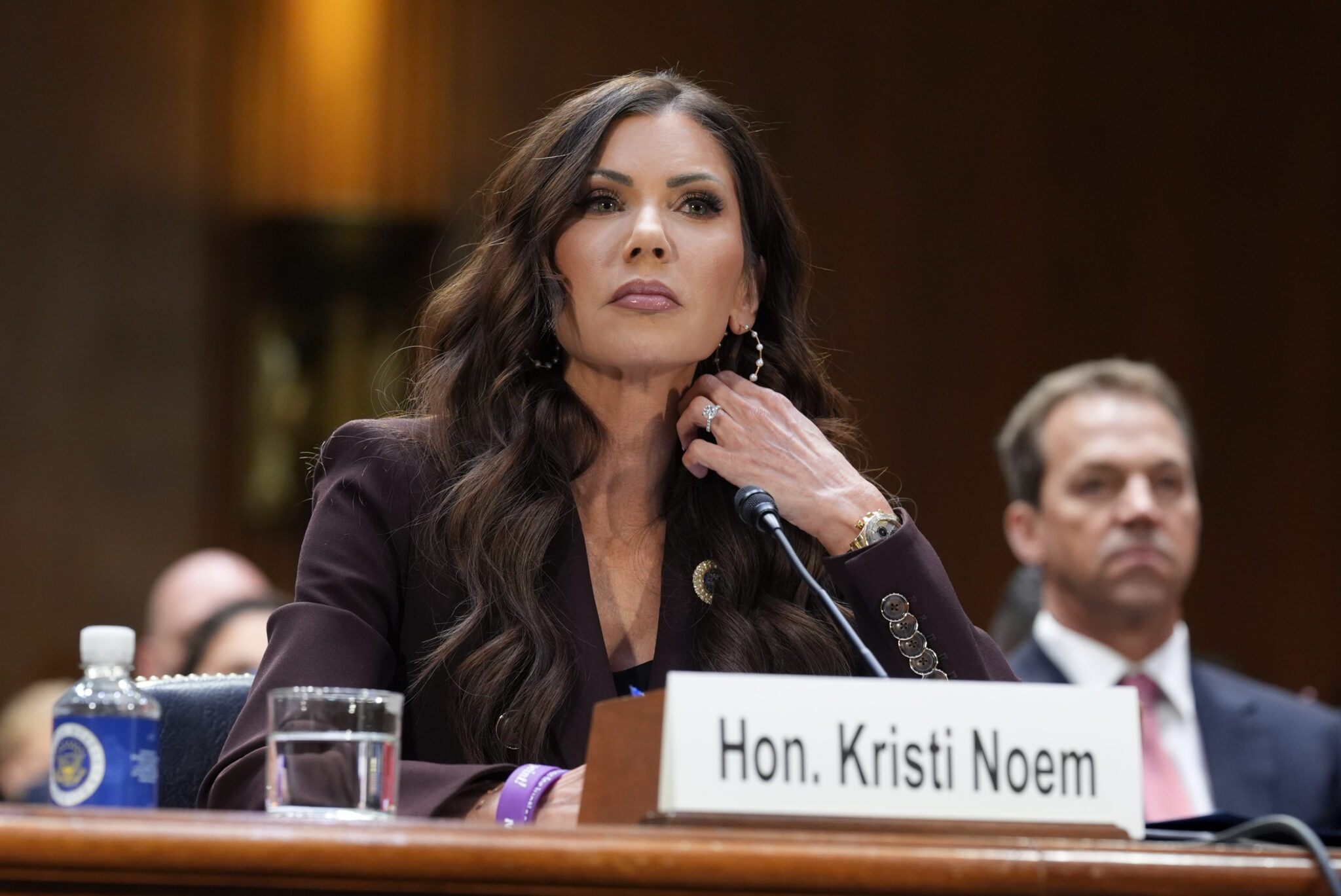
- Kristi Noem is departing the department.
- Trump nominee Markwayne Mullin prepares for Senate confirmation hearings.
- Administration plans to deport up to 1 million immigrants this year.
- Congress approved $170 billion for immigration enforcement expansion.
- Republicans debate narrowing deportations to focus on criminals.
- Critics say aggressive raids and detention policies are escalating.
- Immigration policy remains a defining issue for Trump’s presidency.

Deep Look: Trump Deportation Plan Faces Turning Point at Homeland Security
‘President Donald Trump’s sweeping immigration crackdown is entering a critical phase as leadership changes at the U.S. Department of Homeland Security spark new debate about the future of his mass deportation agenda.
The departure of Homeland Security Secretary Kristi Noem and the nomination of Markwayne Mullin to replace her have created what analysts see as a pivotal moment for the administration’s immigration strategy.
The White House now faces a choice: adjust its approach to immigration enforcement or double down on Trump’s campaign promise to carry out the largest deportation operation in U.S. history.
Signals of a Possible Shift
Some Republican leaders have suggested the administration may recalibrate its messaging.
During a recent retreat at Trump’s golf club in Florida, the White House political director encouraged GOP lawmakers to emphasize enforcement against immigrants convicted of crimes rather than broadly focusing on mass deportations.
Mike Johnson acknowledged that aggressive deportation operations have caused political complications for the party.
He described the situation as a “hiccup” and said Republicans were pursuing a “course correction.”
Despite those comments, there is little indication the administration plans to slow its enforcement efforts.
Deportation Efforts Continue to Expand
Instead, the administration appears to be ramping up operations across the country.
Billions of dollars are being used to hire additional agents from U.S. Immigration and Customs Enforcement, expand detention infrastructure, and construct large warehouse-style holding facilities.
The goal, officials say, is to deport roughly 1 million immigrants this year.
Civil liberties advocates say the expansion represents a dramatic escalation.
Sarah Mehta of the American Civil Liberties Union said the public is only beginning to grasp what mass deportation policies entail.
“We are at an inflection point where people are seeing what mass detention and mass deportation really mean,” she said.
Mehta argued that the government is pushing ahead with policies she described as increasingly harsh.
White House spokeswoman Abigail Jackson rejected that characterization, saying the administration’s strategy has already reduced illegal border crossings and prompted many immigrants to leave the country voluntarily.
“Nobody is changing the administration’s immigration enforcement agenda,” Jackson said.
Senate Confirmation Battle Ahead
Attention now turns to Capitol Hill, where Mullin will face confirmation hearings in the Senate.
Democratic lawmakers have signaled they will challenge the administration’s immigration policies during the hearings, particularly after controversial enforcement actions in cities including Minneapolis.
Those operations sparked outrage after several deaths were reported during enforcement encounters.
Some Democrats say they will withhold routine funding approvals for DHS unless the department revises its enforcement tactics.
At the same time, conservative immigration advocates argue that the administration has not gone far enough.
Rosemary Jenks of the Immigration Accountability Project said Trump’s supporters expect the administration to fully deliver on its deportation promises.
“We’ve got to get the deportation numbers up,” Jenks said.
Immigration Debate Divides Republicans
Even within the Republican Party, disagreements are emerging over how aggressive deportation policies should be.
Some lawmakers favor focusing primarily on immigrants with criminal records rather than broad enforcement actions targeting those living and working in the country without legal status.
Ron Johnson said businesses in his state depend heavily on immigrant labor, particularly in agriculture and food service industries.
“In Wisconsin, immigrants milk most of the dairy cows,” Johnson noted.
He added that implementing mass deportation policies on the scale proposed by the administration could prove far more complicated than political rhetoric suggests.
Many undocumented immigrants, he said, have integrated into communities and are supporting families.
Conservative Groups Push for More Deportations
Meanwhile, conservative organizations are pressing the administration to accelerate enforcement.
The recently formed Mass Deportation Coalition includes advocacy groups such as the Heritage Foundation and security contractor entrepreneur Erik Prince.
The coalition describes the administration’s initial deportation efforts as only the first stage of a broader campaign.
Mark Morgan, a former acting head of ICE and U.S. Customs and Border Protection, said the next phase should target immigrants who overstayed visas, violated immigration orders, or are working illegally.
He said enforcement should remain strategic rather than random.
Still, Morgan criticized Republicans who want deportation efforts limited primarily to criminals.
“That’s not what was promised,” he said.
Debate Over America’s Immigration Identity
The dispute comes as the United States prepares to mark its 250th anniversary, prompting renewed reflection about the nation’s identity as a country historically shaped by immigration.
Images of federal agents detaining migrants — sometimes forcefully — have fueled controversy over how immigration laws should be enforced.
Congress, now controlled by Republicans, significantly increased immigration enforcement funding last year, tripling the budget for ICE.
Supporters argue voters endorsed Trump’s approach during the election.
Eric Schmitt said deportation policies were central to Trump’s campaign.
“The American people supported the idea that we are going to deport people,” Schmitt said.
What Comes Next
Both supporters and critics of the administration believe the next phase of Trump’s strategy could focus heavily on what is sometimes called “self-deportation.”
The idea is to create policies and conditions that make it difficult for undocumented immigrants to remain in the United States.
Advocates say that could include ending temporary protections for asylum-seekers and refugees whose cases are still being processed.
Critics warn such measures could push many immigrants into undocumented status and expand enforcement actions against people who previously had legal protections.
Alex Padilla said he fears the administration will broaden deportation sweeps to fill newly constructed detention facilities.
“That’s unacceptable,” Padilla said, adding that those concerns will be central to Mullin’s confirmation hearings.
As the debate intensifies, Trump’s mass deportation agenda remains one of the most controversial and defining policies of his presidency — with the future direction of U.S. immigration enforcement now hanging in the balance.






You must Register or Login to post a comment.