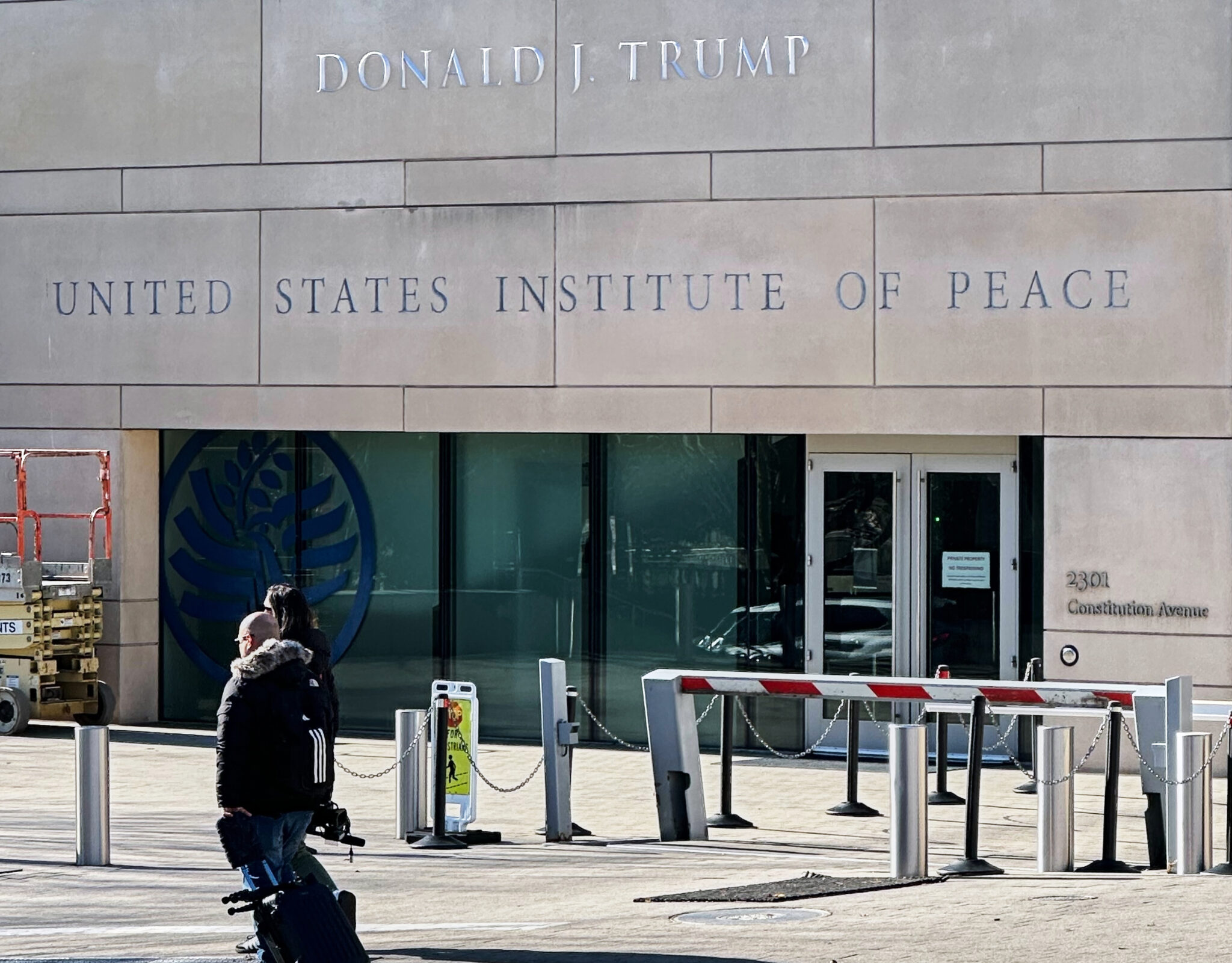
Trump Eyes Disputed Washington Building as Base for New Board of Peace/ Newslooks/ WASHINGTON/ J. Mansour/ Morning Edition/ The Trump administration is considering placing its newly formed Board of Peace in a Washington building formerly occupied by the U.S. Institute of Peace. The move is legally contested, with a federal judge ruling the building’s seizure illegal. Critics say the administration lacks the authority to repurpose the property amid ongoing litigation.
Trump Peace Board Headquarters Quick Looks
- Proposed HQ: Former U.S. Institute of Peace building in Washington, D.C.
- Building Status: Renamed but still under legal dispute
- Federal Court Ruling: Takeover ruled illegal; appeal pending
- Legal Opposition: Former staff, represented by George Foote, call the move unlawful
- Trump’s Plan: Use building for newly launched “Board of Peace”
- Peace Board Role: Oversee Gaza ceasefire, expand to global conflicts
- International Reaction: Key allies skeptical, declining to join
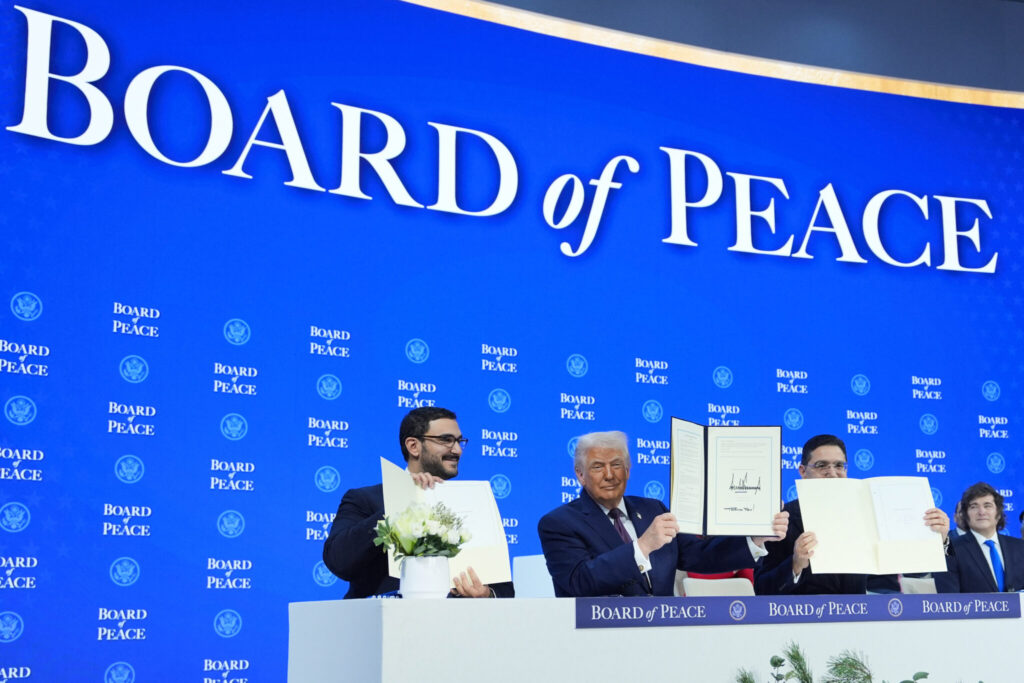
- Public Reveal: Logo and image of disputed building used at Davos
- Founding Members: 27 world leaders aligned with Trump’s peace efforts
- Concerns Raised: Potential rival to United Nations Security Council
Deep Look
Trump Eyes Disputed Washington Building as Base for New Board of Peace
WASHINGTON — The Trump administration is exploring plans to headquarter its newly created “Board of Peace” in a Washington, D.C. building that remains entangled in legal battles, according to four administration officials familiar with the internal discussions.
The building in question previously served as the home of the U.S. Institute of Peace (USIP), a congressionally chartered but independent nonprofit think tank focused on conflict resolution. Last year, the administration abruptly seized the facility, dismissed nearly all of the USIP staff, and renamed it the Donald J. Trump U.S. Institute of Peace—a move that quickly drew legal challenges.
Although discussions are still underway and no final decision has been made, the Trump team is strongly considering using the facility as the administrative hub for the Board of Peace, a new international body tied initially to Trump’s Gaza ceasefire initiative but with broader aspirations.
The legality of that move, however, is in serious question.
A federal judge previously ruled that the federal government had overstepped its authority by seizing the building. The judge concluded that because the USIP is not part of the executive branch, the takeover was unconstitutional. Despite the ruling, enforcement has been paused as the government appeals the decision.
“This is not a free pass for the government to hijack property it doesn’t own,” said George Foote, legal counsel for the former USIP leadership. “The government does not have a license to rename the building or lease it out. It certainly has no right to house a new international body like the Board of Peace there.”
The legal debate reignited after the Trump administration used imagery of the USIP building—including its signature domed roof—alongside the new Board of Peace logo during a presentation at the World Economic Forum in Davos, Switzerland. There, Trump officially unveiled the initiative, highlighting its initial mission to monitor the ceasefire in Gaza.
The Board currently lists 27 “founding members,” including world leaders aligned with Trump’s international agenda. While its starting focus is the Gaza conflict, its charter lays out far more ambitious goals, including involvement in future global peace efforts.
Critics view the Board of Peace as a potential parallel or even rival to the United Nations Security Council, a body Trump has frequently criticized throughout his political career. Many key allies in Europe and other regions have declined to join the initiative, expressing skepticism over its legitimacy and concerns about undermining established international institutions.
As discussions continue, the legal dispute over the building’s ownership could become a flashpoint not only for domestic constitutional questions but also for Trump’s evolving foreign policy apparatus. If the appeal fails, the administration may be forced to find an alternative home for the Board or face renewed criticism over its approach to international diplomacy.