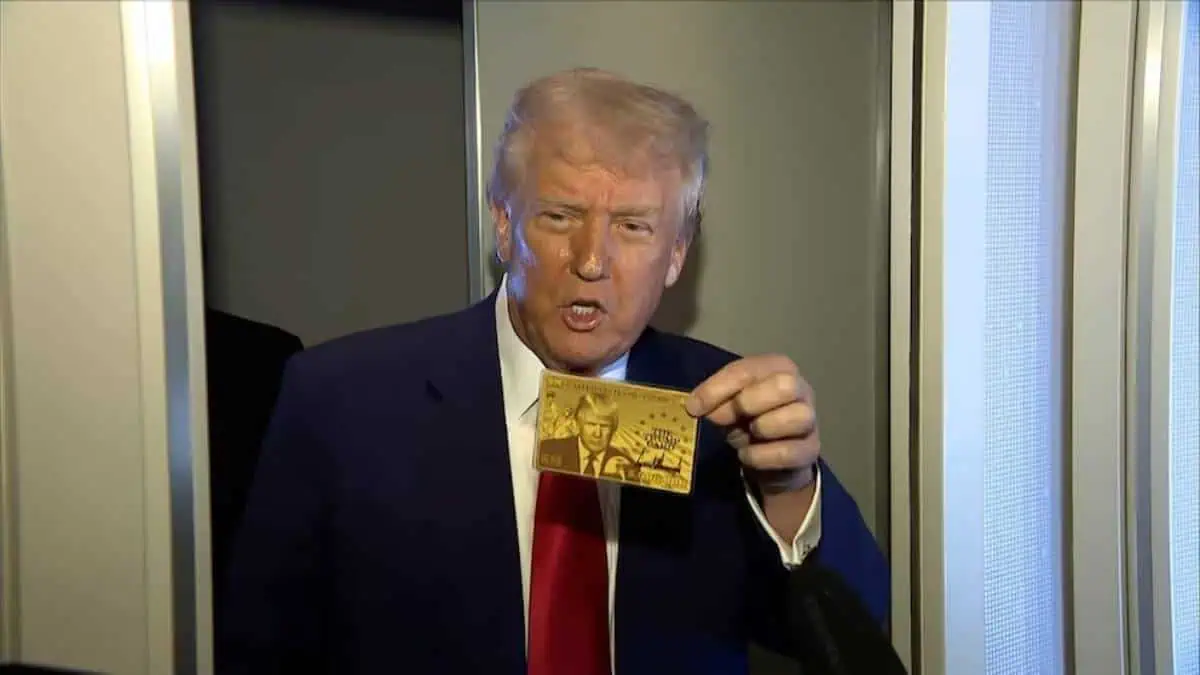
Trump Gold Card Offers $1M Fast-Track U.S. Visa for Wealthy Foreigners/ Newslooks/ WASHINGTON/ J. Mansour/ Morning Edition/ President Trump has launched the “Trump Gold Card” visa program, offering wealthy foreigners expedited U.S. residency for a $1 million contribution. A second-tier “Platinum Card” promises tax-free stays for $5 million. The initiative modifies the EB-5 visa, drawing both attention and criticism for monetizing immigration.

Trump Gold Card Immigration Pathway: Quick Looks
- Trump announces $1M ‘Gold Card’ for fast-track U.S. visas
- Program promises lawful permanent residency in “weeks”
- Companies can sponsor foreign workers for $2M
- New DHS website trumpcard.gov now accepting applications
- “Platinum Card” preview offers tax-free 270-day stays for $5M
- Visa class falls under EB-1 and EB-2 for “extraordinary” ability
- Commerce Secretary says program could raise $1 trillion
- Critics call it immigration for the wealthy elite
- Trump administration says plan prioritizes top-tier talent
Trump Gold Card Offers $1M Fast-Track U.S. Visa for Wealthy Foreigners
Deep Look
President Donald Trump on Wednesday unveiled a new immigration initiative dubbed the “Trump Gold Card,” an unprecedented pathway allowing wealthy foreigners to fast-track their way to U.S. residency in exchange for a $1 million contribution.
The move, announced during a White House roundtable, marks a shift in how the United States approaches high-net-worth immigration, streamlining access for the affluent while the administration continues to restrict other legal and illegal immigration channels.
“Very excitingly, for me and for the country, we’ve just launched the Trump Gold Card,” Trump said, standing next to a display of the physical card during the official launch event.
The dedicated website for the new visa, trumpcard.gov, went live shortly after the announcement, offering details about the application process. The site describes the program as “U.S. residency in record time,” emphasizing speed and prestige for those who can afford the steep price.
What the Gold Card Offers
According to the Department of Homeland Security’s (DHS) official information, applicants must pay a $15,000 processing fee and pass a background check before contributing $1 million to secure their place. Once approved, successful applicants will receive lawful permanent residency via the EB-1 or EB-2 visa categories — typically reserved for individuals with exceptional or extraordinary abilities in their fields.
The site promises that the process, including interviews and paperwork, will take only “weeks” from the time of submission. Additional fees may be incurred depending on the applicant’s case and State Department processing.
Companies can also sponsor foreign workers under the program for a $2 million contribution.
Platinum Card on the Horizon
Alongside the Gold Card, the administration teased a more exclusive option: the Trump Platinum Card, aimed at ultra-wealthy foreign nationals.
Set to launch at a later date, the Platinum Card will offer a unique perk: the ability to spend up to 270 days per year in the United States without being subject to U.S. taxes on foreign income. Like the Gold Card, the Platinum tier requires a $15,000 processing fee plus a $5 million contribution.
Foreign nationals can join a waitlist now to secure their place in the program once it becomes available, though no launch date has been confirmed.
A New Take on EB-5?
Commerce Secretary Howard Lutnick, a key figure behind the new policy, stated that the Trump Gold Card builds upon and modifies the EB-5 visa program, which previously allowed foreign investors to apply for visas by funding U.S. projects that created jobs.
“We will modify the EB-5 agreement,” Lutnick said earlier this year. “For $5 million, they’ll get a license from the Department of Commerce. Then they’ll make a proper investment.”
The administration’s vision is to shift the EB-5’s focus away from job creation metrics and instead prioritize wealth and elite status. Lutnick argued that the traditional green card process brings in too many low-skilled immigrants, suggesting the Gold Card will help filter for only the most successful applicants.
“We’re going to only take extraordinary people at the very top,” Lutnick said.
Critics Question Accessibility, Fairness
Critics and immigration law experts are raising red flags about the implications of this wealth-based immigration model. Some argue that monetizing access to U.S. residency undermines the fairness of the broader immigration system.
Legal experts also note that eliminating or significantly altering the EB-5 program may require legislative action from Congress — a step the Trump administration has not yet publicly acknowledged taking.
The Trump administration maintains that the initiative could serve dual purposes: attracting global talent and generating massive revenue. Lutnick suggested in February that selling millions of Gold Cards could raise $1 trillion, funds the administration says could be used to reduce the national debt.
Still, the juxtaposition of this program with recent crackdowns on other forms of immigration has led to growing criticism. Since the shooting of two National Guard members in Washington, D.C., the administration has taken a hard line, suspending or tightening legal immigration routes and increasing enforcement against undocumented immigrants.
The Gold Card appears to be the sole expansion in Trump’s current immigration policy — and one available only to the global elite.
Growing Debate Over Immigration Priorities
Despite ongoing criticism, Trump insists the new program will strengthen America’s economic and cultural fabric by bringing in only those with proven excellence or wealth.
Yet, concerns remain. Immigration analysts question whether the plan favors the world’s wealthiest at the expense of broader, merit-based immigration programs. Others note the risks of opening residency pathways based on money alone, raising issues of national security and systemic inequity.
The announcement also arrives as Trump prepares for a challenging midterm election cycle in 2026, with immigration expected to remain a top issue for voters. The Gold Card, for all its controversy, signals a strategic move by the administration to appeal to pro-business factions, foreign investors, and conservative voters skeptical of current immigration laws.
Whether the program will succeed as intended — or become mired in legal and political battles — remains to be seen.