Trump Hosts Latin America Summit March 7 Before China Trip/ Newslooks/ Washington/ J. Mansour/ Morning Edition/ President Donald Trump will host Latin American leaders in Florida on March 7 as part of his administration’s push to counter China’s influence in the Western Hemisphere. The summit comes weeks before Trump is expected to travel to Beijing for talks with Chinese President Xi Jinping. The administration has spotlighted concerns over Chinese investments in Venezuela, Panama, and Peru.
Trump Latin America Summit Quick Looks
- Summit scheduled for March 7 in Florida
- Occurs weeks before Trump’s planned Beijing visit
- Focus on countering China’s growing regional influence
- Administration highlights Venezuela, Panama Canal, Peru port issues
- U.S. stresses sovereignty concerns over Chinese infrastructure projects
Deep Look: Trump Latin America Summit Signals Pushback on China’s Influence
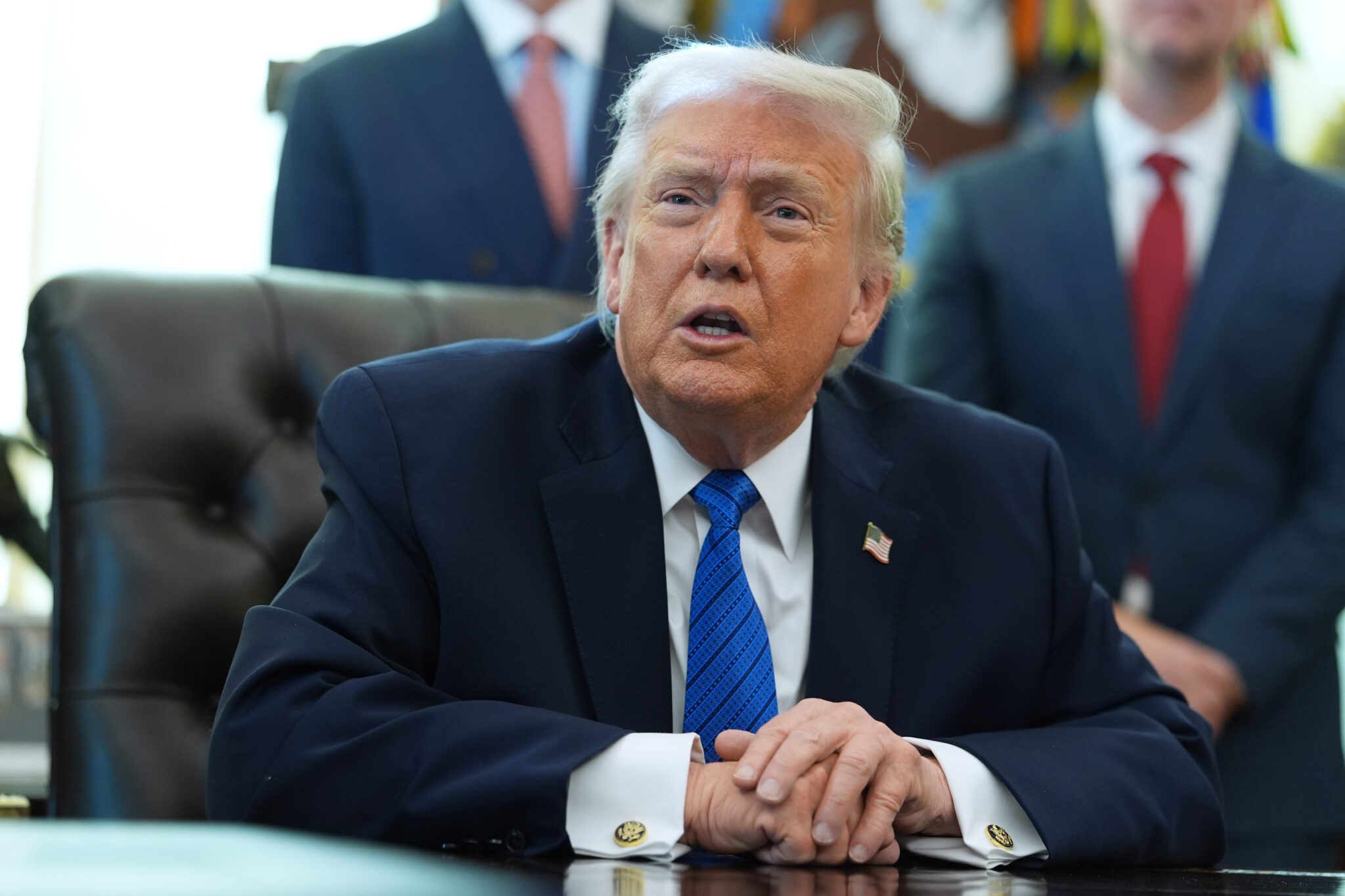
President Donald Trump is preparing to convene a high-profile summit of Latin American leaders in Florida next month, positioning the gathering as a strategic move to counter China’s expanding footprint in the Western Hemisphere. The March 7 summit, confirmed by a White House official, will take place just weeks before Trump is scheduled to travel to Beijing for talks with Chinese President Xi Jinping.
The timing underscores a dual-track diplomatic strategy: strengthening alliances closer to home while preparing for direct engagement with China’s leadership. Trump’s administration has made it clear that curbing Beijing’s influence in Latin America is a central pillar of its foreign policy agenda during his second term.
Asserting U.S. Influence in the Western Hemisphere
For years, China has steadily deepened its economic and political ties across Latin America through infrastructure investments, trade agreements, and large-scale loans. Chinese-backed projects have included ports, energy developments, and telecommunications networks—often welcomed by regional governments seeking development financing.
The Trump administration, however, views many of these projects as potential strategic liabilities that could undermine national sovereignty and U.S. regional dominance.
Officials argue that China’s financial engagements, while sometimes marketed as low-cost development assistance, may come with long-term political and economic strings attached. The Florida summit is expected to emphasize shared democratic values, regional security cooperation, and economic partnerships designed to offer alternatives to Chinese investment.
Venezuela at the Center of Tensions
One of the most dramatic examples of the administration’s assertive approach came last month with a military operation targeting Venezuelan leader Nicolás Maduro. U.S. forces removed Maduro and his wife and transported them to New York to face federal drug conspiracy charges.
Trump defended the operation by arguing that failing to act would have allowed rival global powers to increase their foothold in the region.
“If we didn’t do this, China or Russia would have done it,” Trump told energy industry leaders in Washington shortly after the operation.
China has been a significant buyer of Venezuelan oil, though those imports account for only a small share of China’s overall energy portfolio. Nonetheless, U.S. officials point to Beijing’s investments in Venezuela’s energy infrastructure as part of a broader strategy to expand its influence.
The administration has also indicated that maintaining oversight of Venezuela’s oil sector aligns with U.S. national security interests, particularly amid concerns about geopolitical competition.
Panama Canal Dispute
Another flashpoint involves the Panama Canal, a critical global shipping route linking the Atlantic and Pacific Oceans. Trump has publicly claimed the canal is strategically vital to U.S. interests and has accused Panama of allowing excessive Chinese influence in its operations.
While the canal has been under Panamanian control since 1999, a recent decision by Panama’s high court to annul a contract held by Hong Kong-based CK Hutchison to operate two ports near the canal has further fueled debate.
Trump has repeatedly argued that Chinese involvement in critical infrastructure could pose security risks. Although he has falsely stated that China directly operates the canal, the broader concern among U.S. policymakers centers on the strategic leverage that infrastructure investments may provide Beijing.
Peru’s Chancay Port Controversy
The administration has also raised alarms about Chinese-backed infrastructure in Peru, particularly the deepwater port of Chancay. A recent Peruvian court ruling restricted a local regulator’s oversight of the Chinese-built port, drawing criticism from U.S. officials.
The U.S. State Department’s Bureau of Western Hemisphere Affairs warned that Peru could lose oversight authority over one of its largest ports if regulatory controls weaken.
Officials have framed the issue as a cautionary example of how foreign investment could compromise national sovereignty. The message has been blunt: short-term financial incentives may carry long-term geopolitical consequences.
A Diplomatic Balancing Act
The Florida summit is expected to serve multiple purposes. It provides Trump with a platform to solidify relationships with regional leaders, reinforce security cooperation, and discuss trade and economic development initiatives that compete directly with Chinese financing models.
It also sends a signal ahead of Trump’s upcoming trip to Beijing that the United States remains actively engaged in its traditional sphere of influence.
The administration has emphasized that strengthening regional partnerships is not merely about economic competition but about preserving democratic governance, protecting sovereignty, and ensuring regional stability.
Strategic Implications
The broader geopolitical stakes are significant. Latin America has become an increasingly important arena in the U.S.-China rivalry. From telecommunications networks to energy infrastructure and port facilities, control over key assets can influence trade routes, supply chains, and diplomatic alignments.
By convening regional leaders in Florida, Trump appears intent on demonstrating that the United States remains the primary partner of choice in the Western Hemisphere.
Whether the summit will yield concrete agreements or primarily symbolic outcomes remains to be seen. But its timing—immediately before high-level talks with China—signals that Latin America will remain central to Washington’s global strategy.
As geopolitical competition intensifies, the administration’s message is clear: U.S. leadership in the Americas is not negotiable.