Trump Overturned Decades of US Trade Policy in 2025/ Newslooks/ WASHINGTON/ J. Mansour/ Morning Edition/ President Trump dismantled decades of U.S. trade policy in 2025 by imposing steep tariffs across the board. His erratic decisions caused economic disruption while raising billions in tariff revenue. These four data-driven charts reveal the deep impact on trade, inflation, and markets.
Quick Highlights
- Trump’s tariffs pushed effective U.S. tariff rates to the highest since 1935
- $236 billion in tariff revenue collected through November
- U.S. trade deficit shrank, but remains higher than in 2024
- Imports from China dropped 25%; Mexico and Vietnam surged
- Stock markets saw major volatility tied to tariff announcements
Deep Look: The True Economic Impact of Trump’s 2025 Tariffs, in 4 Key Charts
When President Donald Trump returned to the White House in January 2025, he didn’t just resume past policies — he rewrote the rulebook. With sweeping new tariffs, Trump overturned decades of U.S. free-trade traditions, transforming one of the world’s most open economies into one surrounded by economic barriers.
Framing tariffs as a patriotic tool to reclaim “stolen” wealth and reduce the U.S. trade deficit, Trump’s administration imposed double-digit import taxes on nearly every country. What followed was a year marked by price hikes, global tension, market volatility, and billions in new government revenue — all delivered via erratic, often contradictory policy moves.
Here are four charts that show how deeply these changes impacted trade, revenue, and the global economy.
Chart 1: Effective U.S. Tariff Rate Soars to 90-Year High
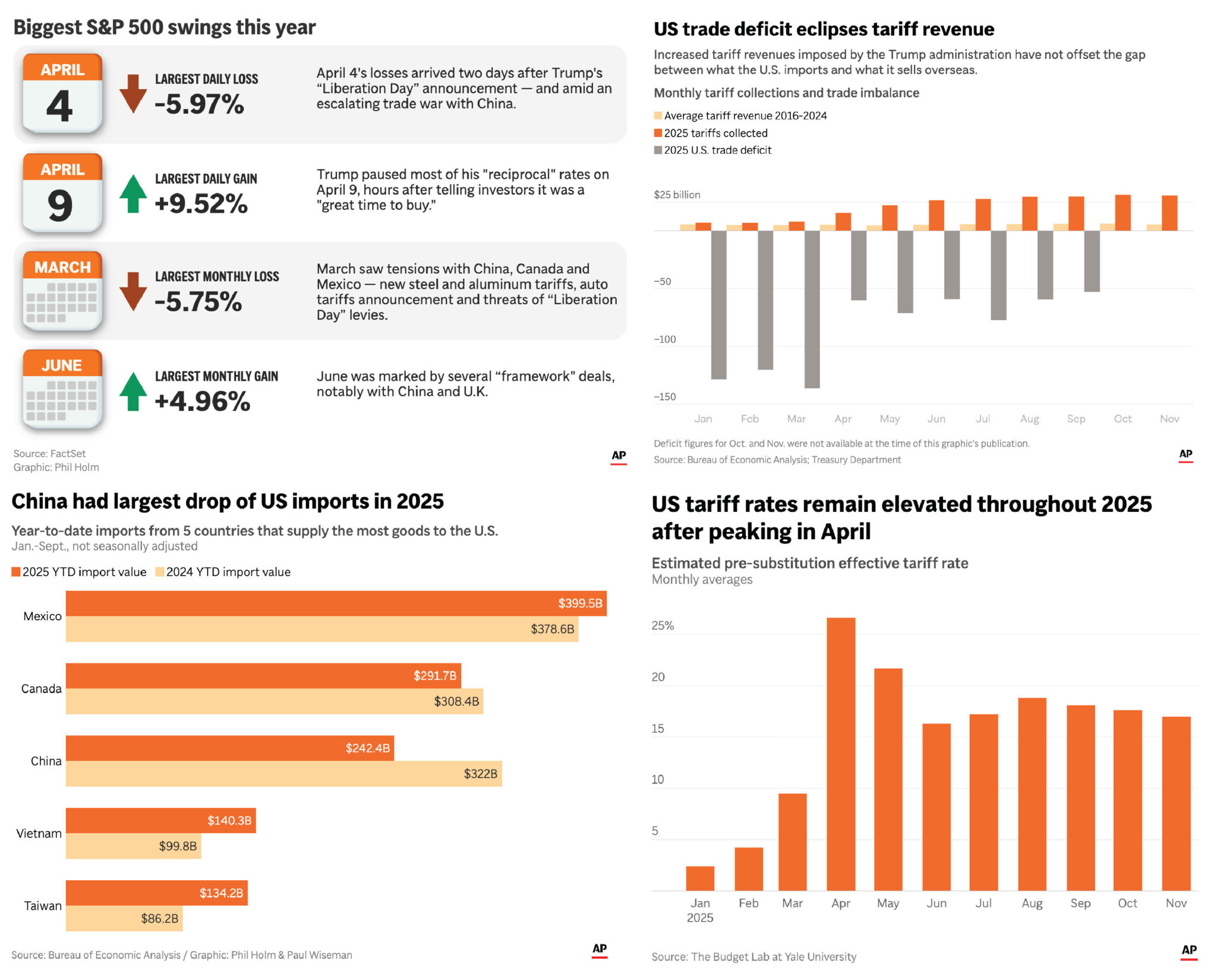
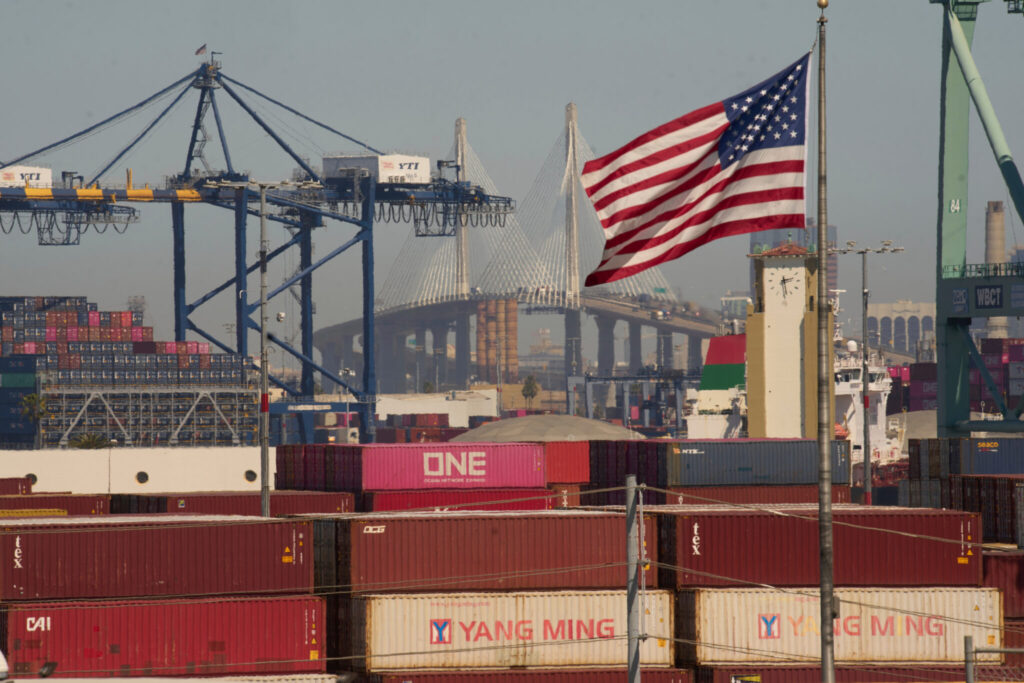
Rather than looking at headline tariff rates, economists focus on the effective tariff rate — the average rate based on real-world imports.
- Start of 2025: Effective tariff rate under 3%
- April 2025 (peak): Just under 17%, the highest since 1935
- November 2025: Still near 7x higher than January levels
This sharp increase reflects not only the breadth of Trump’s tariffs, but also the unpredictability of how and when they were enforced, delayed, or modified. As businesses scrambled to adapt, supply chains fractured and inflation pressures intensified.
Chart 2: Tariff Revenue Surges, But Doesn’t Offset Deficit or Taxes
Trump often claimed tariffs would be a win-win — generating revenue while shrinking the trade deficit. The numbers tell a more complex story:
- Tariff revenue: Over $236 billion collected through November
- Federal impact: Significant boost to Treasury, but still a small slice of total revenue
- Trade deficit: Down sharply from its March peak of $136.4B
- But… The 2025 year-to-date deficit still ran 17% higher than the same period in 2024
Despite the early dip in the deficit, much of the reduction came after businesses front-loaded imports to dodge anticipated tariffs. And while the revenue haul was real, it fell far short of Trump’s suggestion that tariffs could replace the income tax or fund $2,000 dividend checks for Americans.
Chart 3: Imports Shift — China Falls, Mexico and Vietnam Rise
One of the biggest impacts of the 2025 trade policy overhaul was a reshuffling of global trade partnerships:
- China: Once the top U.S. trade partner, fell to No. 3
- U.S. tariffs on China: Now average 47.5%
- Chinese imports: Down nearly 25% in the first 9 months of 2025
- Canada: Also saw a decline in import value
- Mexico, Vietnam, Taiwan: Saw significant growth in U.S. imports
Despite Trump’s rhetoric about reshoring U.S. manufacturing, many companies simply redirected supply chains to other lower-tariff countries. Mexico and Vietnam became the biggest beneficiaries, expanding their roles in electronics, textiles, and auto parts.
Chart 4: Market Swings Mirror Tariff Turmoil
Investors felt the sting of Trump’s unpredictable tariff policy. Each major tariff announcement — or sudden reversal — led to major market swings:
- March 2025: Largest monthly S&P 500 loss of the year
- April: Highest daily and weekly volatility
- June: Market staged biggest rebound, but sentiment remained cautious
The pattern was clear: policy unpredictability = financial volatility. Businesses held off on hiring, investing, or expanding amid the chaos, further slowing economic momentum.
Closing Thoughts
Trump’s aggressive 2025 trade policies undeniably changed the trajectory of U.S. commerce. While they did reduce the trade deficit (temporarily) and raise billions in tariffs, they also:
- Increased costs for consumers
- Introduced global uncertainty
- Triggered lawsuits challenging presidential tariff powers
- Disrupted market stability
For many, the long-term effects are still unfolding. But if the data from 2025 is any indication, the ripple effects of Trump’s tariff revolution will shape trade — and politics — for years to come.