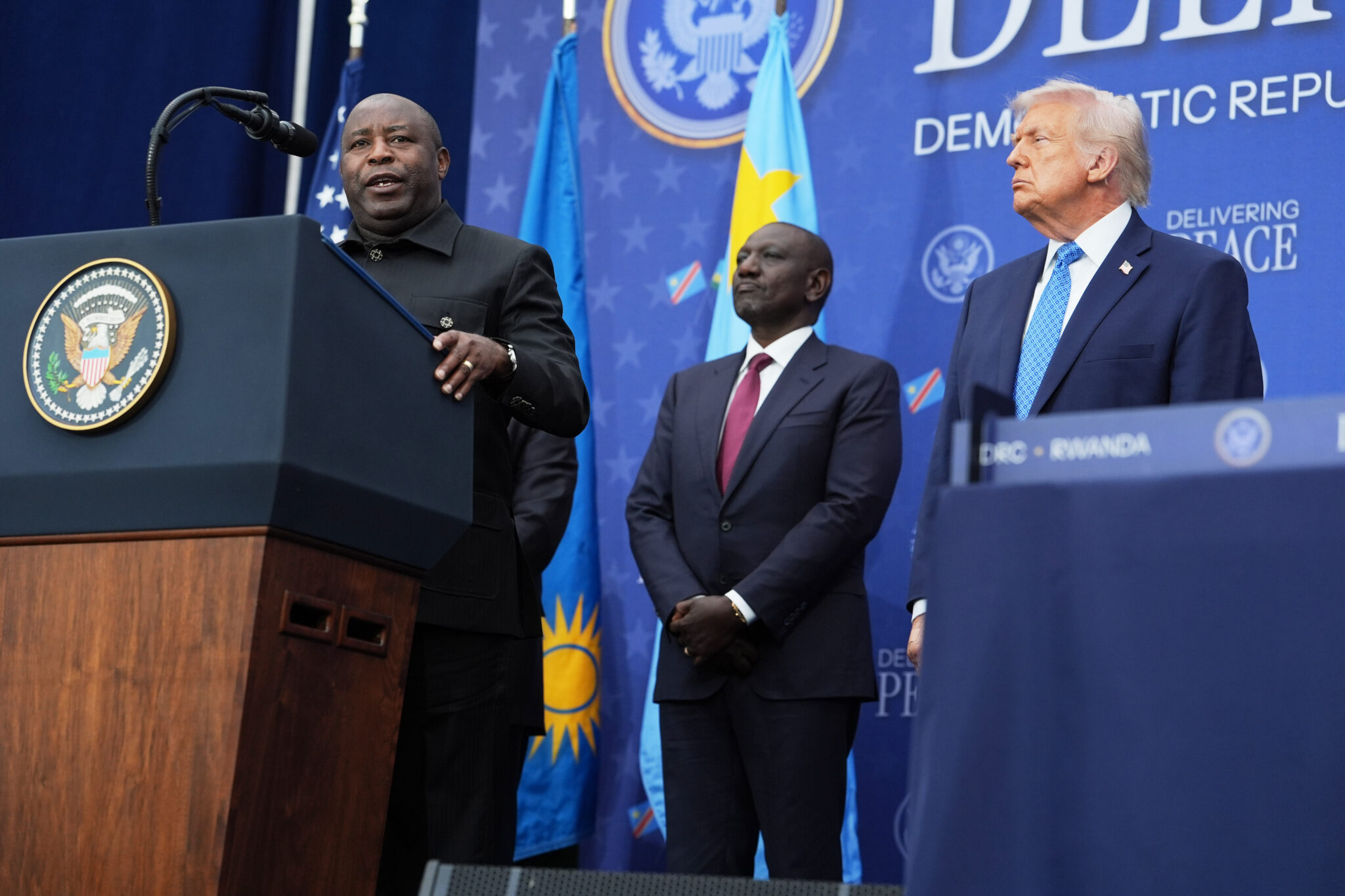
Trump Praises Congo-Rwanda Peace Deal, Eyes Minerals Access/ Newslooks/ WASHINGTON/ J. Mansour/ Morning Edition/ President Donald Trump hailed a U.S.-brokered peace deal between Congo and Rwanda, aimed at ending a brutal conflict and opening access to key minerals. Despite ongoing violence and skepticism from local residents, Trump declared the agreement a breakthrough. The pact includes new U.S. economic ties and rare earth mineral access, boosting American interests in Africa.
Trump-Brokered Congo-Rwanda Peace Agreement: Quick Looks
- Trump celebrates peace deal between Congo and Rwanda
- Pact aims to end conflict and unlock mineral trade
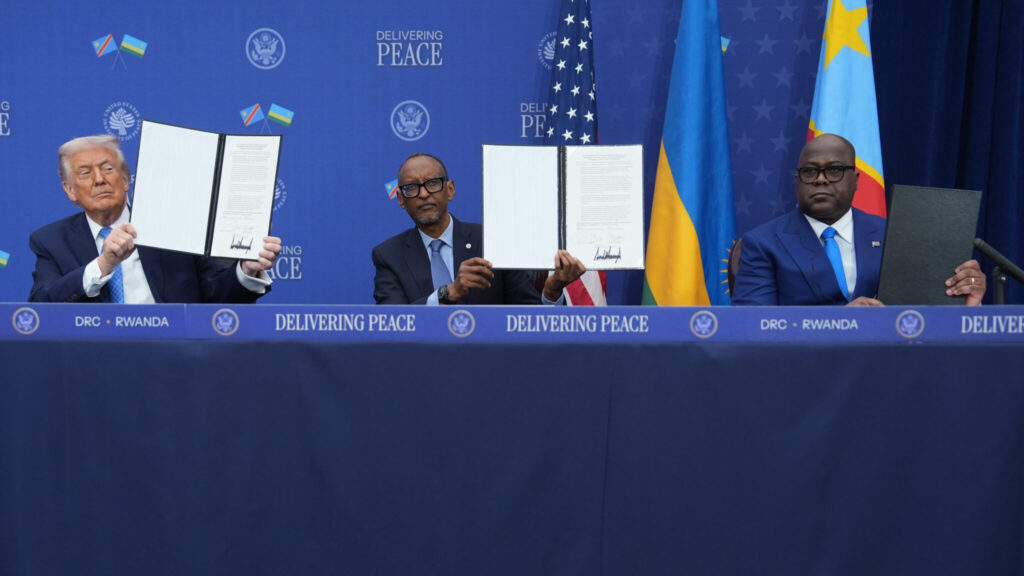
- Leaders Paul Kagame and Félix Tshisekedi sign U.S.-mediated deal
- Agreement follows months of diplomacy with AU and Qatar
- Trump touts himself as global dealmaker, seeks Nobel Prize
- Skepticism remains amid ongoing rebel clashes in eastern Congo
- M23 rebels still hold territory, ceasefire violations continue
- Trump announces rare earth agreements with both nations
- U.S. companies to gain access to critical minerals
- Peace hailed as “historic,” but conditions remain fragile
Trump Hails Congo-Rwanda Peace Deal Amid Ongoing Conflict: Deep Look
WASHINGTON — President Donald Trump on Thursday praised the leaders of the Democratic Republic of Congo and Rwanda as they signed a U.S.-mediated peace deal aimed at halting years of bloodshed in eastern Congo. The agreement, which also includes provisions for American access to the region’s critical mineral reserves, marked a diplomatic win Trump eagerly embraced.
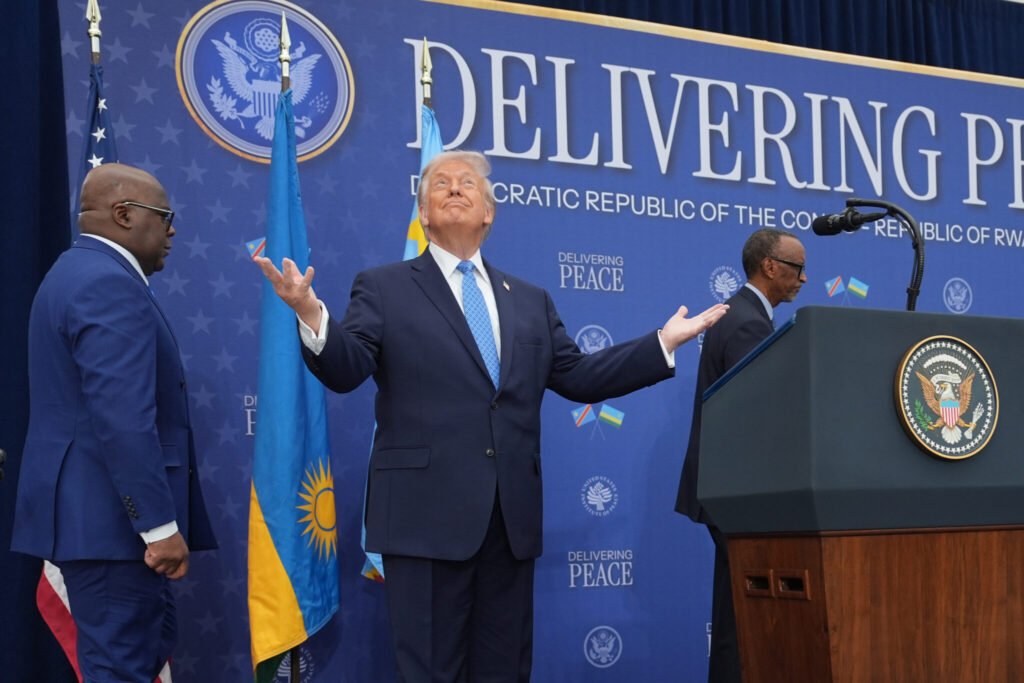
Calling it a “great day for Africa” and “a great day for the world,” Trump used the moment to reinforce his self-image as a master dealmaker. “Today, we’re succeeding where so many others have failed,” he said, referencing his often-repeated claim that he’s brokered peace in the world’s most intractable conflicts.
The agreement, finalized during a signing ceremony in Washington, brings together Congolese President Félix Tshisekedi and Rwandan President Paul Kagame after months of negotiations, supported by the U.S., the African Union, and Qatar. The deal builds on a preliminary accord signed in June, but analysts and regional observers warn that the peace remains fragile at best.
Conflict Still Burns Despite Peace Signing
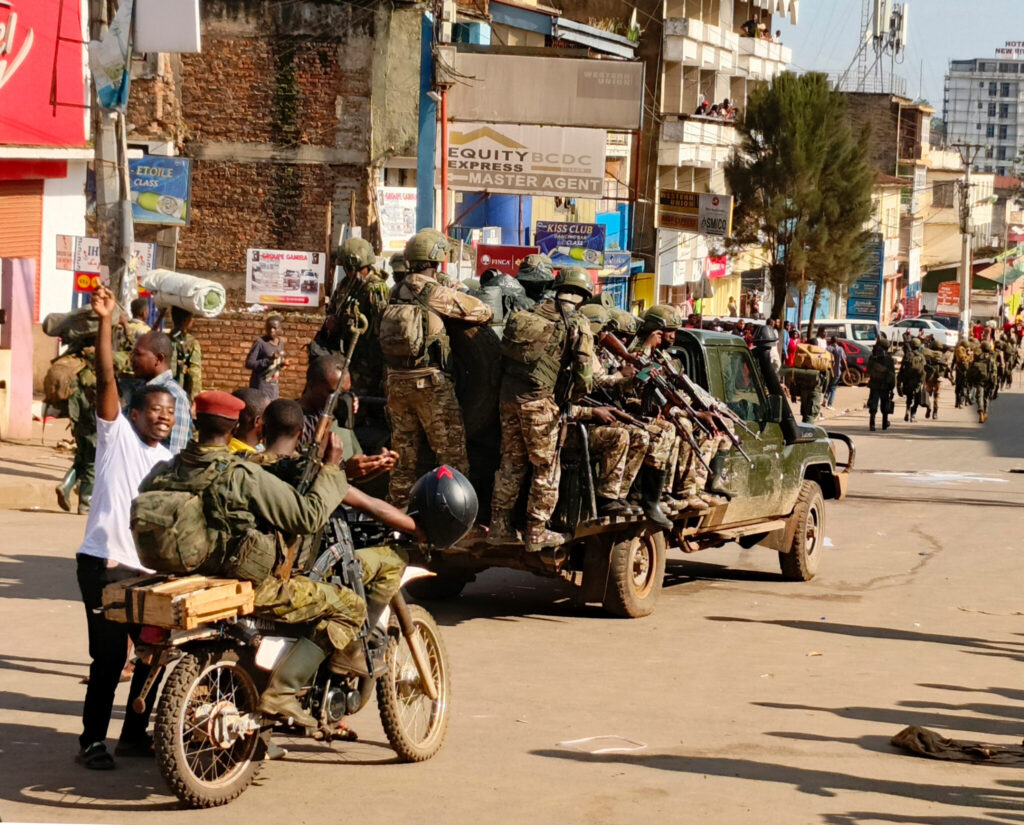
Although the signing ceremony was symbolic and high-profile, fighting continues in eastern Congo. The M23 rebel group, widely believed to be backed by Rwanda, still holds key cities such as Goma and Bukavu. Both Congolese and rebel forces accuse one another of ceasefire violations.
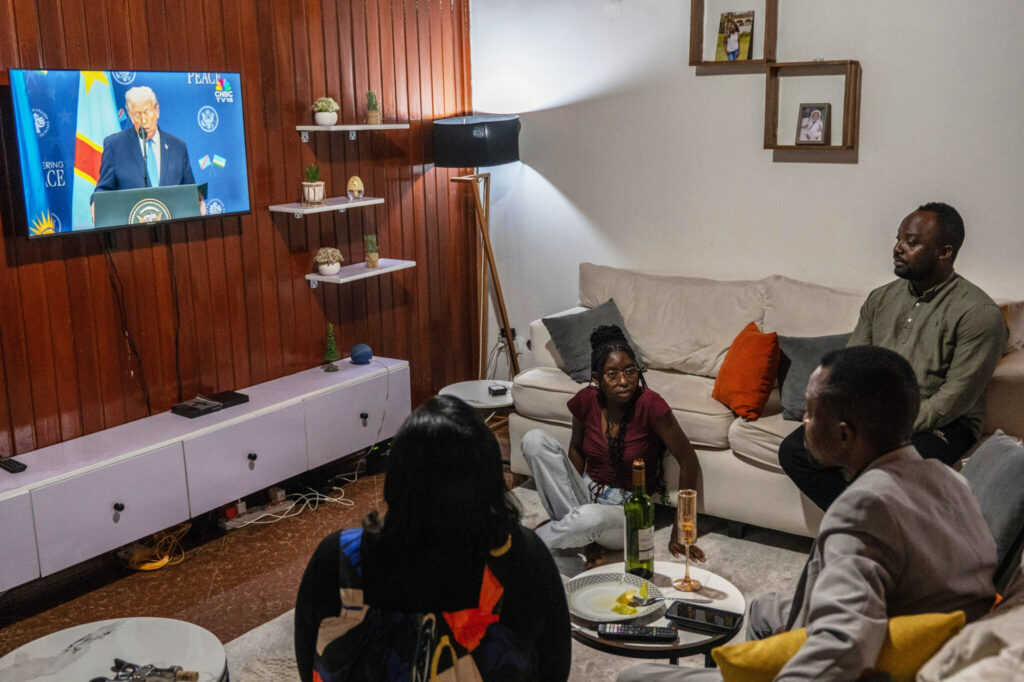
Local residents remain skeptical. “We are still at war,” said Amani Chibalonza Edith, a 32-year-old from Goma. “There can be no peace as long as the front lines remain active.”
Despite the ongoing violence, Kagame and Tshisekedi struck hopeful tones.
“No one was asking President Trump to take up this task. Our region is far from the headlines,” Kagame remarked. “But when the president saw the opportunity to contribute to peace, he immediately took it.”
Tshisekedi echoed the sentiment: “This is a path where peace will not just be a wish, but a turning point.”
However, in a telling moment, the two leaders did not shake hands or make direct eye contact during the 50-minute ceremony.
Economic Interests Behind the Deal
Beyond its diplomatic value, the deal also opens the door to significant U.S. economic interests. Trump announced new bilateral agreements between the United States and both Congo and Rwanda, granting American companies greater access to rare earth minerals.
“These are deals that will benefit all three countries,” Trump said. “We’re going to send some of our biggest and greatest U.S. companies over there. Everybody’s going to make a lot of money.”
The mineral-rich region is of growing importance as Washington looks to reduce its reliance on China, which currently controls nearly 90% of the global rare earth processing market. These minerals are critical in the production of technologies ranging from smartphones to military equipment.
The agreement also reinforces a broader Regional Economic Integration Framework signed previously, meant to formalize trade and development ties across the region.
Trump’s Diplomatic Moment, Personal Agenda
For Trump, the event was as much about foreign policy as personal legacy. Known for lobbying publicly to win the Nobel Peace Prize, the former president again positioned himself as a global peacemaker.
“They spent a lot of time killing each other,” he said of Congo and Rwanda. “Now they’re going to spend a lot of time hugging, holding hands, and taking advantage of the United States economically like every other country does.”
Earlier in the day, Trump hosted both leaders for separate one-on-one meetings and a joint discussion at the White House. The signing ceremony took place at the U.S. Institute of Peace, which the State Department has now renamed the Donald J. Trump Institute of Peace, reflecting his growing personal branding of diplomatic efforts.
Clashes Continue in Eastern Congo
Meanwhile, in eastern Congo, residents reported ongoing clashes this week. Skirmishes between Congolese forces and M23 rebels have broken out in several areas, with each side blaming the other for ceasefire breaches. Fighting has also persisted in South Kivu province, adding to the humanitarian strain.
Conditions in rebel-held Goma remain dire. The airport remains closed, banking services are down, and crime and inflation have surged. Aid delivery has slowed due to recent U.S. funding cuts that previously helped stabilize the region.
Conflict’s Deep Roots
The Congo-Rwanda conflict is rooted in the aftermath of the 1994 Rwandan genocide, during which ethnic Hutu extremists killed hundreds of thousands of Tutsis and moderate Hutus. When Tutsi forces retook control, an estimated 2 million Hutus fled to Congo, fearing retaliation.
Tensions persist over the presence of these groups, with Rwanda accusing elements of the Congolese military of harboring genocide perpetrators. Rwanda has also demanded Congo disband certain Hutu militias it says threaten its Tutsi population.
U.N. experts estimate that between 3,000 and 4,000 Rwandan troops are currently operating in eastern Congo, often alongside the M23 rebels. Rwanda denies direct involvement but justifies limited cross-border activity as protective measures.
Congo’s government insists that peace will only be possible if Rwanda withdraws all military support for M23 — a demand Kigali continues to resist.