Trump Says He Has Other Tariff Options After Supreme Court Ruling/ Newslooks/ WASHINGTON/ J. Mansour/ Morning Edition/ The Supreme Court struck down President Donald Trump’s sweeping emergency-based tariffs. However, multiple other trade laws still give the White House authority to impose import taxes. Experts say tariffs could persist through alternative legal pathways.
Trump Has Tariff Options After Court Ruling Quick Looks
- Supreme Court limits use of IEEPA tariffs
- Section 301 allows action against unfair trade practices
- Section 122 permits short-term tariffs for trade imbalances
- Section 232 enables national security tariffs
- Section 338 offers Depression-era authority
- Average U.S. tariff rose from 2.5% to 17%
- Yale Budget Lab estimates highest rates since 1934
- Administration retains broad procedural control
Deep Look: Trump Says He Has Other Tariff Options After Supreme Court Ruling
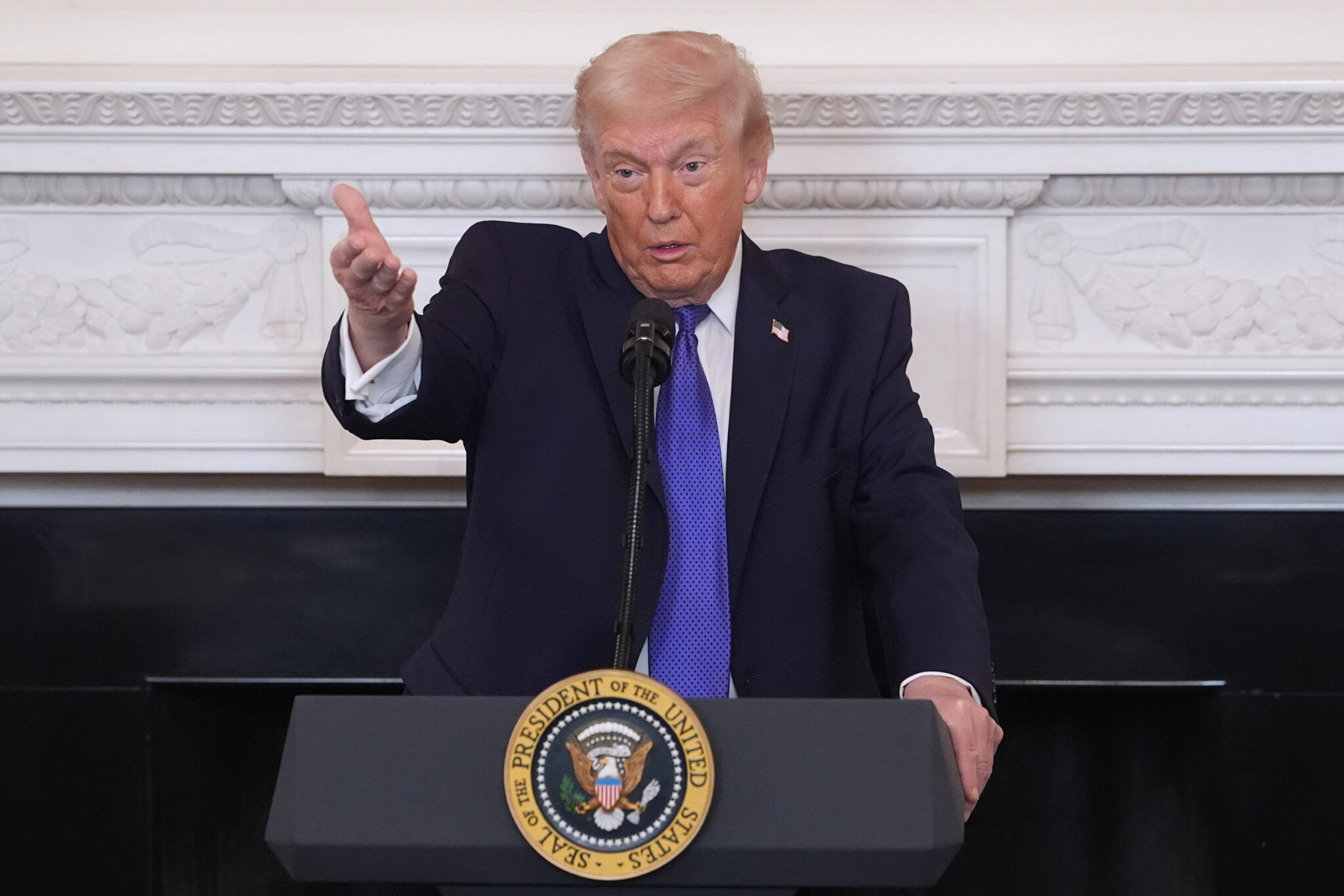
Even after the Supreme Court of the United States struck down President Donald Trump’s sweeping emergency tariffs, the White House still holds significant tools to continue taxing imports.
The court rejected Trump’s expansive interpretation of the 1977 International Emergency Economic Powers Act (IEEPA), ruling that the statute did not authorize broad global tariffs based on a declared trade emergency. Yet trade law experts say the decision does not mark the end of aggressive U.S. tariff policy.
“It’s hard to see any pathway here where tariffs end,” said Georgetown law professor Kathleen Claussen, noting that alternative authorities could allow the administration to reconstruct much of its tariff framework through other statutes.
Since returning to office, Trump has made tariffs central to his economic and foreign policy agenda. By declaring trade deficits a national emergency, he imposed double-digit “reciprocal” tariffs on most countries. According to calculations by Yale University’s Budget Lab, the average U.S. tariff climbed from roughly 2.5% at the start of his term to nearly 17% — the highest level since 1934.
While the Constitution assigns tariff power to Congress, lawmakers have delegated certain trade authorities to the executive branch through various statutes over the decades. Those laws, though narrower than IEEPA, still provide significant flexibility.
Section 301: Countering Unfair Trade Practices
One of the most powerful remaining tools is Section 301 of the Trade Act of 1974. This provision allows the United States to impose tariffs on countries found to engage in “unjustifiable,” “unreasonable,” or “discriminatory” trade practices.
Trump used Section 301 extensively during his first term, particularly against China, targeting intellectual property practices and industrial policies viewed as harmful to U.S. interests. Section 301 tariffs are not capped in size and can be extended beyond their initial four-year term.
However, the process requires an investigation by the U.S. Trade Representative and typically includes public hearings. While effective for targeted disputes — especially with large economies — conducting numerous 301 investigations simultaneously could prove administratively burdensome.
Section 122: Addressing Trade Imbalances
Another lesser-known option is Section 122 of the Trade Act of 1974. This provision allows the president to impose tariffs of up to 15% for up to 150 days to address balance-of-payments issues or trade deficits.
Unlike Section 301, Section 122 does not require a lengthy investigation. Still, it has never been used to impose tariffs, and legal analysts say its practical application remains uncertain. If invoked, it could serve as a short-term bridge while the administration pursues other longer-term measures.
Section 232: National Security Justification
Perhaps the most familiar tool is Section 232 of the Trade Expansion Act of 1962. This law authorizes tariffs on imports deemed to threaten national security.
Trump relied heavily on Section 232 during both terms in office, first targeting foreign steel and aluminum in 2018. Since returning to the White House, he expanded those measures to include autos, auto parts, copper, lumber, and even products like kitchen cabinets and upholstered furniture.
Section 232 investigations are conducted by the Commerce Department and require formal findings, but the executive branch largely controls the process. There are no statutory caps on tariff levels under this authority.
Section 338: A Depression-Era Power
One of the more controversial possibilities lies in Section 338 of the Tariff Act of 1930 — the same law that produced the infamous Smoot-Hawley tariffs during the Great Depression.
Section 338 permits the president to impose tariffs of up to 50% on imports from countries found to discriminate against U.S. commerce. Notably, it requires no formal investigation and places no time limits on the duties.
Though never formally invoked, the provision has historically been used as leverage in trade negotiations. Treasury Secretary Scott Bessent suggested in September that the administration might consider Section 338 if courts curtailed the president’s emergency tariff authority.
What Comes Next?
The Supreme Court’s ruling represents a setback for Trump’s most sweeping trade actions, but it does not dismantle the broader architecture of U.S. tariff law. Instead, it narrows the pathway available under emergency powers while leaving intact several other avenues.
Trade policy experts say rebuilding a comparable tariff structure would require more procedural steps and potentially face new legal challenges. Still, they emphasize that the executive branch retains significant authority to shape import taxes.
For businesses and global markets, the ruling may bring temporary clarity but not necessarily long-term relief. Tariffs remain embedded in U.S. economic strategy, and future measures could emerge under different statutory justifications.
Ultimately, the decision reinforces constitutional limits while confirming that trade policy remains a powerful executive tool. Whether Trump opts for targeted Section 301 actions, national security claims under Section 232, short-term remedies under Section 122, or even revival of Depression-era authority under Section 338, the trajectory of U.S. tariffs appears far from settled.