

Trump Says Iran War Could Be Over Soon, Oil Disruption Would Trigger Harsher US Strikes/ Newslooks/ WASHINGTON/ J. mansour/ Morning Edition/ President Donald Trump said the war with Iran could end quickly, but warned that any move by Tehran to block oil flows would trigger far stronger U.S. military action. Markets swung sharply as oil prices briefly surged to their highest point since 2022 before retreating on hopes the conflict may not drag on. Iran’s selection of Mojtaba Khamenei as supreme leader and continued regional strikes signaled the fight could still widen.
Trump Iran War Warning Quick Looks
- President Donald Trump said the Iran war may be short-lived.
- He warned Iran against disrupting oil shipments through the Strait of Hormuz.
- Trump threatened U.S. strikes “twenty times harder” if oil flows are blocked.
- Iran named Ayatollah Mojtaba Khamenei as its new supreme leader.
- Oil prices briefly jumped to their highest levels since 2022.
- U.S. stocks recovered as traders bet the war may not last long.
- Israel launched major strikes on Tehran, Isfahan and southern Iran.
- Iran and Hezbollah continued missile and rocket attacks on Israel.
- Gulf Arab states reported new drone and missile attacks.
- The conflict has already killed more than 1,600 people across the region.
Deep Look
Trump says Iran war could end soon but warns against oil disruption
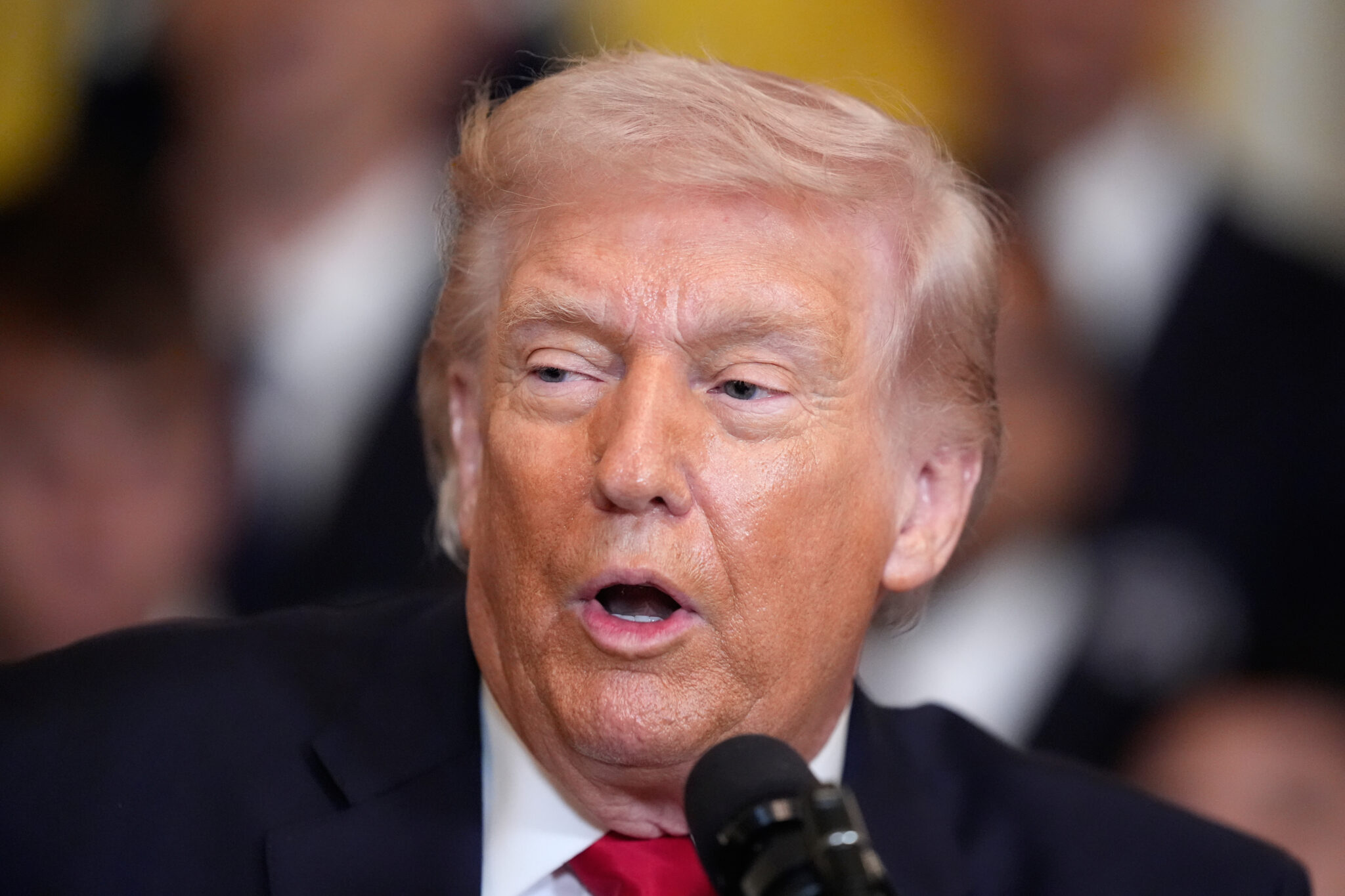
President Donald Trump said Monday that the war against Iran could be over in the near term, but he paired that message with a stark warning: if Tehran interferes further with global oil supplies, the United States would respond with much heavier military force.
The comments came as the conflict entered its second week, with markets, governments and civilians all reacting to a war that has spread far beyond direct strikes between Iran and Israel. Oil prices climbed sharply, stock markets swung wildly, and regional infrastructure came under new pressure as both sides signaled they were not yet ready to step back.
Speaking to Republican lawmakers at his golf club near Miami, Trump suggested the campaign might not last much longer. He described the U.S. military action as a brief mission aimed at eliminating a major threat and expressed confidence that the fighting could soon wind down.
But just hours later, his tone hardened. In a social media post, Trump warned that if Iran does anything to stop oil from moving through the Strait of Hormuz, the U.S. would hit back with dramatically greater force than it has used so far. The statement underscored how closely the White House is linking the future of the war to energy security and global market stability.
That message landed at a moment of deep anxiety in world markets. Oil prices had already surged overnight, briefly reaching their highest level since the summer of 2022. The spike followed Iran’s decision to elevate Ayatollah Mojtaba Khamenei to supreme leader after the death of his father, Ayatollah Ali Khamenei, early in the war. Investors took the leadership change as a sign that Iran’s rulers were digging in rather than preparing for compromise.
New Iranian leadership signals a hard line
Iran’s choice of Mojtaba Khamenei added a new layer of uncertainty to the conflict. The 56-year-old cleric becomes only the third supreme leader since the founding of the Islamic Republic. He is widely seen as more rigid and more closely aligned with the Revolutionary Guard than his late father.
That matters far beyond symbolism. As supreme leader, Mojtaba Khamenei now holds the final word on Iran’s military strategy, foreign policy and nuclear decisions. His elevation suggested continuity at a moment when some observers had wondered whether battlefield losses and leadership disruption might open space for a de-escalation.
Instead, the public mood inside Iran pointed in the opposite direction. Thousands gathered in Tehran and elsewhere to show allegiance to the new leader, waving flags and chanting slogans against the United States and Israel. Though Mojtaba has not appeared publicly since the war began, the rallies reinforced the sense that Iran’s ruling structure remains intact and defiant.
Trump made clear he was unhappy with the choice. He said he would have preferred another type of internal candidate and implied the new leadership would make diplomatic resolution harder. He also said it would be inappropriate to discuss whether Mojtaba Khamenei himself could become a military target, even though Israel has already floated that possibility.
Heavy strikes rock Tehran and Isfahan
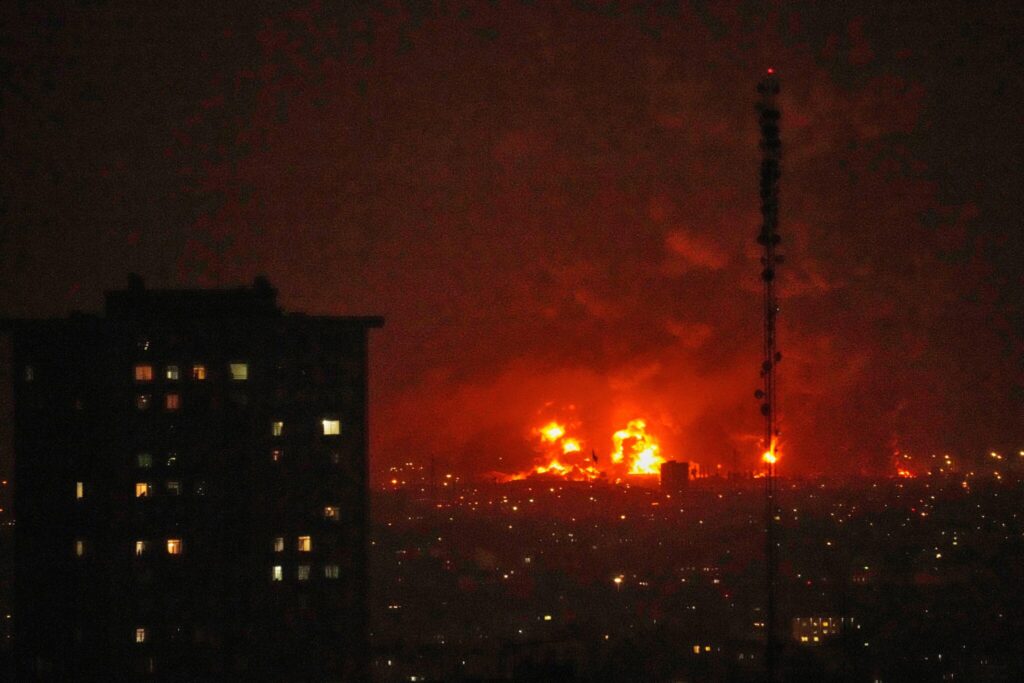
The battlefield picture remained volatile Monday. Tehran was hit by what appeared to be one of the heaviest bombardments since the war started on Feb. 28. Residents reported repeated explosions across the capital, though Iranian media did not immediately provide a detailed accounting of casualties or damage.
Israel said it launched a broad wave of strikes targeting Tehran, Isfahan and southern Iran. According to the Israeli military, the attacks hit dozens of infrastructure sites, including drone-related facilities linked to the Revolutionary Guard. The campaign reflects Israel’s continued focus on degrading Iran’s missile and drone capabilities while pressing deep into the country’s security network.
At the same time, Israel remained under threat. Iranian missiles kept forcing alerts across the country, and Hezbollah fired rockets from Lebanon into Israeli territory. Trump said the United States is getting closer to destroying Iran’s ballistic missile stockpile and its ability to produce and launch more. That claim reflected one of several evolving justifications the administration has offered since the war began.
He also spoke in unusually broad terms about “building a new country,” language that raised fresh questions about how expansive U.S. goals in Iran may be. Whether that comment was rhetorical or a sign of wider ambitions, it added to speculation over what Washington sees as an acceptable end state.
Oil, stocks and the Strait of Hormuz
Energy markets remain one of the clearest measures of the war’s global consequences. Oil prices shot toward $120 a barrel before easing later in the day. That rise reflected fears that Iran’s actions near the Strait of Hormuz could trigger a major supply shock.
The strait is one of the most important oil choke points in the world, carrying roughly a fifth of global oil shipments under normal conditions. Iranian attacks and the broader war have already all but stopped normal tanker activity there. Merchant shipping has also become more dangerous, with attacks near the strait killing at least seven mariners, according to international authorities.
Even so, prices later retreated and U.S. stocks rose, driven by hope that the conflict might remain limited in duration. Investors appeared to be balancing two opposing views: one, that Iran and its allies may prolong the war and deepen the energy disruption; the other, that Washington and its partners could deliver enough military pressure to end the conflict without allowing a prolonged oil blockade.
Kamal Kharazi, a foreign policy adviser to the office of the supreme leader, suggested Iran is preparing for a long fight. He said there was no room left for diplomacy unless outside powers intervene to halt what he described as American and Israeli aggression. That statement challenged the market’s more optimistic reading and reinforced fears that volatility could persist.
Gulf states come under increasing pressure
The war’s regional fallout continued to spread. Saudi Arabia condemned a drone strike on its Shaybah oil field and warned that Iran would be the biggest loser if it kept attacking Arab states. Saudi officials later said air defenses shot down a dozen drones Monday night.
In the United Arab Emirates, authorities said two people were wounded by shrapnel from intercepted Iranian missiles over Abu Dhabi. The Emirati Defense Ministry said 15 ballistic missiles and 18 drones targeted the country on Monday alone. Early Tuesday, the UAE also reported damage from a drone strike on its consulate in Iraq’s Kurdish region, calling it a dangerous escalation.
Iran also launched attacks on Kuwait, Qatar and Bahrain. In Bahrain, authorities said one person was killed and others were injured after an Iranian strike hit a residential building in Manama. These attacks have intensified pressure on Gulf governments that are trying to preserve economic activity while managing growing security threats.
Several U.S. diplomatic missions in the region have responded by reducing staff and ordering nonessential personnel to leave.
Diplomacy remains uncertain
Trump also spoke Monday with Russian President Vladimir Putin. According to the Kremlin, Putin raised ideas for a quick political and diplomatic settlement after consulting Gulf leaders and Iranian President Masoud Pezeshkian. That suggests some international players are exploring ways to halt the war, even if no clear framework has emerged.
Still, the war’s trajectory remains uncertain. Iran’s new leadership, continued missile exchanges, attacks on energy routes and Trump’s own shifting public messaging all point to a conflict that could either wind down quickly or intensify sharply if oil transport becomes the next major battleground.
For now, Trump is projecting confidence that the campaign may soon end. But his warning about the Strait of Hormuz also made clear that any attempt by Iran to squeeze global energy supplies could bring a much harsher phase of the war.



You must Register or Login to post a comment.