Trump Says Maduro, Wife Seized After U.S. Attacks Venezuela/ Newslooks/ WASHINGTON/ J. Mansour/ Morning Edition/ The United States carried out large-scale strikes in Venezuela early Saturday, President Donald Trump said. Trump claimed Venezuelan leader Nicolás Maduro was captured and flown out of the country. The attack sparked explosions in Caracas, global condemnation, and questions over legality.
U.S. Strikes Venezuela: Quick Looks
- U.S. launches large-scale nighttime strike in Venezuela
- Trump claims Nicolás Maduro and wife were captured
- Explosions rock Caracas; military sites reportedly hit
- Venezuelan government calls attack “imperialist aggression”
- FAA bans U.S. flights over Venezuela amid military activity
- U.S. lawmakers question legality and lack of congressional approval
- Cuba and Iran condemn strikes; Argentina praises action
- Maduro faces U.S. narco-terrorism charges from 2020
Trump Says Maduro, Wife Seized After U.S. Attacks Venezuela
Deep Look
CARACAS, Venezuela — The United States carried out what it described as a “large-scale strike” against Venezuela early Saturday, with President Donald Trump announcing hours later that Venezuelan President Nicolás Maduro had been captured and flown out of the country.
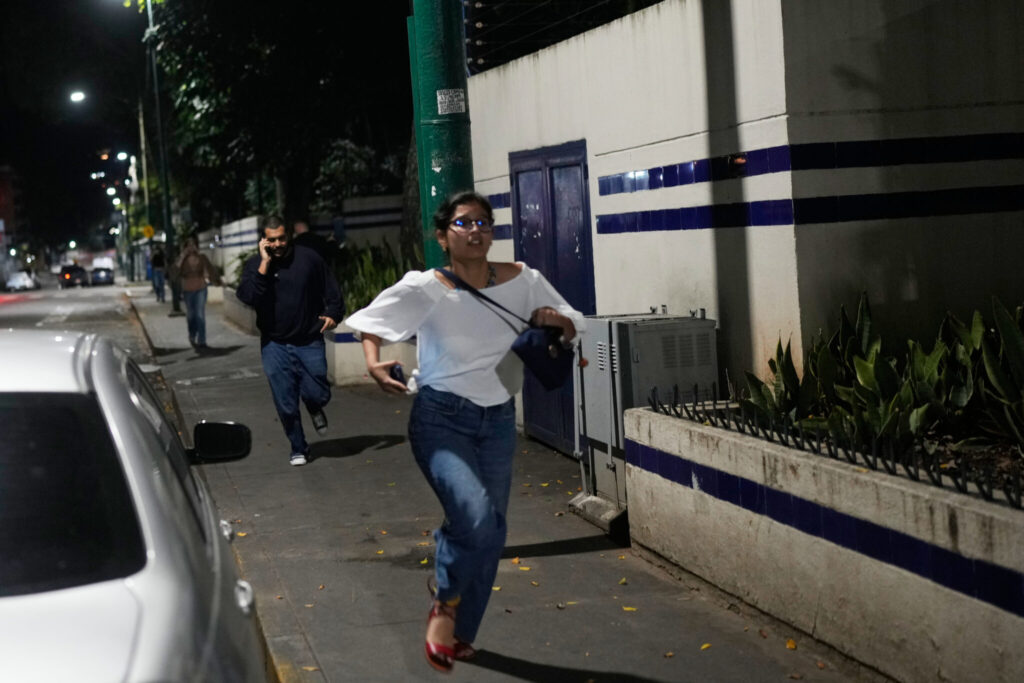
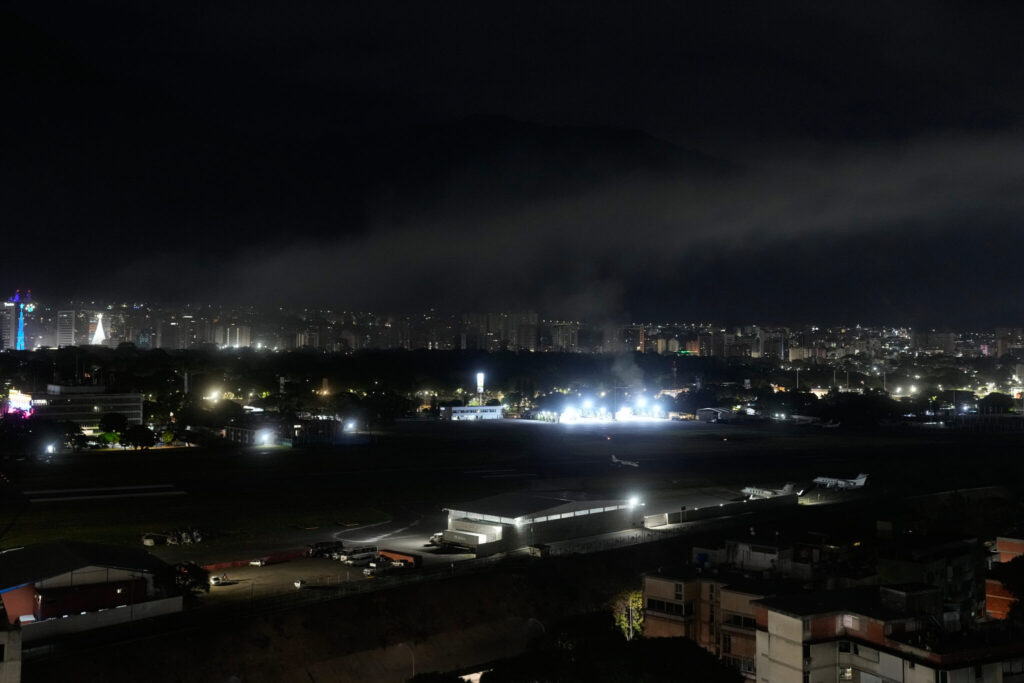
The dramatic announcement followed a wave of explosions that rattled Caracas shortly after midnight. Residents reported hearing at least seven blasts as low-flying aircraft swept across the capital. The attack lasted less than 30 minutes, though it remained unclear whether further military action was planned.
Posting on Truth Social shortly after 4:30 a.m. ET, Trump said Maduro and his wife, Cilia Flores, were “captured and flown out of the Country” in an operation conducted alongside U.S. law enforcement. He said additional details would be released at a later news conference.
Venezuelan authorities immediately condemned the strikes, accusing Washington of targeting both civilian and military installations. In a statement, the government urged citizens to mobilize and denounced what it called an “imperialist attack.”
“We do not know the whereabouts of President Nicolás Maduro and First Lady Cilia Flores,” Vice President Delcy Rodríguez said. “We demand proof of life.”
Under Venezuelan law, Rodríguez would assume power if Maduro were incapacitated or removed, though it was not confirmed whether such a transfer had taken place.
Conflicting Claims and Legal Questions
U.S. officials did not immediately clarify where Maduro and his wife were taken. Senator Mike Lee said he spoke with Secretary of State Marco Rubio, who told him Maduro had been arrested by U.S. personnel to face criminal charges in the United States.
Maduro was indicted in 2020 in New York on charges related to narco-terrorism and drug trafficking conspiracies.
Questions quickly arose over the legality of the strikes. Several lawmakers said Congress had not authorized the use of military force in Venezuela. Members of the Armed Services committees were not formally notified of the operation, according to a person familiar with the matter.
The Federal Aviation Administration issued an immediate ban on U.S. commercial and private flights over Venezuela and nearby Curaçao, citing safety risks from ongoing military activity.
Chaos and Uneven Response in Caracas
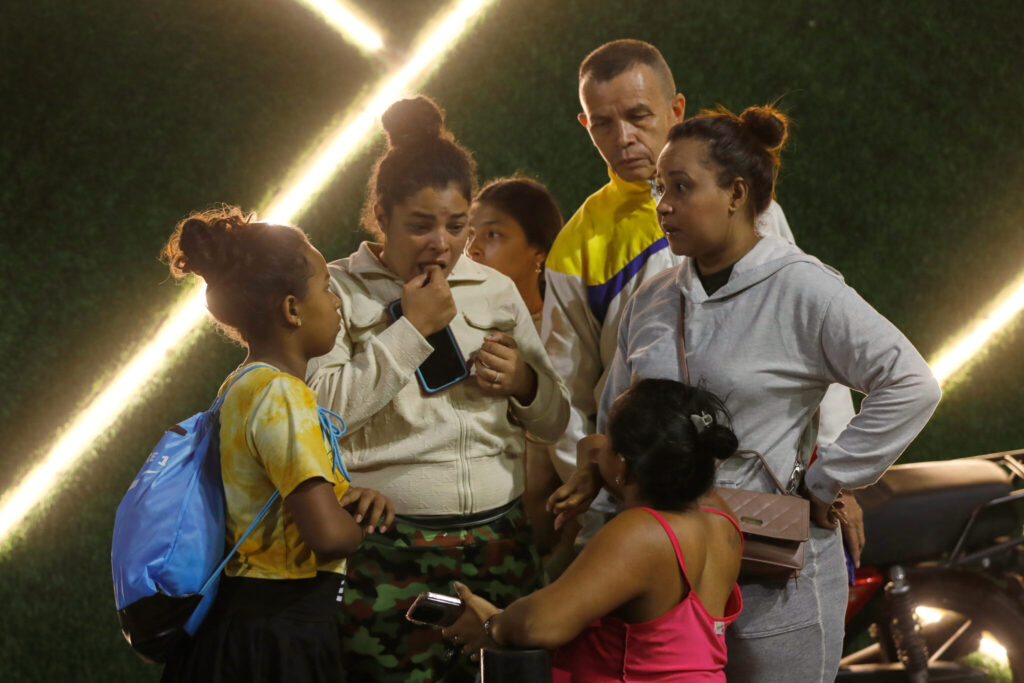
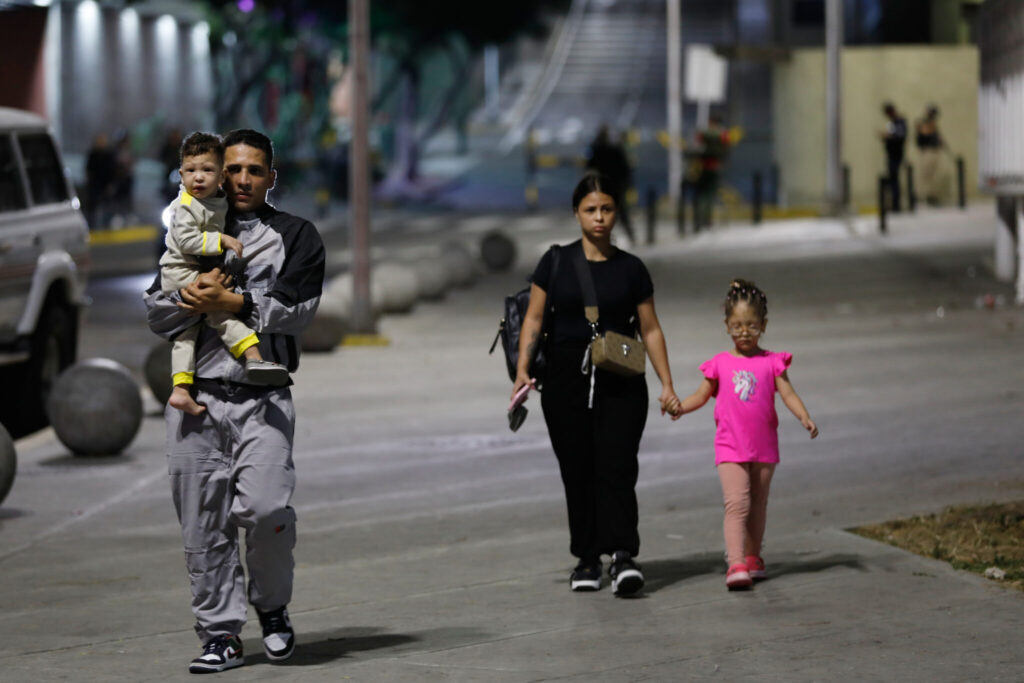
In some Caracas neighborhoods traditionally loyal to the ruling party, armed civilians and militia members appeared in the streets. Elsewhere, large areas remained quiet hours after the strike. Power outages affected parts of the city, though traffic continued moving on major roads.
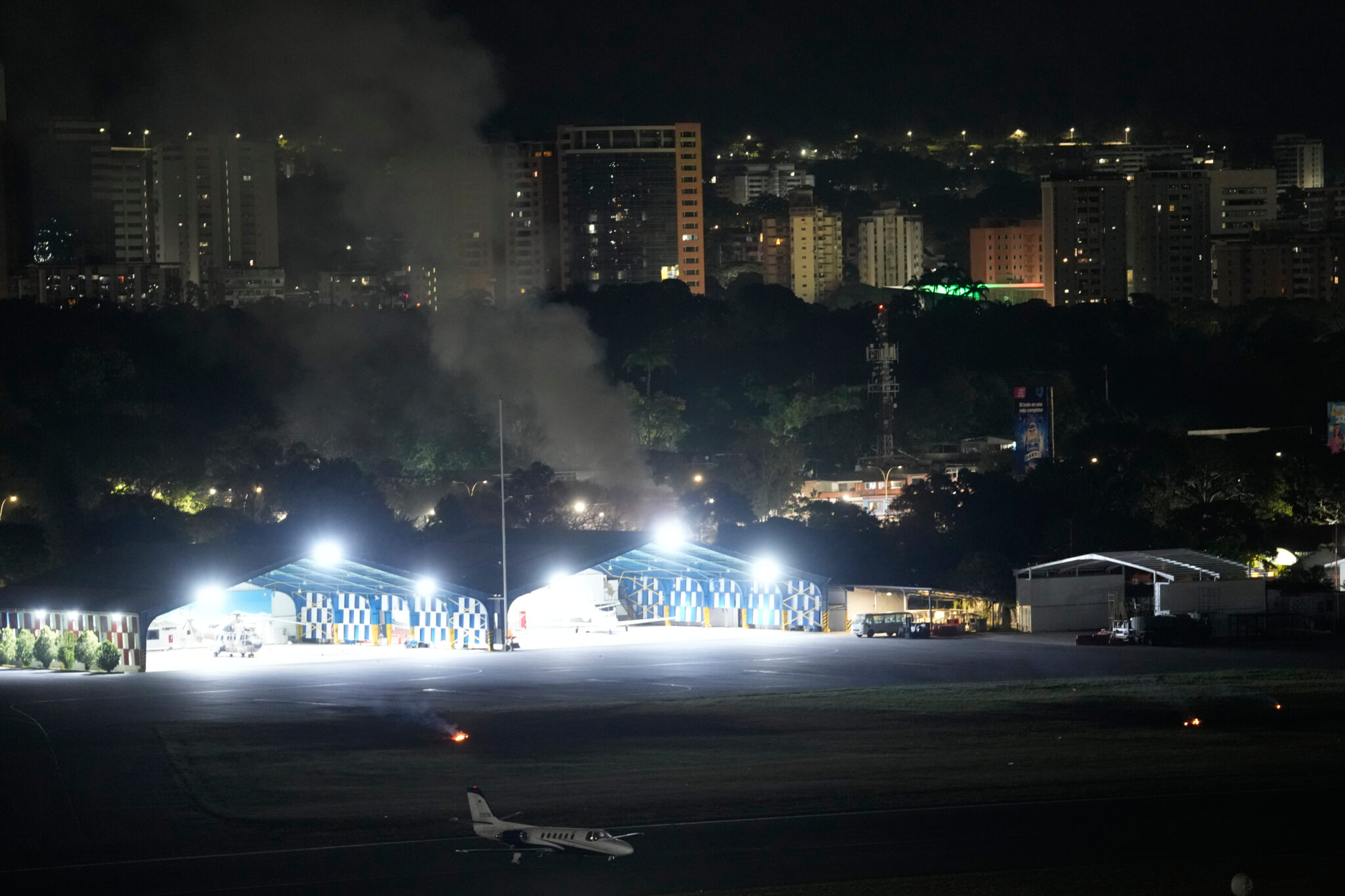
Video footage verified by the Associated Press showed tracer fire, smoke plumes, and explosions illuminating hills around the city. Smoke was seen rising from a military hangar, and at least one military installation reportedly lost power.
“The whole ground shook,” said Carmen Hidalgo, a 21-year-old office worker. “We heard explosions and planes. It felt like the air was hitting us.”
The Venezuelan government declared a “state of external disturbance,” granting authorities expanded emergency powers and increasing the role of the armed forces.
International Reaction
Reaction from the region and beyond began emerging hours later. Cuba, a close ally of Maduro, condemned the strike, with President Miguel Díaz-Canel calling on the international community to respond to what he described as a “criminal attack.” Iran’s Foreign Ministry also denounced the U.S. action.
In contrast, Argentine President Javier Milei praised Trump’s claim that Maduro had been captured, using his trademark slogan celebrating political change: “Long live freedom, dammit!”
Months of Escalation
The strike followed months of escalating U.S. pressure on Maduro’s government. Since September, U.S. forces have attacked dozens of boats suspected of drug trafficking in the Caribbean and eastern Pacific. According to the Trump administration, at least 35 boat strikes have occurred, with a reported death toll of 115.
Last week, the Central Intelligence Agency was linked to a drone strike on Venezuelan soil targeting a docking area allegedly used by drug cartels — the first such known operation inside the country.
The buildup included the arrival of a U.S. aircraft carrier off South America’s coast, creating the largest American military presence in the region in decades. Trump has defended the actions as necessary to stem drug flows into the United States, arguing that the U.S. is engaged in an “armed conflict” with drug cartels.
What Comes Next
As dawn broke over Caracas, uncertainty remained over who was in control of Venezuela’s government and what the next U.S. move might be. With Congress demanding answers and international condemnation growing, the strikes marked one of the most consequential and controversial U.S. military actions in the region in generations.