Trump Says US ‘Armada’ Heading Toward Iran/ Newslooks/ WASHINGTON/ J. Mansour/ Morning Edition/ President Donald Trump announced that a U.S. naval “armada” is being sent toward Iran amid heightened tensions, but said he hopes it won’t be needed. The USS Abraham Lincoln carrier strike group and other assets will arrive in the Middle East as Trump continues to warn Tehran against harming protesters or restarting nuclear activities. Trump claimed his threats led Iran to cancel nearly 840 executions but acknowledged uncertainty about protest deaths, while the International Atomic Energy Agency has not verified Iran’s nuclear stockpile in months.
US Naval “Armada” to Iran Quick Looks
- Trump says a U.S. naval “armada” is heading toward Iran.
- The USS Abraham Lincoln and guided‑missile destroyers are en route.
- Ships left the Asia‑Pacific amid rising tensions with Tehran.
- Trump says he hopes the military buildup won’t be used.
- Additional air‑defense systems may be deployed to the region.
- Tensions escalate after Iran’s crackdown on domestic protests.
- Trump claims Iran cancelled ~840 executions after his threats.
- He warns Iran against restarting its nuclear program.
- IAEA has not verified Iran’s enriched uranium stockpile in months.
- Rights groups report thousands killed in protests, though exact totals vary.
Deep Look: Trump Says US “Armada” Heading Toward Iran as US‑Iran Tensions Rise
ABOARD AIR FORCE ONE — January 22, 2026 — President Donald Trump announced Thursday that the United States is dispatching a naval “armada” toward Iran, signaling a major escalation in military positioning as tensions with Tehran intensify. Trump said he hopes the forces won’t have to be used but stressed that the buildup underscores U.S. resolve in the face of Iranian actions at home and abroad.
Speaking to reporters aboard Air Force One while returning from the World Economic Forum in Davos, Switzerland, Trump described a robust movement of U.S. naval power, including the aircraft carrier USS Abraham Lincoln and several guided‑missile destroyers, toward the Middle East.
“We have a lot of ships going that direction, just in case … I’d rather not see anything happen, but we’re watching them very closely,” Trump said. “We have an armada … heading in that direction, and maybe we won’t have to use it.”
Naval Build‑Up Amid Regional Strain
U.S. military officials, speaking on condition of anonymity, confirmed that the Abraham Lincoln carrier strike group began moving from the Asia‑Pacific region last week in response to growing friction between Washington and Tehran. Additional military assets, including possible air‑defense systems, are also being reviewed for deployment to protect U.S. bases and forces across the region.
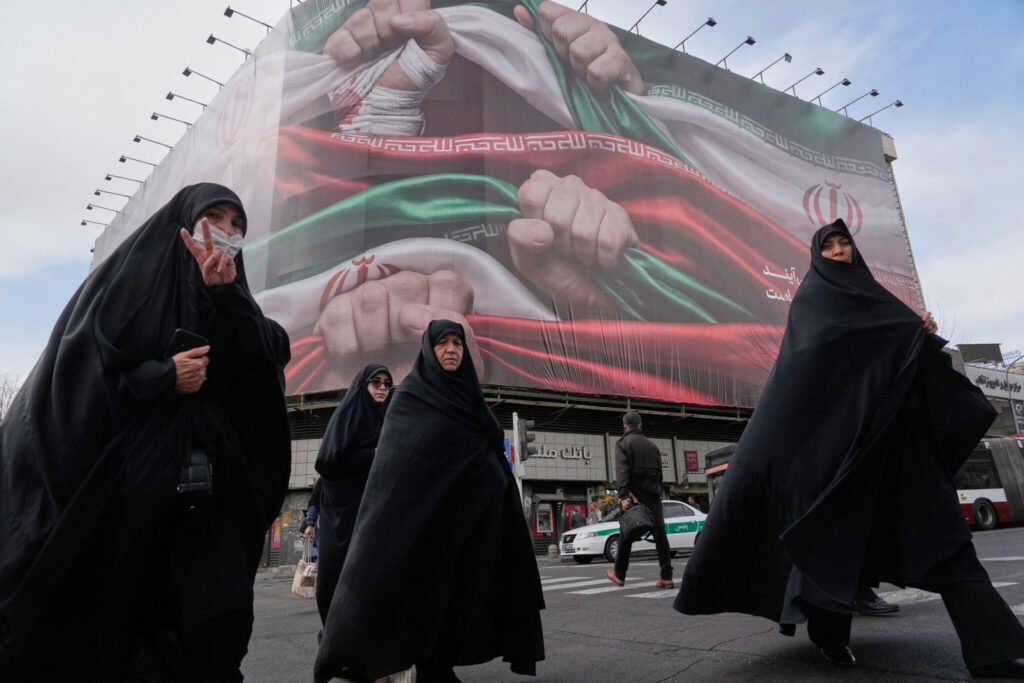
This movement comes amid a backdrop of geopolitical stress triggered by months of unrest in Iran. Large‑scale protests erupted in late December over economic hardship and quickly spread nationwide, met with a severe crackdown by Iranian security forces.
While the protests have eased in recent days, Trump renewed warnings to Tehran not to execute protesters or pursue a renewed nuclear weapons path.
“If they hang those people, they’re going to be hit harder than you’ve ever been hit,” Trump said, referring to Iranian authorities contemplating executions of prisoners tied to unrest. “At an hour before this horrible thing was going to take place, they canceled it. That’s a good sign.”
US Military Posture and Past Actions
The United States has previously shifted military assets to the Middle East during phases of heightened tension with Iran. Most recently, a significant buildup occurred last year ahead of U.S. airstrikes on Iranian nuclear facilities in June, part of a campaign by the Trump administration to disrupt Tehran’s nuclear development program.
Trump reiterated that the U.S. would respond forcefully if Iran attempted to rebuild capabilities that could lead to nuclear weapons. “If they try to do it again, they have to go to another area. We’ll hit them there too, just as easily,” he said.
Iran is required to report findings to the International Atomic Energy Agency (IAEA) regarding its nuclear sites and the whereabouts of materials previously struck by U.S. action. The agency has not verified Iran’s estimated stock of highly enriched uranium — reported by some estimates to be around 440.9 kilograms at 60% enrichment — for more than seven months. Under international guidelines, such verification should occur monthly.
Uncertain Toll from Iran Protests
The protests that fueled part of the administration’s warnings began in late December in Tehran’s Grand Bazaar and spread rapidly. While demonstrations have waned, the death toll remains disputed and significant, according to human rights groups and foreign monitors.
The U.S.‑based Human Rights Activists News Agency (HRANA) has verified 4,519 protest‑related deaths, including 4,251 civilians, with thousands more under review. Iranian officials have cited more than 5,000 confirmed deaths, including members of security forces.
“Iran has a lot of deaths, no matter what,” Trump told reporters when asked how many protesters had been killed, adding: “Nobody knows… I mean, it’s a lot, no matter what.”
Implications for US‑Iran Relations
The administration’s deployment of naval forces highlights the complex, multidimensional nature of U.S.–Iran tensions. While Trump said he hopes military forces will remain unused, the message is clear: the United States is prepared to defend its interests and deter actions by Tehran that could destabilize the region or threaten American forces and allies.
International observers and regional governments will be closely watching this naval deployment as Tehran gauges how far it can push back without triggering direct confrontation with U.S. military power.