Trump Seeks Civil Immunity Over Capitol Riot Case/ Newslooks/ WASHINGTON/ J. Mansour/ Morning Edition/ A federal judge is considering Donald Trump’s claim that he’s immune from civil lawsuits over his alleged role in the January 6 Capitol attack. Trump’s legal team argues his actions were part of his official presidential duties, while plaintiffs argue he acted as a private citizen. The decision could set a major precedent regarding presidential accountability.
Trump Capitol Riot Immunity Case Quick Looks
- Trump claims presidential immunity protects him from civil lawsuits related to January 6.
- U.S. District Judge Amit Mehta heard arguments but did not issue an immediate ruling.
- The lawsuit was filed by Rep. Bennie Thompson and other Democratic lawmakers.
- Plaintiffs argue Trump acted in a personal, political capacity — not official.
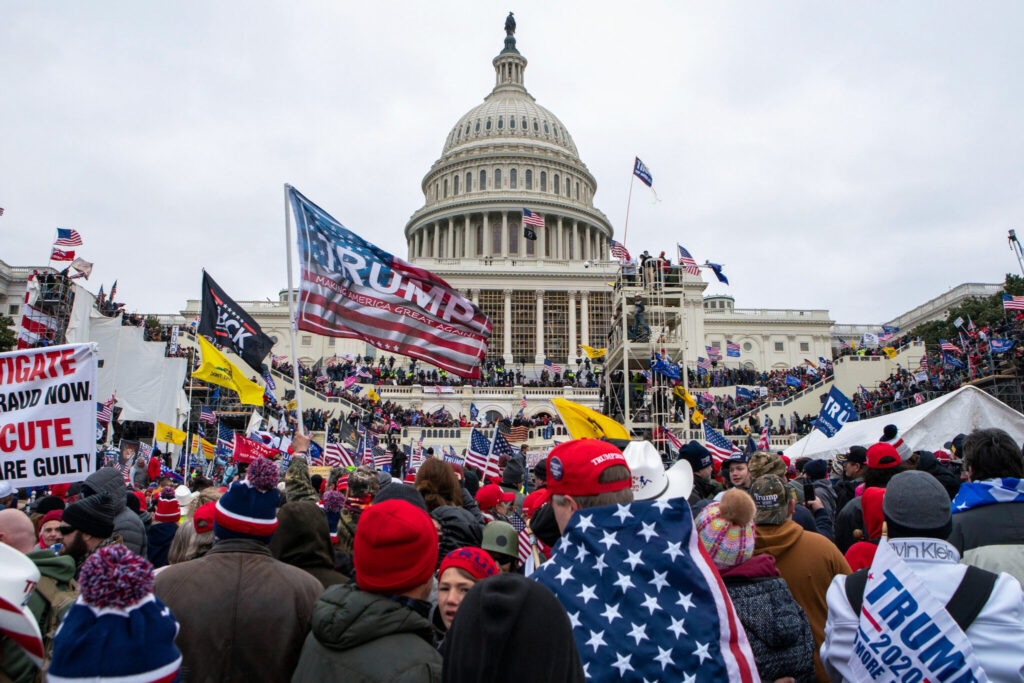
- Trump spoke at the “Stop the Steal” rally before the Capitol attack.
- His lawyers say presidential immunity protects even controversial public statements.
- Plaintiffs cite Supreme Court precedent limiting immunity in campaign-related actions.
- Over 100 officers were injured defending the Capitol during the riot.
- Trump’s sweeping clemency did not shield him from civil liability.
- Judge Mehta said he would rule “as soon as we can.”
- The ruling could define limits of presidential civil immunity.
- Plaintiffs emphasize Trump’s intent and conduct leading up to the riot.
Deep Look: Trump Asserts Civil Immunity in Capitol Riot Lawsuit as Judge Weighs Arguments
WASHINGTON — President Donald Trump’s legal team appeared in federal court on Friday to argue that he should be immune from civil lawsuits alleging he incited the January 6, 2021, attack on the U.S. Capitol — a case that could define the boundaries of presidential legal protections for years to come.
The hearing before U.S. District Judge Amit Mehta centered on whether Trump, now serving a second term as president, can be held personally liable for the violent events of January 6. Trump is facing multiple civil claims filed by Democratic lawmakers who say he provoked the riot in an effort to stop Congress from certifying Joe Biden’s 2020 electoral victory.
Trump’s attorneys argue that his comments before and on the day of the Capitol riot were part of his official duties as president and are therefore shielded by presidential immunity.
“The entire point of immunity is to give the president clarity to speak in the moment as the commander-in-chief,” Trump attorney Joshua Halpern said during the hearing. He added that presidential immunity allows a president to act “boldly and fearlessly” without fear of civil liability.
However, lawyers for the plaintiffs, including Rep. Bennie Thompson of Mississippi, argued that Trump’s conduct falls outside the bounds of presidential immunity. They assert that his actions were politically motivated, rooted in his personal interest in remaining in office, and not in the service of the presidency.
“President Trump has the burden of proof here,” said plaintiffs’ attorney Joseph Sellers. “We submit that he hasn’t come anywhere close to satisfying that burden.”
Sellers argued that context matters, stating the court must examine not only the content of Trump’s January 6 remarks, but also the broader circumstances — including his efforts to overturn the 2020 election results.
“You have to look at what happened leading up to January 6th,” Sellers said, pointing to Trump’s public campaign to cast doubt on the election and pressure officials to overturn the results.
The lawsuit was originally filed by Thompson, who chaired the House Homeland Security Committee, and later joined by additional Democratic members of Congress. The suit also names Trump’s former personal attorney Rudy Giuliani and members of the Proud Boys and Oath Keepers, far-right groups whose members participated in the Capitol breach.
At the time, Trump delivered a speech to supporters near the White House, urging them to “fight like hell.” Shortly after, the crowd marched to the Capitol, breaking through barricades and halting the certification process. More than 100 police officers were injured in the ensuing violence.
Although Trump issued a blanket act of clemency on his first day back in office — which included pardons and dismissals of more than 1,500 criminal cases tied to the January 6 riot — those actions do not extend to civil cases. The lawsuits remain active and are seen as one of the few avenues for holding the former president accountable for the events of that day.
Judge Mehta did not issue a ruling from the bench on Friday but said the case presented “a lot to think about.” He promised to deliver a decision “as soon as we can,” acknowledging the constitutional questions at stake.
Central to the dispute is the legal distinction between a president’s official duties and campaign-related or personal conduct. The U.S. Supreme Court has previously ruled that presidential immunity does not cover acts performed in a personal or political capacity, even if they occur while in office.
Trump’s legal team insists that everything he said and did on January 6 fell within his official responsibilities. But the plaintiffs argue that no sitting president has the authority to interfere with the certification of an election in Congress — an act that, they say, places Trump squarely outside the scope of protected conduct.
The outcome of the case could have far-reaching implications, not only for Trump, but for future presidents and how they wield their power in politically charged contexts. If the judge rules in Trump’s favor, it could significantly broaden the scope of presidential immunity. If he rules against Trump, it could open the door to more legal challenges against executive actions deemed personal or politically motivated.