

Trump Seeks to Close $1.6 Trillion Revenue Gap with Raft of New Tariffs/ Newslooks/ WASHINGTON/ J. Mansour/ Morning Edition/ The Trump administration is expanding tariff investigations to recover revenue lost after a Supreme Court ruling. Officials hope new tariffs could replace roughly $1.6 trillion previously expected from import duties. Economists say the complex legal process may delay or limit the revenue generated.
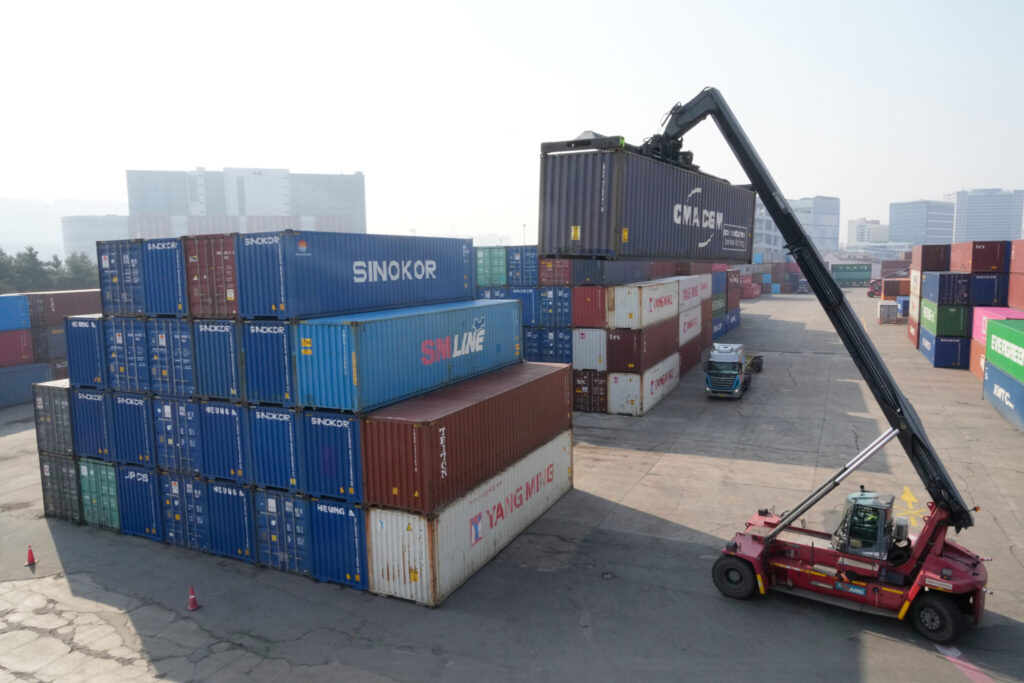
Trump Tariffs Revenue Plan Quick Looks
- Revenue gap: Supreme Court ruling removed about $1.6 trillion in expected tariff income.
- New investigations: The U.S. is examining trade practices in multiple economies, including the EU and China.
- Legal pathway: Tariffs may be imposed under Section 301 of the 1974 Trade Act.
- Temporary tariffs: A 10% import duty is currently in place but expires after 150 days.
- Budget pressure: The administration hopes tariffs will help offset the cost of tax cuts.
- Economic debate: Experts question whether tariffs can reliably generate large government revenue.

Deep Look: Trump Seeks to Close $1.6 Trillion Revenue Gap with Raft of New Tariffs
The Trump administration is intensifying its efforts to rebuild a major source of government revenue after a Supreme Court decision struck down several of the president’s broad import tariffs.
The ruling eliminated an estimated $1.6 trillion in projected tariff income that the White House had expected to collect over the next decade. Officials had planned to use that money to offset the cost of sweeping tax cuts enacted last year.
Now, the administration is launching a series of trade investigations that could pave the way for new tariffs on imports from major global economies.
Investigations Target Major Trading Partners
On Wednesday, U.S. Trade Representative Jamieson Greer announced investigations into 16 economies—including the European Union, China, Japan and South Korea—over concerns that government policies may be subsidizing excessive manufacturing capacity.
According to the administration, such subsidies can distort global markets and disadvantage American industries.
A second investigation will examine whether countries that fail to block imports produced with forced labor are engaging in unfair trade practices that harm U.S. workers and companies.
That review will include a broad range of countries, including Mexico, Canada, Brazil and Australia in addition to China and the European Union.
Both inquiries are being conducted under Section 301 of the Trade Act of 1974, a law that allows the United States to impose trade penalties if foreign governments are found to engage in unfair practices.
However, the process requires multiple procedural steps, including consultations with foreign governments, public comment periods and formal hearings.
A hearing on the investigation into global manufacturing capacity is scheduled for May 5, while the forced labor inquiry will hold a hearing on April 28.
A More Complicated Tariff Strategy
The current approach differs sharply from the method the Trump administration previously used to impose tariffs.
During the president’s first year in office, the White House relied on emergency powers that allowed tariffs to be introduced quickly through executive orders.
Those emergency tariffs were the focus of the Supreme Court ruling issued in February, which determined the administration could no longer rely on that authority for such broad import taxes.
Within hours of the ruling, Trump announced a new temporary 10% tariff on all imports under a different legal authority.
But that measure can only remain in place for 150 days.
Trump has said he plans to raise the tariff to the legal maximum of 15%, though that increase has not yet been implemented.
Meanwhile, several states have filed lawsuits challenging the new duties.
Administration officials hope to complete the Section 301 investigations and implement replacement tariffs before the temporary tariffs expire.
Tariffs as a Key Revenue Source
The White House’s push reflects the central role tariffs have come to play in the administration’s economic policy.
Historically, tariffs were used primarily to protect specific domestic industries from foreign competition.
The Trump administration, however, has increasingly promoted tariffs as a tool for generating government revenue.
In last month’s State of the Union address, Trump suggested tariffs could even replace the federal income tax—a system that would resemble U.S. tax policy during the late 1800s.
Tariffs are also expected to help finance the tax cuts extended by Congress last year.
According to the Congressional Budget Office, those tax reductions could add approximately $4.7 trillion to the national debt over the next decade.
Before the Supreme Court ruling, the administration’s tariffs were projected to offset about $3 trillion of that cost.
With the court eliminating a major portion of those tariffs, about $1.6 trillion in expected revenue disappeared.
Existing Tariffs Still Generate Revenue
Despite the ruling, several tariffs imposed earlier in Trump’s presidency remain in place.
These include duties on Chinese imports that were implemented following previous Section 301 investigations.
The administration has also imposed tariffs on specific industries, including steel, automobiles and lumber.
Together with the temporary universal tariff currently in effect, those duties are expected to generate roughly $668 billion in revenue over the next decade, according to estimates from the Tax Foundation.
Economists Debate Tariffs’ Effectiveness
Some economists believe the administration could eventually restore a similar level of tariffs through multiple investigations and trade actions.
Elena Patel, co-director of the Urban-Brookings Tax Policy Center, said the administration has demonstrated a willingness to aggressively pursue tariff policies.
However, she cautioned that the new legal framework allows businesses more opportunities to challenge tariffs or seek exemptions.
That could create uncertainty about how much revenue the government will ultimately collect.
Erica York, vice president of federal tax policy at the Tax Foundation, noted that the investigations announced this week cover a vast share of global imports.
The manufacturing capacity investigation alone could affect about 70% of goods imported into the United States, she said.
When combined with the forced labor inquiry, the potential scope could include nearly all imports.
York suggested that the breadth of the investigations indicates the administration may be seeking to rebuild a broad tariff system rather than address specific trade disputes.
Who Pays the Tariffs?
Another major point of debate centers on who actually bears the cost of tariffs.
Trump has frequently argued that foreign governments effectively pay the duties when their goods are taxed at U.S. borders.
However, many economists say tariffs are largely paid by American businesses and consumers.
Research from institutions including the Federal Reserve Bank of New York and Harvard University has found that companies importing foreign goods typically pass the additional costs on to buyers through higher prices.
A New Role for Tariffs
Experts say the administration’s reliance on tariffs as a primary revenue source represents a significant shift in U.S. economic policy.
Kent Smetters, director of the Penn Wharton Budget Model, said tariffs historically have been used mainly as trade policy tools rather than major funding sources for the federal government.
“What makes this approach different,” Smetters said, “is that tariffs are being used primarily as a revenue raiser.”
Some analysts argue that if the government wants tariffs to function as a large-scale revenue stream, Congress may ultimately need to pass legislation authorizing broader duties.
For now, the administration is pursuing its strategy through trade investigations and regulatory authority.
Whether those efforts can replace the $1.6 trillion in lost tariff revenue remains uncertain.



You must Register or Login to post a comment.