Trump to Sign AI Executive Order Preempting State Laws/ Newslooks/ WASHINGTON/ J. Mansour/ Morning Edition/ President Donald Trump announced he will issue an executive order this week creating a single national standard for artificial intelligence. The move aims to prevent a patchwork of state laws that tech companies say hinders innovation. State leaders and lawmakers from both parties are expected to oppose the order.
Trump’s National AI Rule Quick Looks
- Trump says U.S. needs “One Rulebook” to stay ahead in AI
- Executive order would preempt state AI regulations
- Big Tech backs national standard; OpenAI, Google, Meta among supporters
- State laws seen by industry as inhibiting innovation
- Critics say order would limit state authority on consumer protections
- Draft order was leaked in November and temporarily shelved
- Trump revived plan after Congress rejected defense bill amendment
- Ron DeSantis, other governors pushing state-level AI safeguards
- States targeting AI use in deepfakes, discrimination, data privacy
- Senate voted 99-1 against blocking state AI laws earlier in 2025
Deep Look: Trump Moves to Preempt State AI Laws With National Standard
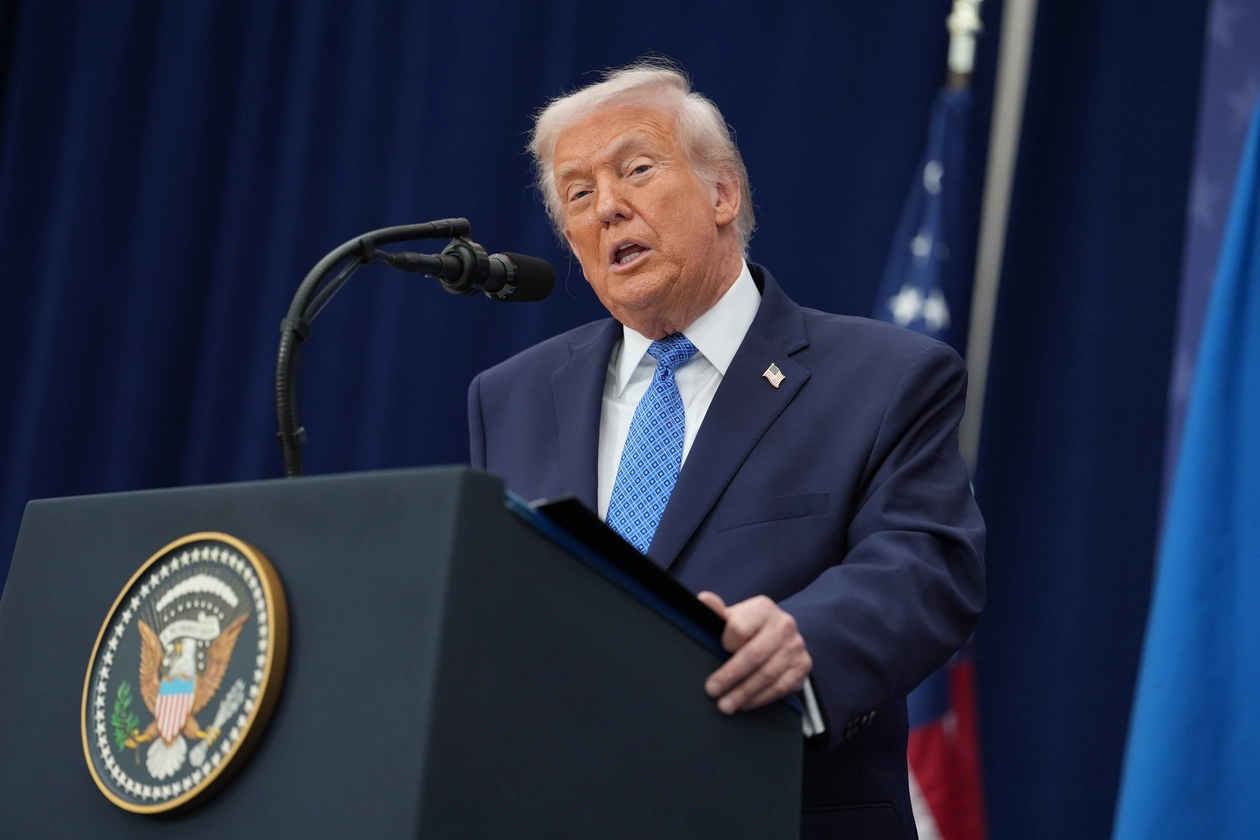
WASHINGTON — President Donald Trump announced Monday that he will issue a long-anticipated executive order establishing a single national framework for artificial intelligence, a move expected to benefit large tech companies but likely to face fierce bipartisan pushback from state leaders.
Writing on Truth Social, Trump declared, “I will be doing a ONE RULE Executive Order this week. You can’t expect a company to get 50 approvals every time they want to do something.” The president emphasized that the U.S. is leading in AI but warned that this advantage could be lost if individual states create their own regulations.
“There must be only One Rulebook if we are going to continue to lead in AI,” he wrote.
A Win for Tech, a Blow to State Regulators
The executive order, which has been in the works for months, would preempt state and local AI laws by centralizing regulatory power at the federal level — a move that would effectively strip states of their ability to enforce or create their own AI-specific legislation.
According to previous reports, the order may go as far as to withhold federal funding from states that defy the national standard, or allow the administration to challenge state laws in court. A similar draft proposal was leaked in November, sparking a wave of controversy and infighting within the Republican Party.
The tech sector — including OpenAI, Google (Alphabet), Meta, and Andreessen Horowitz — has long pushed for a federal AI framework, arguing that a patchwork of 50 state laws hinders innovation, delays product development, and puts the U.S. at risk of falling behind global competitors like China.
Bipartisan State Opposition Growing
Despite industry support, state lawmakers from both parties have warned against federal overreach.
Last week, Florida Governor Ron DeSantis, a Republican, introduced a state-level AI Bill of Rights that would include data privacy protections, parental controls, and anti-discrimination measures. California — home to major AI developers — is moving ahead with risk mitigation disclosure rules and other transparency requirements.
Some states have already passed targeted AI laws, including bans on deepfakes in politics, restrictions on non-consensual AI-generated sexual content, and safeguards against algorithmic bias in hiring, housing, and credit.
“Congress can’t fail to create real safeguards and then block the states from stepping up,” said North Carolina Attorney General Jeff Jackson, a Democrat. Jackson was among several attorneys general who have warned that stripping states of their regulatory powers would leave consumers exposed.
Congressional Route Blocked, Executive Action Accelerated
Trump had previously asked Congress to attach language blocking state AI laws to the annual National Defense Authorization Act (NDAA). That proposal collapsed after House Majority Leader Steve Scalise said the defense bill “wasn’t the best place for this to fit.”
In response, Trump appears to be moving forward unilaterally. The executive order is expected to be announced in detail at a White House event later this week, possibly featuring Treasury Secretary Scott Bessent and AI industry leaders.
The decision to bypass Congress and act through executive authority will likely be met with legal challenges from states and advocacy groups that have warned about the lack of AI accountability and consumer protection at the federal level.
The Senate earlier this year voted 99-1 against legislation that would have blocked states from passing their own AI laws, illustrating the depth of bipartisan concern over handing regulatory power exclusively to Washington.
Industry Applauds, Critics Alarmed
While tech companies have praised the push for consistency, critics argue that the executive order prioritizes industry interests over public safety.
Consumer groups have emphasized the potential harms of AI — from privacy breaches and misinformation to discrimination and job displacement — and fear that a weak federal standard will fail to address those risks.
Still, Trump is framing the move as necessary to protect American technological dominance. “We are beating ALL COUNTRIES at this point in the race,” he posted, “but that won’t last long” if states remain involved in regulation.
As the AI landscape rapidly evolves, the clash between federal oversight and state sovereignty appears set to escalate — with 2026 likely to be a pivotal year in shaping the future of American AI governance.