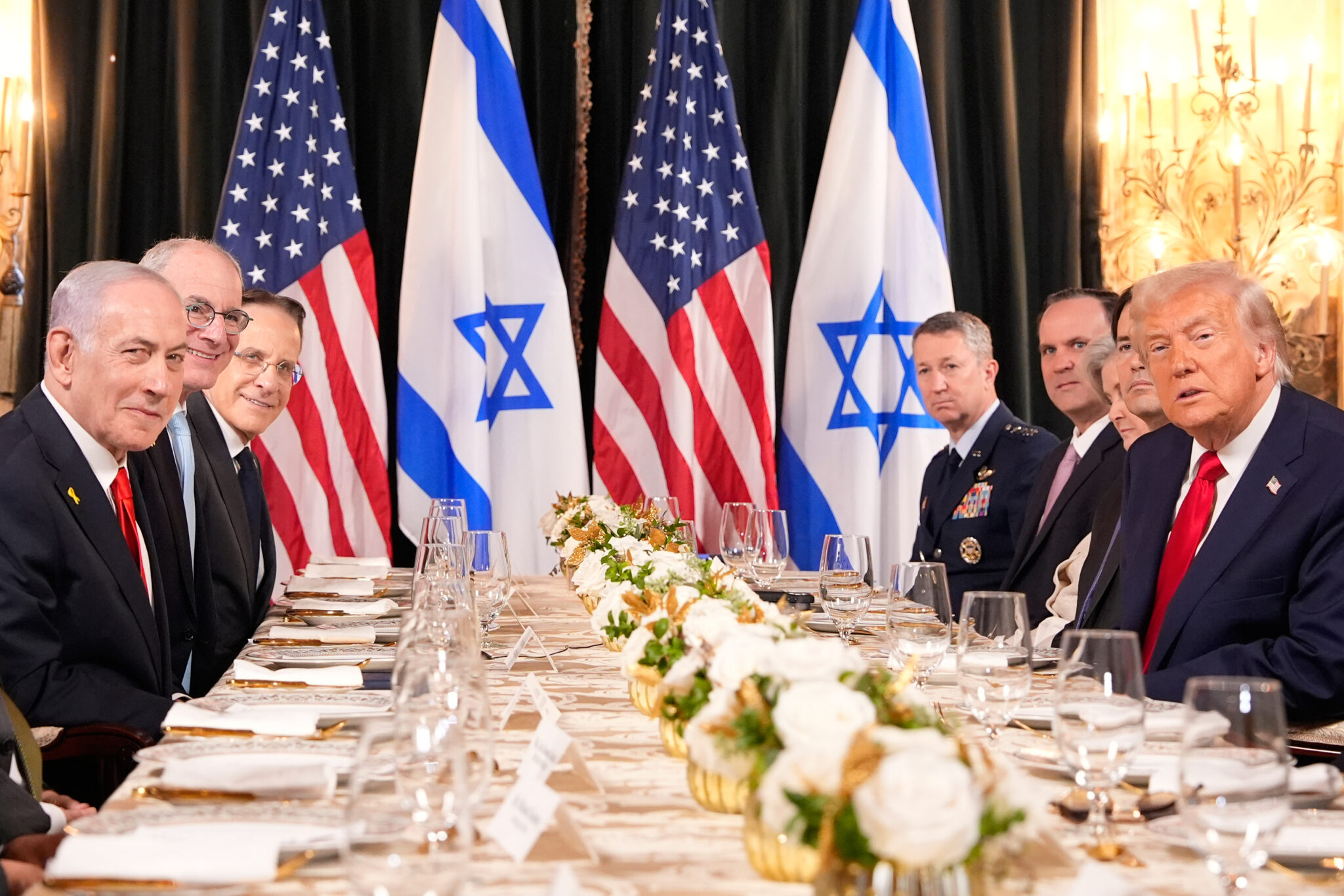
President Trump and his top advisers urged Israeli Prime Minister Benjamin Netanyahu to shift policies in the occupied West Bank during a recent meeting. The U.S. expressed concern that continued violence and settlement expansion could derail peace efforts and regional diplomacy. Netanyahu reportedly agreed to take action on settler violence and advance Gaza deal discussions.
Quick Looks:
- U.S. Concerns Over Escalation: The White House believes that increased violence in the West Bank could threaten the implementation of the Gaza peace agreement and delay efforts to expand the Abraham Accords before the end of Trump’s second term.
- Shift in U.S. Tone: This marks the first time in Trump’s current term that his administration has directly pressed Netanyahu over West Bank policy, despite previously backing Israel’s actions in the region.
- Israeli Settlement Activity: Netanyahu’s government has faced international criticism for expanding settlements, legalizing outposts, reducing Palestinian Authority funding, and displacing Palestinian communities — steps many view as moving toward de-facto annexation.
Trump Urges Netanyahu to Shift West Bank Policy Amid Rising Tensions
Deep Looks:
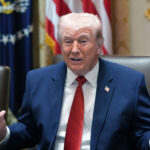
President Donald Trump and top aides have privately urged Israeli Prime Minister Benjamin Netanyahu to shift his government’s approach to the occupied West Bank, citing concerns that ongoing instability could jeopardize peace efforts and U.S. strategic goals in the region.
During a high-level meeting at Mar-a-Lago, Trump and his national security team asked Netanyahu to avoid further provocations in the West Bank, according to a U.S. official and a separate source familiar with the talks.
Behind Closed Doors:
- Trump’s team raised several issues, including:
- Rising settler violence against Palestinian civilians
- The weakening financial state of the Palestinian Authority
- Accelerated Israeli settlement construction
- The administration’s message was clear: without a course correction, Israel risks damaging its diplomatic standing in Europe and hindering broader regional normalization efforts.
Netanyahu’s Response:
- According to sources, Netanyahu responded by vowing to address settler violence and expressed openness to entering the second phase of the Gaza peace plan, despite ongoing disagreements with Trump’s team over its timeline and execution.
- Netanyahu also accepted Trump’s request to reopen talks with the Syrian government about a potential security agreement.
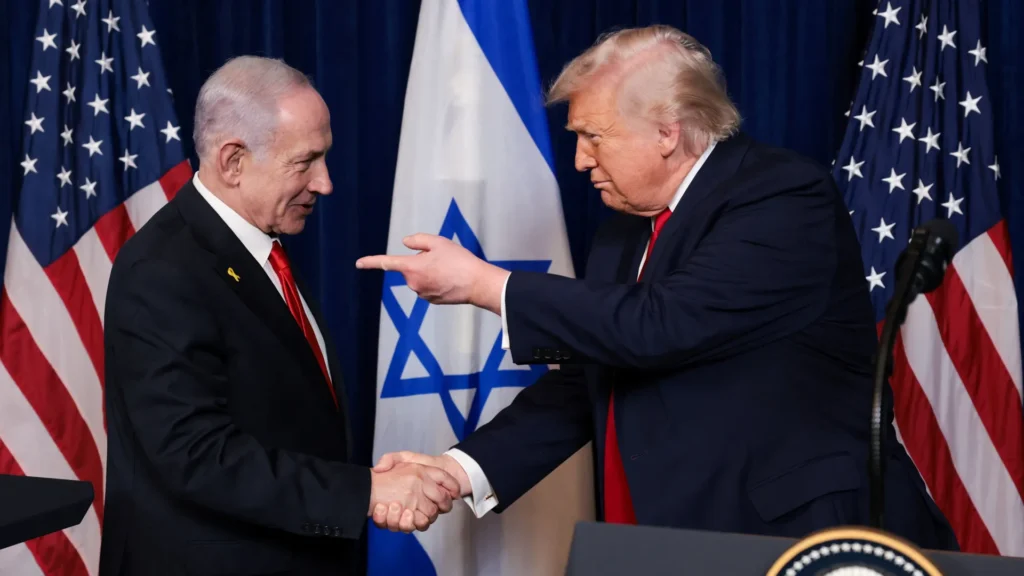
- In a press conference, Trump acknowledged their differences, stating, “We don’t agree 100% on the West Bank, but we will come to a conclusion.”
Strategic Implications:
- Trump’s push for moderation in the West Bank reflects growing U.S. concern over Israeli domestic policies that could derail regional stability.
- Officials said changing Israel’s course in the West Bank is essential to strengthening alliances, particularly with European nations, and ensuring momentum behind the Abraham Accords.
Broader Context:
- Netanyahu’s hardline policies in the West Bank have long been supported by the powerful settler lobby, which holds significant sway over his coalition and the Likud party.
- Trump, despite lifting sanctions on Israeli settlers imposed during the Biden administration and appointing pro-settlement advocate Mike Huckabee as ambassador, is now signaling the need for restraint to avoid broader conflict.
Recent Developments:
- Two Palestinian Americans were reportedly killed in recent settler violence, intensifying pressure on the White House to intervene.
- Sources confirmed that Netanyahu discussed these issues earlier in the day with Secretary of State Marco Rubio, advisor Jared Kushner, and businessman Steve Witkoff, before his meeting with Trump.
Trump’s Position:
- While Trump refused to elaborate on his disagreements with Netanyahu during the press conference, he expressed confidence in the Israeli leader, saying, “He will do the right thing. I know that.”
Historical Context:
- In September, Trump reportedly blocked a plan by Netanyahu to annex parts of the West Bank after several European nations recognized the state of Palestine. However, Trump had largely remained silent on broader West Bank policies until now.
This meeting marks a notable moment in U.S.-Israel relations as Trump moves to balance his staunch pro-Israel stance with the diplomatic realities of regional peacebuilding.