Trump’s 2024 GOP Success Faces 2026 Challenges Ahead/ Newslooks/ WASHINGTON/ J. Mansour/ Morning Edition/ Donald Trump’s 2024 victory revived GOP dominance in Washington, but momentum is slipping ahead of 2026. Recent Republican losses, declining approval ratings, and internal party tensions cast doubt on midterm success. Key issues like healthcare, affordability, and immigration are testing the party’s strategy and Trump’s sway.
2026 Midterm Preview Quick Looks
- Trump’s 2024 win helped Republicans regain full control of Washington.
- Recent GOP losses in local elections raise red flags.
- Trump’s approval on the economy has dropped from 40% to 31%.
- Approval also fell on crime and immigration, two core Trump issues.
- Democrats have gained ground in traditionally red districts.
- Indiana Republicans rejected Trump’s proposed redistricting plan.
- Frustration grows over healthcare subsidy failures ahead of January hikes.
- Trump’s messaging missteps, including inflammatory comments, have overshadowed key events.
- Party strategists worry about affordability and healthcare dominating 2026 races.
- Some Republicans say Trump’s influence may not carry them through 2026.
Trump’s 2024 GOP Success Faces 2026 Challenges Ahead
Deep Look
WASHINGTON — President Donald Trump’s triumphant return to the White House in 2024 helped lift Republicans into control of Congress, capitalizing on public unease about the economy, immigration, and crime. But with less than a year to go before the 2026 midterm elections, cracks are beginning to show in that winning formula.
Republicans have stumbled through a series of recent election losses that suggest the political terrain has shifted. This week, a Democrat won the mayor’s race in Miami for the first time in over 30 years. Another Democrat flipped a solidly Republican district in Georgia in a special election — a district that hadn’t backed a Democrat in decades.
Meanwhile, a key effort to reshape congressional districts in Indiana failed when Trump couldn’t convince state senators to approve a map that could have secured two additional seats for the GOP.
These developments come at a time when Trump’s approval ratings are sliding, particularly on the very issues that once defined his appeal.
According to the latest poll from the Associated Press-NORC Center for Public Affairs Research, just 31% of Americans approve of how Trump is handling the economy, down from 40% in March. Approval of his immigration policies has dropped from 49% to 38%, and support for his stance on crime has slipped from 53% to 43%.
Yet Trump continues to project confidence, recently telling Politico that he gives himself an “A+++++” on economic performance — a claim that may feel disconnected from voters struggling with high costs and financial uncertainty.
GOP on Edge as Democrats Close the Gap
Republicans currently hold the House and Senate, but Democrats are just a handful of seats away from reclaiming control. Some GOP lawmakers are openly voicing concern that the 2026 midterms may repeat the pattern of 2018, when Democrats rode a wave of dissatisfaction with Trump to flip 40 House seats.
“If you’re not concerned, then you’re living in a cave,” said Sen. Jim Justice, R-W.Va., pointing to the GOP’s struggles to connect with voters. “We’re not good at our messaging a lot of times as Republicans. The Democrats are professionals at it.”
History suggests that the party in power typically loses seats during the president’s first midterm. However, thanks to redistricting and partisan voting trends, there are fewer truly competitive districts — meaning the GOP’s grip may not loosen easily. But the recent Democratic wins have many Republican strategists alarmed.
Trump’s Campaign Role Under Scrutiny
Despite these warning signs, Trump’s inner circle is doubling down. His chief of staff, Susie Wiles, recently said Trump will campaign aggressively in 2026 and the party will essentially “put him on the ballot.”
But that strategy has already backfired. A trip to Pennsylvania intended to focus on economic messaging was quickly overshadowed when Trump made inflammatory remarks about immigrants from “filthy” countries — comments that dominated headlines and distracted from his policy agenda.
At the same time, internal party tensions are brewing. Pressure from within the GOP forced Trump to support a measure for the release of the Jeffrey Epstein files, and recent defense legislation passed by Congress includes provisions opposing Trump’s Pentagon policies.
Affordability: The Defining Issue of 2026?
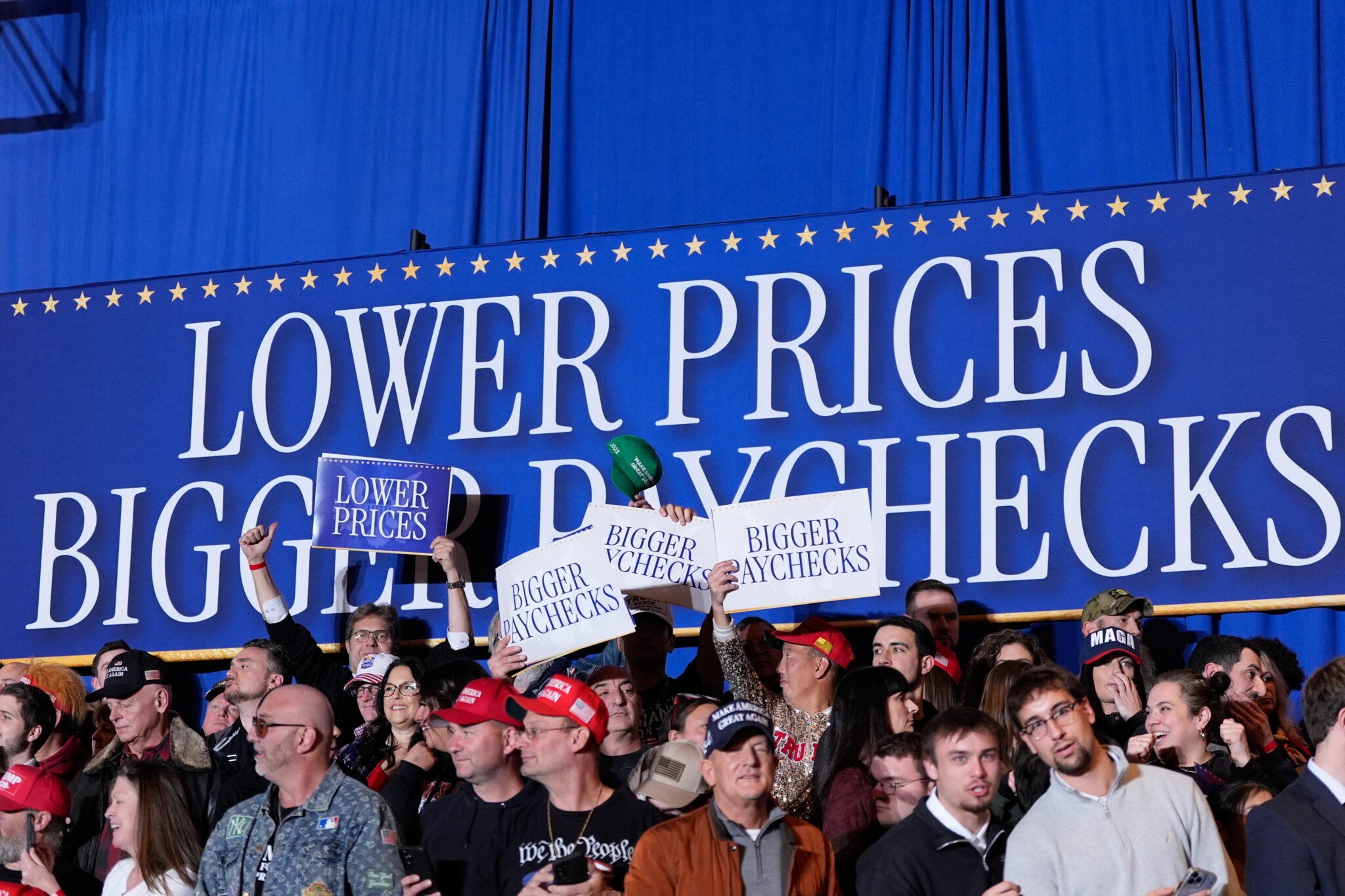
In conversations with Republican candidates in swing districts, affordability remains the top concern from voters.
John Braun, a Washington state senator challenging Democrat Rep. Marie Gluesenkamp Perez, said the GOP must zero in on cost-of-living issues if it hopes to stay in power.
“We have a lot of work to do,” Braun said. “What people care about is how they can support their families in this environment. If we don’t address that, we’ll lose.”
But as Republicans face backlash over healthcare, that job may be getting harder.
The Senate recently rejected a plan to extend enhanced Affordable Care Act (ACA) subsidies, a decision that will trigger sharp premium hikes for millions of Americans in January. For voters already frustrated with healthcare costs, that decision may be a major blow to the GOP’s credibility.
Sen. Thom Tillis, R-N.C., who is not seeking reelection, compared the moment to the failed repeal of the ACA in 2017. But this time, he warned, the consequences are more immediate.
“Back then, voters weren’t losing something,” Tillis said. “Now, they are. And that’s the fundamental difference in an election year.”
Republican Messaging Woes
Several GOP lawmakers admit their messaging isn’t breaking through. Rep. Kevin Kiley, R-Calif., said unless something changes soon, no campaign strategy will soften the impact of healthcare premium spikes.
“If people suddenly pay thousands of dollars more for health care,” Kiley said, “I don’t know what kind of messaging is going to matter. It is what it is.”
With issues like healthcare, cost of living, and immigration dominating public concern, Republicans are scrambling to recalibrate. Trump’s loyal base still gives him strong support — around 80% of Republicans approve of his performance — but it’s unclear if that will be enough in swing districts.
As the clock ticks toward November 2026, the GOP faces a critical question: Can Trump’s appeal carry them again, or is the electorate signaling that change is coming?