Trump’s Board of Peace Debuts With Grand Vision But Limited Support/ Newslooks/ WASHINGTON/ J. Mansour/ Morning Edition/ Donald Trump introduced his “Board of Peace” at Davos, aiming to maintain ceasefire efforts in Gaza and expand global peace missions. While Trump claims widespread interest, key U.S. allies like France, Canada, and the UK declined to join. Concerns persist about the board’s vague mandate and its potential to rival the U.N.
Trump Board of Peace Quick Looks
- Trump launched the “Board of Peace” to manage ceasefires, beginning with Gaza.
- Event took place at the World Economic Forum in Davos, Switzerland.
- Trump claims 59 nations support the board, though only 20 sent top-level officials.
- Many key U.S. allies—including France, UK, Canada, and Sweden—declined participation.
- Critics are wary the board could undermine the U.N.’s authority.
- Ali Shaath announced Rafah crossing between Gaza and Egypt will open next week.
- Putin and Russia are undecided; others criticize authoritarian involvement.
- Israeli PM Netanyahu has agreed to join the board.
- Trump says disarming Hamas is essential for Gaza’s future.
- Trump touted peace while threatening military action against Iran earlier this month.
- Ukraine and Russia are still hesitant on peace, despite Trump’s pressure.
Deep Look: Trump’s Board of Peace Debuts With Grand Vision But Limited Support
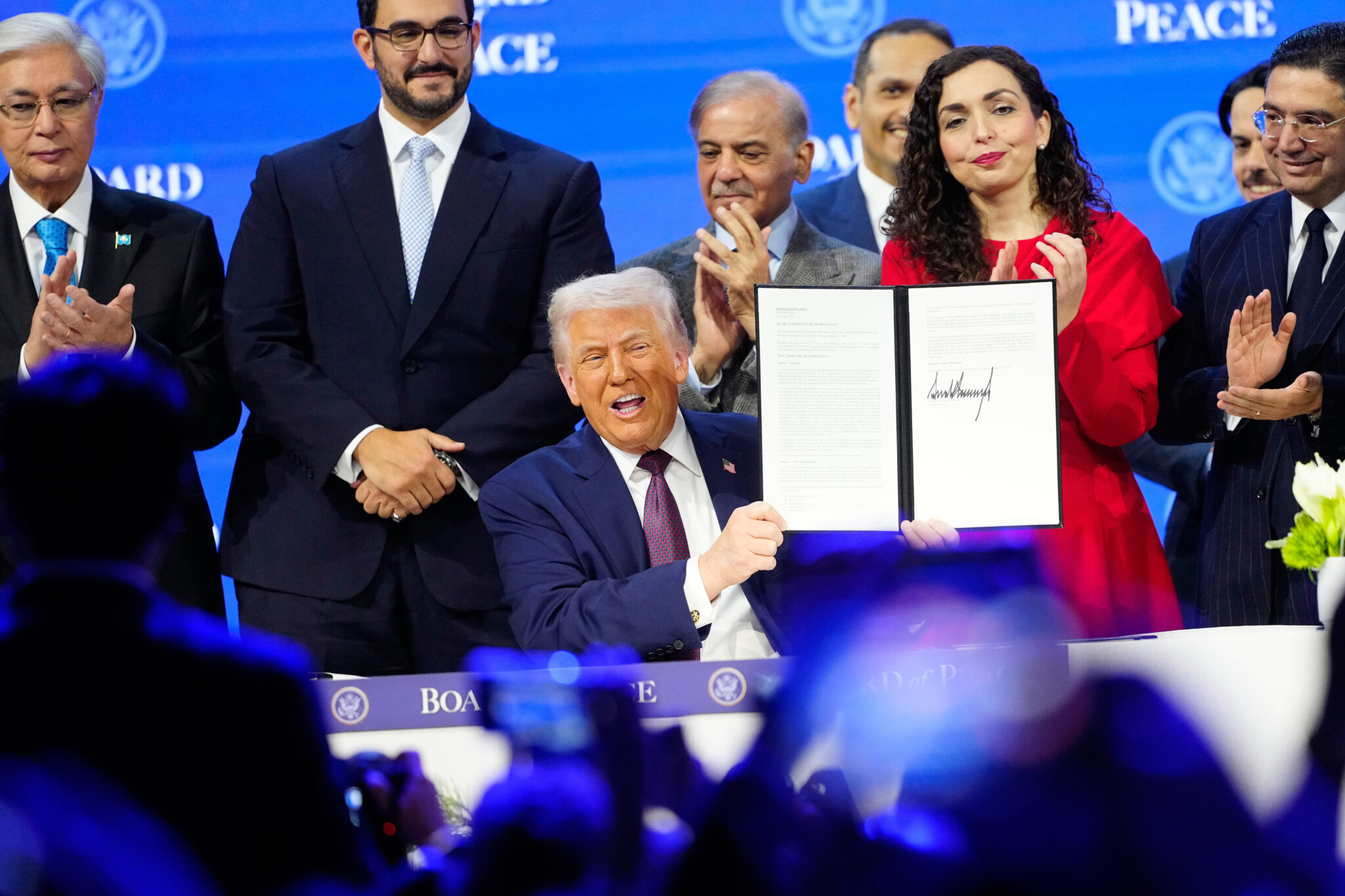
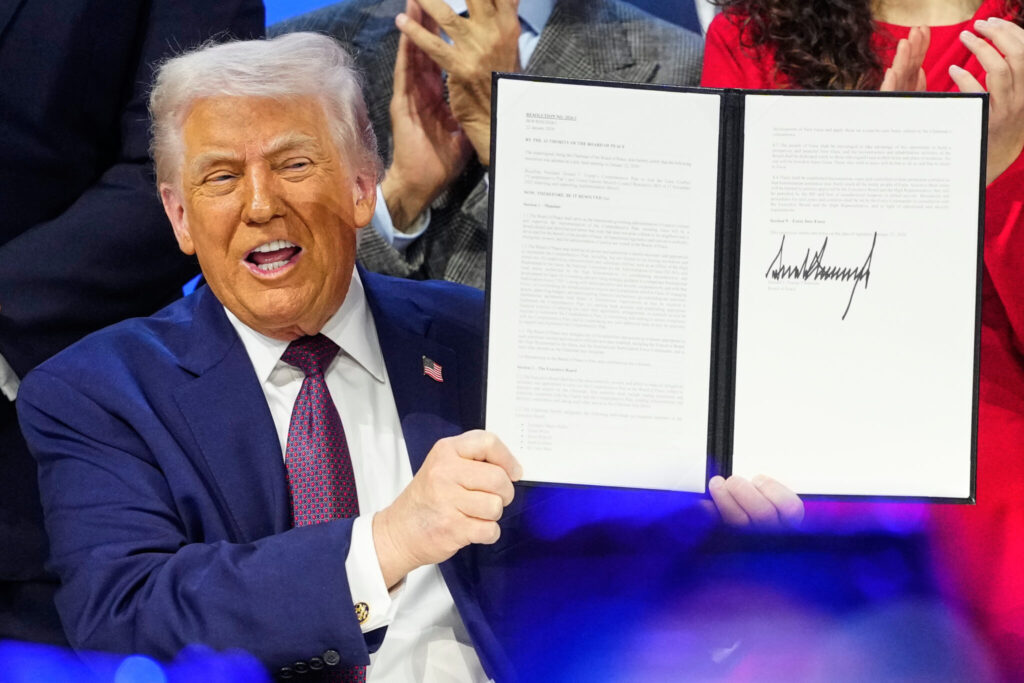
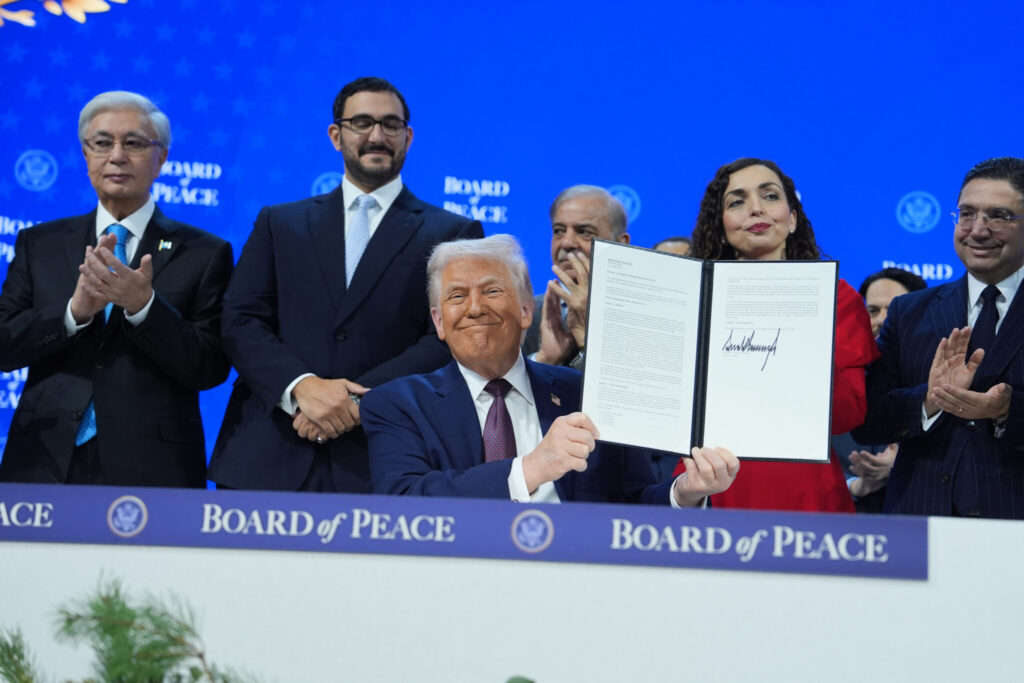
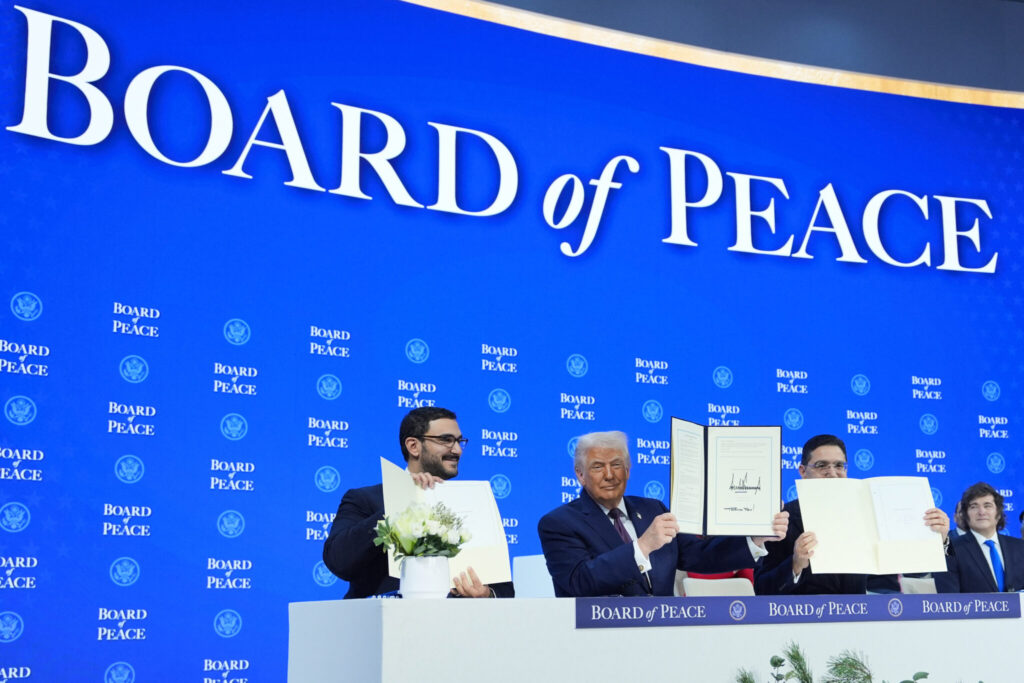
DAVOS, Switzerland — With the snow-covered Swiss Alps as a backdrop, U.S. President Donald Trump formally launched his ambitious “Board of Peace” on Thursday during the World Economic Forum in Davos. Framed as a global body to manage ceasefires and promote peace—starting with the conflict in Gaza—the announcement was long on promises but short on participation from traditional U.S. allies.
Trump cast the new board as a fresh alternative to the United Nations, positioning it as a proactive, global coalition to manage peace deals in volatile regions. However, the initiative was met with hesitation from several leading democratic nations, many of which chose not to sign on, raising concerns over its structure, legality, and legitimacy.
Gaza First, Then the World
The Board of Peace originated as part of Trump’s 20-point ceasefire proposal for Gaza, which was previously endorsed by the U.N. Security Council. At the forum, Ali Shaath—head of the provisional technocratic government expected to administer Gaza—announced that the Rafah crossing between Gaza and Egypt would open next week. Israel had committed to this move back in December but hadn’t followed through until now.
Trump described the board as a tool for lasting peace, saying, “This isn’t the United States—this is for the world.” He added that after success in Gaza, the board would “spread out to other things.”
Yet, he faced a tepid response from many world leaders, with only 19 countries plus the U.S. sending top-level delegates. While Trump claimed that 59 countries had signed onto the board, he did not offer any verification of that number.
“You’re the most powerful people in the world,” he told the assembled leaders, a group that included representatives from Azerbaijan, Paraguay, and Hungary, among others. “Every one of them is a friend of mine… Some cases—not so popular. That’s the way it goes.”
Skepticism from Europe and Canada
Major U.S. allies like France, the United Kingdom, Sweden, Norway, and Canada all refused to sign on. France voiced support for peace efforts in Gaza but warned that the Board could become a rival to the U.N., weakening the international order anchored by the U.N. Charter.
British Foreign Secretary Yvette Cooper said that her government would not be joining due to the legal implications and ongoing concerns about Russia’s involvement. “We do also have concerns about President Putin being part of something which is talking about peace,” she said, citing his actions in Ukraine.
Slovenian Prime Minister Robert Golob echoed those concerns, suggesting the board’s undefined scope and potential to override U.N. processes were red flags.
Even countries like Canada, Ukraine, and China remained noncommittal, as did the executive body of the European Union.
Russia, Putin, and Peace Posturing
Russian President Vladimir Putin, who is hosting Palestinian Authority President Mahmoud Abbas in Moscow, said his government was still consulting with strategic partners before deciding whether to join. The Kremlin did suggest Putin was prepared to contribute $1 billion in humanitarian aid to the Board—if U.S. restrictions on the use of those funds are lifted.
The inclusion—or potential inclusion—of authoritarian regimes like Russia has drawn criticism. Critics argue that nations actively involved in ongoing conflicts or with poor human rights records shouldn’t be mediating peace.
Israel On Board, but Hamas Still Armed
Despite earlier criticism of the board’s structure, Israeli Prime Minister Benjamin Netanyahu confirmed his country’s participation. Trump reaffirmed his stance that Hamas must disarm if the ceasefire is to hold.
“We have little fires that we’ll put out. But they’re little,” he said, implying that the major military conflict had largely subsided.
Still, over two years of war have devastated Gaza, and more than 2 million Palestinians face a worsening humanitarian crisis. Trump emphasized that ongoing violence cannot be tolerated and warned Hamas of “dire consequences” if they fail to comply with disarmament.
Iran in the Background
Trump’s Davos appearance comes on the heels of escalating tensions with Iran. Earlier this month, he threatened military retaliation in response to the Islamic regime’s brutal crackdown on nationwide protests that reportedly led to thousands of deaths.
Although he’s since backed off any immediate strikes after Iran postponed planned mass executions, Trump insisted that his tough posture toward Tehran helped pressure Hamas into agreeing to the ceasefire. Iran has been a longstanding sponsor of Hamas, providing substantial military and financial support.
Frustrations with Ukraine and Russia
Trump also met with Ukrainian President Volodymyr Zelenskyy during the forum. Although his administration has attempted to bring Ukraine and Russia to a ceasefire agreement, Trump voiced clear frustration with both leaders.
“I believe they’re at a point now where they can come together and get a deal done,” he said. “And if they don’t, they’re stupid—that goes for both of them.”
His comments underscored his blunt diplomatic style and growing impatience with the stalemated war, which has lasted nearly four years.