Trump’s Defense Strategy Tells Allies to Handle Their Own Security/ Newslooks/ WASHINGTON/ J. Mansour/ Morning Edition/ The Trump administration’s new National Defense Strategy urges allies to assume greater responsibility for their regional security. The Pentagon blueprint downplays China as a direct threat and emphasizes U.S. dominance in the Western Hemisphere. The strategy reflects Trump’s “America First” stance, stressing reduced military intervention and recalibrated global commitments.
America First Defense Shift: Quick Looks
- The Pentagon’s 34-page strategy prioritizes the Western Hemisphere over China.
- Allies are told to take “primary responsibility” for regional defense.
- Emphasis on securing U.S. access to Greenland and the Panama Canal.
- Minimal mention of Taiwan; softens tone toward China.
- Europe, South Korea expected to manage their own threats.
- Trump warns partners: non-cooperation may lead to “decisive action.”
- Strategy follows Trump’s public push to reassert U.S. control over key strategic zones.
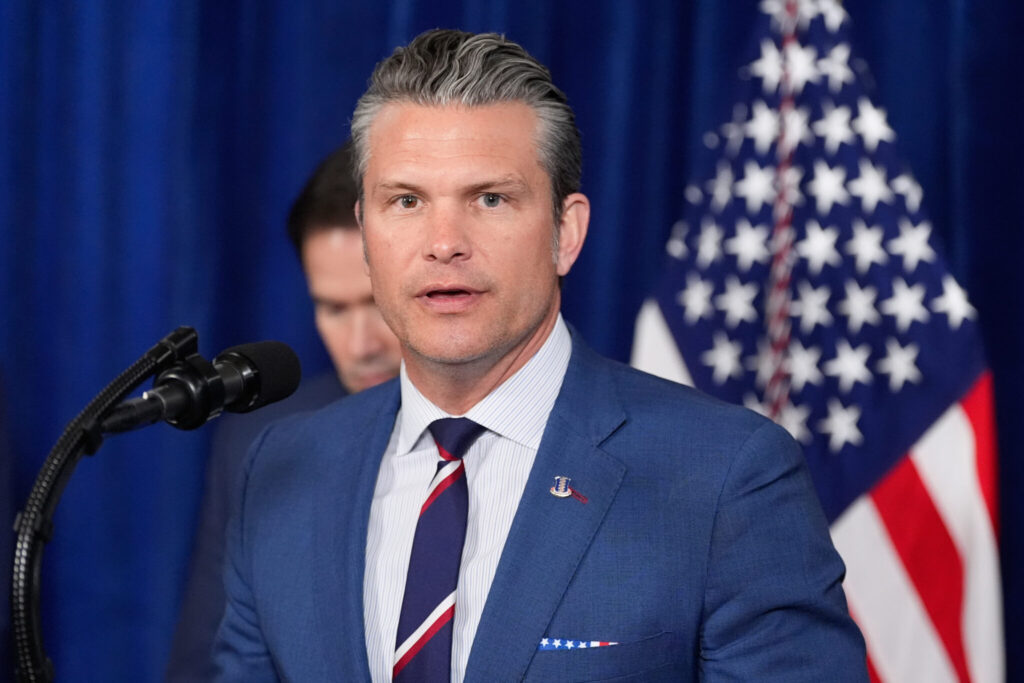
Deep Look: Trump’s New Defense Strategy Pushes Allies to Secure Their Own Regions
WASHINGTON — The Trump administration unveiled a bold reimagining of U.S. military priorities on Friday, releasing a sweeping National Defense Strategy that shifts much of the responsibility for global security onto America’s allies. The 34-page document signals a hard break from past strategies by demanding that foreign partners carry more of the load, while reasserting U.S. interests closer to home.
“For too long, the U.S. Government neglected — even rejected — putting Americans and their concrete interests first,” the strategy begins, echoing President Donald Trump’s recurring “America First” doctrine.
The plan emphasizes a strategic recalibration: reducing direct U.S. involvement in regions like Asia and Europe while securing influence and control over critical points in the Western Hemisphere, such as the Panama Canal and Greenland. That focus aligns with Trump’s recent moves, including controversial negotiations to expand U.S. access to Greenland — a territory of NATO ally Denmark — and previous remarks about possibly retaking the Panama Canal.
Allies Under Pressure
The strategy doesn’t hold back criticism of allies, accusing past U.S. administrations of enabling a “security dependence” among NATO and Asian partners. Now, the Pentagon — under Defense Secretary Pete Hegseth — is making clear that era is over.
European allies are expected to “take primary responsibility for Europe’s conventional defense,” while South Korea is deemed “capable” of deterring North Korea with limited U.S. support.
The document implies a lower threshold for direct military commitments, instead offering “credible options to guarantee U.S. military and commercial access” to vital regions. Notably, it offers few reassurances to partners like Taiwan, a glaring omission compared to the 2022 defense strategy under President Biden, which pledged strong asymmetric support.
Focus on the Americas
Perhaps the most dramatic pivot is toward the Western Hemisphere. The document warns nations from Canada to Central and South America that cooperation with U.S. interests is no longer optional.
“We will engage in good faith… but where they do not [cooperate], we will stand ready to take focused, decisive action,” the strategy warns.
This comes on the heels of rising tension with Canadian Prime Minister Mark Carney. Trump recently revoked Canada’s invitation to join his Gaza “Board of Peace” after Carney pushed back on claims that “Canada lives because of the United States.” The document appears to nod to that dispute, simultaneously offering engagement while leaving room for unilateral moves.
The strategy also applauds the recent U.S. operation that ousted Venezuelan leader Nicolás Maduro, calling it a warning to “all narco-terrorists.”
China: A Softer Tone
While the Biden-era defense blueprint labeled China as America’s top strategic threat, the Trump administration’s 2026 update takes a more tempered approach.
“The goal is not to dominate China… nor to humiliate them,” it says. Instead, it advocates for a stable relationship rooted in “fair trade and respectful relations.”
Military communication with China is encouraged, signaling a willingness to de-escalate tensions in the Indo-Pacific. However, the document’s silence on Taiwan — which China claims as its own — raises questions about how much support the self-governing island can expect in a conflict scenario.
Reduced Global Footprint
The Trump defense vision places less emphasis on forward-deployed forces and more on strategic access, commercial control, and burden-sharing. The document admits U.S. troop posture in Europe may be “calibrated” in the future, as allies take on more responsibility.
NATO remains part of U.S. strategy — but with the clear understanding that the U.S. is shifting its role.
Mixed Reactions Expected
While U.S. officials say the move reflects geopolitical realism, critics warn it could lead to regional insecurity, especially in Eastern Europe and East Asia. Reducing America’s footprint may embolden adversaries like Russia and North Korea, some analysts argue.
Meanwhile, Trump’s continued push for Arctic and canal dominance signals a return to old-school geopolitics — with a distinctly unilateral twist.