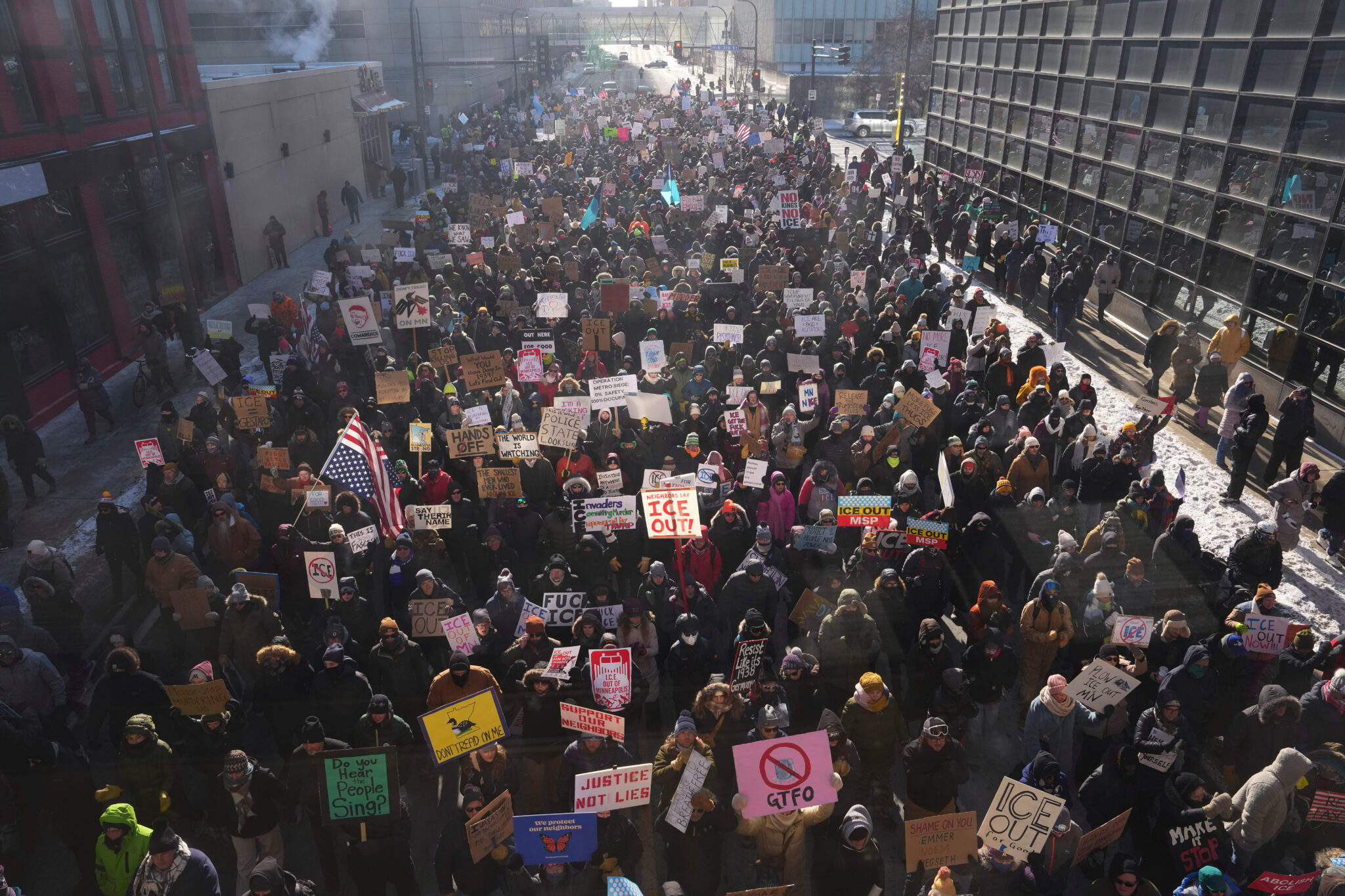
Trump’s Immigration Crackdown Led to Drop in US Growth Rate in 2025/ Newslooks/ WASHINGTON/ J. Mansour/ Morning Edition/ The U.S. population rose to nearly 342 million in 2025, but the annual growth rate plunged to just 0.5% — a sharp drop from the previous year — largely due to a dramatic decline in immigration. Census Bureau estimates link the slowdown directly to the Trump administration’s renewed immigration enforcement policies.

Population Growth Quick Looks
- U.S. population reached 341.8 million as of July 2025
- Growth rate dropped to 0.5%, down from 0.97% in 2024
- Net immigration declined from 2.8 million in 2024 to 1.3 million in 2025
- Trump’s second-term crackdown on immigration contributed to the slowdown
- Report covers July 2024–July 2025, overlapping Biden’s exit and Trump’s return
- Growth rate mirrors previous lows from 1919 and 2021 pandemic years
- Impact of later immigration crackdowns in cities like Chicago, Memphis, and Minneapolis not yet included
- Census Bureau staffing reduced by 15% due to Trump administration budget cuts
- Experts confirm no political interference with population data
- These annual population estimates affect federal funding allocations and economic planning

Deep Look: Trump’s Immigration Crackdown Led to Drop in US Growth Rate in 2025
ORLANDO, Fla. — Jan. 27, 2026 | The U.S. Census Bureau reported Tuesday that America’s population grew to nearly 342 million in 2025, but the annual growth rate slowed drastically to just 0.5%, its sharpest decline in over a decade. The drop is largely attributed to President Donald Trump’s renewed immigration enforcement measures.
The year-to-year growth slowdown marks a significant departure from 2024, when the U.S. saw its fastest population growth since 2001, driven largely by immigration. That year, the country gained nearly 3.3 million people, with 2.8 million attributed to net international migration. In contrast, 2025 saw just 1.3 million new arrivals.
The 2025 estimates span the period from July 2024 to July 2025, overlapping the transition from President Joe Biden to Trump’s second term. During this time, the Trump administration launched high-profile immigration enforcement surges, first targeting cities like Los Angeles and Portland. While the impact of later crackdowns in cities such as Chicago, Minneapolis, and New Orleans is not yet reflected, early enforcement clearly had an immediate effect.
“This year’s numbers reflect what we’ve seen in out-migration — more people leaving, fewer coming in,” said Eric Jensen, a senior research scientist with the Census Bureau.
Historically, similar slowdowns occurred during crisis periods. The 2021 pandemic year saw only a 0.16% growth rate, and the 1919 Spanish flu era produced a comparable low point.
Unlike the decennial census that influences congressional representation and Electoral College votes, the annual population estimates help direct $2.8 trillion in federal funding and provide critical insight into demographic trends. They are compiled from administrative records and Census Bureau data, rather than door-to-door enumeration.
The Trump administration’s immigration agenda, a centerpiece of his 2024 campaign, continues to reshape U.S. population patterns. His policies — including expanded interior enforcement and new rules for humanitarian entry — appear to have significantly reduced the number of migrants entering the U.S. legally or otherwise.
The Census Bureau’s report also arrives amid internal challenges. A recent wave of budget cuts led to 15% workforce reductions across U.S. statistical agencies, including layoffs and early retirements at the bureau. The White House Office of Government Efficiency led those efforts.
Further controversy followed the removal of Erika McEntarfer, the commissioner of the Bureau of Labor Statistics, raising concerns about political interference in traditionally nonpartisan data operations.
However, demographers like William Frey of the Brookings Institution said that despite political pressure, career civil servants at the Census Bureau have continued to operate independently.
“I have no reason to doubt the numbers,” Frey told AP. “They’ve done this work without interference.”
Looking ahead, demographers warn that sustained reductions in immigration — especially amid an aging population and declining birth rates — could hamper economic growth, labor force participation, and long-term social program sustainability.