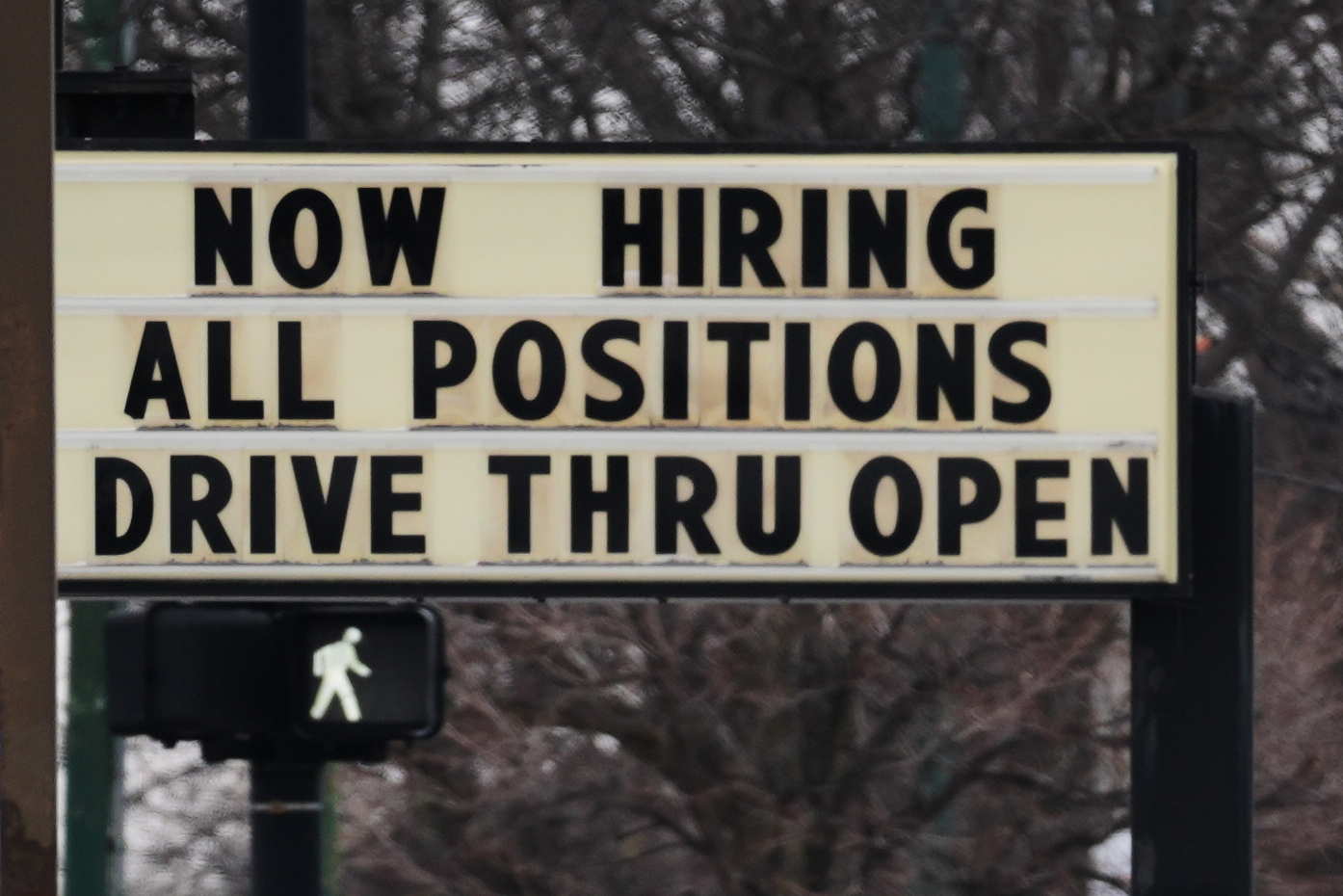
US Adds 130,000 Jobs Despite Major Revisions/ Newslooks/ WASHINGTON/ J. Mansour/ Morning Edition/ U.S. employers added a stronger-than-expected 130,000 jobs last month. However, sweeping government revisions slashed hundreds of thousands of jobs from 2024 and 2025 totals. The unemployment rate dipped to 4.3% even as hiring remains historically sluggish.


US Jobs Report 2026 – Quick Looks
- 130,000 jobs added last month, beating expectations
- Unemployment rate falls to 4.3%
- 2024 job growth revised down to 181,000
- Hiring slowdown tied to high rates, layoffs, trade uncertainty
- Economists warn revisions may show net 2025 job losses
Deep Look: US Employers Add 130,000 Jobs, But Revisions Slash 2024–2025 Payroll Gains
The U.S. labor market delivered a surprise in January, with employers adding 130,000 jobs — significantly outperforming expectations. Yet the encouraging headline figure was overshadowed by sweeping government revisions that erased hundreds of thousands of previously reported jobs from 2024 and 2025.
According to the U.S. Department of Labor, the unemployment rate dipped to 4.3%, signaling continued job stability even as hiring momentum slows.
Major Revisions Reshape the Picture
The most striking development in Wednesday’s report was the sharp downward revision to job growth figures for last year. Payroll gains for 2024 were revised down to just 181,000 — less than half the previously reported 584,000 and the weakest performance since the pandemic year of 2020.
Economists had anticipated some correction, but the scale of the revision surprised many analysts.
Preliminary estimates released last fall suggested that up to 911,000 jobs might be wiped from the year ending March 2025 during the annual benchmark adjustment process. While final numbers were somewhat smaller, they still dramatically altered perceptions of the labor market’s strength.
Additional monthly revisions also trimmed 20,000 to 30,000 jobs per month from spring 2025 onward, according to estimates from major financial institutions.
Hiring Sluggish Despite Strong Growth
The revisions raise fresh questions about why the labor market appears disconnected from broader economic performance.
The U.S. economy has posted robust growth in recent quarters, with gross domestic product accelerating at a 4.4% annual pace from July through September — the fastest expansion in two years. Consumer spending remained resilient, exports climbed, and imports fell sharply.
Yet hiring has failed to match that momentum.
During the hiring boom of 2021 through 2023, employers added roughly 400,000 jobs per month. In 2025, by contrast, job creation has averaged fewer than 50,000 per month.
What’s Weighing on Hiring?
Several factors appear to be restraining job growth:
- High interest rates that continue to dampen corporate investment
- Widespread layoffs, including reductions at major firms
- Uncertainty surrounding President Donald Trump’s trade policies
- Advances in automation and artificial intelligence reducing labor needs
High-profile companies have recently announced significant workforce reductions. UPS said it would cut 30,000 jobs. Dow plans to eliminate 4,500 positions as it shifts toward automation. Amazon has also announced thousands of corporate layoffs.
Additionally, last year’s restructuring of federal agencies — including cuts tied to initiatives associated with billionaire Elon Musk — contributed to employment declines in the public sector.
Job Openings and Layoffs Signal Cooling
Other data points have pointed to softening demand for workers.
Job openings fell to 6.5 million in December — the lowest level in more than five years. Payroll processor ADP reported just 22,000 private-sector jobs added in January. Meanwhile, the outplacement firm Challenger, Gray & Christmas reported more than 108,000 job cuts last month — the worst January for layoffs since 2009.
These indicators reinforce the view that employers remain cautious about expanding payrolls.
Why Unemployment Remains Low
Despite weaker hiring, the unemployment rate has remained relatively low.
One reason: slower population growth driven in part by tighter immigration policies. Economists note that fewer new workers entering the labor force reduces the number of jobs needed each month to keep unemployment stable — the so-called “break-even” point.
In 2023, when immigration surged, the economy needed roughly 250,000 new jobs per month to prevent unemployment from rising. By mid-2025, that number had fallen to roughly 30,000 — and may now be even lower.
As a result, modest hiring gains can still maintain a stable unemployment rate.
Could 2025 Show Net Job Losses?
Some analysts suggest that when all revisions are fully accounted for, 2025 could ultimately show net job losses — which would mark the first annual employment decline since the pandemic year of 2020.
Federal Reserve Chair Jerome Powell has previously acknowledged that payroll data may be overstating job creation by tens of thousands per month.
If the economy continues growing while job creation stagnates, it could reflect rising productivity driven by AI and automation — meaning output expands without a proportional increase in hiring.
A Mixed Outlook for Workers
For many Americans who already have jobs, the low unemployment rate signals continued job security. However, job seekers — particularly young workers entering the labor force — face a more challenging environment.
The January report highlights a labor market that is neither collapsing nor booming, but recalibrating after years of volatility.
The big question for 2026: Will hiring accelerate to match economic growth — or will the economy continue expanding with fewer workers?