

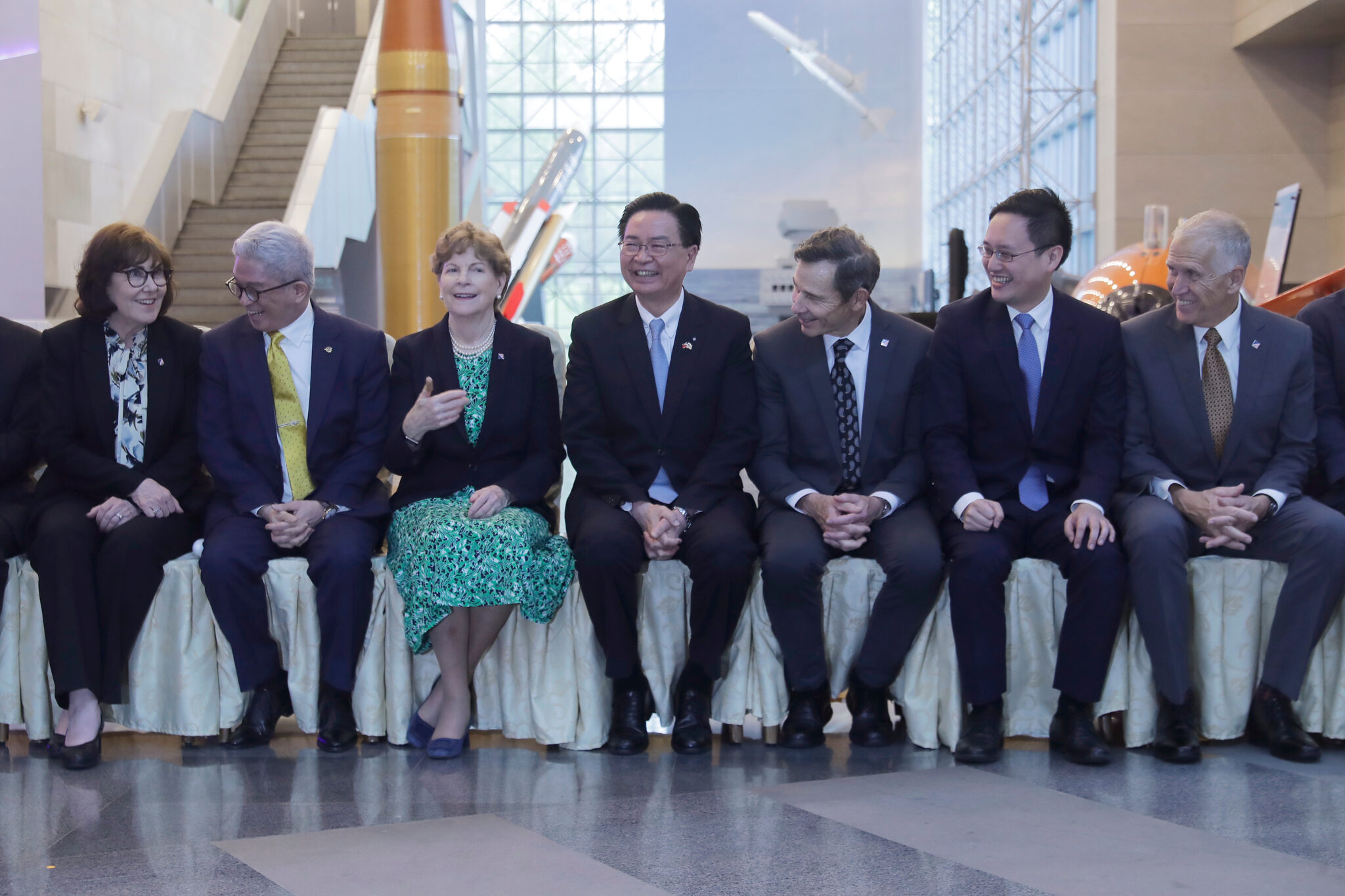
US Lawmakers Support Taiwan $40 Billion Defense Budget/ Newslooks/ WASHINGTON/ J. Mansour/ Morning Edition/ A bipartisan group of U.S. senators expressed support for Taiwan’s stalled $40 billion defense budget. The funding aims to boost missile defense, AI military capabilities, and domestic defense production. China criticized the visit, warning the U.S. against strengthening ties with Taiwan.
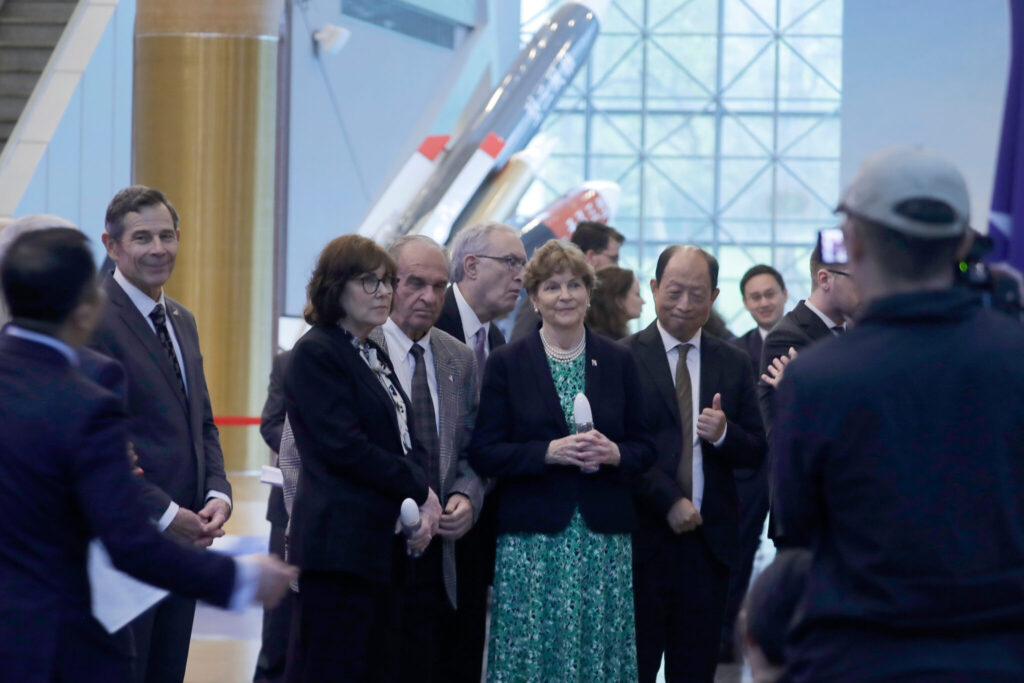
US Lawmakers Support Taiwan Defense Budget Quick Looks
- Bipartisan U.S. senators visit Taiwan
- $40 billion defense budget stalled in parliament
- Taiwan plans missile defense “T-dome” system
- AI integration and domestic defense production planned
- Visit comes ahead of Trump-Xi summit
- China criticizes congressional visit
- Taiwan president urges quick approval
- Opposition proposes smaller defense spending
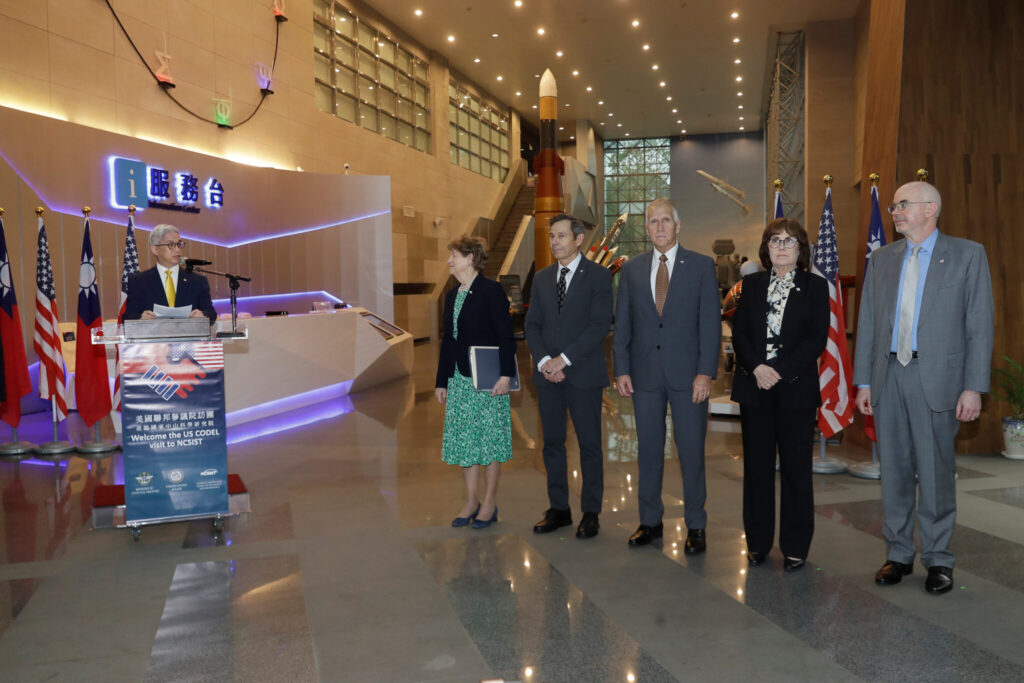
Deep Look: US Lawmakers Support Taiwan Defense Budget Amid Rising China Tensions
TAIPEI — A bipartisan delegation of U.S. senators voiced strong support Monday for Taiwan’s proposed $40 billion special defense budget, which remains stalled in the island’s opposition-controlled parliament, underscoring growing U.S. concern over regional security and China’s expanding military influence.
The group of four lawmakers — Democratic Senators Jeanne Shaheen of New Hampshire and Jacky Rosen of Nevada, along with Republican Senators John Curtis of Utah and Thom Tillis of North Carolina — arrived in Taipei as part of a broader Asia trip designed to strengthen U.S. alliances and counter China’s influence across the region.
Their visit comes ahead of a planned May summit between U.S. President Donald Trump and Chinese President Xi Jinping, where Taiwan and U.S. arms sales are expected to be major topics of discussion.
Taiwan Defense Budget Stalled in Parliament
Taiwan’s government has proposed a $40 billion special defense budget spanning eight years. The funding would support development of advanced missile defense systems, integrate artificial intelligence into Taiwan’s military operations, and expand domestic defense manufacturing capabilities.
One centerpiece of the plan is the creation of a missile defense shield dubbed the “T-dome,” designed to strengthen Taiwan’s ability to intercept incoming threats and enhance national security.
However, the budget faces opposition in Taiwan’s parliament, where rival political parties are pushing for smaller defense spending packages instead of the full proposal.
Taiwanese President Lai Ching-te urged lawmakers to approve the funding quickly during his meeting with the visiting U.S. senators.
“I want to reassure you and all of our friends in the United States that my government’s resolve and commitment to enhancing our self-defense capabilities, strengthening Taiwan-U.S. cooperation and ensuring national security remain unwavering,” Lai told the delegation.
US Lawmakers Highlight Taiwan Security Efforts
Senator John Curtis praised Taiwan’s progress in strengthening defense capabilities and broader national preparedness.
“The seriousness is noticed in Washington D.C., and your efforts on the special defense budget are also noticed and supported,” Curtis said during the meeting.
The U.S. remains Taiwan’s strongest informal ally and primary arms supplier, despite not formally recognizing Taiwan as an independent country. Washington maintains unofficial diplomatic relations with Taipei while adhering to its long-standing “One China” policy.
China Condemns Congressional Visit
China quickly criticized the U.S. lawmakers’ visit to Taiwan, reiterating its claim over the island and warning Washington against expanding official interactions.
Chinese Foreign Ministry spokesperson Mao Ning urged the United States to “handle the Taiwan question prudently and properly,” and to stop sending what Beijing views as signals supporting Taiwanese independence.
“China’s position on the Taiwan-related issue is consistent and clear,” Mao said. “China will take necessary measures to firmly safeguard its sovereignty and territorial integrity.”
China considers Taiwan a breakaway province and has repeatedly threatened to retake the island by force if necessary. Beijing also opposes foreign governments maintaining official ties with Taipei.
Political Divisions Inside Taiwan
Domestic political divisions are contributing to the delay in passing the defense budget. Taiwan’s opposition parties have raised concerns about the scale of the spending and proposed smaller alternatives.
Meanwhile, opposition leader and Kuomintang chairwoman Cheng Li-wun announced plans to visit China next month to promote what she described as “peaceful” cross-strait relations.
Cheng has previously expressed interest in meeting Chinese President Xi Jinping, although it remains unclear whether such a meeting will occur during the visit.
Beijing has refused to engage directly with President Lai, labeling him a separatist and accusing his administration of increasing tensions across the Taiwan Strait.
Rising Regional Tensions Ahead of Trump-Xi Summit
The U.S. senators’ visit highlights growing geopolitical tensions in the Indo-Pacific region. Taiwan remains a key flashpoint between Washington and Beijing, with U.S. arms sales and military cooperation continuing to draw strong objections from China.
The upcoming Trump-Xi summit in May is expected to address trade disputes, regional security, and Taiwan — issues that have increasingly defined U.S.-China relations.
For Taiwan, passage of the $40 billion defense budget could signal stronger preparedness and deeper security cooperation with the United States.
For China, however, the move risks further escalation in an already sensitive geopolitical standoff.




You must Register or Login to post a comment.