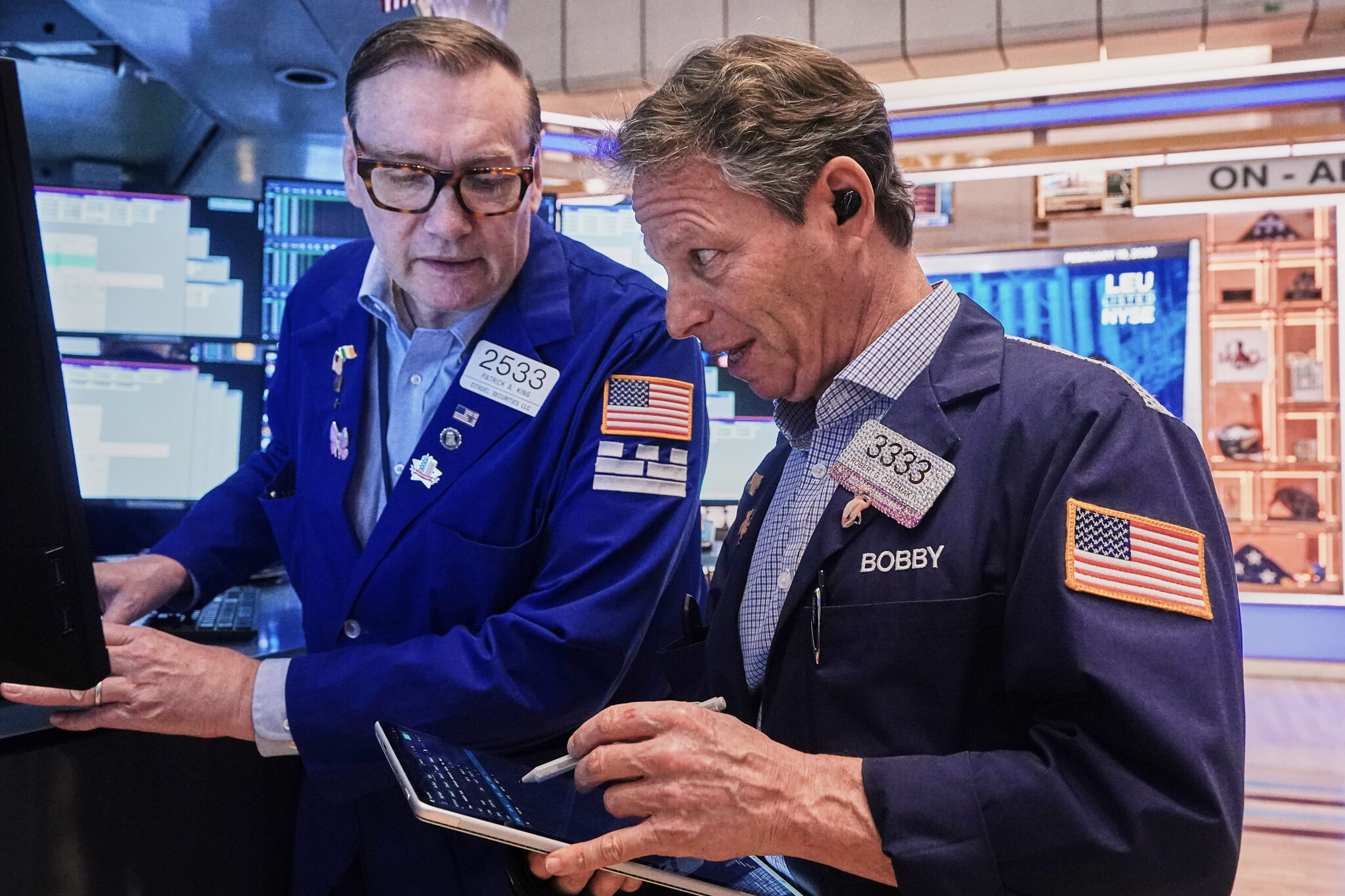
US Stocks Steady After Supreme Court Tariff Ruling/ Newslooks/ WASHINGTON/ J. Mansour/ Morning Edition/ U.S. stocks remained relatively steady after the Supreme Court struck down President Donald Trump’s sweeping tariffs. Investors largely shrugged off weaker economic growth and hotter inflation data. Traders continue to expect Federal Reserve rate cuts later this year.
US Stocks Steady After Supreme Court Tariff Ruling Quick Looks
- S&P 500 up 0.1% in morning trading
- Dow rises slightly; Nasdaq gains 0.3%
- Supreme Court blocks Trump emergency tariffs
- GDP slows to 1.4% annual rate
- Inflation accelerates to 2.9% in December
- Treasury yields mixed after ruling
- Akamai drops 10% on profit outlook
- Comfort Systems jumps nearly 5%
Deep Look: US Stocks Steady After Supreme Court Tariff Ruling
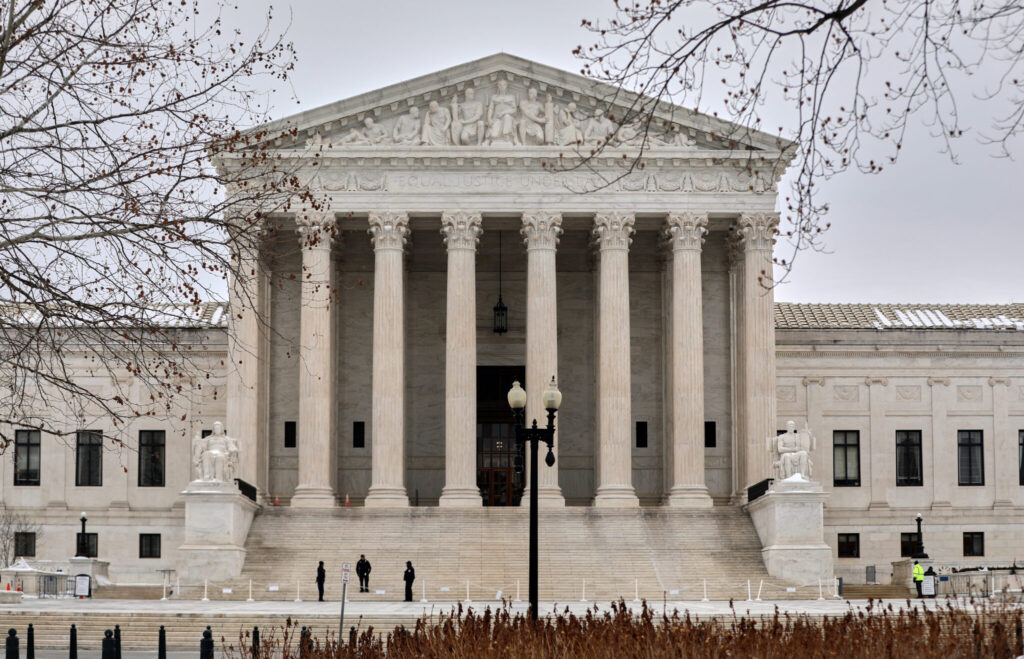
U.S. financial markets showed resilience Friday after the Supreme Court of the United States struck down President Donald Trump’s sweeping global tariffs, a decision that dismantled a cornerstone of his economic strategy but failed to spark major volatility on Wall Street.
The S&P 500 edged up 0.1% in mid-morning trading, fluctuating between modest gains and slight losses earlier in the session. The Dow Jones Industrial Average added just 7 points, less than 0.1%, while the Nasdaq Composite climbed 0.3%.
The muted reaction suggests that investors had largely anticipated the court’s decision invalidating Trump’s tariffs imposed under emergency powers. The tariffs had rattled markets when first introduced last year, fueling uncertainty over trade policy and raising concerns about higher consumer prices.
Beyond the tariff ruling, traders also digested fresh economic data that painted a mixed picture of the U.S. economy. A Commerce Department report showed that gross domestic product expanded at just a 1.4% annual pace in the fourth quarter of 2025 — a sharp slowdown from the summer’s 4.4% growth rate. The softer reading signals cooling momentum as the economy enters 2026.
Meanwhile, inflation data released the same morning showed that the Federal Reserve’s preferred price gauge rose 2.9% in December compared with a year earlier, up from 2.8% in November. Core inflation, which excludes food and energy prices, accelerated to 3%. The figures underscore persistent price pressures that complicate the central bank’s policy outlook.
The Federal Reserve faces a delicate balancing act. Slowing growth might justify interest-rate cuts to support economic activity. However, elevated inflation limits the Fed’s flexibility, as premature rate reductions could reignite price increases. At its most recent meeting, policymakers signaled they want additional evidence that inflation is moving closer to their 2% target before trimming borrowing costs further.
Despite Friday’s disappointing economic reports, traders’ expectations for rate cuts shifted only slightly. According to futures data from CME Group, markets still anticipate at least two interest-rate reductions before year’s end, though some investors pushed back expectations for the first cut to later in the summer.
In the bond market, Treasury yields were mixed. The 10-year Treasury yield ticked up to 4.10% from 4.08% late Thursday, while the two-year yield — more sensitive to Federal Reserve policy expectations — held steady at 3.47%.
Corporate earnings also drove individual stock movements. Akamai Technologies dropped 10.2%, one of the steepest losses on Wall Street, despite reporting better-than-expected results for the end of 2025. Investors focused instead on the company’s weaker profit forecast for the upcoming year and its plans to increase spending on equipment and infrastructure. Rising costs for computer memory and hardware tied to the artificial intelligence boom have pressured technology firms across multiple sectors.
On the upside, Comfort Systems surged 4.9% after posting quarterly profits that exceeded analyst projections. The provider of heating, ventilation, air conditioning, and electrical services cited “unprecedented demand,” reflecting strength in infrastructure and commercial construction activity.
International markets showed mixed results. In Europe, major indexes posted modest gains. In Asia, Hong Kong’s Hang Seng fell 1.1% as trading resumed following Lunar New Year holidays, while South Korea’s Kospi jumped 2.3% to a record high, buoyed by defense contractors benefiting from increased global military spending.
Overall, Friday’s trading session reflected cautious stability rather than dramatic reaction. The Supreme Court’s tariff ruling, while politically significant, did not materially alter investors’ broader economic outlook. Markets appear more focused on the interplay between slowing growth, persistent inflation, and the Federal Reserve’s next policy move.
As 2026 unfolds, Wall Street will likely remain sensitive to incoming economic data and signals from central bank officials. For now, the steady performance of major indexes suggests that investors view the tariff decision as one chapter in a broader, ongoing recalibration of U.S. economic policy.