

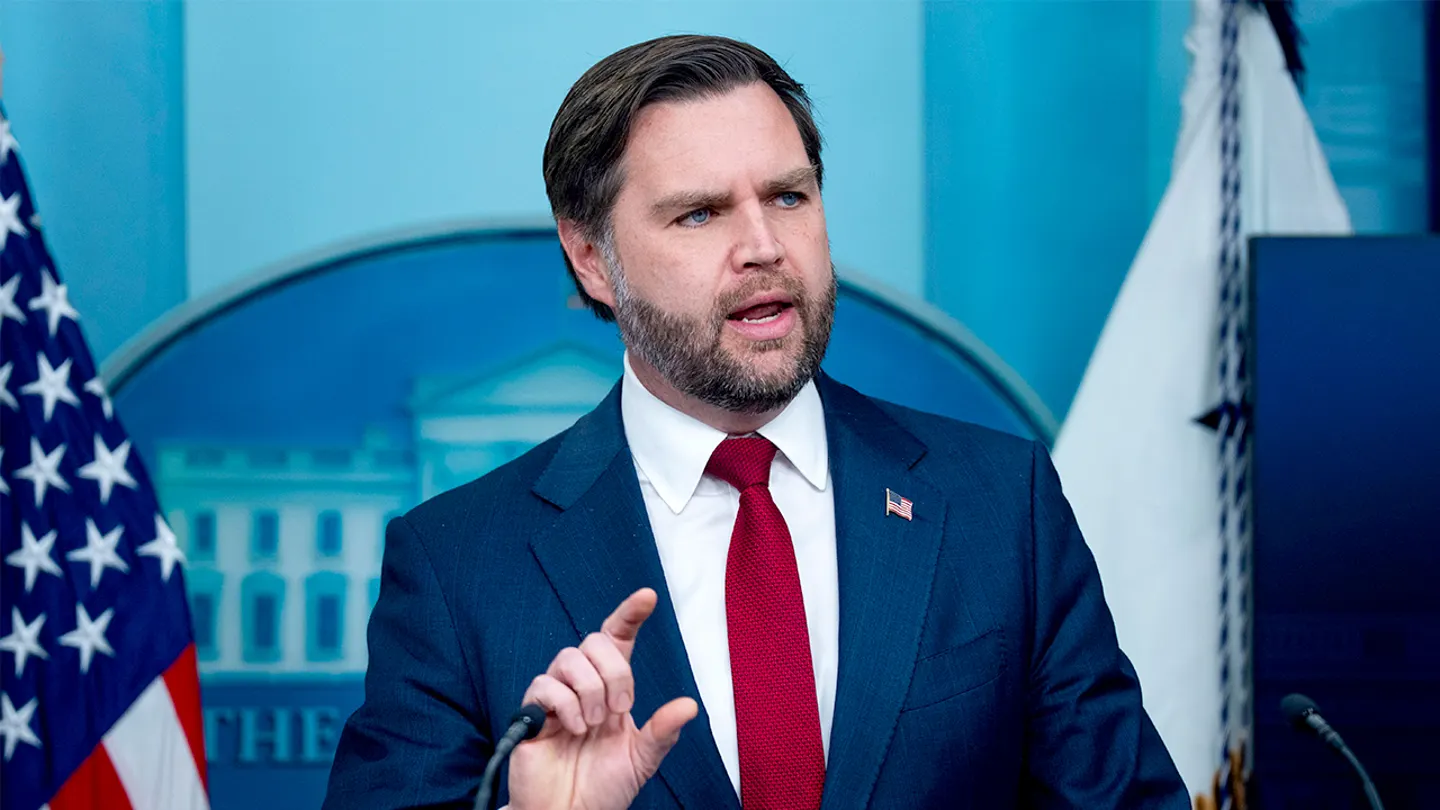
Vance: US Has ‘Much Greater Capacity’ to Hit Iran, Campaign Could ‘Go a Lot Longer’/ Newslooks/ WASHINGTON/ J. Mansour/ Morning Edition/ Vice President JD Vance says the U.S. has far greater capacity to strike Iran if needed. He argues the current campaign has clearly defined goals, unlike Iraq and Afghanistan. Vance insists the mission is focused solely on preventing Iran from obtaining nuclear weapons.

Quick Look: Vance on Iran Campaign
- Greater U.S. Capacity: Vice President JD Vance says the U.S. can inflict significantly more damage on Iran if needed.
- Flexible Timeline: Campaign could continue “a little bit longer” — or “a lot longer.”
- Defined Objectives: Focused on preventing Iran from obtaining or rebuilding nuclear weapons.
- Not Iraq or Afghanistan: Vance rejects comparisons, citing no nation-building or open-ended mission.
- Operation Epic Fury: Ongoing U.S.-Israeli strikes targeting nuclear and missile infrastructure.
- Leadership Losses: Initial strikes reportedly killed Iranian Supreme Leader Ali Khamenei and senior officials.
- Escalation Concerns: Critics warn conflict could broaden across the Middle East.
- White House Position: President Donald Trump has multiple military options and no fixed end date.
Deep Look: Vance: U.S. Has ‘Much Greater Capacity’ Against Iran
Vice President JD Vance said Monday that the United States retains significant military capabilities to intensify strikes against Iran if necessary, emphasizing that the Trump administration’s campaign has clearly defined objectives.
Speaking on Jesse Watters Primetime, Vance said President Donald Trump understands the scope of American power and has multiple options available as the conflict unfolds.
“The president knows what we’re able to do,” Vance said. “We have much greater capacity to inflict damage on the Iranian nuclear program and on the missiles that threaten our troops.”
He added that while the administration is not committing to a specific timeline, the campaign “could go for a little bit longer” — or “a lot longer” — depending on how events develop.
Rejecting Iraq and Afghanistan Comparisons
Vance dismissed comparisons between the current military operation and past U.S. wars in Iraq and Afghanistan.
He described the Afghanistan conflict as an example of “mission creep,” arguing that it lacked clearly defined objectives and evolved into a prolonged nation-building effort that lasted two decades. He made similar critiques of the nearly decade-long U.S. presence in Iraq.
“What’s so different about this,” Vance said, “is that the president has clearly defined what he wants to accomplish.”
According to Vance, the administration’s goals are limited to:
- Preventing Iran from obtaining a nuclear weapon
- Ensuring Iran does not rebuild its nuclear capability
- Neutralizing missile threats targeting U.S. forces
He argued that those objectives distinguish the current operation from earlier Middle East interventions.
Operation Epic Fury and Escalation Risks
The remarks come amid expanding U.S.-Israeli military actions under Operation Epic Fury. Over the weekend, joint strikes reportedly killed dozens of senior Iranian officials, including Supreme Leader Ali Khamenei.
The escalation has prompted concerns among lawmakers and foreign policy analysts that the conflict could broaden across the region.
Trump recently notified Congress of the strikes, and administration officials have maintained that the campaign is focused on degrading Iran’s nuclear and missile infrastructure — not nation-building or long-term occupation.
Vance reiterated that distinction, saying the mission’s defined scope reduces the risk of the kind of prolonged entanglements seen in prior wars.
“I think that means we’re not going to get into the problems that we’ve had with Iraq and Afghanistan,” he said.
Broader Political and Strategic Context
The administration’s posture toward Iran has sparked debate in Washington and among voters, particularly as the conflict intensifies and energy markets react.
Supporters argue the strikes demonstrate strength and deterrence. Critics warn that extended military engagement could increase regional instability and strain U.S. resources.
For now, Vance signaled that the White House believes it retains flexibility — and significant military leverage — as the campaign continues.



You must Register or Login to post a comment.