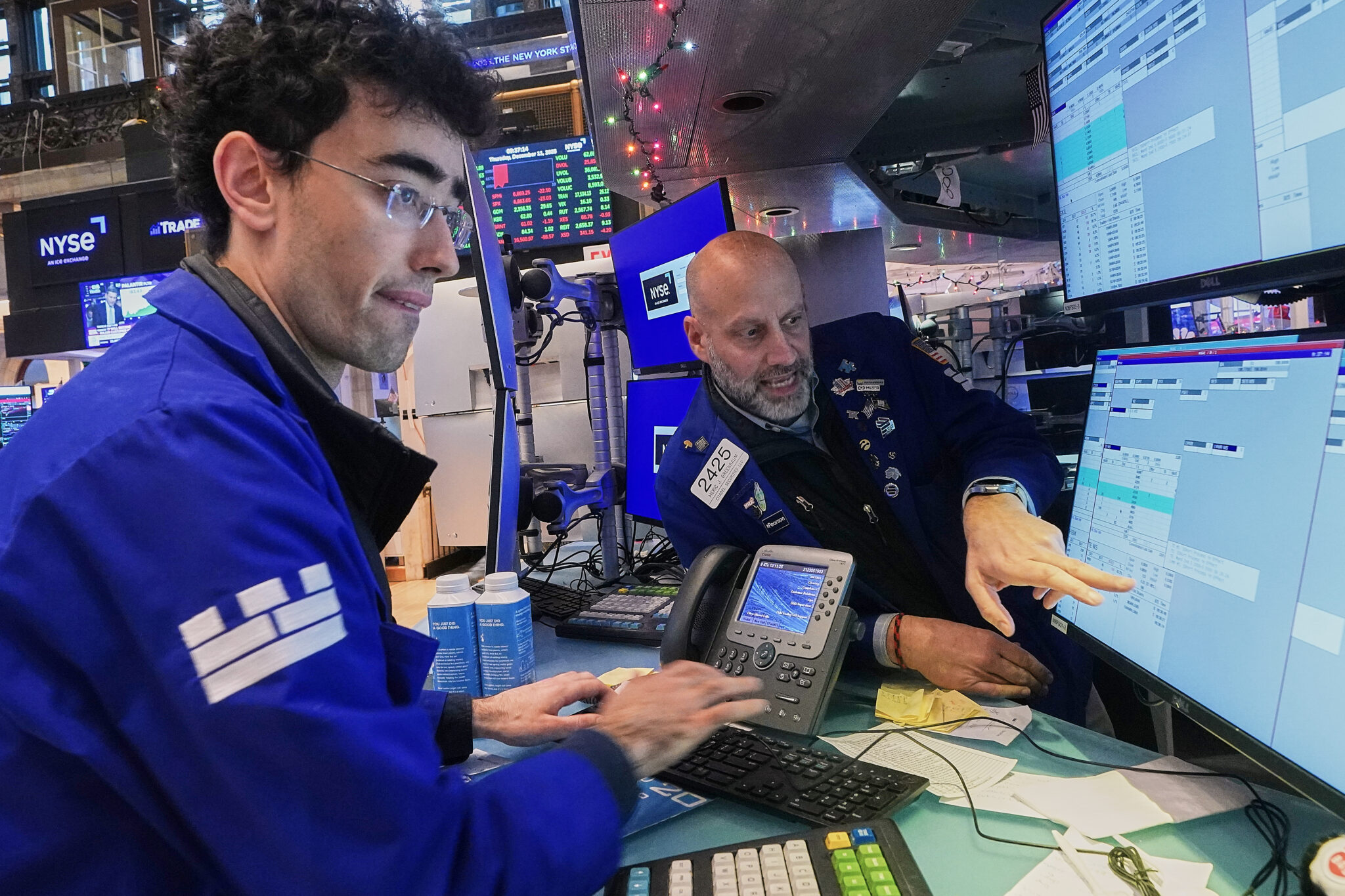
Wall Street Rises Ahead of Key Economic Reports/ Newslooks/ WASHINGTON/ J. Mansour/ Morning Edition/ U.S. stock markets edged higher Monday as investors braced for a busy week of economic reports. AI stocks showed mixed performance while the Federal Reserve’s next moves on interest rates remain under close watch. Eyes are on jobs and inflation data that could determine the market’s next direction.
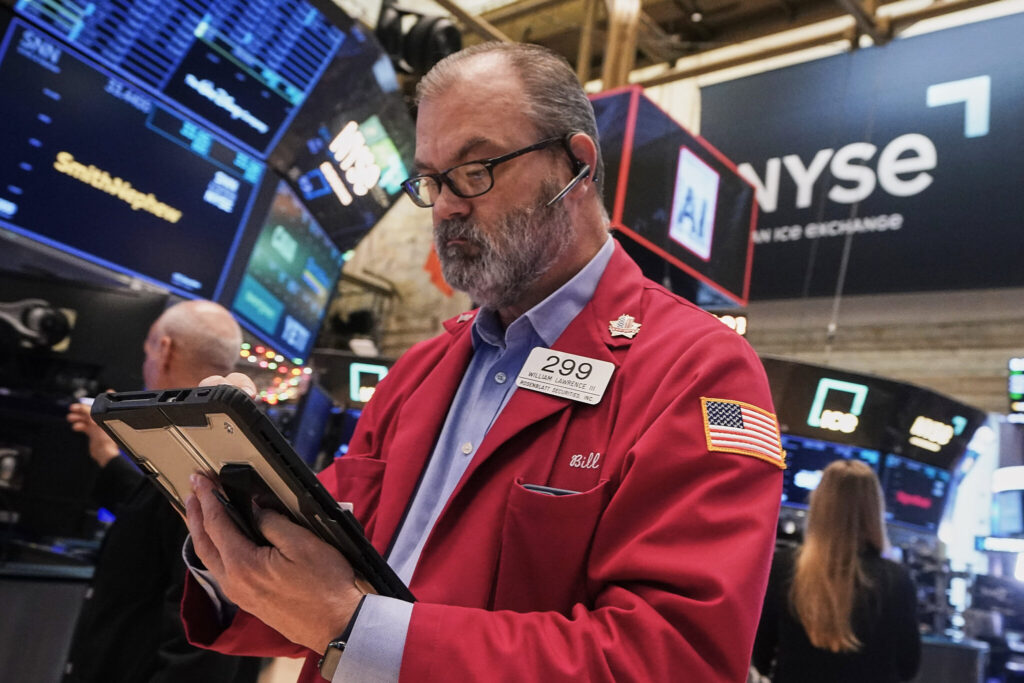
Wall Street Weekly Outlook Quick Looks
- S&P 500, Dow, and Nasdaq opened modestly higher
- Nvidia, Palantir gained; Oracle, Broadcom extended losses
- Focus shifts to Tuesday’s jobs report and Thursday’s inflation data
- Federal Reserve balancing job market and inflation challenges
- Treasury yields dipped as market eyes soft landing scenario
- Investors hope for rate cuts if labor market slows slightly
- iRobot stock plunges after filing Chapter 11 bankruptcy
- Asian markets fell on weak China factory investment data
- European stocks rose following strong open
- Market volatility expected amid economic uncertainty
Wall Street Rises Ahead of Key Economic Reports
Deep Look
Wall Street opened on a cautiously optimistic note Monday morning, with U.S. stock indexes posting modest gains as investors brace for a critical week packed with economic data that could reshape expectations around interest rates and future market performance.
The S&P 500 rose 0.3% early in the session, recovering some of the ground lost last week. The Dow Jones Industrial Average climbed about 100 points, or 0.2%, while the Nasdaq composite was up 0.4%, buoyed by a partial recovery in some big-name technology stocks.
Leading the rebound was Nvidia, up 1.3% in early trading, after losing 0.6% last week amid broader concerns over whether the artificial intelligence (AI) investment boom will translate into long-term profitability. Palantir Technologies also rose 2.1%, adding some strength to the tech-heavy Nasdaq.
However, the sector remained mixed. Oracle dropped another 2.1% following last week’s 12.7% slide — its worst weekly performance in over seven years. Broadcom was also down 1.4% as skepticism continues to grow over the payoff from massive capital investments into AI infrastructure.
Wall Street’s recent rally, largely fueled by surging AI optimism and bets on lower interest rates, has shown signs of faltering as reality sets in. Investors are now closely watching economic indicators for signs of whether the Federal Reserve may pivot toward easing its policy stance.
A Week of Key Economic Reports
The most anticipated updates begin Tuesday with the November jobs report. Economists forecast that U.S. employers added about 40,000 net new jobs last month. While not strong, such a number could support the idea that the labor market is cooling — a potential catalyst for interest rate cuts in 2026.
On Thursday, the Consumer Price Index (CPI) report will offer insight into the inflation situation. Analysts expect inflation to come in at 3.1%, still above the Fed’s 2% target, but a slight improvement over previous months.
These data points are vital as the Federal Reserve tries to navigate a delicate balance: cooling inflation without triggering a full-blown recession. Any signs of weakness in the job market could push the central bank toward cutting rates — something Wall Street views as bullish for stocks.
“Bad news could be good news this week,” said Chris Larkin, managing director at E-Trade from Morgan Stanley. “If employment data comes in soft — but not too soft — markets may take it as a green light for future rate cuts.”
Larkin noted that the Fed appears more concerned about labor market weakness than persistent inflation, making Tuesday’s unemployment rate especially crucial. Projections point to a 4.4% unemployment rate, nearing a three-year high and reinforcing concerns about slowing momentum in hiring.
Treasuries Ease, Manufacturing Falters
Ahead of the data, bond markets responded with lower yields. The benchmark 10-year Treasury yield dipped to 4.16%, down from 4.19% late Friday, as investors repositioned portfolios in anticipation of potential Fed policy changes.
A separate report Monday showed New York state manufacturing unexpectedly weakened, despite forecasts for steady growth. The surprise contraction added to the cautious tone surrounding this week’s economic outlook.
Company Movers: iRobot Plummets
Outside of tech and macroeconomic news, iRobot Corp. made headlines with a stunning 69.9% drop in share value. The Roomba maker filed for Chapter 11 bankruptcy protection over the weekend, signaling significant restructuring. The company has entered an agreement for a court-supervised sale to its main manufacturing partner, Picea.
The sharp decline sent ripples through consumer electronics sectors, adding to broader volatility in Monday’s trading session.
Global Markets React to Mixed Signals
Overseas, Asian markets struggled. Hong Kong’s Hang Seng dropped 1.3%, and China’s Shanghai Composite fell 0.6% after government data revealed a decline in investment across key sectors, including infrastructure and manufacturing. The soft numbers reinforced concerns about demand weakness in the world’s second-largest economy.
In Japan, the Nikkei 225 also slid 1.3%, despite a slightly positive quarterly business sentiment report from the Bank of Japan. Analysts speculated the central bank could use the data to justify an interest rate hike in the near future — a rare move in Japan’s typically low-rate environment.
Conversely, European stock indexes opened higher, reflecting optimism that U.S. economic data could support a more dovish Fed and global stability heading into 2026.