

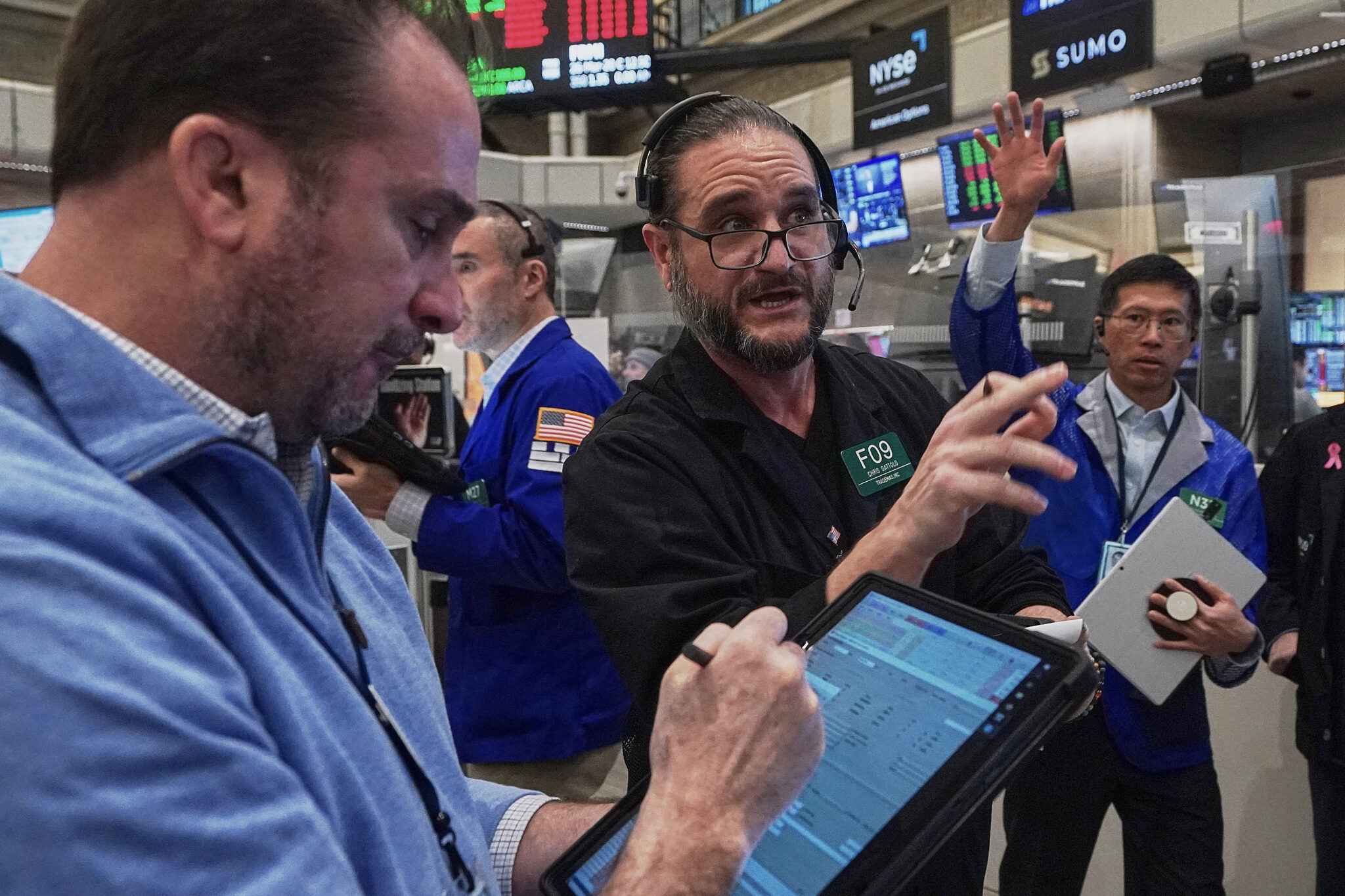
Wall Street Wavers as Intel Plunges 15%/ Newslooks/ WASHINGTON/ J. Mansour/ Morning Edition/ U.S. stocks traded mixed Friday as Intel’s sharp drop weighed on markets. Tariff threats and bond yield shifts added volatility, but inflation expectations eased. Gold rose and consumer sentiment showed signs of resilience amid economic uncertainty.

Wall Street Weekly Wrap – Quick Looks
- S&P 500 flat; Dow down, Nasdaq slightly higher
- Intel sinks 15.6% on weak Q1 forecast despite strong Q4
- Gold nears $5,000/oz as investors seek safety
- Capital One falls after weak earnings, $5.15B Brex acquisition
- CSX and SLB gain on positive outlooks despite mixed earnings
- Treasury yields dip slightly as inflation expectations ease
- University of Michigan survey shows lowest inflation expectation in a year
- Global markets mixed; Japan’s Nikkei rises as BOJ holds rate steady
Deep Look: Wall Street Ends Week Mixed as Intel Drops and Inflation Expectations Improve
NEW YORK (Jan. 23, 2026) — Wall Street ended the week in uncertain territory, with major indexes making mixed moves as investors processed disappointing forecasts from Intel, eased inflation concerns, and the latest developments in global trade tensions.
The S&P 500 hovered near break-even on Friday, inching toward a second straight weekly loss, while the Dow Jones Industrial Average dropped 263 points (0.5%) and the Nasdaq Composite managed a modest 0.2% gain by mid-morning.
Intel Tumbles 15% on Weak Outlook
The spotlight was firmly on Intel, which plummeted 15.6% despite reporting better-than-expected earnings for Q4 2025. Investor concern centered on the company’s first-quarter 2026 forecast, which fell short of Wall Street’s expectations.
Chief Financial Officer David Zinsner cited supply shortages across the semiconductor industry, suggesting that the worst may pass by spring. CEO Lip-Bu Tan maintained a positive outlook, pointing to growing opportunities in the AI sector.
Broader Market Reaction: Financials, Energy, and Railroads Diverge
Beyond Intel, the earnings picture was mixed across sectors:
- Capital One Financial dropped 4.3% after posting disappointing Q4 profits and announcing its $5.15 billion acquisition of Brex, a corporate card startup.
- SLB (formerly Schlumberger) gained 1.7% after beating earnings estimates and raising its dividend by 3.5%. CEO Olivier Le Peuch highlighted broad-based revenue growth across all global regions — a first since early 2024.
- CSX rose 3.9% despite weak earnings, with analysts pointing to strong margin guidance for 2026, suggesting operational improvements are on the way.
Trump’s Tariff Threats Rattle, Then Fade
Markets experienced early-week turbulence after President Donald Trump threatened 10% tariffs on European nations opposing his bid to acquire Greenland. The announcement shook U.S. Treasury bonds and pushed the U.S. dollar lower.
However, Trump reversed course by mid-week, saying a “framework of a future deal” had been reached with NATO leaders. Though details remain scarce, the pullback brought some relief to financial markets.
Still, gold prices surged, nearing $5,000 per ounce, signaling investor demand for safe-haven assets amid ongoing geopolitical uncertainty.
Bond Market Finds Stability as Inflation Expectations Ease
The 10-year Treasury yield dipped slightly to 4.24% from 4.26% Thursday, offering some support to stock valuations.
A key factor: The University of Michigan’s inflation expectations survey showed consumers anticipate 4% inflation over the next year — the lowest reading in 12 months. That’s still well above the Federal Reserve’s 2% target, but represents a step in the right direction.
Improved sentiment was also reflected in a modest uptick in overall consumer confidence, a positive sign for continued consumer spending, the backbone of the U.S. economy.
Global Markets: Japan Up, Europe Down
Markets outside the U.S. offered a mixed picture:
- Japan’s Nikkei 225 rose 0.3%, buoyed by the Bank of Japan’s decision to hold its policy rate steady after a December hike to 0.75%.
- European indexes slipped, reacting to both U.S. trade uncertainty and local earnings reports.
Earlier in the week, Japanese government bond yields spiked over concerns that Prime Minister Sanae Takaichi may increase spending, exacerbating the country’s already high debt levels.
Key Takeaways for Investors
While Wall Street remained mostly flat overall, underlying volatility and sector divergence were clear themes:
- Tech took a hit due to Intel’s forecast
- Financials wavered on mixed earnings and M&A deals
- Energy and transport offered bright spots with forward-looking optimism
- Safe-haven assets like gold showed strength amid trade tension and uncertainty
Looking ahead, markets remain sensitive to geopolitical shifts, corporate earnings guidance, and any new signals from the Federal Reserve as it weighs its inflation strategy going into Q2 2026.




You must Register or Login to post a comment.